 Burlington
 Why Fir Island Asks More of a Window Installation
Fir Island sits low in the Skagit River delta, out on the diked farmland between Burlington and the open water of Skagit Bay. That location is beautiful, but it's also one of the more demanding places in Skagit County to keep a window envelope tight. There's very little to break up the wind coming off the bay, so window walls take a steady load of moving air and wind-driven rain that a more sheltered Burlington lot never sees. Add in the salt content carried on that marine air, and you've got a combination that goes after hardware, fasteners, and finishes faster than inland installations.
Then there's moss season, which on Fir Island runs long. The same damp, mild conditions that make this farmland so productive also keep exterior surfaces wet for extended stretches of the fall, winter, and spring. Moss and algae need standing moisture to take hold, and they'll colonize window sills, trim, and cladding wherever water isn't shedding cleanly. A window that's installed with even a small flashing gap or a low spot in the sill will collect that moisture and start feeding growth within a season or two.
None of this means Fir Island homes need exotic materials. It means the installation details that get skipped elsewhere — proper flashing sequencing, correct sealant selection, a sill designed to shed water outward — can't be skipped here. This is a local service page specifically about getting window installation right for this stretch of the county, not a general overview.
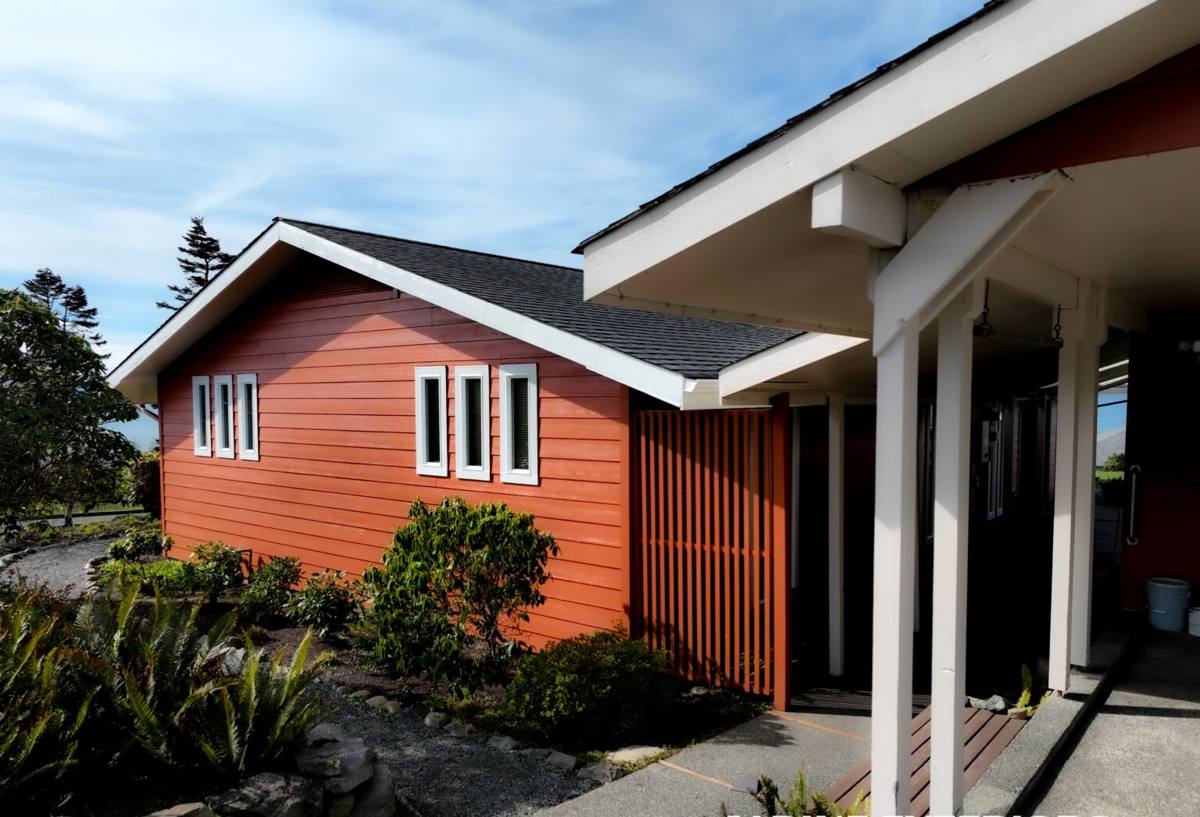
What a Correct Installation Actually Involves
Flashing and Water Management
A window is only as good as the flashing behind it. Housewrap and building paper need to be integrated with the window's nailing flange in the right shingle-lap order — head flashing over the wall covering, side and sill flashing under it — so any water that gets past the exterior finish drains back out instead of tracking down into the wall cavity. On a site exposed to driving rain off the bay, we treat this step as non-negotiable, not optional trim work.
Sill Pans
We install a sloped sill pan under every window we set, even on straightforward replacements. A sill pan gives any water that makes it past the glazing or frame a dedicated path back outside instead of soaking into the rough opening framing. On a low-lying, high-moisture site like Fir Island, this one detail does more to prevent long-term rot than almost anything else in the installation.
Sealant Selection
Salt air is corrosive to certain sealants and fastener coatings faster than people expect. We use exterior-grade sealants rated for movement and UV exposure, and we're deliberate about fastener material so we're not setting up a slow corrosion problem behind the trim. Cheap caulk fails here in a few seasons; the right sealant, applied at the right joints, is what actually keeps water out long-term.
Fastening for Wind Exposure
Open, low-lying ground means higher sustained wind loads on window openings than a home tucked into trees or surrounded by other buildings. We fasten to manufacturer spec for the exposure, not just a generic pattern, so the window performs under the gusts that come through the delta.
Choosing Window Materials for a Marine, High-Moisture Site
Frame material matters more here than it would on a sheltered inland lot. The table below reflects how the common options actually hold up under salt air, damp, and moss-prone conditions — not marketing claims, just the practical trade-offs we've seen doing this work in Skagit County.
| Frame Material | Corrosion / Salt Air Behavior | Moisture Season Maintenance | Where It Fits Best |
|---|---|---|---|
| Vinyl | Doesn't corrode; UV and coastal-grade formulations hold color well | Occasional rinse to keep sills clear of moss and algae buildup | Most Fir Island homes — good balance of cost and durability |
| Fiberglass | Very stable dimensionally, excellent resistance to salt air and moisture cycling | Low; finish holds up well over years of damp exposure | Higher-exposure walls facing the bay, or where a painted finish is wanted |
| Aluminum (uncoated or poorly finished) | Prone to pitting and corrosion in salt air unless properly finished | Requires closer inspection of finish and hardware over time | Only with marine-rated finishes; we're selective about specifying this here |
| Wood (unclad) | High maintenance burden in constant damp; needs consistent refinishing | Frequent — repainting/sealing schedule can't slip in this climate | Rarely the right call for direct bay-facing exposure without cladding |
We're not against any of these materials outright — the point is matching the frame to the exposure and to how much upkeep a homeowner actually wants to sign up for. A clad or fiberglass option that costs a bit more up front often costs less over ten years on a site like this, because it isn't fighting the salt air the whole time.
Our Installation Process on Fir Island Jobs
- Site and exposure assessment — we look at which walls face open water or prevailing wind, since that changes flashing detail and sealant choice wall by wall.
- Careful removal — old windows and any compromised trim come out without tearing up more of the wall assembly than necessary.
- Rough opening inspection — this is where we catch rot or past water damage before it gets sealed behind a new window. On older Fir Island homes, this step regularly turns up damage from a previous installation that skipped flashing.
- Sill pan and flashing installation — sloped sill pan first, then housewrap and flashing integrated in proper shingle-lap order.
- Window setting and fastening — shimmed, leveled, and fastened to spec for the site's wind exposure.
- Sealing and trim — exterior-grade sealant at all joints, trim reinstalled or replaced as needed.
- Final water test and walkthrough — we check operation and water management before we call the job done.
Problems We Commonly Find From Past Installations
A lot of our Fir Island window calls start as a "just replace this one window" job and turn into a conversation about what's happening behind the trim. The patterns repeat:
- Missing or improperly lapped flashing, letting wind-driven rain track behind the siding
- No sill pan, so any moisture that gets past the glazing sits directly on bare framing
- General-purpose caulk used where a real exterior sealant was needed, now cracked and open
- Moss and algae staining building up on sills and trim because water isn't shedding away from the opening
- Corroded fasteners or hardware on aluminum-framed windows without adequate coastal-rated finish
- Condensation and soft framing found once trim is pulled, from years of slow, unnoticed water intrusion
None of these show up overnight. They're the slow result of an installation that didn't account for what this location actually deals with year-round.
Why It Matters to Hire a Crew That Already Works Fir Island
Window installation isn't a one-size-fits-all trade skill. A crew that mostly works sheltered, inland lots may do fine work there and still under-detail a job on open, wind-exposed farmland facing Skagit Bay. Working this area regularly means we already know to treat flashing and sill pans as standard on every job here, to choose sealants and fasteners that hold up to salt air, and to size up wind exposure wall by wall instead of applying one generic approach. We also know what a home in this part of Skagit County is up against through a full moss season, not just on a dry install day.
That local pattern recognition is what keeps a callback from turning into a rot repair two years later.
What Homeowners Can Do Between Installations
Even a correctly installed window benefits from a little seasonal attention on a site like this. A short annual checklist goes a long way:
- Rinse sills and tracks to clear salt residue and moss spores before they establish
- Check exterior sealant lines each fall for cracking or separation, especially on bay-facing walls
- Keep gutters and downspouts clear so roof runoff isn't sheeting down over window trim
- Watch for soft spots or discoloration in trim and siding near window corners — early signs of a flashing issue
- Operate and lubricate hardware periodically so moving parts don't seize from moisture and grit
What Drives Cost on a Fir Island Window Job
| Factor | Why It Affects Price |
|---|---|
| Number and size of openings | More or larger windows mean more material and labor time |
| Frame material | Vinyl, fiberglass, and clad-wood options carry different material costs |
| Condition of the rough opening | Rot or past water damage found during removal adds repair scope |
| Wall exposure | Bay-facing or high-wind walls may call for additional flashing detail or fastening |
| Trim and siding tie-in | Matching or repairing surrounding trim and cladding adds finish work |
Every one of these varies enough house to house that we'd rather look at the actual openings than quote a number sight unseen.
Get a Straight Look at What Your Windows Need
If you're planning a window replacement on Fir Island, or you want an honest read on whether an older installation is starting to let water in, we're happy to come take a look. There's no pressure and no obligation — just a straightforward estimate from a crew that already understands what this stretch of Skagit County puts a window through. Use the form below to get started.