 Burlington
 Guemes Island sits close enough to open water that salt air, driving rain, and a moss season that runs most of the year are simply part of owning a home there. Board and batten siding is a strong fit for the island's mix of cabins, cottages, and larger waterfront homes, but only when it's installed with those conditions in mind. A batten pattern that looks right in a showroom photo can still trap moisture, hold moss, and fail early if the substrate, fastening, and gaps aren't handled correctly for a marine environment. This page covers what board and batten siding needs to hold up on Guemes Island, what a correct installation actually involves, and how our Burlington-based crew approaches projects on the island.
What Guemes Island's Climate Does to Siding
Guemes Island's exposure to Puget Sound air means siding here deals with more airborne salt than siding on a home fifteen miles inland in Burlington. Salt-laden moisture accelerates corrosion on fasteners and metal flashing, and it settles into any surface that doesn't shed water cleanly. Combine that with Skagit County's long stretch of wet months, and you get siding that stays damp for extended periods rather than getting a quick soak and drying out.
That extended dampness is what drives moss and algae growth on north- and shade-facing walls, tree-covered lots, and anywhere airflow behind the siding is poor. Moss isn't just cosmetic — it holds water against the siding face and, on butt joints or battens with no drainage path, that trapped moisture works its way into seams over time. A board and batten installation that ignores this reality tends to show staining, soft spots, and premature paint failure years before it should.
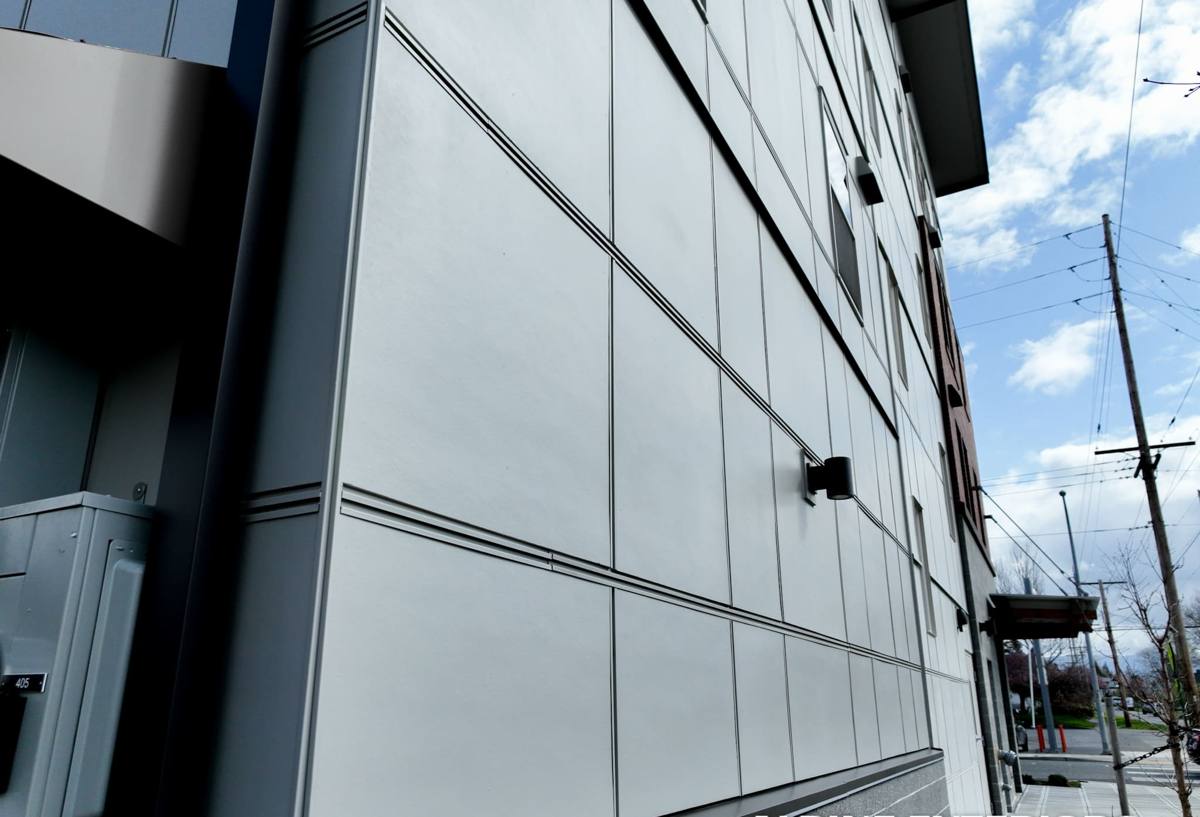
Why Board & Batten Fits Island Homes — With Caveats
The vertical board and batten look works well on Guemes Island's mix of cabin-style and craftsman homes, and it reads as a natural fit for a rural, waterfront setting. The style also has a practical upside in wet climates: vertical lines shed water more directly than some horizontal profiles, and the batten strips cover the seams between boards, reducing the number of exposed joints where water can enter.
The caveat is that board and batten is less forgiving of substrate movement and poor detailing than some other profiles. Every batten strip is a fastening point and a potential water-entry point if it's not flashed and gapped correctly. On an island property exposed to salt air and sustained rain, those details matter more than they would on a sheltered inland lot — which is exactly where a lot of board and batten installs go wrong.
What a Correct Board & Batten Installation Involves
Rain Screen Behind the Panels
A drainage gap — typically furring strips creating a rain screen cavity — between the siding and the weather-resistive barrier lets any moisture that does get past the boards dry out instead of sitting against the wall sheathing. This is not optional on an island lot with heavy shade or water exposure; it's the difference between siding that dries between rain events and siding that stays wet for weeks.
Fastener Selection
In a salt-air environment, fastener corrosion resistance isn't a minor spec — it's one of the first things to fail if it's cut short. Corrosion-resistant, manufacturer-approved fasteners driven at the correct depth and spacing keep the boards secured without splitting the material or creating gaps that widen over time.
Flashing at Every Penetration
Windows, doors, hose bibs, light fixtures, and vents all need proper flashing integrated with the water-resistive barrier before the siding goes on. On board and batten specifically, the vertical joints and batten strips need to be detailed so water is directed out and down, not channeled behind the boards.
Gaps and Clearances
Correct clearance at the bottom of the siding, around trim, and at grade keeps the boards from wicking moisture from the ground or from splashback off decks and walkways — a common issue on island properties with irregular grading near the water.
Material Comparison for a Guemes Island Job
| Material | Salt Air / Moisture Behavior | Moss & Algae Resistance | Long-Term Maintenance |
|---|---|---|---|
| James Hardie Fiber Cement (HZ5) | Non-combustible, engineered for Pacific Northwest moisture exposure | ColorPlus finish resists moss staining better than raw or field-painted surfaces | Periodic washing; factory finish holds color for years |
| Cedar Board & Batten | Natural material, absorbs and releases moisture; performs unevenly with age | Prone to moss and mildew in shaded, damp spots without regular treatment | Recurring staining/sealing; higher upkeep near water |
| Vinyl Board & Batten | Doesn't rot, but can warp or gap at fasteners over time, opening entry points | Sheds surface growth but seams and gaps can trap moisture behind panels | Low upkeep on the surface, but repairs are limited once damaged |
| LP SmartSide / Engineered Wood | Wood-based core is more sensitive to sustained moisture exposure than fiber cement | Requires consistent maintenance of the factory coating to resist moss and staining | Coating and edge maintenance matter more in marine climates |
We install James Hardie exclusively. It's not that the alternatives can't be installed correctly — it's that fiber cement's moisture stability and factory-cured ColorPlus finish give island homes the best long-term margin against the specific conditions Guemes Island throws at siding: salt, sustained dampness, and shade-driven moss.
Our Process for Guemes Island Projects
Working on Guemes Island means building ferry access into the schedule from the start. We plan material deliveries and crew trips around the ferry, stage what we need for multi-day stretches, and sequence the job so we're not making unnecessary extra crossings mid-project. Homeowners on the island have told us in the past that this is where a lot of off-island contractors either quote higher to cover the hassle or simply avoid the work — we've built the logistics into how we bid and schedule, so it isn't a surprise cost or a scheduling headache.
On site, our approach is the same rigor we use everywhere: assess the existing wall assembly and moisture condition, correct any rot or water damage found during removal before anything new goes up, install the rain screen and flashing details described above, and finish with Hardie's factory ColorPlus finish so the color and coating aren't dependent on field painting conditions.
Maintenance in a Salt-Air, Moss-Prone Environment
- Rinse siding periodically to clear salt residue and organic buildup, especially on shaded or tree-covered walls
- Trim back vegetation and tree cover where practical to improve airflow and sun exposure on affected walls
- Check caulking around windows, doors, and penetrations annually — sealant is the first thing to break down in sustained moisture
- Watch for moss or algae at butt joints and batten seams specifically, since that's where trapped moisture shows up first
- Inspect fasteners and trim for early corrosion signs, particularly on walls facing prevailing wind and water
- Keep gutters and downspouts clear so roof runoff isn't adding extra water load onto the siding below
Signs Your Current Siding Needs Attention
- Persistent moss or dark staining that returns shortly after cleaning
- Soft or spongy spots when pressed, especially near the bottom courses or around trim
- Paint or coating that's peeling, chalking, or failing faster than expected for its age
- Visible gaps opening up at batten strips or board seams
- Rust streaking from fasteners or trim hardware
- Musty smell or interior moisture signs on exterior-facing walls
Why Hiring a Crew That Already Works Guemes Island Matters
Board and batten siding done wrong doesn't usually fail in the first year — it fails three, five, or eight years in, after moisture has had time to work into a seam that wasn't flashed correctly or a fastener that started corroding early. That makes experience with the specific conditions on Guemes Island — the salt exposure, the extended damp periods, the shade-driven moss — genuinely worth something. A crew that has priced, scheduled, and installed siding on the island before isn't guessing at ferry logistics or generalizing from inland Burlington or Skagit Valley conditions; they've already accounted for what the island does to a wall assembly over time.
We're a Burlington-based crew, and Guemes Island is part of the area we regularly work — not a special trip we occasionally make. That means the planning, material staging, and installation details reflect what actually holds up on the island, not just what holds up in a more sheltered inland setting.
Get an Estimate for Your Guemes Island Project
If you're planning a board and batten project on Guemes Island — new construction, a full re-side, or replacing failing siding — we're happy to take a look and walk you through what the job involves for your specific home. Reach out for a free, no-pressure estimate using the form below.