 Burlington
 Storm Damage Roof Repair Built for Guemes Island
Guemes Island sits right at the edge of Skagit County, exposed to wind off the water on every side. That exposure is part of what makes the island beautiful, and it's exactly what makes roofs there wear differently than roofs five miles inland in Burlington or Mount Vernon. Salt-laden air, driving horizontal rain during winter storms, and a moss season that can run eight months out of the year all combine to shorten the life of roofing materials and hide damage until it becomes a real problem. A storm damage repair on Guemes Island isn't the same job as a storm repair in a sheltered subdivision, and it shouldn't be treated that way.
This page covers what we actually look at, what a correct repair involves, and how our process works when we're called out to the island after a wind event, a windstorm-driven limb strike, or ongoing wear that finally opens up during a heavy rain.
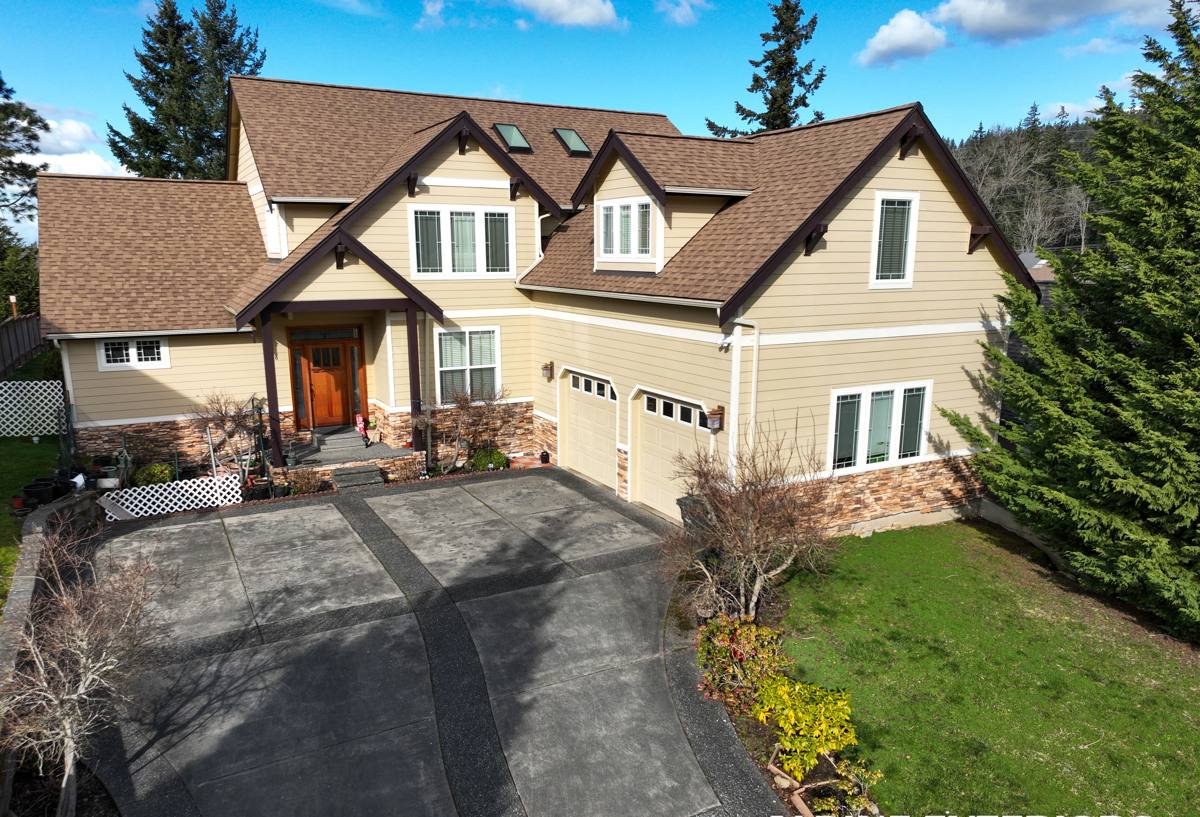
Why Guemes Island Roofs Take a Different Kind of Beating
Salt Air and Metal Fasteners
Airborne salt accelerates corrosion on exposed metal — nail heads, flashing seams, ridge vent screws, and any galvanized hardware that isn't rated for coastal exposure. On the mainland side of Skagit County this is a slower process. On the island, we see fastener corrosion and flashing seam failure show up years earlier than it would on a comparable roof in Burlington proper. When we're repairing storm damage out there, we're not just patching what the wind tore loose — we're checking every fastener and seam nearby for the corrosion that made that section vulnerable in the first place.
Driving Rain and Wind-Driven Water
Wind off the water doesn't just blow shingles loose — it drives rain sideways and up under laps that were never designed to shed water from that angle. This is why storm damage on the island is so often worse than it looks from the ground. A homeowner sees a few missing shingles and assumes that's the extent of it, but wind-driven rain has usually already gotten under the surrounding courses and started wetting the underlayment or decking before the visible damage even happened.
Moss and Extended Wet Season
Shade, marine humidity, and a long wet season give moss a real foothold on north-facing and shaded roof slopes around the island. Moss holds moisture against the roofing material long after a storm has passed, and it works its way under shingle tabs and around fasteners, prying them up over time. A roof that's already carrying a moss load going into a storm is more likely to lose material and more likely to have hidden moisture problems underneath.
What Storm Damage Actually Looks Like
Storm damage isn't always obvious. Some of it is, and some of it takes a trained eye and a walk on the roof (or a close inspection from a ladder when conditions don't allow foot traffic) to find.
- Missing, cracked, or curled shingles or shakes, especially on the windward slope
- Lifted or creased shingle tabs that look intact but have broken the seal strip underneath
- Damaged or displaced ridge cap and hip cap pieces
- Bent, loosened, or torn-back flashing around chimneys, skylights, and roof-to-wall transitions
- Debris punctures or dents from wind-driven branches
- Granule loss showing up in gutters after a storm, a sign of impact or age accelerated by the event
- Soft spots or discoloration on the decking visible from the attic, indicating water has already gotten through
- Gutter and downspout separation from wind load or debris impact
The last two items on that list are why we always recommend an attic check as part of a storm damage inspection, not just a look at the roof surface. Water intrusion from a storm often shows up inside the house before it's obvious from the ground.
What a Correct Repair Involves
Inspection Before Anything Gets Touched
We start by identifying the full extent of the damage, not just the spot that's leaking or visibly missing material. That means checking the surrounding field of the roof, the flashing details nearby, and the attic side if access allows. On a coastal roof, damage rarely stays contained to one small area — wind that tore loose one section of shingles usually stressed the seal strips on adjacent courses too, even if they haven't let go yet.
Matching Materials, Not Just Patching
A repair that uses the wrong shingle profile, the wrong flashing metal, or mismatched fasteners creates a weak point that will fail again, often faster than the original damage did. We match the existing roofing material as closely as possible and use fasteners and flashing rated for coastal, high-moisture exposure — not standard galvanized hardware that will corrode again in a few seasons in this environment.
Underlayment and Decking Check
If water has been getting under the roofing material, the underlayment and decking underneath need to be evaluated, not just covered back up. Wet or soft decking has to be addressed before new shingles go down over it, or the repair will fail from underneath regardless of how well the surface work is done.
Flashing Details Get Extra Attention
Most roof leaks — storm-related or not — trace back to flashing, not the field shingles. Chimney flashing, skylight flashing, and roof-to-wall step flashing are the details most likely to have been compromised by wind and driving rain. We check these every time, even when the visible damage is somewhere else on the roof.
Cleanup and Moss Consideration
If moss contributed to the vulnerability that let storm damage happen, we'll point that out and talk through options — treatment, cleaning, or a longer-term moss management plan — as part of the repair conversation. Repairing the storm damage without addressing an existing moss load just sets the roof up for a repeat problem.
Our Process for Guemes Island Calls
- Contact and scheduling. We ask what happened, when, and what you're seeing from the ground or inside the house, so we arrive prepared for the likely scope.
- On-site inspection. We assess the roof surface, flashing details, gutters, and attic access where possible, and document what we find.
- Straight assessment. We tell you what's actually damaged, what's at risk but not yet failed, and what can reasonably wait. We don't pad scope, and we don't downplay something that needs attention.
- Written estimate. You get a clear breakdown of the work and materials before anything starts.
- Repair. We complete the work with materials suited to coastal exposure, not generic replacements.
- Final check. We walk the repair and the surrounding area again before calling the job done, checking that flashing, seals, and fasteners are solid.
Ferry Scheduling and Island Logistics
Working on Guemes Island means working around the ferry schedule, and we factor that into how we plan repair visits. It's part of why timing communication matters — we try to batch inspection and repair work efficiently so you're not waiting longer than necessary because of logistics on our end. A crew that regularly works the island already has this built into how jobs get scheduled, rather than treating every island call as a special case that adds delay.
Repair vs. Replacement: How We Make That Call
Not every storm-damaged roof needs full replacement, and not every roof that looks fine after a storm actually is. Here's generally how we think through it:
| Factor | Leans Toward Repair | Leans Toward Replacement |
|---|---|---|
| Extent of damage | Isolated to one slope or section | Widespread across multiple slopes |
| Roof age | Roof has years of service life left | Roof is already near end of expected lifespan |
| Decking condition | Decking is dry and solid | Decking shows rot or soft spots in multiple areas |
| Material availability | Matching material is available | Existing material is discontinued or badly weathered elsewhere |
| Repair history | First significant repair needed | Repeated repairs to the same areas over time |
We'll always give you our honest read on which side of this table your roof falls on, along with the reasoning, so you're making the call with real information rather than a sales pitch.
Preventing the Next Storm From Doing the Same Damage
After a repair, there are a few things that genuinely reduce the odds of repeat damage on an island roof exposed to salt air and driving rain:
- Keeping gutters and downspouts clear so wind-driven rain has somewhere to go instead of backing up under roofing material
- Trimming back tree limbs that could strike the roof in the next windstorm
- Addressing moss buildup before it works its way under shingle tabs
- Using coastal-rated fasteners and flashing on any future repair or maintenance work, not standard hardware
- Scheduling a roof check after any major wind event, even if nothing looks obviously wrong from the ground
None of this eliminates storm risk entirely — nothing does, on a site this exposed — but it meaningfully reduces how much damage a given storm does and how often you're dealing with repairs.
Why Local Experience on Guemes Island Matters
A contractor who hasn't worked the island before is guessing at things a Skagit County crew that's actually been out there already knows: how the wind behaves on different sides of the island, which roof details tend to fail first in this exposure, how ferry timing affects scheduling, and what material choices actually hold up long-term in salt air rather than just meeting code on paper. That experience shows up in fewer repeat calls and a repair that's built for the environment it's actually in, not a generic mainland job done on an island roof.
If you've got storm damage on a Guemes Island roof — or you're not sure whether what you're seeing is damage or just wear — we're happy to come take a look. Reach out for a free, no-pressure estimate using the form below.