 Burlington
 Guemes Island Windows Work Harder Than Windows Inland
A window on Guemes Island sits in a different climate than the same window ten miles inland in Burlington. It's not just Skagit County weather anymore — it's marine weather. Salt-laden air off the water, wind-driven rain that hits glass and trim at an angle instead of straight down, and a wet season that runs long enough to grow moss on north-facing siding, trim, and sills before summer ever dries things out. None of that is exotic. It's just relentless, and it shows up first at the weak points of a window installation: the seams, the flashing laps, and the sealant joints that a rushed or inland-style install tends to shortcut.
We're not saying window installation on the island is a different trade. It's the same trade, done with more discipline, because the margin for error is smaller and the consequences of a bad seal show up faster.
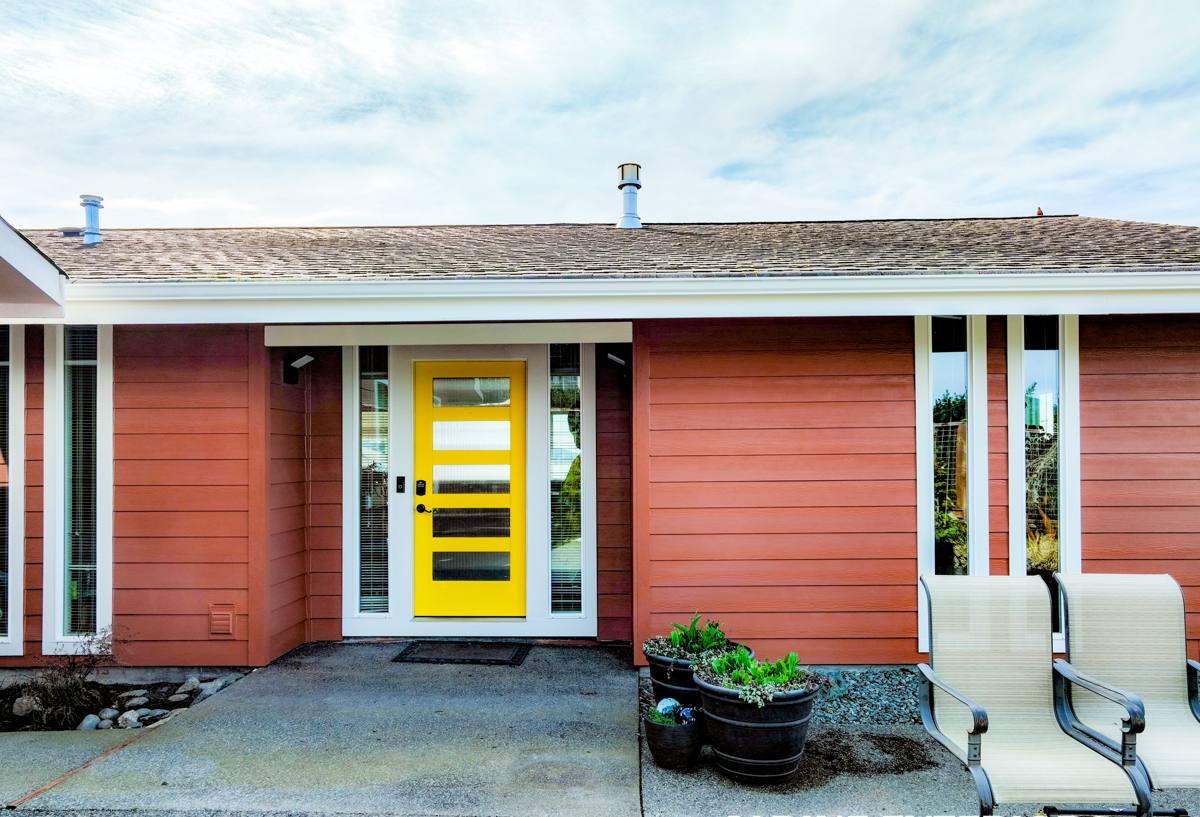
What Salt Air and Driving Rain Actually Do to a Window
Corrosion Where You Can't See It
Salt air accelerates corrosion on anything metal — window hardware, cranks, hinges, screws, and especially the fasteners holding the window flange to the framing. A fastener that would last decades in a dry inland wall can start weeping rust streaks within a few years in a marine environment if it isn't rated for it. Once a fastener corrodes, it loses grip, and a window that's supposed to be sealed tight starts to work loose under wind pressure.
Wind-Driven Rain Finds the Gaps
Rain that comes in sideways off the water doesn't behave like rain falling straight down. It gets pushed up under drip caps, into reveal gaps, and behind trim that would stay dry in a calmer setting. A window installation that relies on caulk alone to keep water out — instead of proper flashing that sheds water by gravity and lapping, with sealant as a backup, not the primary defense — is the kind of installation that looks fine for a year or two and then starts showing water stains at the interior sill.
Moss and Constant Moisture
The long wet season here means anything that traps moisture against wood — old wood window frames especially — stays damp for months at a stretch. That's exactly the environment moss, mildew, and eventually rot need. It's not that moisture rots wood overnight; it's that Guemes Island rarely gives wood a real chance to dry out between rain events, so any weak point in the water management gets exploited over and over, season after season.
Ferry Access Changes How a Window Project Should Be Planned
This is the part of an island project that has nothing to do with the window itself and everything to do with getting it done right. Guemes Island is reached by a short ferry crossing from Anacortes, and that changes project logistics in ways a mainland Burlington job doesn't have to think about:
- Material staging matters. Windows, especially larger or custom sizes, need to be ordered and staged correctly the first time — a forgotten trim piece or the wrong flashing tape means another ferry crossing, not a quick trip back to the shop.
- Ferry schedules set the workday. A crew that's used to island jobs plans around sailing times so a crew isn't standing on the dock waiting instead of on the job.
- Weather windows are tighter. Wind and sea conditions that would be a non-issue on the mainland can affect ferry service. Scheduling window replacement — where the wall is open for a period of time — around a realistic weather forecast matters more here than it does inland.
- Fewer opportunities to run for a missing part. A correct scope, correct measurements, and a correct materials list before the crew ever loads up isn't a nicety on an island job — it's what keeps a one-day window swap from turning into a three-day headache.
A crew that already works Guemes Island regularly has this logistics pattern built into how they quote, order, and schedule. A crew doing its first island job is learning that on your time and your open wall.
Choosing Window Materials for a Marine Environment
Every window material handles salt air, moisture, and UV differently. None of them are ruined by island exposure, but each comes with trade-offs worth knowing before you commit.
| Material | How It Handles Salt Air & Moisture | Maintenance Reality |
|---|---|---|
| Vinyl | Won't rust or corrode; UV-stable formulations hold up well to sun and salt exposure over time | Low — occasional rinse to clear salt film and moss spores off the frame |
| Fiberglass | Very stable dimensionally in temperature swings; resists corrosion and doesn't absorb moisture | Low — durable finish, minimal upkeep, higher upfront cost |
| Wood / Wood-Clad | Attractive but the wood core is vulnerable if the exterior cladding or finish is ever breached by moisture | Higher — finish needs monitoring and refinishing on a schedule, especially exposed elevations |
| Aluminum | Strong but conducts cold and is prone to corrosion and pitting in salt air unless properly coated | Moderate to high — coating integrity needs to be watched over the years |
Our standard for island installs leans toward vinyl and fiberglass options specifically because they remove corrosion and moisture-absorption from the list of things that can go wrong later. That's not a knock on wood-clad windows as a product — they can look great — it's an honest trade-off between appearance and long-term maintenance burden in a marine climate. We'll walk you through what fits your home and your tolerance for upkeep rather than pushing one answer for everyone.
What a Correct Window Installation Actually Involves
The window unit itself is often not where a bad installation fails — it's everything around it. A proper install includes:
- Opening prep and inspection. Checking the rough opening for existing rot, soft framing, or prior water damage before anything new goes in — because covering up an existing problem just hides it.
- Sill pan flashing. A sloped, sealed pan at the bottom of the opening so any water that does get past the window has a built-in path back outside instead of into the wall cavity.
- Proper flashing sequence. Water-resistive barrier and flashing tape lapped correctly — top over bottom, like shingles — so water is always shed downward and outward, never trapped behind a lap running the wrong direction.
- Correct fastening. Corrosion-resistant fasteners set into solid framing, with the window shimmed level, plumb, and square before it's ever fastened permanently.
- Insulation and air-sealing around the frame. Gaps between the window frame and rough opening filled correctly — not overpacked, which can bow the frame, and not skipped, which leaves drafts and condensation points.
- Sealant as backup, not primary defense. Exterior sealant applied at the right joints to back up the flashing work, not to compensate for skipped flashing.
- Interior and exterior trim finished to shed water. Trim details that direct water away from the window rather than holding it against the frame.
Skip or rush any one of these steps and the window itself — however good the product is — has no chance of performing the way it's rated to.
Our Process for a Guemes Island Project
We keep the process straightforward because a project on the island doesn't need extra complexity, it needs extra planning:
- On-site assessment. We look at existing windows, framing condition, and exposure — a window on the windward, water-facing side of a home often needs a different level of attention than one tucked on a sheltered wall.
- Written scope and material list. Sizes, materials, flashing details, and trim all confirmed before ordering, so nothing gets discovered mid-job.
- Materials staged and confirmed complete before the crew and equipment cross on the ferry.
- Installation done to the sequence above — sill pan, flashing, fastening, insulation, sealant, trim — every time, not as an upsell option.
- Walkthrough before we leave the island so any question gets answered in person, not over a phone call after the ferry's already left.
Signs Your Current Windows Are Losing the Fight
Because moisture damage on the island tends to build slowly, a lot of homeowners live with early warning signs for a while before addressing them. Worth checking for:
- Soft or discolored wood at the interior sill or the exterior trim below the window
- Moss or dark streaking on the frame or siding directly around the window, even if the rest of the wall is clean
- Fogging or a persistent haze between panes of a double-pane window — a sign the seal has failed
- A window that's noticeably harder to open, close, or lock than it used to be
- Visible daylight or a draft at the frame edge when the window is closed
- Paint or finish bubbling or peeling on the interior trim near the glass
Any one of these on its own isn't an emergency. Several of them together, or any sign of soft wood, usually means water has already found its way past the original flashing and it's worth having someone look before it spreads into the wall framing.
Cost Factors for Island Window Projects
We won't quote a number here because every home and every opening is different, but the honest cost drivers for a Guemes Island project are:
| Factor | Why It Moves the Price |
|---|---|
| Number and size of windows | Larger units and full-house replacements have more material and labor per opening |
| Existing damage | Rotted framing found once the old window is out adds repair scope beyond a straight swap |
| Material choice | Vinyl, fiberglass, and wood-clad carry different unit costs and long-term maintenance costs |
| Wall exposure | Windward, water-facing walls often warrant more robust flashing detail than sheltered walls |
| Logistics | Ferry scheduling and material staging affect crew time on an island job compared to a mainland job |
| Trim and finish work | Matching existing exterior trim or upgrading it adds scope beyond the window unit itself |
A site visit is really the only honest way to price this kind of work — anything quoted sight unseen is a guess, and on an island job a bad guess costs everyone an extra ferry trip.
Why a Crew That Already Works Guemes Island Matters
None of this is about the window brand. It's about whether the crew installing it understands marine exposure, has the flashing sequence down as a habit rather than an afterthought, and has the logistics of an island job — ferry timing, material staging, weather windows — worked out from experience rather than learning it on your project. We work Skagit County, including the ferry-served island communities off Anacortes, and we plan every island job around the reality that a mistake here costs more time and more trips to fix than the same mistake would inland.
If you're weighing whether your windows need attention, or you're ready to plan a replacement before the wet season sets in again, we're glad to come take a look. Reach out for a free, no-pressure estimate — there's a form right below to get started.