 Burlington
 Siding La Conner Homes Actually Need
La Conner sits close enough to Skagit Bay and the Swinomish Channel that salt-laden air is part of daily life, not an occasional event. Add Skagit County's long wet season — months of driving rain followed by a stubborn moss and mildew stretch through spring — and you have one of the tougher small-scale climates in western Washington for exterior materials. Wood siding checks and rots at seams. Vinyl chalks, warps in temperature swings, and never really sheds the green tinge that shaded, damp walls pick up. Homeowners here need a siding system engineered for moisture cycling and salt exposure, not one that merely tolerates it.
James Hardie fiber cement is what we install for La Conner homes, and it's the only siding product our crew puts on a wall. That's a deliberate standard, not a sales pitch — we'll explain why below, and what a correct installation looks like in this specific area.
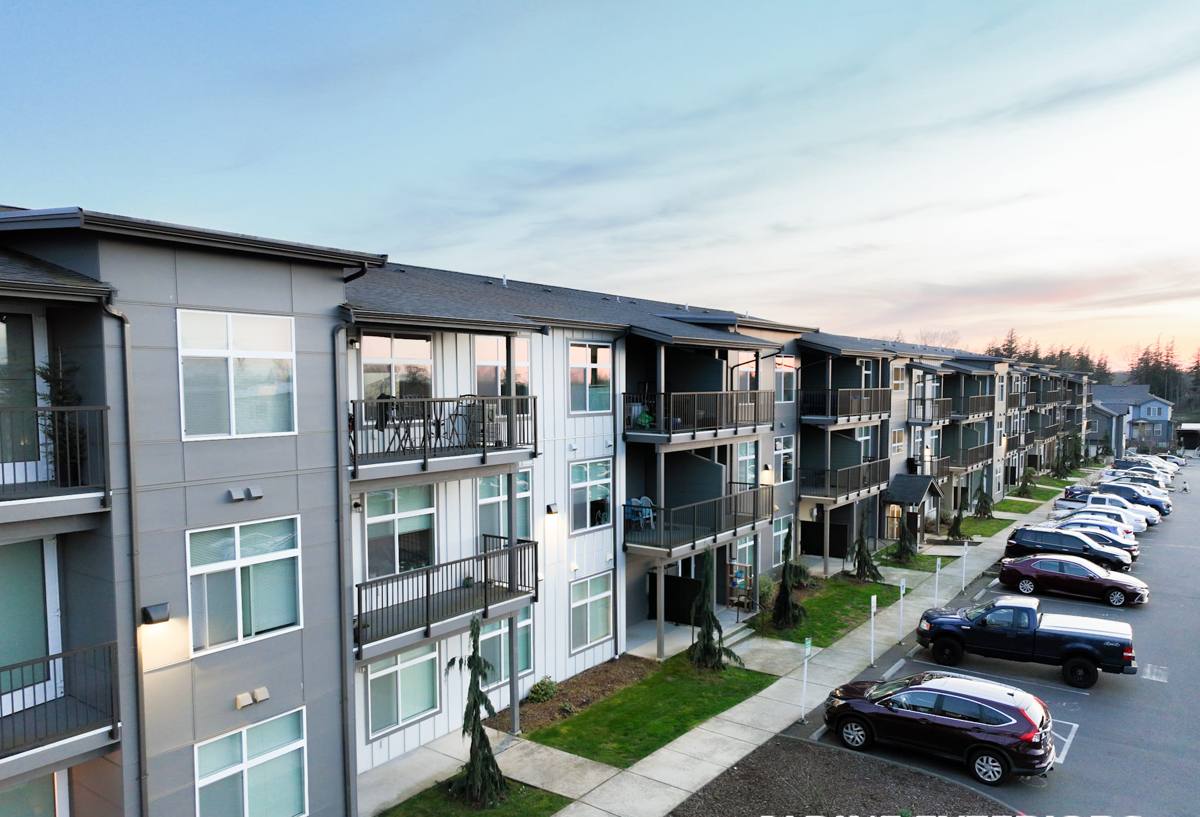
What Salt Air and Moss Actually Do to a Wall
Salt-laden air
Airborne salt from the bay and channel settles on exterior surfaces and accelerates corrosion of fasteners, flashing, and any exposed metal trim. It also draws moisture — salt is hygroscopic, meaning it pulls humidity out of the air and holds it against whatever surface it's sitting on. On wood or engineered wood siding, that's a slow, steady invitation for the face and edges to absorb water they were never meant to hold.
Driving rain
Wind-driven rain off the water pushes moisture sideways into joints, laps, and butt seams that would stay dry in a calmer climate. Any siding product with weak seam performance or poor water-shedding detail will eventually let water track behind the cladding, where it can sit against sheathing and framing unseen.
Moss and mildew season
Shaded north- and west-facing walls in La Conner's tree cover and marine humidity stay damp far longer after a storm than open, sunny walls do. That extended damp window is exactly what moss and mildew need to establish. Porous or absorbent siding faces give spores something to grip; a dense, factory-sealed face gives them much less to work with.
How These Three Stack Up Against Common Siding Choices
| Climate stress | Wood/cedar | Vinyl | James Hardie fiber cement |
|---|---|---|---|
| Salt air corrosion of the material itself | Accelerates rot at fastener points | Doesn't corrode, but can pit/dull over years | Non-organic, doesn't corrode |
| Driving rain / seam moisture | Swells and checks at laps | Panels can flex, opening gaps in wind | Rigid, holds tight laps when installed to spec |
| Moss/mildew growth | Absorbent face feeds growth | Smooth but grime and mildew film build in shaded areas | Dense factory finish resists spore adhesion |
| Long-term fading from marine sun/rain cycling | Needs repainting on a repeating cycle | Chalks and fades, especially darker colors | ColorPlus factory finish, baked-on, warrantied against fade |
Why We Standardized on James Hardie
We used to field questions about LP SmartSide, vinyl, and cedar, and we understand the appeal of each — vinyl's upfront cost, cedar's look, engineered wood's lighter weight. But once you've replaced enough failed siding in a climate like this one, the pattern is obvious: the products that struggle here all share a vulnerability to sustained moisture and organic growth. James Hardie's fiber cement formulation is cement, sand, and cellulose fiber — it doesn't rot, it isn't a food source for mold or moss, and it's non-combustible, which matters increasingly given wildfire smoke seasons across the Pacific Northwest.
Hardie's HZ5 product line is specifically engineered for climates with heavy moisture and freeze-thaw cycling, which fits Skagit County's coastal winters better than the standard HZ10 formulation sold in drier regions. We install the HZ5 line as our default for La Conner and the surrounding bay-adjacent areas.
What a Correct La Conner Installation Involves
Fiber cement is only as good as its installation. A wall covered in the right product but installed wrong will still leak, warp, or fail early — and in a high-moisture area like this one, installation mistakes show up faster than they would somewhere dry.
Water management first
- A properly lapped weather-resistive barrier behind the siding, not just tacked-on house wrap
- Correct flashing at every window, door, and roofline penetration, integrated with the barrier so water sheds outward, never behind it
- Rainscreen or vented gap where wall assembly and budget allow, giving any incidental moisture a path to dry out instead of sitting against the sheathing
- Proper starter strip and clearance off the foundation, deck, or grade so splashback doesn't wick into the bottom course
Fastening and joints
- Corrosion-resistant fasteners driven to Hardie's specified depth — overdriven or underdriven nails are one of the most common failure points we find on re-sides
- Butt joints treated with sealant and, where visible seams matter aesthetically, joint flashing behind them
- Panel and lap siding installed with correct exposure and overlap per Hardie's published fastening schedule for our wind and exposure zone
Finish integrity
- Field-cut edges primed or sealed before installation — a factory-finished ColorPlus board that's cut and left raw at the edge is a moisture entry point waiting to happen
- Caulking only where Hardie's install guide calls for it, with a product rated for the movement and exposure involved
Our Process for La Conner Jobs
Every project runs the same sequence, whether it's a single wall replacement or a full re-side:
- On-site assessment. We look at existing siding condition, sheathing where accessible, current flashing details, and which walls take the worst of the wind-driven rain and shade-driven moss.
- Scope and product selection. We confirm HZ5 lap, panel, or shingle profile and ColorPlus color, and flag any wood rot or sheathing repair the tear-off is likely to expose.
- Tear-off and substrate check. Old siding comes off, and we inspect sheathing and framing before anything new goes up — this is the point where hidden moisture damage from a prior installation shows up.
- Weather barrier and flashing. Barrier, flashing, and rainscreen detailing go in before a single piece of Hardie board is hung.
- Installation to Hardie spec. Fastening schedule, exposure, joint treatment, and edge sealing all follow Hardie's published requirements for our exposure conditions.
- Final walkthrough. We check caulking, trim, and touch-up paint on any field cuts before calling the job done.
Why a Crew That Already Works La Conner Matters
Skagit County's coastal microclimates aren't uniform — a wall two blocks from the water behaves differently than one set back and tree-shaded. A crew that's already worked in La Conner has seen which walls hold moss longest, which lots catch the worst wind-driven rain off the channel, and where flashing details need extra attention because of how a particular street sits relative to the water. That local pattern recognition doesn't replace following Hardie's install spec — it's what tells us where to be most careful applying it.
Being based in Burlington also means we're not driving a crew in from out of the area for warranty callbacks or touch-ups. If something needs a look five years down the road, we're a short drive away, not a scheduling problem.
Maintenance in a Salt Air and Moss Climate
Correctly installed Hardie siding is low-maintenance, not no-maintenance. In La Conner's climate, that means:
- An annual rinse-down of shaded, north-facing walls to interrupt moss and mildew buildup before it stains the finish
- A visual check of caulking at trim and joints every year or two, since UV and salt air will eventually break down even a good sealant
- Keeping vegetation and irrigation spray off the lower courses, since constant dampness at the base is the single biggest driver of premature wear we see on any siding material
- Watching gutters and downspouts for overflow onto siding below — a small gutter problem becomes a concentrated water problem on the wall it drains past
Cost Factors for a La Conner Project
Every job is different, but the main variables that move price are consistent:
| Factor | Why it matters |
|---|---|
| Tear-off complexity | Multiple layers of old siding or extensive rot repair adds labor before new siding even starts |
| Wall exposure | Walls taking direct wind-driven rain often get extra flashing and rainscreen detail |
| Siding profile | Lap, panel, and shingle profiles carry different material and labor costs |
| Trim and detail work | Window and door counts, corner details, and custom trim add time |
| Color and finish | Standard ColorPlus colors versus custom field-painted options affect both cost and warranty terms |
We'll walk your specific home and give you real numbers rather than a generic range — every La Conner lot handles water and shade differently enough that an honest estimate has to be site-specific.
Get a Local Estimate
If your La Conner home's siding is showing moss staining, rot at the seams, or paint that won't hold anymore, we're glad to take a look. The estimate is free, there's no pressure attached to it, and you'll get a straight answer about what your home actually needs — use the form below to get started.