 Burlington
 Siding Built for La Conner's Waterfront Climate
La Conner sits right on the Swinomish Channel, close enough to Skagit Bay that salt-laden air is part of daily life for homes in and around town. That proximity to tidal water changes what a house needs from its siding. Add in the driving rain that comes off Puget Sound through the fall and winter, plus a moss season that can stretch for months under the tree cover and marine humidity common to this part of Skagit County, and you have an exterior envelope that's working harder than it would twenty or thirty miles inland. Siding installation here isn't just a cosmetic upgrade — it's the first line of defense against moisture intrusion, coastal corrosion, and the slow biological growth that eats away at paint and substrate year after year.
We install siding on homes throughout the Burlington and greater Skagit County area, and La Conner's near-water exposure is one of the more demanding micro-climates we work in regularly. That matters because a siding job that holds up fine in a dry inland neighborhood can fail early on a home a few blocks from the channel if it isn't detailed for salt air and sustained moisture.
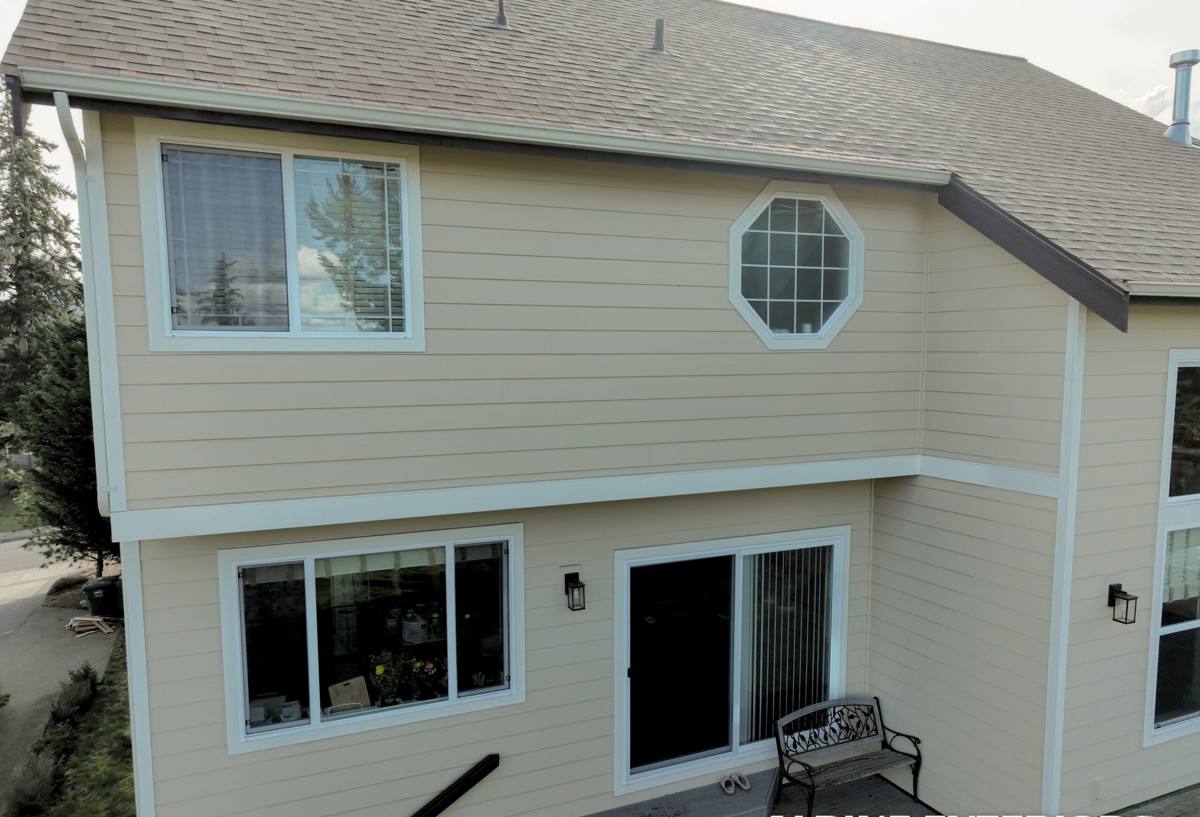
What Salt Air and Moisture Actually Do to Siding
Homeowners often assume "salt air" is mainly a concern for metal fixtures and fasteners — and it is — but it also accelerates the breakdown of paint films, caulking, and any wood-based siding product. Salt is hygroscopic, meaning it pulls moisture out of the air and holds it against the surface it's sitting on. Combined with the driving rain typical of a La Conner winter, that creates near-constant dampness at the siding surface, even between storms.
- Paint failure: Standard field-applied paint breaks down faster under repeated salt-moisture cycling, leading to chalking, peeling, and exposed substrate within a handful of years rather than a decade or more.
- Fastener corrosion: Non-marine-grade fasteners and trim hardware can begin showing rust streaks well before the siding itself shows wear.
- Moss and algae growth: Shaded, moisture-retentive surfaces develop moss colonies that hold water against the siding face, which is a direct path to rot on any wood-based product and a maintenance headache on nearly everything else.
- Substrate swelling: Wood-based and engineered wood siding products absorb moisture at cut edges and fastener penetrations, swelling and softening over repeated wet-dry cycles.
None of this means a home near the channel is doomed to premature siding failure. It means the product choice and the installation details have to account for these conditions from day one, not get patched after the fact.
Why We Install Only James Hardie Fiber Cement
We standardized on James Hardie fiber cement siding for every home we side, and La Conner is exactly the kind of environment that explains why. Fiber cement is non-combustible and dimensionally stable — it doesn't swell, warp, or absorb water the way wood-based products do, which matters enormously in a climate with this much sustained moisture exposure. James Hardie's ColorPlus factory-applied finish is baked on under controlled conditions rather than field-sprayed, giving it substantially better adhesion and UV/moisture resistance than a jobsite paint job, which translates directly into longer intervals between repaints for homeowners near the water.
James Hardie also engineers regional product lines (their HZ5 designation) specifically for climates with higher moisture exposure, which the Pacific Northwest coastal belt qualifies as. That's not a marketing distinction — it affects the formulation and how the product is expected to perform over time in exactly the conditions La Conner sees every winter.
What We Don't Install, and Why
We don't install vinyl, LP SmartSide, primed spruce, cedar, or composite panel products like Cemplank or Allura. Each of those has legitimate uses elsewhere, but for this climate specifically:
- Vinyl can warp under heat and doesn't hold up structurally at cut edges and seams the way fiber cement does; it also isn't repaintable to change a home's color down the road.
- LP SmartSide and other engineered wood products use wood strand substrates that are more moisture-sensitive at cut edges than fiber cement, which is a real concern in a marine-humidity environment with heavy rain.
- Primed spruce and cedar require the most ongoing maintenance of any option — regular repainting or restaining — and are the most vulnerable to moisture-driven rot near the water.
- Other fiber cement brands may perform reasonably well, but we've standardized on one product line so we can guarantee installation consistency, warranty backing, and factory finish quality on every job rather than juggling multiple systems.
What Correct Installation Involves in This Climate
Fiber cement siding is only as good as the installation behind it. In a high-moisture, salt-exposed setting like La Conner, a handful of details separate a job that lasts decades from one that develops problems in five years.
Weather-Resistive Barrier and Drainage Plane
Every job starts with a properly lapped weather-resistive barrier and a drainage gap behind the siding so any moisture that does get past the cladding has somewhere to go instead of sitting against the sheathing. This is non-negotiable on a home this close to the water.
Flashing at Every Penetration
Windows, doors, hose bibs, light fixtures, and any other penetration through the siding plane need proper flashing integrated with the weather barrier — not just caulk. Caulk is a maintenance item; flashing is a permanent water management system. In driving rain off the Sound, wind-driven water finds any gap that flashing was supposed to cover.
Fastener Selection
We use corrosion-resistant fasteners appropriate for coastal exposure. This is one of the cheapest details to get right and one of the most consequential to get wrong — the wrong fastener shows rust streaking down the face of the siding within a couple of seasons.
Clearance and Grade Details
Fiber cement siding needs proper clearance from grade, roof lines, and decks to avoid sustained water contact and to allow moss and debris to be cleared without damaging the siding face. We set these clearances to manufacturer spec, not to whatever looks tightest.
Caulking and Joint Treatment
Butt joints, trim intersections, and penetrations get sealed with a high-quality, paintable, flexible sealant rated for the movement and moisture cycling this climate produces — not a bargain caulk that shrinks and cracks within a year or two.
Our Process for a La Conner Siding Installation
| Step | What Happens |
|---|---|
| Inspection & Assessment | We evaluate existing siding, sheathing, and any moisture or moss damage before quoting the job, so estimates reflect the actual condition of your home rather than a generic assumption. |
| Product & Color Selection | We walk through James Hardie profiles and ColorPlus finish options suited to your home's style and this region's light and moisture conditions. |
| Tear-Off & Substrate Check | Old siding comes off and we inspect sheathing for hidden rot or moisture damage before anything new goes up — this is where problems from a prior installation usually surface. |
| Weather Barrier & Flashing | Weather-resistive barrier, drainage gap, and flashing at every penetration are installed to manufacturer spec before the first siding panel goes up. |
| Siding Installation | James Hardie panels or lap siding installed with corrosion-resistant fasteners, correct clearances, and properly sealed joints. |
| Final Walkthrough | We review the finished work with you and cover basic care specific to a near-water home before we consider the job done. |
Why Hiring a Crew That Already Works This Area Matters
A crew that mostly works drier, inland projects can still install siding competently in a general sense, but they won't necessarily default to the flashing details, fastener grade, or clearance decisions that a channel-front or waterfront-adjacent home actually needs. We work throughout Skagit County, and La Conner's combination of salt exposure, tree-shaded moisture, and driving winter rain is a known quantity to us — we build the job around it rather than treating it as an afterthought. That familiarity shows up in fewer callbacks, less premature paint failure, and a home that isn't fighting moss and rust streaks within the first few years.
Maintenance Expectations After Installation
Even the right product installed correctly benefits from a little seasonal attention in this climate:
- Rinse siding periodically to clear salt residue and organic buildup, especially on shaded north- and west-facing walls.
- Keep gutters clear so overflow doesn't run down the siding face repeatedly through winter storms.
- Trim back vegetation and tree cover that keeps siding damp and shaded, since that's exactly the environment moss needs to establish.
- Have caulking and trim joints checked every few years and resealed if they've started to crack or pull away.
- Watch for any rust streaking at fasteners or trim hardware and have it addressed early rather than letting it stain the finish.
None of this is heavy maintenance — it's the kind of upkeep any coastal-adjacent home benefits from, and it's considerably less demanding than what wood-based or vinyl siding requires in the same conditions.
Cost Factors for La Conner Siding Projects
| Factor | Why It Affects Cost |
|---|---|
| Home size and complexity | Square footage, number of stories, and roofline complexity drive labor and material quantities. |
| Existing siding removal | Tear-off of old wood, vinyl, or damaged siding adds labor and disposal costs versus installing over new construction sheathing. |
| Substrate repair | Rot or moisture damage found during tear-off needs to be repaired before new siding goes up — this is common on older homes near the water. |
| Siding profile and finish | Lap siding, panel siding, and specialty trim profiles carry different material and labor costs; ColorPlus finish options vary by color and texture. |
| Trim and detail work | Homes with more windows, dormers, or architectural trim require more flashing and cutting labor. |
We give straightforward, itemized estimates rather than vague ballpark numbers, so you know exactly what you're paying for before work starts.
Ready to Talk About Your Home?
If you own a home in La Conner and your siding is showing moss buildup, cracked paint, soft spots, or rust streaking, it's worth having it looked at before those issues reach the sheathing underneath. We offer free, no-pressure estimates for La Conner siding installation — use the form below to get started.