 Burlington
 Why La Conner Siding Takes a Different Kind of Beating
La Conner sits close enough to the water that homes here deal with a version of Skagit County weather that inland Burlington neighborhoods don't see quite as hard. Salt-laden air off the water accelerates corrosion on fasteners, flashing, and any metal trim tied into the siding system. Driving rain off the water pushes moisture sideways into laps and seams that would stay dry in a calmer setting. And the long, damp shoulder seasons here grow moss and algae on north- and west-facing walls faster than almost anywhere else in the county. None of that means La Conner homes need exotic materials — it means the repair work has to account for conditions that a generic "patch it and move on" job usually ignores.
We've worked on homes throughout La Conner and the surrounding waterfront-adjacent streets long enough to know which failure patterns show up here first, and which ones matter most when deciding whether a repair is enough or a section needs to come off entirely.
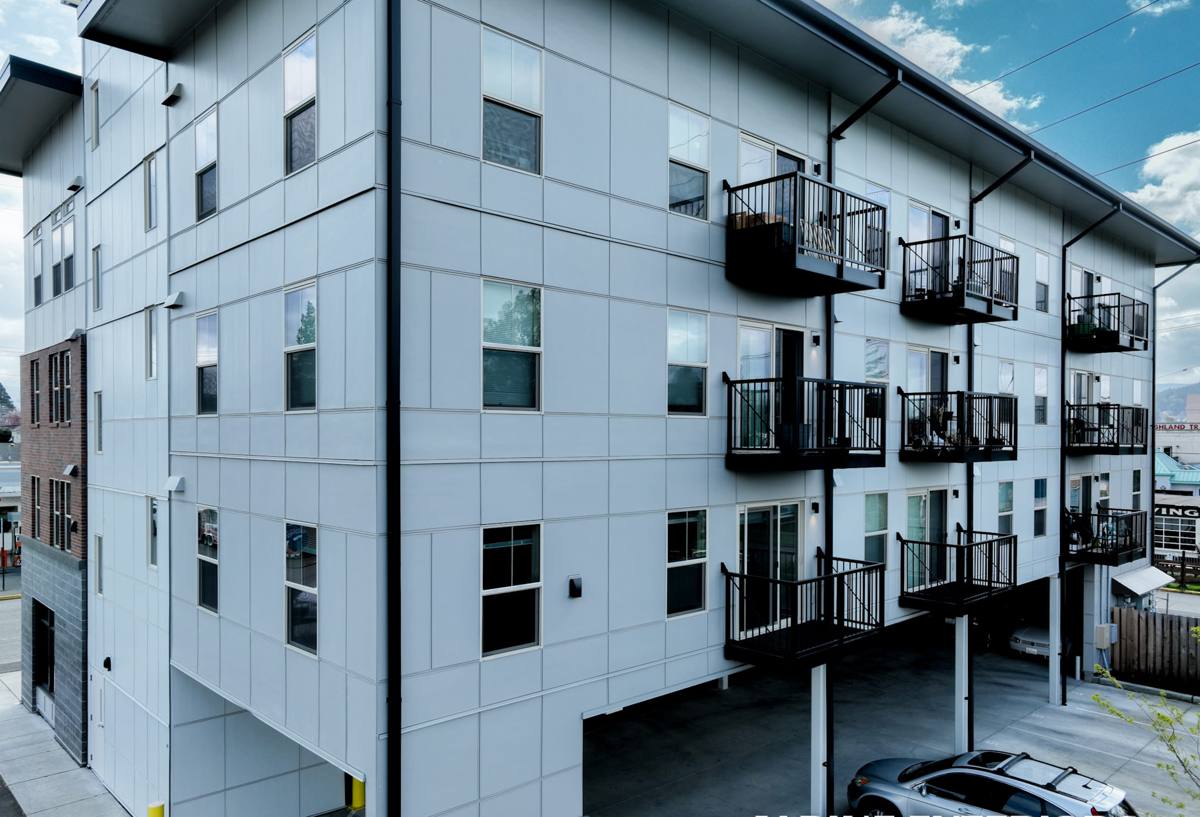
What Actually Fails on La Conner Siding
Moisture-Driven Damage
The most common call we get in this area isn't cosmetic — it's soft, swollen, or delaminating siding near ground level, around window trim, and at inside corners where two walls meet. Wood-based siding products (cedar, primed spruce, and similar) absorb water at cut edges and fastener holes, and once that water gets in, it doesn't leave easily in a climate where the air itself stays damp for months. By the time paint is visibly bubbling or a board feels spongy underfoot, the damage usually extends further than what's visible from the ground.
Salt Air and Fastener Corrosion
Proximity to the water means faster oxidation on exposed nail heads, staples, and any galvanized flashing that wasn't fully protected. Rust streaks bleeding down from nail heads are a reliable sign that the original fasteners weren't rated for a coastal-adjacent environment — a detail that matters a lot more in La Conner than it would twenty miles inland.
Moss, Algae, and Trapped Moisture
Moss doesn't just look bad — it holds water against the siding surface long after a storm has passed, which keeps wood-based products wet far longer than they're designed to tolerate. On fiber cement, moss and algae are a surface-cleaning issue, not a structural one. On wood siding, months of moss cover in the shaded, damp corners common to this area is often what pushes a board from "repairable" to "replace."
Cracking and Impact Damage
Wind-driven debris, ladder contact, and simple age-related brittleness show up as cracks, chips, or popped boards. These are usually the most straightforward repairs — as long as the underlying water-resistive barrier and flashing are still intact underneath.
What a Correct Siding Repair Actually Involves
A repair that's done right isn't just about matching the color and screwing a new board into place. It requires a few steps that get skipped more often than they should:
- Confirm the extent of damage by checking behind and around the visibly bad section — moisture rarely stops exactly where it becomes visible
- Inspect the house wrap or building paper underneath for tears, gaps, or improper overlap once siding is removed
- Check and correct flashing at windows, doors, and penetrations in the repair zone — a damaged board is sometimes a symptom of failed flashing, not the root cause
- Replace fasteners with corrosion-resistant hardware appropriate for a coastal-influenced climate, not whatever was on hand
- Match the replacement material's profile, reveal, and finish so the repair doesn't stand out as an obvious patch
- Reseal and caulk joints with a product rated for the wide temperature and moisture swings this area sees
- Confirm proper clearance from grade, decks, and hardscape so the new section isn't set up to fail the same way again
Skipping the inspection step is the single most common shortcut in this trade — replacing a rotted board without checking what let water in leaves the same problem to resurface within a season or two.
Repair vs. Replacement: How We Make the Call
| Situation | Repair Usually Makes Sense | Replacement Usually Makes Sense |
|---|---|---|
| Damage location | Isolated to one or two boards, single wall section | Spread across multiple walls or recurring in the same areas |
| Underlying barrier | House wrap intact, no widespread water intrusion | Sheathing damage, mold, or multiple wet spots found |
| Siding age | Under 15-20 years, product still performing elsewhere | Original siding near or past its expected service life |
| Material | Fiber cement with isolated impact damage | Wood-based siding with widespread rot from years of moisture exposure |
| Cause | One-time event (impact, isolated flashing failure) | Systemic issue (poor original installation, chronic moisture path) |
Most La Conner homes we look at fall somewhere in the middle — a couple of clearly compromised sections alongside boards that are still sound. In those cases we'll repair what's genuinely fixable and flag what isn't, rather than pushing a full re-side when it isn't warranted.
Why Material Choice Matters Even for a Repair
When a repair calls for new siding material, what goes in matters as much as the workmanship. We install and repair with James Hardie fiber cement exclusively — we don't install LP SmartSide, vinyl, Cemplank, Allura, primed spruce, or cedar, and we won't patch a failing wood or vinyl section with more of the same product if a homeowner is open to a better long-term fix.
That's not a knock on every alternative product across the board — vinyl is inexpensive and low-maintenance in mild climates, and traditional wood siding has real appearance appeal that some homeowners specifically want. But in a climate with this much moisture, salt exposure, and moss pressure, those products carry trade-offs we've seen play out on real houses: wood needs ongoing paint and sealant maintenance to keep water out, vinyl can warp or crack in temperature swings and doesn't stop moisture from reaching what's behind it, and none of them carry the non-combustible, factory-cured finish that James Hardie's ColorPlus system offers. For a repair specifically, matching new material into an existing Hardie wall is straightforward and nearly invisible. Matching into wood or vinyl walls is where we'll give homeowners an honest recommendation, even when it isn't the easy answer.
Our Process for a La Conner Repair Call
- On-site inspection of the damaged area and a check of comparable areas on the same elevation
- Straight answer on repair vs. replacement, with the reasoning explained, not just a number
- Written estimate covering material, labor, and any flashing or barrier corrections needed
- Repair scheduled around weather windows — we don't open up wall sections during an active rain system
- Final check that the repaired section sheds water the way the rest of the wall does
We're not trying to sell every repair call into a full replacement. If a section is genuinely fixable and the rest of the siding has years left in it, we'll say so.
Why It Matters to Hire a Crew That Already Works in La Conner
Siding repair looks similar on paper everywhere, but the failure points shift by microclimate. A crew that mostly works dry inland neighborhoods may not think to check fastener corrosion first, or may underestimate how much moss cover matters on a north-facing wall near the water. We've done repair and installation work across Skagit County long enough to know that La Conner's combination of salt air, driving rain, and extended moss season needs to be factored into the diagnosis from the first walk-around, not treated as an afterthought.
That local pattern-recognition is also why we standardized on one product system instead of stocking five different siding brands. Knowing exactly how James Hardie's HZ5 climate-engineered line behaves in this exact environment lets us give a faster, more confident answer than juggling unfamiliar specs for every product a homeowner might ask about.
What Homeowners Can Check Before Calling
- Soft spots or visible swelling near the bottom courses of siding
- Rust streaking below nail heads or metal trim
- Persistent moss or dark staining on shaded walls
- Cracked, chipped, or missing boards after storms
- Peeling or bubbling paint, especially around seams and corners
- Any soft or discolored trim around windows and doors
None of these require a ladder or any risk to check from the ground — if you spot one or more, it's worth getting a professional look before the next wet season sets in.
Get an Honest Assessment
If you're seeing early signs of trouble on your La Conner home's siding, or you're not sure whether a section needs a repair or something more, we're happy to take a look. The estimate is free, there's no pressure to do more work than the house actually needs, and you'll get a straight answer about what's really going on. Fill out the form below to get started.