 Burlington
 Why La Conner Siding Wears Out Faster Than Inland Homes
La Conner sits right on the Swinomish Channel, which means homes here take on a different kind of weather load than a house ten miles inland in Burlington or Mount Vernon. Salt-laden air off the channel and Puget Sound corrodes fasteners and finishes faster than fresh water exposure alone. Add Skagit County's long, wet fall-through-spring stretch of driving rain, and siding here is under near-constant moisture pressure for six to eight months of the year. Then there's moss and algae season, which in this part of Washington isn't really a season at all — it's close to year-round on north-facing walls and anything shaded by trees or neighboring structures.
Older siding materials weren't engineered for that combination. Wood-based products swell, checks, and eventually rots where moisture sits against the wall. Vinyl chalks and warps under UV and temperature swings and does nothing to stop moss from taking hold in its seams and laps. Even siding that looks fine from the street can be failing quietly behind the surface — caulk joints opening, paint losing adhesion, fastener heads bleeding rust streaks. In a waterfront town like La Conner, those small failures compound quickly because there's less of a dry recovery period between storms than homes get elsewhere in the county.
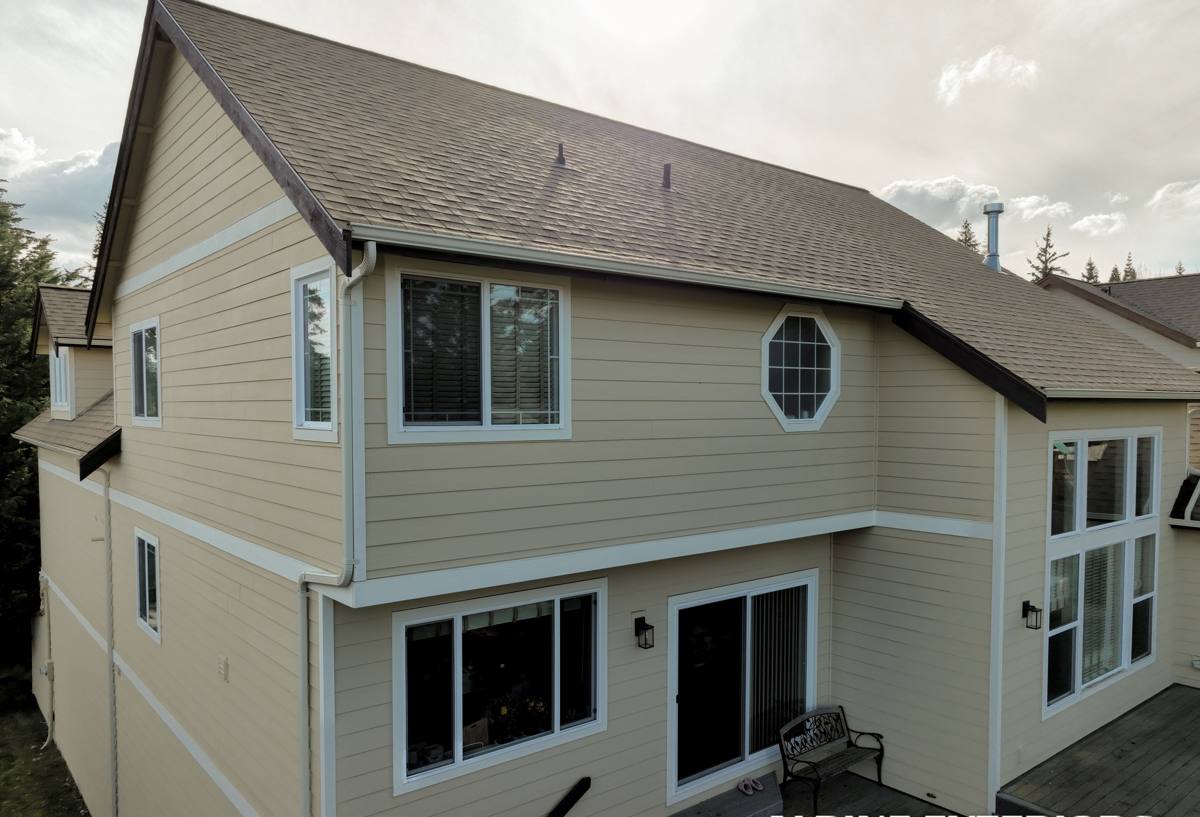
What a Correct Siding Replacement Actually Involves
Replacing siding isn't just stripping old boards and nailing up new ones. Done right, it's a full building-envelope job, and skipping steps is exactly how a brand-new siding job ends up with rot problems five years later. A correct replacement includes:
- Full tear-off of the old siding and trim, not overlay — overlaying traps moisture against the old material and hides sheathing damage
- Inspection of the sheathing underneath for soft spots, rot, or prior water intrusion, with repairs made before anything new goes up
- A new water-resistive barrier (weather-resistant house wrap) installed with proper shingle-lap sequencing so water sheds outward, not inward
- Correct flashing at every window, door, deck ledger, and roof-to-wall intersection — this is where the majority of hidden leaks originate
- Rain-screen or drainage gap detailing where the wall assembly calls for it, so bulk water has somewhere to go besides straight into the sheathing
- Fastening to manufacturer spec — correct fastener type, spacing, and depth, not "close enough"
- Factory-finished siding installed with proper joint treatment, so field-painted seams (a common failure point) are minimized
Every one of those steps matters more in a channel-side climate than it would in a drier part of the state. A missed flashing detail that might take a decade to cause visible damage in eastern Washington can show up in La Conner in a fraction of that time.
Why We Only Install James Hardie Fiber Cement
We install James Hardie fiber cement exclusively, and in a town that sits this close to salt water, the reasoning isn't abstract. Fiber cement doesn't rot, doesn't feed moss the way organic wood fibers do, and doesn't swell or delaminate when it takes on repeated wetting. James Hardie's HZ5 product line is specifically engineered for climates with sustained moisture and freeze-thaw cycling, which describes the Skagit County coast well. The ColorPlus factory finish is baked on under controlled conditions and backed by a separate finish warranty, which matters because field-applied paint is almost always the first thing to fail on lower-grade siding exposed to this kind of weather.
We get asked why we don't offer LP SmartSide, vinyl, or cedar as options. All three have real strengths — LP SmartSide is engineered wood and holds paint well when it's dry; vinyl is inexpensive and low-maintenance in mild climates; cedar has a look some homeowners genuinely prefer. But none of them hold up to salt air and near-constant moisture the way fiber cement does without a materially higher maintenance burden. Cedar needs ongoing sealing and refinishing. Vinyl can crack in cold snaps and gives moss plenty of horizontal ledges to colonize. LP SmartSide's engineered-wood core is more moisture-sensitive at cut edges and gaps than fiber cement, which means installation quality has to be nearly flawless to avoid problems over time — a risk we're not willing to carry on homes exposed to what La Conner sees. We'd rather install one product very well than install several products and hope the weather cooperates.
Material Comparison for a Channel-Side Climate
| Material | Moisture/Salt Air Resistance | Moss/Algae Resistance | Typical Maintenance |
|---|---|---|---|
| James Hardie fiber cement | Non-combustible, engineered for wet climates (HZ5) | Doesn't feed organic growth; surface cleaning as needed | Occasional rinse; factory finish holds long-term |
| Vinyl siding | Can warp/crack with temperature swings | Laps and J-channels collect moss and debris | Low, but limited repair options if damaged |
| Cedar/wood siding | Absorbs moisture; prone to rot at joints | High — organic material feeds growth directly | Regular sealing/staining and inspection |
| LP SmartSide | Good when dry; edge/cut sealing is critical | Moderate; depends on finish maintenance | Field-applied finish needs periodic upkeep |
How We Approach a La Conner Project
Because we already work in and around Burlington, Mount Vernon, and La Conner, we know what channel-facing and shaded lots typically look like underneath the siding before we ever pull the first board. That doesn't mean we skip steps — every project still gets a full inspection — but it means fewer surprises and fewer change orders once the walls are open.
- On-site assessment of existing siding, trim, and any visible moisture or moss patterns, with attention to north- and west-facing walls that take the worst of the weather
- Written scope covering tear-off, sheathing repair allowances, water-resistive barrier, flashing details, and the specific James Hardie product and color selected
- Sheathing inspection once old siding is removed, with any rot or damage addressed before house wrap goes on — no re-siding over a compromised wall
- Installation to manufacturer spec, including correct fastening, flashing, and joint treatment
- Final walk-through covering trim lines, caulk joints, and touch-up before we consider the job done
What Drives Cost on a La Conner Home
Every home is different, but a few factors consistently move the price on jobs in this area more than they would somewhere with milder exposure:
| Cost Factor | Why It Matters Here |
|---|---|
| Sheathing condition | Homes with long-term moisture exposure near the water more often need sheathing repair once old siding comes off |
| Wall complexity | Dormers, bay windows, and multiple roof-to-wall transitions each need individual flashing work |
| Siding profile and color | Lap width, shingle-style panels, and custom ColorPlus colors vary in material cost |
| Trim scope | Full trim replacement alongside siding versus reusing sound existing trim |
| Access and site conditions | Waterfront lots, tight setbacks, and mature landscaping can affect staging and labor time |
We provide a written, itemized estimate before any work starts — there's no reason a homeowner should have to guess what they're paying for.
Signs Your La Conner Home May Need Siding Replacement
- Persistent moss or algae staining that returns within weeks of cleaning
- Soft, spongy sections when you press on the siding, especially near the bottom courses or window sills
- Paint that's peeling, bubbling, or failing to hold on repeated attempts
- Visible gaps, warping, or cupping in individual boards or panels
- Rust streaking from fastener heads
- A musty smell or visible staining on interior walls that back up to exterior siding
- Siding that's original to a home built more than 20-25 years ago, especially wood or older vinyl products
Any one of these on its own might just need a repair. Several of them together, especially on walls facing the channel or shaded by trees, usually mean it's time to talk about full replacement before the underlying structure is affected.
Why Hiring a Crew That Already Works This Area Matters
Siding installation quality depends heavily on details that don't show up in a sales brochure — how flashing gets integrated at a deck ledger, how a rain-screen gap is detailed behind the cladding, how joints are sequenced so water always has a path outward. Those details matter everywhere, but they matter more on a home that sits closer to salt water and gets more sustained rain exposure than most of the state. A crew that regularly works La Conner, Burlington, and the rest of Skagit County has already seen what happens when those details are done wrong on homes just like yours, and builds around it as standard practice rather than an afterthought.
It also means faster, more accurate estimates. We're not guessing at what your wall assembly probably looks like based on national averages — we're basing it on what we consistently find on homes in this specific climate and geography.
After Installation: Keeping Hardie Siding Performing
One of the practical advantages of fiber cement in this climate is how little ongoing work it asks for. A periodic rinse to clear pollen, salt residue, and moss spores keeps the ColorPlus finish looking like new. Caulk joints at trim and penetrations should get a visual check once a year, since caulk is a maintenance item on any siding system and is usually the first thing to need attention, regardless of the cladding above it. Beyond that, there's no re-staining, re-sealing, or repainting cycle to plan around — which, for a home exposed to La Conner's weather for most of the year, is a meaningful difference over the life of the siding.
If you're seeing moss buildup, failing paint, or soft spots on your home's siding, we're happy to take a look and give you a straight answer about what it needs — whether that's a targeted repair or a full replacement. Reach out for a free, no-pressure estimate using the form below.