 Burlington
 Building Decks for Lyman's Corner of Skagit County
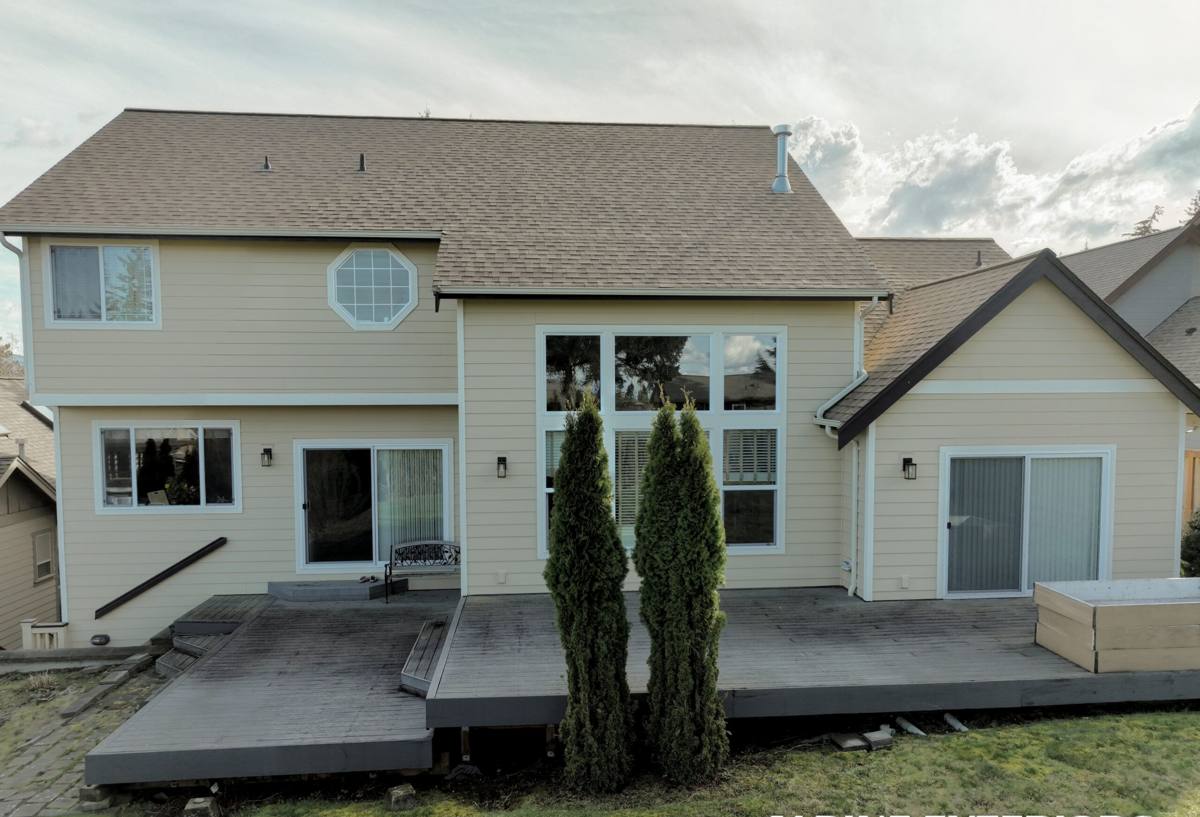
Lyman sits in that stretch of Skagit County where river-valley moisture and the region's marine-influenced weather both show up on the same deck. Homes here deal with long stretches of steady rain, humid air that lingers under tree cover, and a moss season that can run from October through May in a wet year. A deck built without that reality in mind starts showing problems fast: soft spots, slick boards, mildew streaking, fasteners popping loose as wood moves with the seasons. Composite decking, installed correctly for this specific climate, is one of the more reliable answers we install for homeowners in and around Lyman.
This page is about that one job — composite deck installation for Lyman properties — not a general rundown of every decking product on the market. If you're comparing options or just want to understand what a correct installation actually requires here, this is written for you.
What Lyman's Climate Actually Does to a Deck
Driving Rain and Standing Moisture
Skagit County gets a lot of rain, and in the Lyman area it tends to come with wind that drives water sideways under railings, against ledger boards, and into any gap that isn't properly flashed. Over a season, that moisture finds its way into end grain, fastener holes, and any spot where two materials meet without a drainage path. It's not usually one big storm that causes damage — it's water sitting somewhere it shouldn't for months at a time.
The Long Moss Season
Moss and algae need shade, moisture, and time — Lyman's tree cover and rainy stretches provide all three. On a wood deck, moss doesn't just look bad; it holds water against the board surface and accelerates rot underneath. On a poorly ventilated composite deck, moss can still take hold in the surface texture if the boards stay damp and don't get airflow underneath. Site orientation, tree canopy, and how much direct sun a deck gets all factor into how aggressive the moss problem will be.
Humidity and Temperature Swings
The river valley traps humidity longer than more open, breezy parts of the county. Materials that expand and contract with moisture — like untreated or poorly kiln-dried wood — move more here than they would in a drier climate, which loosens fasteners and opens joints over time.
Why Composite Decking Fits This Climate
Composite decking — a blend of wood fiber and plastic, typically capped with a protective polymer shell — doesn't absorb water the way solid wood does, doesn't need annual staining or sealing, and resists the kind of surface rot that shows up on wood decks left in shaded, damp spots. That doesn't mean it's maintenance-free or immune to every problem; it means the failure points shift from the board itself to the structure underneath and the details of the installation. For Lyman specifically, that trade-off makes sense: less time spent fighting moss and mildew on the walking surface, more attention paid up front to making sure water can actually get away from the deck.
Composite isn't automatically the right call for every home. If you want the specific look and feel of real wood and are willing to keep up with sanding, staining, and sealing on a schedule, that's a legitimate choice too. We'll tell you honestly which fits your situation rather than pushing one product because it's what we happen to have on the truck.
What a Correct Composite Deck Installation Involves
The Substructure Comes First
Composite boards are only as good as what's underneath them. Joists need to be spaced correctly for the specific board profile — grooved boards with hidden fasteners often call for tighter joist spacing than solid-edge boards, and manufacturers publish minimums that we follow, not shortcut. In a wet climate like Lyman's, we also look hard at ledger board flashing where the deck meets the house, since that's the single most common point where water gets behind siding and causes hidden rot.
Ventilation Underneath
A composite deck built low to the ground or over a slab with no airflow underneath will hold moisture longer, which encourages mildew and can void some manufacturer warranties. Where clearance allows, we build in gaps and venting so air moves under the deck and dries it out between rain events — important in a valley climate where things don't dry out as fast as they would somewhere breezier.
Fasteners and Hardware
We use fasteners and hidden clip systems rated for exterior, coastal-influenced climates — stainless or coated hardware that won't corrode and streak the boards. Cheap fasteners are one of the most common causes of premature deck failure we see, and it's not a place to cut cost.
Flashing and Water Management
Every point where the deck meets the house, a post meets a footing, or a board meets a rim joist is a place water wants to collect. Proper flashing tape, drip edges, and post base standoffs (keeping posts off standing water) matter more here than in a drier region because Lyman gives water more chances, over more months, to find a way in.
Composite, Wood, and PVC — An Honest Comparison
| Factor | Composite Decking | Pressure-Treated Wood | PVC/Vinyl Decking |
|---|---|---|---|
| Moss/mildew resistance on surface | Good, especially capped boards | Poor without regular sealing | Very good |
| Annual maintenance | Occasional wash | Sanding, staining, sealing | Occasional wash |
| Upfront material cost | Moderate to higher | Lowest | Highest |
| Look and feel | Wood-like, consistent | Natural wood grain | Uniform, plastic feel |
| Sensitivity to poor installation | Moderate | Forgiving | High — expansion/contraction issues if done wrong |
| Typical warranty structure | 25–50 years, prorated | Limited, often on the lumber only | Long, varies by brand |
PVC decking can be a strong option too, but it's more sensitive to correct installation because it expands and contracts more with temperature than composite. We install it when it's the right fit, but we're upfront that it demands more precision, especially around fastening and gapping.
Cost Factors for a Lyman Composite Deck
| Factor | Why It Moves the Price |
|---|---|
| Deck size and shape | Square footage plus complexity of angles, curves, or multiple levels |
| Board tier | Entry-level capped composite vs. premium multi-tone boards |
| Substructure condition | New footings and framing cost more than building on a sound existing structure |
| Railing system | Composite, metal cable, or glass rail options vary widely in cost |
| Site access and grading | Sloped lots or tight access near the house add labor time |
| Ventilation and drainage work | Under-deck drainage systems or added venting add material and labor |
We don't quote a number until we've actually looked at your site — a flat "per square foot" price ignores substructure condition and access, which are often the bigger cost drivers on Lyman properties given the terrain and tree cover many lots have.
Our Process, Start to Finish
- On-site assessment — we look at existing structure (if any), drainage patterns, sun/shade exposure, and how water currently moves around the area.
- Honest product conversation — we walk through composite board tiers and railing options against your budget and how the space will actually be used.
- Written estimate — clear scope, materials, and price range before any work starts.
- Structural work — footings, framing, ledger flashing, and joist layout built to the board manufacturer's specs.
- Decking and fastening — boards installed with correct gapping for expansion, proper fastener pattern, and attention to ventilation underneath.
- Railings, stairs, and trim — finish work completed and checked for level, secure attachment, and code compliance.
- Final walkthrough — we go over care basics with you before we consider the job done.
Living With a Composite Deck in Moss Season
- Rinse the deck surface a few times a year, more often under heavy tree cover, to keep organic buildup from settling into the board texture.
- Keep gutters and downspouts near the deck clear so runoff isn't dumping directly onto or under the deck structure.
- Sweep leaves and debris off the surface and out of any gaps between boards regularly through fall.
- Trim back overhanging branches where practical to cut down on shade and moisture that feed moss growth.
- Check the underside occasionally for debris buildup that can block the ventilation gaps we build in.
- Address any loose railing or fastener issues early — small movement problems get worse, not better, over a wet winter.
Why Hiring a Crew That Already Works in Lyman Matters
A lot of deck problems we get called to fix started with a crew that built the deck the same way they would in a drier climate, or that skipped ventilation and flashing details because "it usually works fine." In Lyman, those shortcuts show up faster because the climate gives moisture more time and more opportunity to cause damage. Working across Burlington and the surrounding Skagit County communities day to day means we've already seen how the local rain patterns, humidity, and moss pressure play out on real decks, not just in a manufacturer's install guide written for a national audience.
That local pattern recognition is what lets us make small but meaningful calls — where to add extra ventilation, which flashing details deserve extra attention, how to orient a deck relative to tree cover — that a crew unfamiliar with this specific stretch of the county might not think to flag.
Getting Started
If you're weighing a new composite deck or replacing a tired one on your Lyman property, we're happy to come take a look, talk through honest options, and put together a clear, no-pressure estimate. There's a form below to get that started whenever you're ready.