 Burlington
 Lyman, Washington: A Small Community With Tough Window Conditions
Lyman sits in the Skagit River valley, tucked between Sedro-Woolley and Hamilton, in the shadow of the Cascade foothills. It's a quieter, more wooded stretch of Skagit County than the towns closer to the water, but that doesn't mean the homes here get an easy ride from the weather. The valley traps moisture. Marine air pushes up from Puget Sound and the Skagit delta through the fall and winter, mixing with cooler mountain air and dumping rain for weeks at a stretch. Add heavy tree cover along the river and the surrounding hillsides, and you get near-constant shade on north- and east-facing walls — exactly the conditions that grow moss, keep wood damp, and shorten the life of anything with a seal, a gasket, or exposed wood trim.
Windows take more of this abuse than most homeowners realize. A window isn't just glass in a frame — it's a system of seals, flashing, and drainage paths that either shed water correctly or slowly let it in. In a climate like Lyman's, where driving rain can come sideways for days and humidity rarely drops long enough for things to fully dry out, a poorly installed or aging window doesn't just look tired. It starts costing you in heat loss, fogged glass, soft framing, and eventually interior damage you can't see until it's expensive.
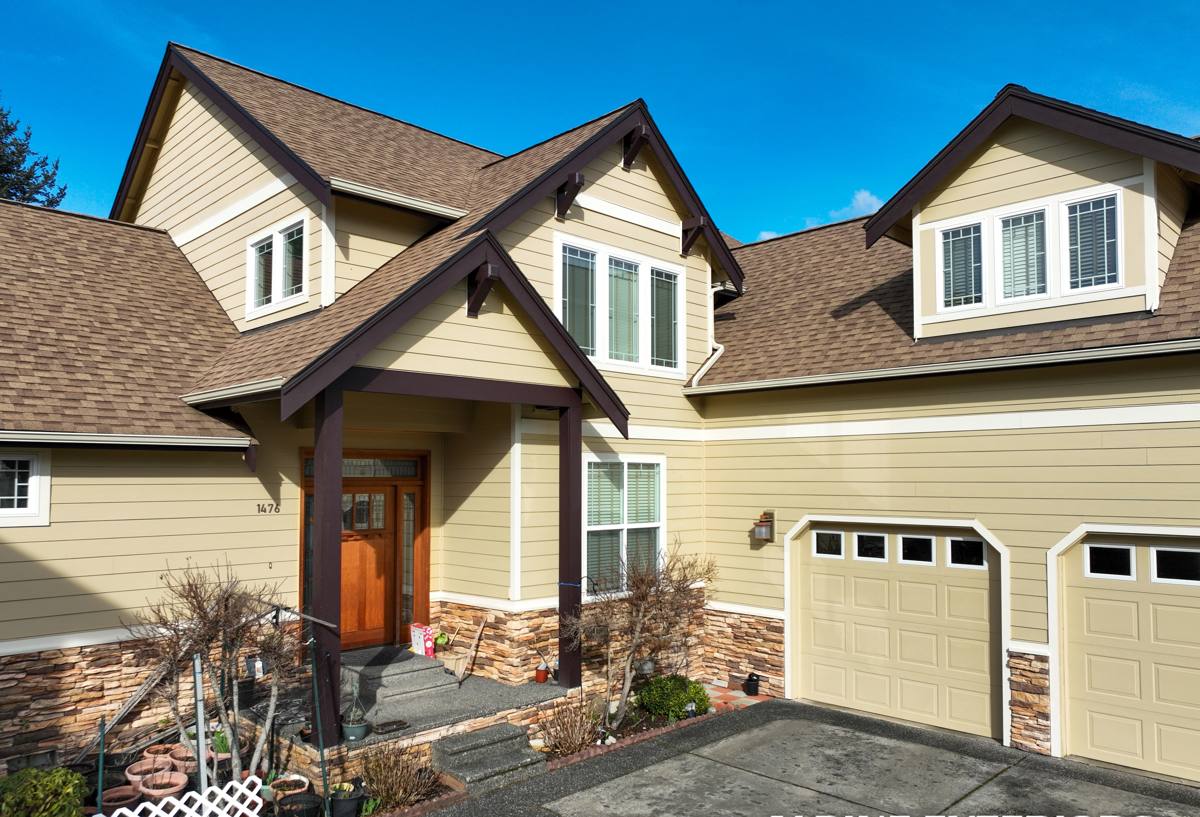
What "Custom" Actually Means for Windows in an Older or Non-Standard Home
A lot of homes in and around Lyman weren't built to modern stock window sizes. Farmhouses, older ranch-style homes, additions built over the decades, and cabins converted to full-time residences all tend to have openings that don't match anything on a shelf. "Custom windows" isn't a marketing term here — it's a practical necessity. It means:
- Field-measuring each opening individually rather than assuming a standard size
- Building or ordering units to fit true rough openings, including out-of-square framing common in older construction
- Matching sightlines and grille patterns across a home when only some windows are being replaced
- Accommodating deeper or shallower wall assemblies than a typical new-construction wall
- Planning flashing and trim details around existing siding, trim board, or masonry that won't be touched
Custom doesn't have to mean expensive or exotic. Most of the time it simply means the window is made to fit the house instead of the house being forced to fit a standard window — and that fit is what determines whether the installation actually performs in weather like Skagit County sees for most of the year.
Signs Your Current Windows Are Losing the Fight
Before recommending replacement, we look for real evidence that a window has failed — not just cosmetic wear. In this climate, these are the signs that matter:
- Fogging or a visible haze between panes on double-pane windows (a broken seal, not a cleaning issue)
- Soft, spongy, or darkened wood at the sill or lower corners of the frame
- Visible moss or persistent green growth on the frame, sill, or nearby trim
- Drafts you can feel at the frame edge, especially during wind-driven rain
- Paint that bubbles or peels specifically around the window rather than the wall in general
- Difficulty opening or latching — often a sign the frame has swelled or warped from moisture
- Interior condensation on the glass or frame during cold, wet stretches
Any one of these can be minor. Two or three together, especially on the same window, usually means water has been getting past the seal or flashing for a while and the frame is absorbing it.
Materials and Glass: What Actually Holds Up Here
We steer homeowners toward materials based on how they behave in sustained moisture and shaded, damp conditions — not on which looks best in a showroom. Every material has trade-offs, and being upfront about them is part of doing the job honestly.
| Material | Moisture Performance | Maintenance | Best Fit |
|---|---|---|---|
| Vinyl | Excellent — won't rot, doesn't need painting, handles constant damp well | Low — occasional cleaning | Most homes; best value for full replacements |
| Fiberglass | Excellent — very stable in temperature and moisture swings | Low | Larger openings, homes wanting a more rigid, low-expansion frame |
| Wood-clad | Good on the exterior face; interior wood still needs protection from condensation | Higher — cladding seams and interior finish need attention over time | Homes prioritizing an interior wood look, with realistic upkeep expectations |
| Bare wood | Poor without diligent upkeep — end grain and joints absorb water | High — regular repainting and sealing | Historic restoration where matching original material is the priority |
For glass, a dual-pane unit with a low-E coating and an argon or krypton gas fill is the standard we build around. In a valley that stays shaded and damp much of the year, the low-E coating does double duty — it cuts heat loss in winter and reduces the interior condensation that shows up on cold glass when warm, moist indoor air meets a cold pane. We don't push triple-pane as a default; it adds cost and weight that isn't always justified unless a home has unusually high heat-loss or noise concerns.
Why We're Selective About What We Install
We won't install every product on the market, and that's a deliberate standard, not a sales pitch. Some window lines use thinner vinyl profiles, weaker corner welds, or drainage designs that work fine in a dry climate but struggle when a frame is wet more often than it's dry. We'd rather install fewer options well than offer everything and let a homeowner discover the weak points after a wet winter.
How We Approach an Installation Correctly
- On-site assessment — we check the existing frame, sill condition, and any water staining or soft wood before quoting anything
- Precise field measurement — every opening is measured individually; nothing is assumed from a set of "standard" sizes
- Removal and inspection — once the old window is out, we check the rough opening and sheathing for hidden rot or moisture damage before installing anything new
- Flashing and weather barrier work — proper sill pan flashing and integration with the existing weather-resistive barrier, so water is directed out and down, not into the wall cavity
- Setting and shimming — the window is leveled, plumbed, and squared, then shimmed and fastened per the manufacturer's specification
- Sealing — backer rod and sealant at the right joints, not just a bead of caulk around the outside
- Interior and exterior trim — finished to match the surrounding house, with attention to any custom sightlines already discussed
- Final check — operation, seal, and drainage confirmed before we call the job done
That flashing and drainage step is where a lot of window failures actually start, and it's also the step that's invisible once the trim goes back on. It's not glamorous work, but in a climate that gives a window very little time to dry out between storms, it's the difference between a window that lasts and one that quietly rots the wall around it.
What Drives Cost on a Custom Window Job
| Factor | Why It Matters |
|---|---|
| Number of openings | Per-window cost drops somewhat with volume, but each opening is still measured and installed individually |
| Non-standard sizes or shapes | Custom-built units cost more than off-the-shelf sizes, especially for arched, angled, or oversized openings |
| Frame material | Vinyl is typically the most budget-friendly; fiberglass and wood-clad cost more upfront |
| Existing damage | Rotted sheathing or framing found during removal adds repair work before a new window can go in |
| Access and site conditions | Second-story, tight clearance, or difficult site access can add labor time |
| Trim and finish work | Matching existing exterior trim or interior casing adds material and labor beyond the window unit itself |
We give a range up front and a firm number after the on-site walk-through, because guessing at cost before seeing the actual openings and their condition does homeowners a disservice.
Living With Windows in a Wet, Shaded Climate
Even a well-installed window benefits from a little seasonal attention here. Keep weep holes at the sill clear of debris and moss so water can drain out as designed. Wipe down frames and tracks after long wet stretches if you notice standing water or buildup. Check exterior caulking once a year — sun exposure and freeze-thaw cycles in the valley can open small gaps that let water behind the trim. None of this is heavy maintenance, but skipping it in a climate this consistently damp lets small issues become frame issues.
Why a Crew That Already Works This Area Matters
Lyman isn't a big town, and it doesn't get the same attention from larger regional contractors that Mount Vernon or Bellingham does. A crew that regularly works Skagit County — and specifically the Burlington-to-Sedro-Woolley-to-Lyman corridor — knows what these homes are dealing with without needing it explained: the shade patterns along the river, how long moss takes to establish on a north wall here, and which older homes in this area tend to have non-standard openings from additions or renovations over the years. That local familiarity shortens the guesswork on measuring, flashing, and material selection, and it means someone is genuinely local if a warranty question or follow-up comes up down the road — not a call center for a company based somewhere else.
If you're weighing whether your windows need attention or you already know it's time, we're happy to come take a look. A free, no-pressure estimate gets you a straight answer on condition, options, and real cost — no obligation, just use the form below to get started.