 Burlington
 Siding Built for How Lyman Actually Weathers
Lyman sits up the Skagit River corridor from Burlington, tucked in under heavy tree cover with the kind of shaded, damp microclimate that's common through this stretch of Skagit County. Homes here don't get the same steady sun exposure that dries out siding in more open parts of the valley. Add in marine-influenced air pushing inland off the Salish Sea, and you get a combination of moisture, shade, and salt-tinged humidity that is genuinely harder on exterior cladding than most homeowners realize until they're dealing with the results.
We work out of Burlington and cover Lyman regularly, which means we're not guessing at what this climate does to a house over ten or twenty years — we're looking at it on every job. This page walks through what that means for a siding installation done right, not just installed fast.
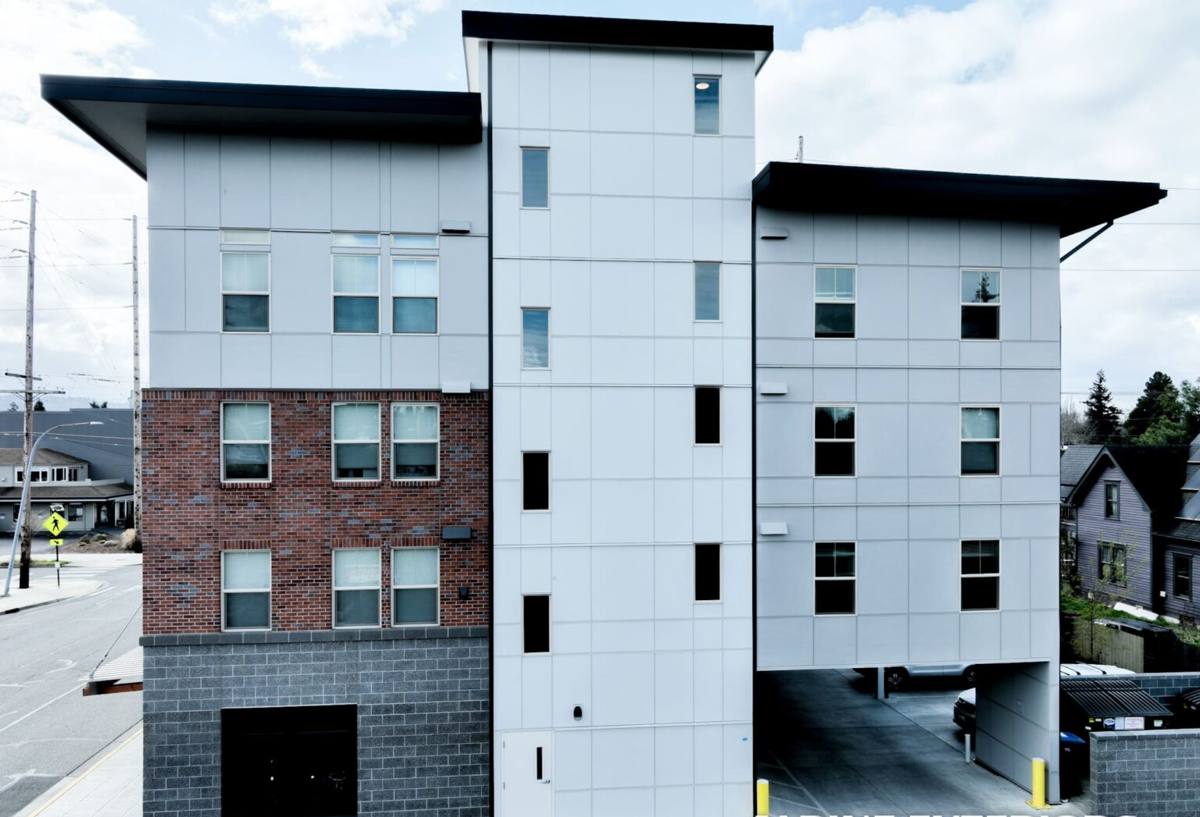
What This Climate Does to Siding Over Time
Moss and Algae on Shaded Walls
Tree-covered lots keep siding damp longer after every rain, and damp, shaded surfaces are exactly where moss and algae take hold. On wood-based or cellulose-based siding products, that growth isn't just cosmetic — it holds moisture against the surface and can accelerate rot underneath. On siding that isn't organic to begin with, moss is a surface problem you can wash off rather than a structural one.
Driving Rain and Wind-Loaded Moisture
Rain in Skagit County doesn't always fall straight down. Storms moving up the valley push moisture sideways into wall assemblies, which is exactly the scenario that exposes weak seams, under-caulked joints, and skipped flashing. A siding job that looks fine in dry weather can fail specifically in driving rain if it wasn't detailed correctly at the laps, corners, and penetrations.
Freeze-Thaw and Temperature Swings
Western Washington doesn't get brutal winters, but Skagit County does see real freeze-thaw cycling, especially on north-facing and shaded walls that stay cold and wet longer. Materials that absorb water and then freeze are prone to cracking, swelling, or delaminating over repeated cycles. That's a slow-motion failure — it doesn't show up in year one, it shows up in year eight or ten.
Why We Only Install James Hardie Fiber Cement Here
We standardized on James Hardie fiber cement and don't install vinyl, LP SmartSide, Cemplank, Allura, primed spruce, or cedar. That's not a marketing position — it's a decision built around exactly the conditions described above.
- Non-combustible material that doesn't feed mold or insect activity the way wood-based products can.
- HZ5/HZ10 climate-engineered formulations — Hardie builds its plank and panel products differently depending on regional climate zone, and Western Washington's marine, wet-winter conditions call for a formulation matched to that reality rather than a one-size-fits-all product.
- ColorPlus factory finish that's baked on under controlled conditions, so color and moisture protection are consistent from board to board — not dependent on field-applied primer and paint holding up under this rain.
- A strong, transferable warranty backed by a company that engineers specifically for regional performance, not a generic national spec.
We're not going to tell you every other product is junk — vinyl is cheap and low-maintenance in the right setting, and cedar has a look some homeowners genuinely want. But for a shaded, wet, moss-prone property in this part of Skagit County, we've made the call that fiber cement engineered for this climate is what we're willing to put our name on.
What a Correct Siding Installation Actually Involves
Tear-Off and What's Underneath
Before any new siding goes up, the old siding comes off and the sheathing gets inspected. This is the step that gets skipped on cut-rate jobs, and it's the one that matters most in a wet climate — if there's hidden water damage or rot behind the old siding, covering it up with new material just hides the problem for a few more years.
Weather-Resistive Barrier and Flashing
A correctly installed weather-resistive barrier, with properly lapped and taped seams, is what actually keeps bulk water out of the wall assembly — the siding itself is the second line of defense, not the first. Flashing at windows, doors, roof lines, and any wall penetration has to be installed so water sheds outward, not into the wall. This is where driving rain finds mistakes.
Fastening, Gaps, and Caulking to Spec
Hardie's installation instructions specify fastener type, placement, and spacing, along with clearances from grade, roof lines, and adjoining surfaces. Panel and plank gaps need proper expansion clearance and the right sealant at joints — installed too tight or caulked wrong, and you get cracking or trapped moisture instead of the clean, long-lasting result the product is capable of.
Trim, Corners, and Finish Details
Corner boards, trim, and transitions are where water intrusion most often starts if they're rushed. Getting these details right the first time is far cheaper than the water damage repair that follows years of a small gap or misaligned trim piece left uncorrected.
Our Process for a Lyman-Area Siding Project
- On-site assessment — we look at sun exposure, tree cover, drainage, and the condition of the existing siding and sheathing before quoting anything.
- Clear scope and product selection — we walk through Hardie plank, panel, or shingle options and what fits the house and the site.
- Tear-off and inspection — old siding comes off, sheathing gets checked, and any repair needs get flagged before we move forward.
- Weather barrier, flashing, and installation to spec — done in the sequence and detail level described above, not shortcut for speed.
- Final walkthrough and cleanup — we go over the finished work with the homeowner and leave the site clean.
Because we already work this area regularly, we're familiar with the permitting expectations for unincorporated Skagit County properties versus work inside Burlington city limits, and we're not learning the local building department's process on your job.
Cost Factors for a Lyman Siding Installation
Every house is different, but the variables that move the price of a Hardie installation are consistent. This is meant to help you understand what you're pricing, not to promise a number sight unseen.
| Factor | Why It Matters | Typical Effect on Cost |
|---|---|---|
| Tear-off vs. new construction | Removing and disposing of old siding, plus repairing any hidden damage, adds labor | Increases cost over new-build install |
| Siding profile (lap, panel, shingle) | Shingle and detailed profiles take more time per square foot than lap siding | Moderate to significant increase |
| Home size and wall complexity | More corners, gables, and dormers mean more cutting, trim, and flashing detail | Increases labor hours |
| Site access | Steep lots, tree-crowded yards, or tight setbacks slow staging and scaffolding | Can add labor time |
| Trim and finish package | Factory-finished trim and detailed corner work versus basic trim | Moderate increase |
Why a Crew That Already Works This Area Matters
Siding installed to spec in a dry, sunny climate can get away with small shortcuts that simply don't hold up on a shaded, moisture-heavy Skagit County property. A crew that works Lyman and Burlington regularly has already seen where those shortcuts fail — the north wall that never fully dries, the corner where moss keeps coming back, the flashing detail that has to be right because the rain here doesn't come straight down. That's not something you can substitute with a national installer passing through on a one-off job.
There's also the practical side: knowing which Skagit County permitting requirements apply, understanding realistic project timing around this region's wet season, and being reachable afterward if you have a warranty question — all of which are easier for a local crew than an out-of-area one.
Homeowner Checklist: Keeping New Siding Performing Long-Term
- Rinse siding annually, especially on shaded or north-facing walls, to keep moss and algae from establishing.
- Keep tree branches and shrubs trimmed back from siding to improve airflow and sun exposure.
- Check caulking at trim, window, and door joints yearly and have gaps resealed before wet season.
- Watch gutters and downspouts — overflow running down a wall is one of the most common causes of localized siding and trim damage.
- Have any impact damage or cracked boards repaired promptly rather than waiting, since small gaps are how water gets behind the assembly.
If you're weighing a siding replacement on a Lyman-area home, we're happy to come take a look and walk you through what your specific property needs — no pressure, no obligation. Use the form below to request a free estimate.