 Burlington
 Mount Vernon's Climate Is Hard on Roofs — Here's Why
Homes in Mount Vernon sit in a stretch of Skagit County that gets the worst of both worlds: coastal-influenced salt air moving in off Puget Sound and Padilla Bay, and heavy, sustained rainfall for much of the year. Add in the shade from mature trees along many older streets and the long stretches of overcast, damp weather, and you have ideal conditions for moss, algae, and slow moisture damage. A roof that would hold up fine in a drier inland climate often shows problems years earlier here.
Salt Air and Coastal Moisture
Salt-laden air corrodes exposed metal faster than dry inland air does. Nails, flashing, vents, and fasteners that aren't rated for coastal exposure can start rusting years before the shingles themselves wear out. Once flashing corrodes or loosens, water finds its way underneath it, and that's when small leaks turn into decking damage you can't see from the ground.
Moss, Algae, and a Long Wet Season
Skagit County's moss season isn't a few weeks — it's most of the year. Moss holds moisture against the shingle surface, works its way under tabs and shingle edges, and lifts material as it grows. Algae staining is mostly cosmetic, but moss is a structural problem in slow motion. On roofs with any shade or north-facing slopes, moss growth is one of the clearest signs a roof is aging faster than it should.
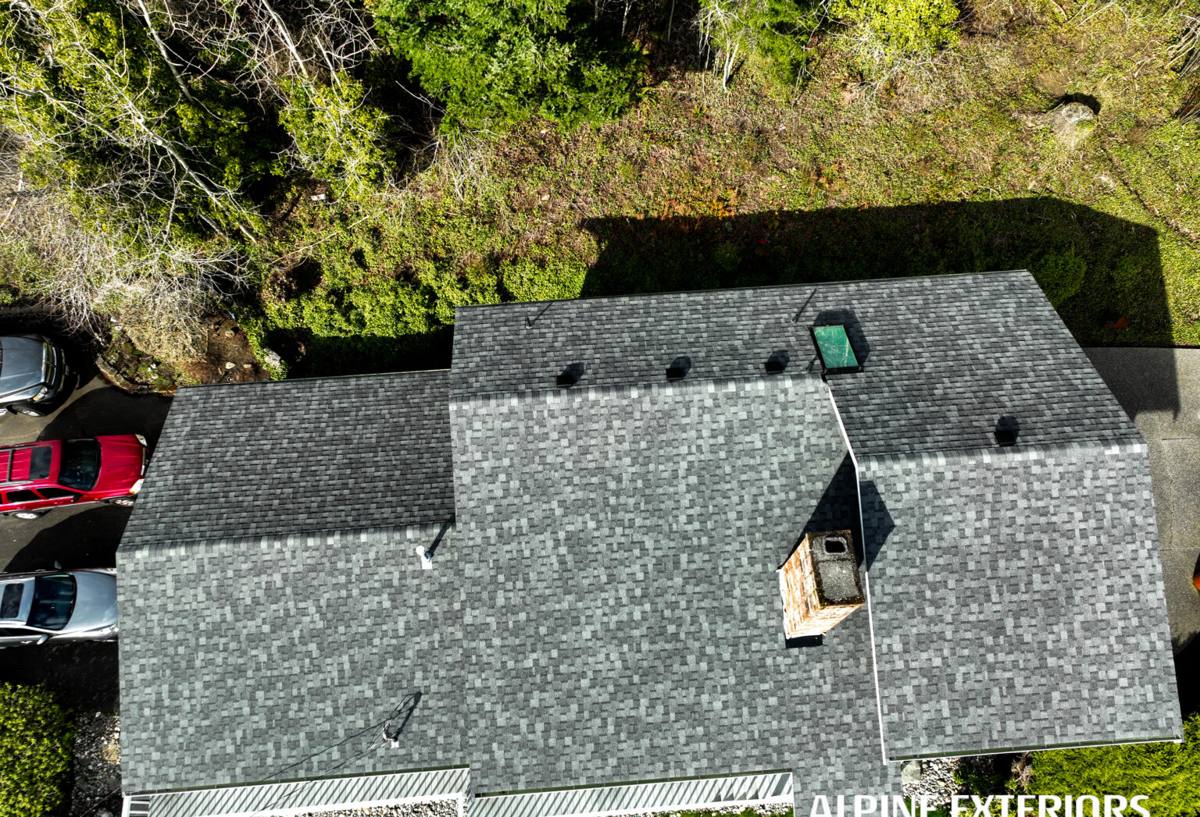
Repair or Replace? Know the Difference First
Not every roofing problem in Mount Vernon means a full replacement. A cracked pipe boot, a section of lifted flashing, or a handful of damaged shingles after a windstorm is usually a repair. Replacement makes sense when the damage is spread across the roof, the underlying materials have failed, or the roof is old enough that patching one area just means the next failure is a matter of time.
- Shingles are curling, cracking, or losing granules across large sections, not just one spot
- You've had two or more separate leaks in different areas within the last year or two
- Moss or algae growth covers a significant portion of the roof, especially on shaded slopes
- Decking feels soft, spongy, or shows sagging when viewed from the attic or ground
- The roof is original to the house and is at or past its expected service life
- Flashing around chimneys, vents, or valleys is rusted, cracked, or was never properly installed
- You're seeing daylight through the roof deck from inside the attic
If you're only seeing one or two of these, a repair may buy you real time. If several apply at once, replacement is usually the more honest recommendation — and the more cost-effective one, since chasing repeated repairs on a failing roof rarely saves money in the long run.
What a Correct Roof Replacement Actually Involves
A roof replacement is more than stripping old shingles and nailing down new ones. Done right, it addresses everything underneath the surface that actually determines how long the new roof lasts in this climate.
Full Tear-Off, Not a Layover
We remove the existing roofing down to the deck rather than installing over old layers. That lets us inspect the decking directly, replace any rotted or delaminated sheathing, and start the new roof system on a solid, dry base — something you can't verify or guarantee with a layover.
Ice-and-Water Protection Where It Matters Most
Eaves, valleys, and areas around penetrations like chimneys and skylights are where driving rain and wind-blown water cause the most damage. We install self-adhering waterproof underlayment in these vulnerable zones, backed by synthetic underlayment across the rest of the roof, to keep water out even if wind pushes rain up under the shingle edge.
Flashing That's Actually Sized and Sealed Correctly
Step flashing at walls, counter-flashing at chimneys, and proper valley metal aren't optional details — they're usually where leaks start when a roof was installed carelessly. We replace flashing rather than reusing old, corroded pieces, since salt air and years of rain rarely leave it in reusable condition.
Ventilation Sized for a Humid Climate
Poor attic ventilation traps moisture, which shortens the life of both the roof deck and the insulation below it. We balance intake at the soffits with exhaust at the ridge so air actually moves through the attic space instead of just circulating near the top, which matters more in a consistently damp climate like ours than it does in drier regions.
Comparing Roofing Materials for Mount Vernon Conditions
Material choice matters more here than in drier climates, because moisture exposure and moss pressure are constant rather than seasonal. Here's how the common options stack up for a coastal Skagit County home.
| Material | Typical Lifespan | Moss & Moisture Resistance | Maintenance Needs | Relative Cost |
|---|---|---|---|---|
| Architectural (dimensional) asphalt shingle | 25–30 years | Good, with periodic moss treatment | Low to moderate | Mid-range |
| 3-tab asphalt shingle | 15–20 years | Fair; more prone to early moss lift | Moderate | Budget-friendly |
| Standing seam metal | 40+ years | Excellent; sheds moss and debris well | Low | Higher upfront |
| Cedar shake | 20–30 years with upkeep | Requires active moss/moisture management | High | Higher upfront |
We install architectural asphalt shingle and metal roofing as our standard recommendations for this area. Cedar shake can look great, but it needs consistent upkeep to manage moisture and moss in a climate this wet, and it carries more long-term maintenance burden than most homeowners want to take on. We'll walk you through the honest trade-offs for your specific roof rather than steering you toward whatever's easiest to sell.
Our Roof Replacement Process
- On-site inspection. We get on the roof, check the decking, flashing, ventilation, and attic condition, and take photos so you can see exactly what we see.
- Written estimate. A clear, itemized quote — material, scope, and what's included — with no vague allowances that turn into surprise add-ons later.
- Scheduling around Skagit County weather. Tear-off and dry-in work is scheduled to minimize the roof deck's exposure to rain, which matters a lot more here than in drier parts of the state.
- Property protection. Landscaping, gutters, and siding are protected before tear-off begins, and a magnetic sweep is done for nails and debris afterward.
- Tear-off and deck inspection. Full removal down to the sheathing, with any rotted or soft decking replaced before anything new goes down.
- Underlayment, flashing, and ventilation installed correctly — not skipped or shortcut to save time.
- Final walkthrough. We review the finished roof with you, answer questions, and make sure everything matches what was quoted.
What Drives the Cost of a Roof Replacement
Every roof is different, so exact pricing depends on the specifics of your home. These are the factors that actually move the number, and why they matter here in particular.
| Factor | Why It Matters in Mount Vernon |
|---|---|
| Roof size and pitch | Steeper roofs take longer and require more safety setup, especially on multi-story homes common in the area |
| Number of existing layers | Older Mount Vernon homes sometimes have a layover from a previous replacement, which adds tear-off time |
| Decking condition | Homes with a history of moss or slow leaks often need more sheathing replaced once we open the roof up |
| Material selected | Asphalt, metal, and cedar carry different material and labor costs, plus different long-term maintenance |
| Roof complexity | Valleys, dormers, skylights, and chimneys all add flashing work and labor time |
| Access and site conditions | Tree cover, tight lots, or difficult staging areas affect how efficiently a crew can work |
Why Hiring a Crew That Already Works in Mount Vernon Matters
Roofing done by a crew unfamiliar with this specific climate tends to make the same predictable mistakes — underestimating ventilation needs, skipping ice-and-water protection in areas that need it, or using fasteners and flashing that aren't suited to salt-air exposure. A crew that regularly works Mount Vernon and the surrounding Skagit County area already knows which details can't be shortcut here, understands local permitting requirements, and can spot moss- and moisture-related problems that an out-of-area crew might miss entirely. That familiarity shows up in fewer callbacks and a roof that actually performs the way it's supposed to for its full expected life.
Protecting Your Investment After Replacement
A new roof still needs some basic upkeep in this climate to reach its full lifespan.
- Have moss growth treated before it spreads, rather than waiting until it's visible from the street
- Keep gutters clear of needles and debris, since clogged gutters back water up under the roof edge
- Trim back overhanging branches to reduce shade and debris buildup on the roof surface
- Schedule a visual inspection every couple of years, especially after major windstorms
- Address any small leak or flashing issue right away — small problems stay small when caught early
If your roof is showing its age, or you just want an honest opinion on where it stands, we're happy to take a look. We offer free, no-pressure estimates for Mount Vernon homeowners — you'll get a straight answer about what your roof actually needs, not a sales pitch. Use the form below to get started.