 Burlington
 Windows Built for a Salt Air, Rain-Soaked Climate
Homes in and around Oak Harbor deal with a combination of conditions that most window installers never have to think about: salt-laden air off the water, driving wind-driven rain for months at a stretch, and a moss and mildew season that can run from October through May. Standard window installation practices — the kind used inland or in drier climates — often don't hold up here. Seals fail early, frames pit and corrode, and sills stay damp long enough to grow mold or rot the trim around them.
We work throughout Skagit County and the surrounding coastal communities, and Oak Harbor's exposure is some of the toughest we see. A correct window job in this area isn't just about picking a good product off a shelf — it's about material choice, flashing detail, and drainage planning that account for salt exposure and near-constant moisture. That's the difference between windows that look good for a year and windows that perform for two decades.
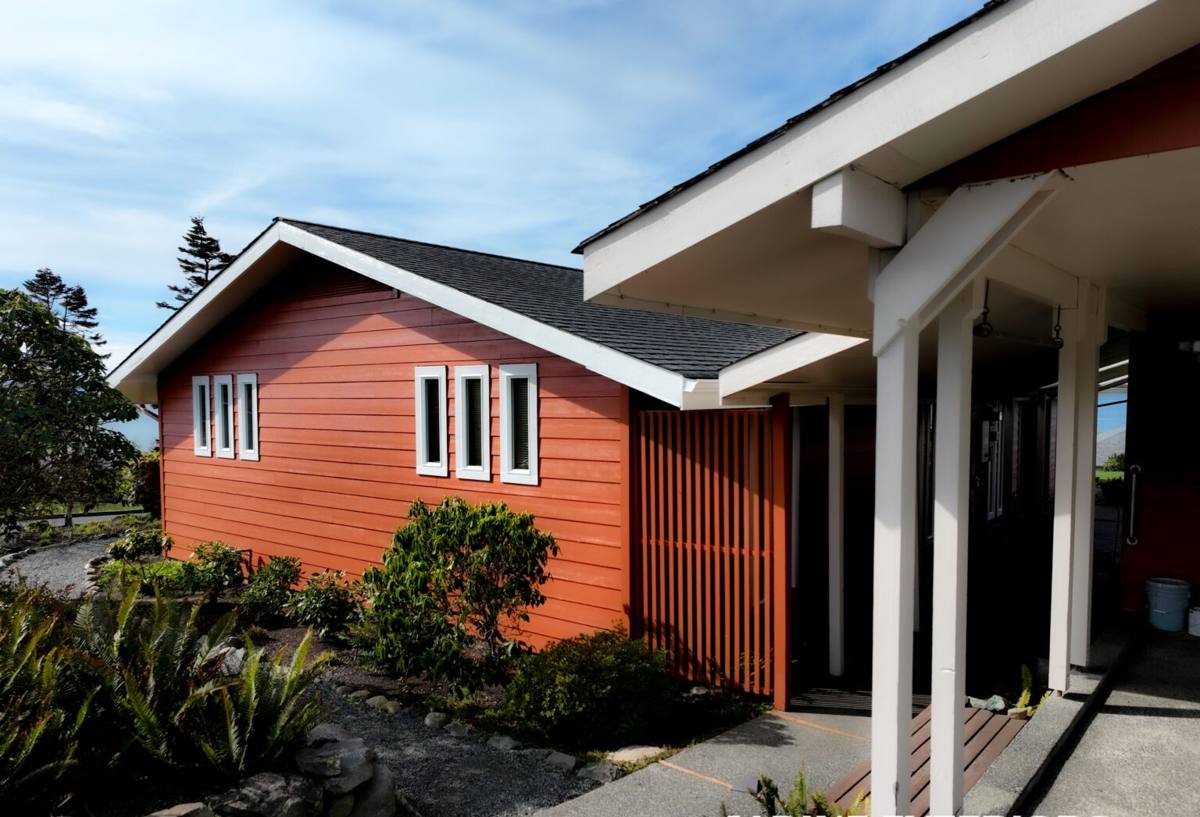
What Salt Air and Driving Rain Actually Do to Windows
It helps to understand the specific failure modes we're designing against, because they shape almost every decision in a custom window install here.
Salt Air Corrosion
Airborne salt settles on hardware, fasteners, and unprotected metal components. Over time it corrodes cheap aluminum cladding, low-grade screws, and unprotected steel reinforcement inside vinyl or fiberglass frames. Once corrosion starts on hardware — hinges, locks, cranks — the window stops sealing tightly, which lets in more moisture and speeds up the damage.
Driving Rain and Wind-Driven Water
Rain that comes in sideways doesn't behave like rain falling straight down. It gets pushed into gaps around the frame, under poorly lapped flashing, and behind trim that wasn't sealed with the right sequence of materials. A window can be well-built and still leak if the installation didn't account for wind-driven water finding every weak point in the opening.
Moss, Mildew, and Prolonged Dampness
With a moss season that stretches most of the year, anything that traps moisture against wood — trim, sills, or old wood-frame windows — becomes a growth surface. Moss and mildew hold water against the surface even longer, accelerating rot in wood components and degrading paint and caulking faster than in drier regions.
What a Correct Custom Window Job Involves Here
"Custom" means the window is built to the exact opening and the specific performance needs of the house — not a stock size with gaps shimmed and trimmed to fit. For Oak Harbor-area homes, that includes a few things we treat as non-negotiable:
- Frame materials and hardware rated for coastal or near-coastal salt exposure, not just standard-grade builder stock
- Corrosion-resistant fasteners and hardware — cheap screws are one of the first things to fail in salt air
- Proper flashing sequence (window flange integrated with weather-resistive barrier, correctly lapped top-to-bottom) so wind-driven rain has nowhere to get behind the frame
- Sloped sills and drainage paths so any water that does reach the frame exits instead of pooling
- Sealant and caulking rated for sustained moisture exposure, not general-purpose caulk that hardens and cracks within a couple seasons
- Accurate measurement of the actual opening, since older homes in this area often have openings that have shifted slightly out of square over the years
Skip any one of these steps and the window itself doesn't matter much — water and salt air will find the weak point.
Choosing the Right Window Materials for This Climate
Not every window product sold as "premium" is a good fit for salt air and constant rain exposure. We steer homeowners toward materials based on how they actually perform here over time, not just how they look in a showroom.
| Material | How It Handles This Climate | Trade-Offs |
|---|---|---|
| Vinyl (quality-grade) | Won't corrode or rot; handles moisture well; low maintenance | Lower-end vinyl can warp with sun/temperature swings; hardware quality varies a lot by manufacturer |
| Fiberglass | Very stable in wet, salty conditions; holds paint and finish well; strong long-term durability | Higher upfront cost than vinyl |
| Wood (clad or unclad) | Classic look, good insulation; clad versions protect the exterior face | Unclad wood is a poor match for this climate — high maintenance, vulnerable to rot and moss if not kept up |
| Aluminum (uncoated or low-grade) | Can pit and corrode in salt air over time | We generally steer homeowners away from bare or low-grade aluminum near the coast for this reason |
Hardware finish matters as much as frame material. Even a good frame can be let down by hinges or locks that weren't specified for coastal exposure, so we check hardware ratings as part of every quote — not as an afterthought.
Our Process for Oak Harbor Window Projects
1. On-Site Assessment
We look at the actual exposure of each window opening — direction it faces, how much weather it takes, current condition of the trim and sill, and any signs of past moisture intrusion. A window on the weather-exposed side of a house needs more attention to flashing and sealant than one tucked under an eave on a protected wall.
2. Accurate Measurement and Product Selection
We measure the real opening, not an assumed stock size, and recommend materials and glass packages based on that specific location's exposure and the home's overall design.
3. Proper Removal and Opening Prep
Old caulking, damaged trim, and any rotted framing get addressed before the new window goes in. Installing a good window into a compromised opening just locks the existing problem behind new trim.
4. Installation with Correct Flashing and Sealing Sequence
This is where most of the long-term performance difference actually gets decided. Flashing goes in a specific order relative to the weather-resistive barrier and siding so water sheds outward at every layer, and sealants are applied to manufacturer spec rather than just "caulked around the edge."
5. Final Check and Cleanup
We check operation, seal integrity, and trim finish before we consider the job done, and walk the homeowner through basic care for their specific window type.
Signs Your Current Windows Are Losing the Battle
Homeowners in the Oak Harbor area often notice these signs well before a window fails outright:
- Fogging or condensation between panes (seal failure in a double- or triple-pane unit)
- Soft or discolored trim or sill wood, especially on the weather-facing side of the house
- Hardware that's stiff, corroded, or won't lock cleanly anymore
- Visible moss or persistent green/black staining around the frame or sill
- Drafts or a noticeable temperature difference near the window even when it's closed
- Paint or finish peeling faster around windows than on the rest of the siding
Any one of these is worth a look. Left alone, moisture problems around a window tend to spread into the surrounding wall framing, which turns a window job into a much bigger repair.
What Affects Cost
Custom window pricing depends on several factors that are worth understanding before you get quotes, so you're comparing apples to apples:
| Factor | Why It Matters |
|---|---|
| Frame material | Fiberglass and higher-grade vinyl cost more upfront than basic builder-grade vinyl but hold up longer in this climate |
| Glass package | Double vs. triple pane, and coatings for energy efficiency, add cost but also add performance |
| Opening condition | Rotted framing or trim found during removal adds repair time before the window can even go in |
| Number and size of windows | Larger or custom-shaped openings require more precise fabrication |
| Access and site conditions | Second-story or hard-to-reach openings take more time and equipment |
We give straightforward, itemized quotes so you can see exactly what you're paying for — material, labor, and any prep work — rather than one lump number.
Why a Crew That Already Works This Area Matters
General contractors who split time across many different climates don't always build the habit of treating flashing, hardware grade, and sealant choice as seriously as they need to be treated here. A crew that regularly works Skagit County's coastal and near-coastal homes has already seen which shortcuts fail in this specific climate and which details actually matter. That experience shows up in fewer callbacks, fewer surprise leaks two winters down the road, and windows that are specified correctly the first time instead of upgraded after a problem shows up.
If you're weighing a window project for a home in the Oak Harbor area, we're happy to take a look, walk you through what your specific openings need, and put together a clear, no-pressure estimate using the form below.