 Burlington
 Roofing in Conway Deals With a Different Set of Conditions
Conway sits low in the Skagit River delta, close enough to Skagit Bay that salt-laden air moves through on a regular basis, and low enough that fog, standing moisture, and slow-draining ground are just part of life here. That combination is harder on a roof than most homeowners realize. Salt air accelerates corrosion on fasteners, flashing, and any exposed metal. Driving rain off the water finds its way under shingles that have lost their seal. And the shaded, damp conditions common on tree-lined lots and north-facing slopes give moss a long growing season that runs from fall through spring.
None of this means a roof in Conway needs to be exotic or over-built. It means the details — fastener choice, underlayment, ventilation, and moss prevention — have to be right for this specific environment, not just built to a generic code minimum. A roof replacement done without accounting for local conditions will often look fine for a year or two and then start showing problems exactly where the climate is hardest on it: valleys, north slopes, and anywhere moisture sits.
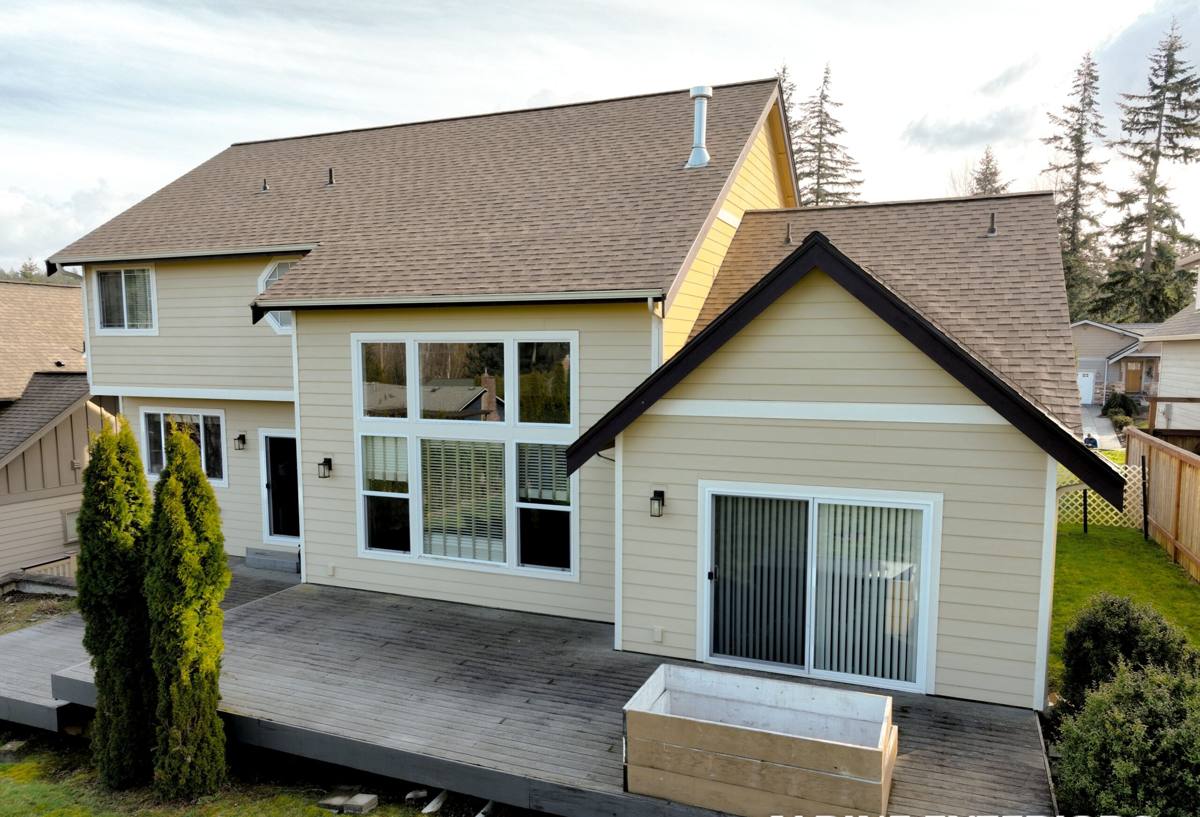
How Salt Air, Rain, and Moss Actually Damage a Roof
Salt Air and Corrosion
Homes closer to the bay and the river's tidal reach see faster degradation of exposed metal — nail heads, flashing, vent boots, and gutter hardware. Standard electro-galvanized fasteners can start showing rust streaks well before the shingles themselves wear out. Once a fastener corrodes, its grip weakens and the shingle above it becomes vulnerable to wind lift and leaks.
Driving Rain
Wind-driven rain off open, low-lying terrain doesn't just fall on a roof — it pushes sideways and works its way under shingle edges, around chimneys, and through poorly lapped flashing. A roof that's fine in a light, straight-down rain can still leak in a sideways storm if the underlayment and flashing details weren't done with that in mind.
Moss
Moss doesn't just look bad — it holds moisture against the roof surface, lifts shingle edges as it grows, and breaks down the granule surface that protects asphalt shingles from UV and weather. On a roof with any shade at all, moss season here can run most of the year, which means moss control has to be built into the roofing system, not treated as a once-a-year chore.
What a Correct Roof Replacement Involves
A roof replacement is more than swapping old shingles for new ones. Done right, it includes:
- Full tear-off to the deck — never a layover on top of old roofing, which traps moisture and hides deck damage
- Inspection and repair of the decking itself, since soft or rotted plywood/sheathing has to be replaced before anything new goes down
- New underlayment rated for this climate's rain exposure, with extra protection (ice-and-water-shield-style membrane) in valleys, eaves, and around penetrations
- Correct flashing at every roof-to-wall, chimney, skylight, and vent transition — flashing failure is the single most common cause of "new roof" leaks
- Balanced attic ventilation (intake at the eaves, exhaust at the ridge) so moisture doesn't build up underneath the new roof
- Fasteners and metal components chosen for corrosion resistance given the salt-air exposure
- A finished moss-prevention detail, typically zinc or copper strips near the ridge, so the new roof starts its life protected
Skipping any one of these doesn't necessarily show up on installation day — it shows up two, five, or ten years later, usually as a leak that's expensive to trace because it's coming from a detail buried under finished roofing.
Choosing a Roofing Material for a Conway Home
There's no single "best" roofing material — the right choice depends on the home, the budget, and how much long-term maintenance the owner wants to take on. Here's how the common options actually compare for this climate:
| Material | Moss/Moisture Behavior | Typical Lifespan | Maintenance |
|---|---|---|---|
| Architectural asphalt shingle | Good with proper ventilation and zinc/copper strips; granule loss accelerates if moss is left unchecked | 25–30 years | Periodic moss treatment, gutter clearing |
| Standing seam metal | Sheds moss and moisture very well; minimal surface for growth | 40–50+ years | Low; occasional fastener/sealant check |
| Cedar shake | Attractive but holds moisture and is more susceptible to moss and rot without diligent upkeep | 20–30 years with maintenance | High; regular treatment required |
| Synthetic/composite shingle | Resists moisture absorption better than wood; performance varies by product line | 30–50 years depending on product | Low to moderate |
We install cedar shake when a homeowner specifically wants that look and understands the maintenance commitment, but for most Conway homes we steer people toward architectural asphalt or metal, simply because the moisture and moss exposure here punishes low-maintenance choices less than it punishes high-maintenance ones. That's a trade-off conversation, not a sales pitch — we'll lay out the honest maintenance burden of each option for your specific roof.
Ventilation: The Detail That Gets Skipped Most Often
In a climate this damp, attic ventilation isn't optional. Without balanced intake and exhaust airflow, moisture from daily living (cooking, showers, laundry) gets trapped in the attic, condenses on the underside of the roof deck, and creates the exact damp conditions that rot sheathing and feed mold — from the inside, where you won't see it until it's serious. A roof replacement is the right time to correct ventilation problems, since the deck and roofline are already open. We check and correct intake and exhaust balance on every replacement, not just when a homeowner asks.
Our Roof Replacement Process
- On-site inspection. We look at the roof, the attic, and the current ventilation before quoting anything — not just a drive-by estimate.
- Written estimate. Material options, scope of work, and a clear price, with the trade-offs explained in plain terms.
- Scheduling around the weather. Roof replacement here has to work around real rain windows, not just a calendar date — we plan for that.
- Tear-off and deck inspection. Old roofing comes off completely; any damaged decking is identified and replaced before moving forward.
- Underlayment, flashing, and ventilation correction. The parts that don't show but matter most.
- Roofing installation. Installed to manufacturer spec, with attention to the local details — moss strips, fastener choice, valley protection.
- Cleanup and final walkthrough. Magnetic sweep for stray fasteners, debris removal, and a walkthrough so you know exactly what was done.
Signs a Conway Roof Needs Replacing, Not Just Repairing
- Granules collecting in gutters or at downspout outlets in noticeable amounts
- Shingles that are cupping, curling, or cracking, especially on south- and west-facing slopes
- Moss or algae staining that comes back quickly after cleaning
- Soft spots or sagging visible from the ground or in the attic
- Daylight visible through the roof deck from inside the attic
- Leaks around chimneys, skylights, or vent pipes that keep recurring despite spot repairs
- A roof at or past 20–25 years old with multiple repair patches already in place
One or two of these on their own might mean a repair is enough. Several together, or a roof that's already near the end of its expected life, usually means repair spending is just delaying a replacement that's coming anyway.
What Affects the Cost of a Roof Replacement
| Factor | Why It Matters |
|---|---|
| Roof size and pitch | Steeper roofs take longer and require more safety setup; larger roofs need more material and labor |
| Number of existing layers | Tear-off of multiple old layers adds disposal cost and labor time |
| Deck condition | Rotted or soft sheathing found during tear-off adds material and labor to replace it |
| Material selected | Asphalt, metal, cedar, and composite all carry different material and installation costs |
| Roof complexity | Valleys, dormers, skylights, and chimneys all add flashing work and time |
| Access | Difficult site access can add setup and material-handling time |
We won't quote a firm number without seeing the roof, since deck condition alone can shift a job significantly — but we'll walk you through what's driving your specific price so there are no surprises once work starts.
Why Local Experience on This Kind of Roof Matters
A roofing crew that works in Skagit County regularly knows what a Conway roof is up against before they ever climb a ladder: the salt exposure off the bay, the way driving rain behaves in this terrain, and how long moss season really runs here. That translates into practical decisions — which fastener to use, where extra membrane goes, how ventilation needs to be balanced — made up front instead of learned the hard way after a callback. It also means realistic scheduling around actual weather patterns instead of guesswork, and a crew that's already familiar with permitting and inspection expectations in the area.
If your Conway home needs a roof replacement, or you're not sure yet whether it needs a repair or a full replacement, we're happy to take a look and give you a straight, no-pressure assessment. Use the form below to request a free estimate.