 Burlington
 Building Decks for Samish Island's Water-Exposed Climate
Samish Island sits out on the water, and that changes what a deck has to survive compared to a deck built a few miles inland. Salt-laden air off Samish Bay, wind-driven rain that comes in sideways instead of straight down, and long stretches of shade under fir and cedar trees all work against a deck at the same time. None of that means you can't have a great outdoor space here — it means the deck has to be built with those conditions in mind from the framing up, not just finished to look good on installation day.
We build and repair decks throughout the Burlington and Skagit County area, and the decks we put in on Samish Island get a few deliberate adjustments compared to a build in town. This page walks through what those adjustments are, what a correctly built deck involves out here, and how we handle a project from first look to final walk-through.
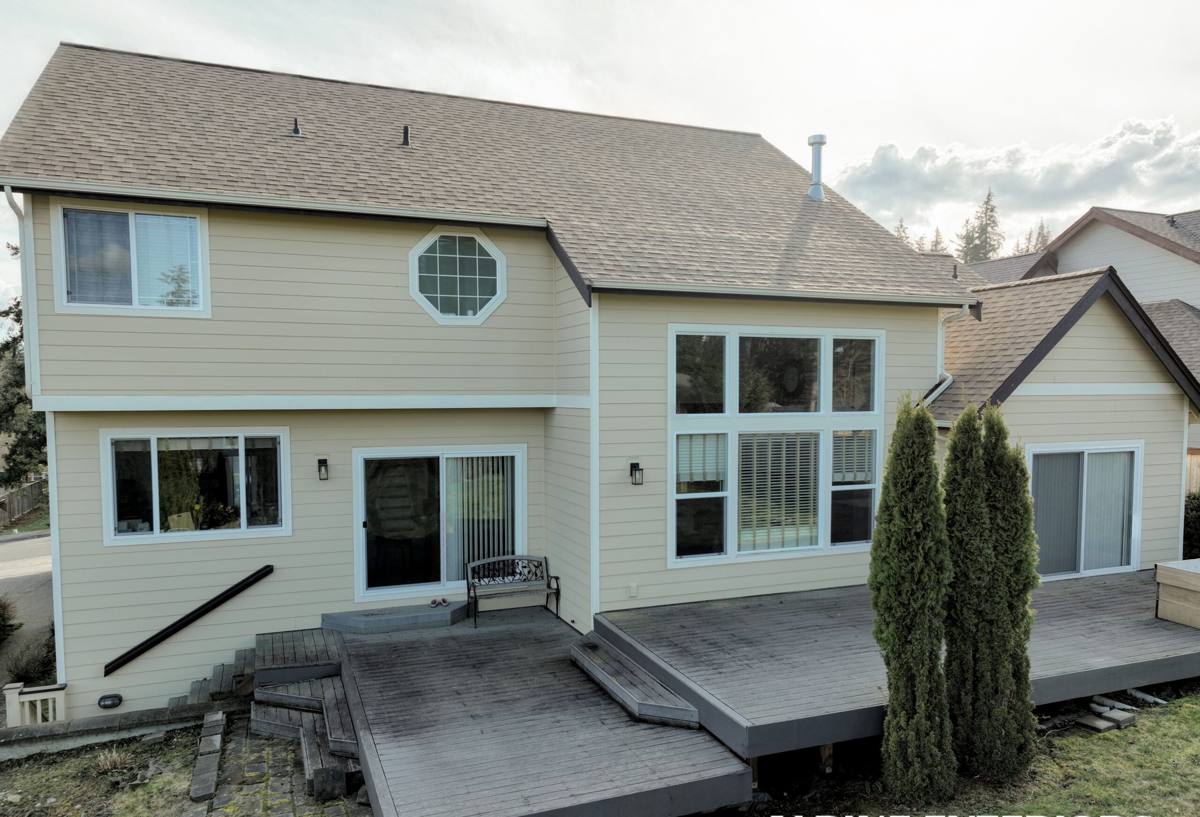
What Salt Air, Rain, and Moss Actually Do to a Deck
Salt Air and Metal Fasteners
Airborne salt accelerates corrosion on anything metal — screws, joist hangers, bolts, post bases. On a standard inland deck, mid-grade galvanized hardware can go a long time without trouble. Close to Samish Bay, the same hardware can start rusting and staining the wood around it within a few seasons. Once a fastener starts to corrode, it loses holding strength long before it looks bad enough to notice from a distance, which is part of why deck hardware failures near the water tend to show up as a surprise.
Driving Rain and the Ledger Connection
The ledger board — the piece that attaches the deck to the house — is the single most important connection on any deck, and it's the one most likely to cause real damage if it's done wrong. Wind-driven rain pushes water sideways and upward into gaps that would stay dry in calmer weather. If the ledger flashing isn't detailed correctly, water works its way behind it and into the house's rim joist and wall framing, where it can sit and rot for years before anyone sees a sign of it.
Moss, Shade, and Standing Moisture
Shaded, humid conditions near the water are exactly what moss and algae need to take hold. On a deck, that shows up first on north-facing boards, under railings, and anywhere water sits instead of draining. Beyond making the surface slippery, trapped moisture under moss and debris keeps wood decking wet for days after a storm has passed, which shortens the life of the boards and can lead to soft spots and rot at butt joints and fastener holes.
Choosing Decking Material for This Location
There's no single "right" decking material for every home — it depends on your budget, how much upkeep you want to take on, and how close you are to the water. Here's how the common options actually perform in Samish Island's conditions:
| Material | Salt Air / Moisture Behavior | Maintenance | Typical Lifespan Here |
|---|---|---|---|
| Pressure-treated fir/pine | Absorbs moisture readily; needs sealing to resist rot and moss staining | Annual cleaning and re-sealing recommended | 10–15 years with upkeep |
| Western red cedar | Naturally rot- and insect-resistant; still needs finish protection near salt air | Periodic cleaning and oil/stain every 2–3 years | 15–20 years with upkeep |
| Composite decking | Doesn't absorb moisture or rot; some boards can show mineral staining near salt spray over time | Occasional washing; no sealing or staining | 25+ years, manufacturer-warrantied |
| Tropical hardwood (ipe and similar) | Very dense and rot-resistant, but installation is unforgiving and pre-drilling is required | Oiling needed to maintain color; will gray naturally if left untreated | 25–30+ years |
For homes close to the water on Samish Island, we most often steer clients toward composite decking or well-finished cedar, simply because both hold up to repeated wetting and drying without the maintenance burden climbing every year. Pressure-treated lumber still has its place for framing and for owners who want the lowest upfront cost and are willing to stay on top of sealing.
What a Correctly Built Deck Involves Out Here
A deck that's going to hold up on Samish Island needs a few things done right that are easy to skip on a rushed job:
- Stainless or coated fasteners rated for coastal/marine exposure — not standard galvanized hardware, which corrodes faster in salt air.
- Properly flashed ledger board with flashing tape and metal flashing lapped correctly to shed water away from the house framing, not into it.
- Footings sized for local soil conditions — soil near the water can behave differently than inland lots, so footing depth and bearing need to be checked, not assumed.
- Slope built into the decking surface (roughly a quarter-inch per foot away from the house) so water sheds off instead of pooling.
- Joist tape on top of every joist to keep water from soaking into end grain and framing lumber, which is where rot usually starts first.
- Ventilation under the deck so the space beneath the boards can dry out between rain events instead of staying damp.
- Code-compliant railings and guardrails — decks more than about 30 inches above grade generally require guardrails, and all elevated decks need railings that meet current structural requirements.
Skipping any one of these doesn't usually show up as a problem on day one. It shows up two, five, or ten years later as a soft ledger board, rusted-through hangers, or boards that never quite dry out. Building it right the first time costs less than fixing it later, and it's a lot less disruptive than tearing into a deck that's already attached to your house.
Our Process for Samish Island Deck Projects
Every deck we build follows the same basic sequence, with the details adjusted for your site and how exposed it is to wind and water:
- Site visit and assessment. We look at grade, drainage, sun/shade exposure, distance from the water, and how the deck will attach to your home before we talk materials or design.
- Design and material selection. We walk through decking, railing, and fastener options with the trade-offs laid out honestly — cost, maintenance, and expected lifespan for your specific location.
- Permitting. We handle the permit application and inspections required for your project so you're not the one chasing paperwork.
- Framing and structural work. Footings, ledger attachment, joists, and blocking go in first, with flashing and fastener choices matched to a coastal exposure.
- Decking, railing, and finish work. Boards, railings, stairs, and any lighting or trim details are installed and checked for level, slope, and fastening.
- Final walk-through. We go over the finished deck with you, answer questions, and cover what maintenance schedule makes sense for your specific material and site.
What a Deck Project Typically Costs
Every project is different, but the biggest cost drivers on a Samish Island deck tend to be the same handful of things:
| Cost Factor | Why It Moves the Price |
|---|---|
| Decking material | Composite and tropical hardwood cost more upfront than pressure-treated lumber, but need less maintenance over time |
| Size and shape | Multi-level decks, curves, and built-in benches or planters add framing and labor time |
| Height above grade | Taller decks need deeper or additional footings, stairs, and code-required guardrails |
| Fastener and hardware grade | Marine-grade stainless hardware costs more than standard galvanized but is worth it this close to the water |
| Site access | Waterfront lots with limited equipment access can add time for material staging and hauling |
| Permitting requirements | Setback rules and any shoreline-related review can affect design and timeline |
We'll always give you a written estimate that breaks these out so you know what you're paying for and where you have room to adjust if budget is tight.
Keeping a Deck Ahead of Moss and Salt Damage
Even a well-built deck needs some regular attention in this environment. A simple seasonal routine goes a long way toward getting the full lifespan out of whatever material you choose:
- Sweep debris and needles off the surface regularly, especially under trees where moss gets a head start.
- Rinse salt residue off the deck a few times a year, particularly after storms with strong wind off the water.
- Check railings and stair connections annually for loose fasteners or early rust staining.
- Re-seal or re-oil wood decking on schedule rather than waiting until it looks dry and gray.
- Keep gutters and downspouts clear so roof runoff isn't dumping extra water onto or near the deck.
- Look underneath the deck once a year for standing moisture, moss growth on framing, or signs of pests.
Why It Matters That We Already Work Samish Island
A crew that mostly builds decks in town isn't necessarily going to default to marine-grade fasteners or think about wind-driven rain at the ledger unless they're reminded to. A crew that's already built decks out on Samish Island treats that as the starting point, not an upgrade. We know to stock the right hardware before the job starts, we're familiar with the permitting process for unincorporated Skagit County, and we've seen firsthand what a few seasons of salt air and moss does to a deck that wasn't built for it.
That local experience also means fewer surprises during the build — knowing what to expect from the access, the weather windows for pouring footings, and the kind of finish work that actually holds up out here instead of looking good for one summer.
Getting Started
If you're planning a new deck or need to replace one that's showing its age, we're happy to come take a look and talk through what makes sense for your home and your budget. There's no pressure and no obligation — just a straight assessment and a written estimate you can use to plan. Fill out the form below to get started.