 Burlington
 Asphalt Shingle Roofing Built for Sedro-Woolley's Weather
Sedro-Woolley sits at the edge of the Skagit Valley, close enough to the Salish Sea to catch salt-laden air off the water and close enough to the foothills to get the heavier rain bands that roll in off the Cascades. That combination is hard on a roof. Homes here don't just deal with rain — they deal with rain that sits, air that carries moisture and salt year-round, and long stretches of shade under mature fir and cedar trees that keep shingles damp long after a storm has passed. An asphalt shingle roof that's installed correctly for this climate will hold up for decades. One that's installed the way you'd install it in a dry inland town will show problems in five to seven years, sometimes sooner.
We're a Burlington-based crew, and Sedro-Woolley is inside our regular service area — not a town we drive an hour to reach once a quarter. That matters more for roofing than almost any other exterior trade, because roofing problems here are climate problems, and climate problems require a crew that's watched how local roofs actually age.
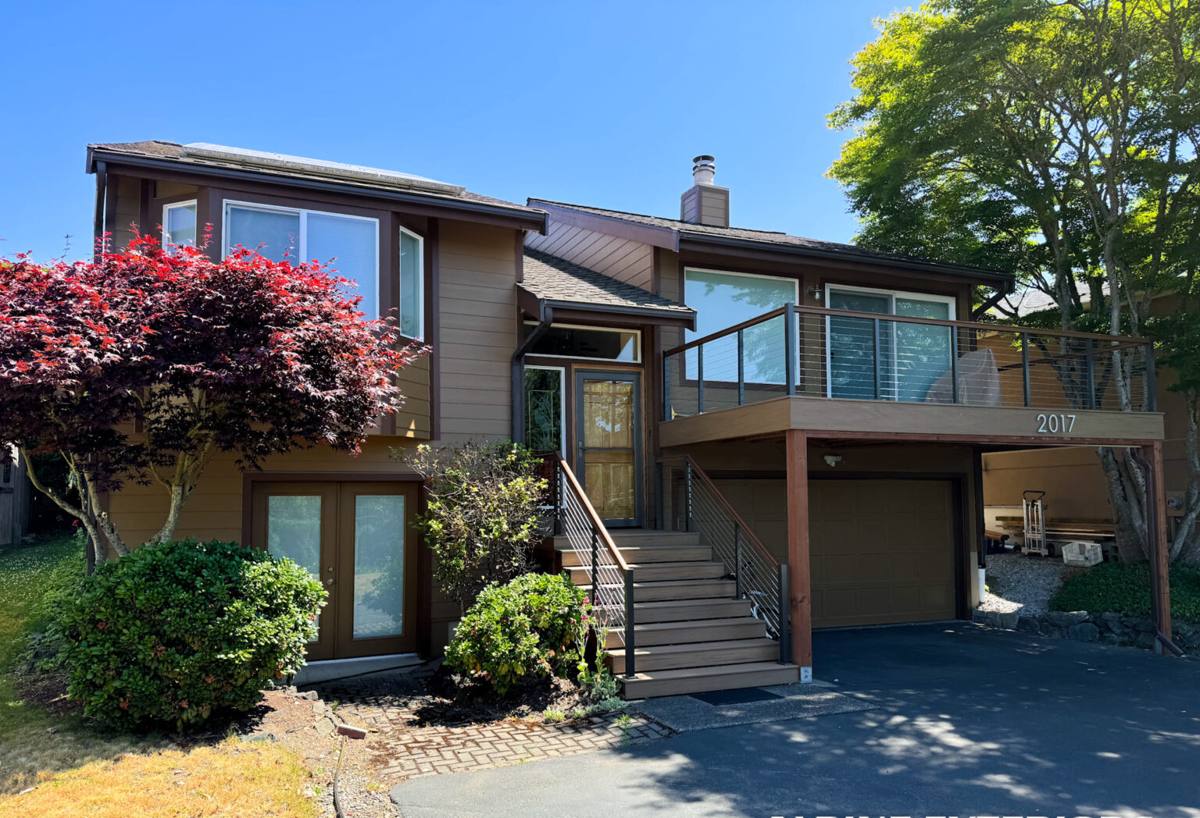
What Skagit County's Climate Actually Does to a Shingle Roof
Moss and Organic Growth
Sedro-Woolley's tree cover and consistent moisture create a long moss season — realistically, moss can gain a foothold nearly any month of the year on a roof that stays shaded and damp. Moss isn't just cosmetic. As it establishes, it lifts shingle edges, holds water against the granule surface, and accelerates the breakdown of the asphalt mat underneath. A roof that looks fine from the ground can already have moss working under the shingle tabs.
Driving Rain and Wind-Driven Wet
Rain that comes in at an angle, pushed by wind off the valley, tests every horizontal lap and every fastener line on a roof. Standard nailing patterns and standard underlayment choices that pass in calmer climates can let water track sideways under shingles here, especially at hips, ridges, and anywhere the roof plane changes.
Salt Air and Metal Fatigue
Being close enough to the water to catch salt air means exposed metal — flashing, nail heads, drip edge, vent stacks — corrodes faster than it would inland. A roof spec'd without corrosion-resistant fasteners and flashing in this area will show rust streaks and metal failure well before the shingles themselves wear out.
Temperature Swings and Shingle Flexibility
Skagit County doesn't get extreme heat, but the freeze-thaw cycles in winter, combined with damp shingles, put real stress on the asphalt mat's flexibility. Lower-grade shingles get brittle faster under repeated damp-cold cycling than they would in a drier, more stable climate.
What a Correct Asphalt Shingle Job Looks Like Here
Asphalt shingles are a good, cost-effective roofing choice for this region — but only when the installation accounts for the moisture load. The shingle itself is one part of a system. The parts underneath and around it are what actually keep water out over the long run.
| Component | Why It Matters in Sedro-Woolley |
|---|---|
| Underlayment | A synthetic or self-adhered underlayment resists the prolonged dampness better than older felt products, which can absorb water and sag over time |
| Ice and water shield | Applied at eaves, valleys, and around penetrations to stop wind-driven rain from tracking backward under the shingle field |
| Flashing | Corrosion-resistant metal at valleys, walls, chimneys, and skylights — this is where most leaks actually originate, not in the open shingle field |
| Fasteners | Proper gauge, corrosion-resistant nails placed in the manufacturer's nailing zone, not just wherever is fastest |
| Ventilation | Balanced intake and exhaust airflow keeps the underside of the deck dry, which slows moss growth and prevents rot from the inside out |
| Shingle grade | Heavier, algae-resistant shingles hold up longer against the moss and moisture load than builder-grade options |
Our Process for a Sedro-Woolley Re-Roof
1. On-Site Inspection
We look at the whole system, not just the shingles — deck condition, existing ventilation, flashing points, valleys, and any moss or organic growth already established. We also check the attic side when accessible, because trapped moisture there tells us more about the roof's real condition than the shingle surface does.
2. Honest Scope and Estimate
We tell you plainly whether you need a full tear-off or whether a repair or partial replacement is realistic. We don't upsell a full roof when a repair will genuinely hold, and we don't recommend a patch job on a roof that's past the point where patching makes financial sense.
3. Tear-Off and Deck Check
Old shingles come off down to the deck so we can actually see what's there. Any soft, rotted, or delaminated decking gets replaced before anything new goes down — covering a bad deck with new shingles just hides a problem that gets more expensive later.
4. Underlayment and Flashing First
This is where the real weatherproofing happens. We install underlayment and flashing sized and placed for this climate's rain and wind pattern before a single shingle goes on.
5. Shingle Installation
Shingles go down to manufacturer spec — correct nailing zone, correct exposure, correct pattern at hips, ridges, and valleys. This is also where ventilation components (ridge vents, etc.) get tied in correctly so the roof breathes.
6. Final Walkthrough
We walk the finished roof and the site with you, cover care and moss-prevention basics for your specific tree cover and roof pitch, and answer questions before we consider the job done.
Repair, Partial Replacement, or Full Tear-Off?
Not every roof problem in Sedro-Woolley calls for a full replacement. The right call depends on the age of the roof, how the damage is distributed, and what's happening underneath the shingles.
- Repair is often right when damage is localized — a section lifted by wind, a flashing leak at one valley, a small area of moss damage caught early.
- Partial replacement can make sense when one slope (often a shaded, moss-prone north face) is failing well ahead of the rest of the roof.
- Full tear-off and replacement is the right call once the shingle mat is broadly brittle, granule loss is widespread, or the deck itself shows moisture damage in multiple areas.
We'll tell you which category your roof falls into and why, not just default to the most expensive option.
Signs a Sedro-Woolley Roof Needs Attention
- Moss visible along ridge lines, valleys, or the shaded slope of the roof
- Granules collecting in gutters or at downspout outlets
- Shingle edges curling, cupping, or lifting
- Dark streaking that isn't just surface dirt (can indicate algae or trapped moisture)
- Daylight or water staining visible in the attic near the roof deck
- Rust streaks below flashing, vents, or exposed nail heads
- A roof approaching 18-20 years old that hasn't had a full inspection recently
Cost Factors for Asphalt Shingle Roofing
Every roof is different, so we won't quote a number without seeing it, but the main factors that move the price on a Sedro-Woolley job are consistent:
| Factor | How It Affects Cost |
|---|---|
| Roof size and pitch | Steeper and larger roofs take more material, more labor time, and more safety setup |
| Layers to remove | Tearing off multiple existing layers costs more than a single-layer tear-off |
| Deck condition | Rotted or soft decking sections add material and labor to replace before shingles go down |
| Shingle grade chosen | Heavier, algae-resistant shingles cost more upfront but generally last longer in this climate |
| Flashing and penetration complexity | Roofs with multiple valleys, skylights, chimneys, or dormers require more detail work |
| Ventilation upgrades | Adding or correcting ridge and soffit ventilation adds cost but reduces long-term moisture problems |
Why a Local Burlington Crew Matters for This Job
Roofing is one of the trades where local experience shows up directly in the outcome. A crew that works Sedro-Woolley, Burlington, and the surrounding Skagit County towns regularly knows which slopes in this area tend to hold moss, which older neighborhoods commonly have ventilation issues from how homes were originally built, and which flashing details tend to fail first under this specific rain and wind pattern. That's not something you get from a national spec sheet — it's something you get from working the same climate on roof after roof.
It also means we're a short drive away if something needs a follow-up look after a big storm, not a call center routing you to whichever crew is available next. Warranty support means more when the people who installed your roof are still local and still working in your area.
Maintenance That Extends the Life of Your Roof
A correctly installed asphalt shingle roof in Sedro-Woolley still benefits from basic upkeep given the local conditions:
- Keep gutters clear so water doesn't back up under the eave line during heavy rain
- Trim back overhanging branches to reduce shade and debris buildup that feeds moss
- Have moss treated before it establishes deeply, rather than after it's visibly thick
- Schedule a roof check after any major windstorm, even if nothing looks obviously wrong from the ground
- Get a professional inspection every few years once the roof passes the ten-year mark
If you're in Sedro-Woolley and want a straight answer on whether your roof needs repair, partial replacement, or a full re-roof, we're glad to take a look. Reach out for a free, no-pressure estimate using the form below.