 Burlington
 Board & Batten Siding in Sedro-Woolley: Built for the Skagit Valley
Sedro-Woolley sits far enough up the Skagit Valley that homeowners often assume they're shielded from the coastal weather that hits Burlington and the rest of Skagit County. They're not. The same wet air pattern that rolls in off Padilla Bay and Samish Bay pushes rain and salt-laden moisture up the valley for most of the year, and the tree cover and river-bottom humidity around Sedro-Woolley add their own problem: a moss and algae season that can run eight months or longer on shaded, north-facing walls. Board and batten siding has a strong, honest look that fits the farmhouses, craftsman homes, and newer builds throughout this area — but it only holds up here if it's installed with this climate in mind, not just installed to look good on day one.
This page covers what a correctly built board and batten system needs to survive a Sedro-Woolley winter, what our process looks like, and why we only install it in James Hardie fiber cement rather than the wood or engineered-wood versions most commonly sold for this style.
Why Board & Batten Fits This Area — and Why It Also Punishes Bad Installs
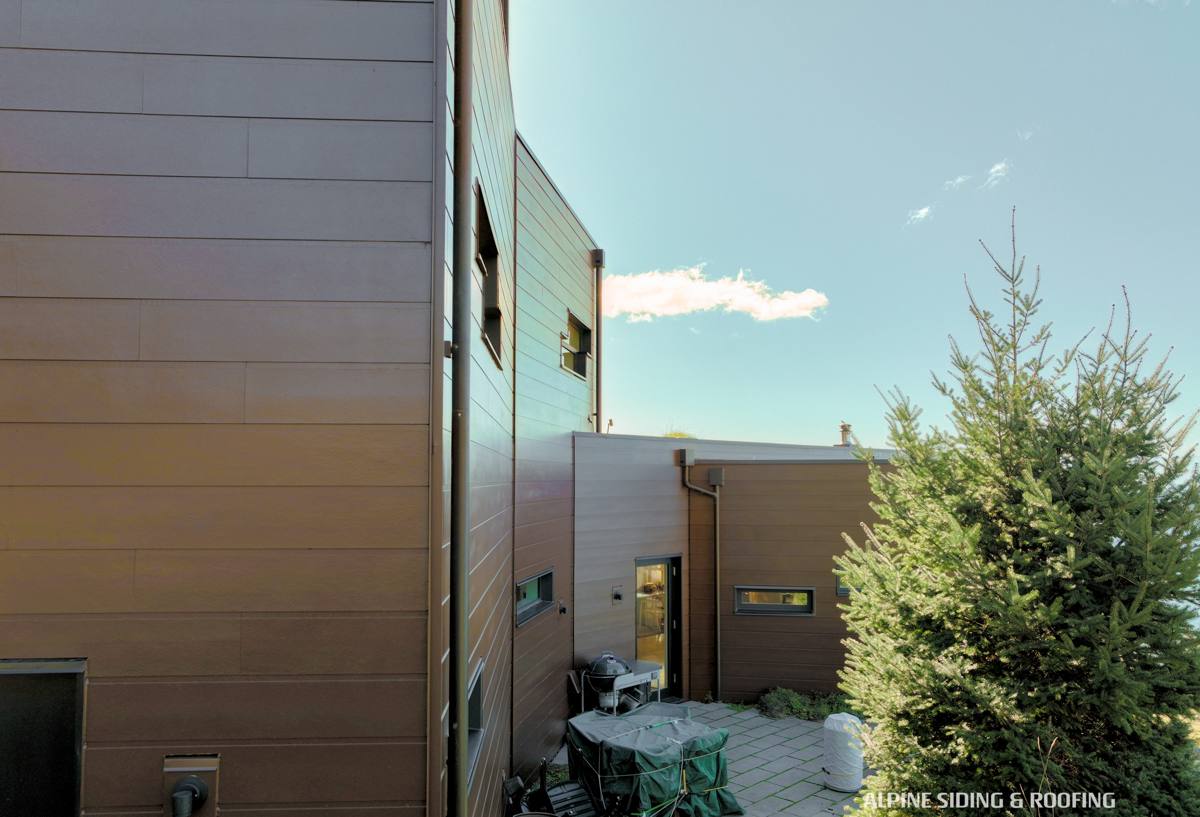
The vertical board and batten profile has deep roots in this part of Washington. It's the siding style most associated with barns, farmhouses, and the agricultural buildings that still define a lot of the Skagit Valley's character, and it translates well to modern homes that want a clean, linear look without going full modern-flat panel. It also happens to be one of the least forgiving siding styles when it comes to water management.
The vertical seams between boards and the battens that cover them create dozens of linear feet of potential water entry points on an average home — far more seams per square foot than horizontal lap siding. On a home in a dry climate, a small installation shortcut at one of those seams might never cause a problem. In Sedro-Woolley, where driving rain hits walls at an angle for a good part of the year, a poorly flashed or poorly gapped batten seam will find water eventually. That's not a knock on the style — it's just the trade-off you accept for the look, and it's why the install matters more here than almost anywhere else in the county.
The Local Climate Factors That Drive the Install Details
- Salt-influenced air: moisture carried up the valley accelerates corrosion on exposed or poor-quality fasteners and trim hardware.
- Driving, wind-blown rain: pushes water sideways into vertical seams and batten joints that would stay dry in calmer climates.
- Long moss and algae season: shaded walls under trees or on north exposures stay damp for extended stretches, which favors growth on porous or poorly sealed surfaces.
- Freeze-thaw swings: not extreme here, but frequent enough that trapped moisture behind siding gets a repeated freeze cycle to work with over a winter.
What a Correct Board & Batten Installation Actually Involves
Board and batten looks simple from the street — vertical boards, battens over the seams — but a correct installation is a system, not a stack of boards. The parts that actually determine whether it lasts are almost all hidden once the job is done.
The Water Management Layer
Every board and batten wall needs a continuous weather-resistive barrier behind it, and in a climate like this one we treat a drainage gap as standard, not optional. Furring strips or a drainage wrap create a gap behind the boards so any water that does get past the surface can drain and dry out instead of sitting against the wall sheathing. Skipping this gap is one of the most common shortcuts we see on board and batten jobs, and it's the one most likely to cause rot years down the road, well after the crew that installed it is gone.
Flashing and Seams
Every horizontal joint, every window and door head, and every point where the siding meets a roofline, deck, or trim needs proper flashing — not just a bead of sealant. Caulk fails; flashing sheds water by geometry and lasts as long as the wall does. On a home in Sedro-Woolley's rain pattern, this detail alone is often the difference between a wall that's dry in fifteen years and one with hidden sheathing damage.
Fasteners and Hardware
Given the salt-influenced moisture in this area, we use corrosion-resistant fasteners rated for the exposure, and we fasten battens into structural framing wherever possible rather than just through the panel into sheathing. Streaking rust stains on light-colored board and batten siding are almost always a sign that cheaper fasteners were used.
Gaps, Reveals, and Factory-Finished Edges
Fiber cement board and batten needs consistent expansion gaps at every seam, and any field-cut edge should be sealed or primed — factory finishes protect the face of the board, but a raw cut edge left unsealed will wick moisture right into the material. This is a small step that takes minutes and gets skipped constantly on rushed jobs.
Why We Only Install James Hardie Fiber Cement for This Style
Board and batten is sold in several materials — cedar, engineered wood, vinyl, and fiber cement — and we made a standing decision to install only James Hardie fiber cement, in any siding style, anywhere we work in Skagit County. For board and batten specifically, that decision matters even more than usual, because this profile is harder on materials than lap siding.
Wood board and batten looks great initially but needs ongoing refinishing, and in a climate with this much sustained moisture, real wood battens and boards are the first thing to show rot at end grain and fastener points. Engineered wood products have closed some of that gap but are still wood-based at the core, meaning they're more sensitive to sustained moisture exposure than a cement-based product. Vinyl board and batten sheds water fine but relies on snap-together panel systems that can rack, gap, or fade, and it doesn't hold paint if a homeowner ever wants to change the color down the road.
James Hardie's fiber cement is non-combustible, dimensionally stable across our wet-to-dry seasonal swings, and comes with a factory-applied ColorPlus finish engineered to resist the fading and moss-friendly surface breakdown that hits painted wood products first. Hardie also engineers its HZ5 product line specifically for climates like ours — the freeze-thaw, moisture-cycling Pacific Northwest zone — rather than a single generic formulation sold everywhere. That's the whole reason we standardized on one manufacturer instead of offering several options: we've seen what holds up here and what doesn't.
Comparing Board & Batten Material Options
| Material | How It Handles Sedro-Woolley's Climate | Long-Term Upkeep |
|---|---|---|
| Cedar / real wood | Attractive initially; end grain and battens absorb moisture in sustained wet seasons | Frequent refinishing, repainting, and rot inspection |
| Engineered wood | More moisture-resistant than solid wood but still wood-based at the core | Moderate; manufacturer moisture guidelines must be followed closely |
| Vinyl | Sheds surface water but panel systems can gap, rack, or fade under UV and seasonal cycling | Low, but color and panel integrity fade over time; cannot be repainted easily |
| James Hardie fiber cement (HZ5) | Non-combustible, dimensionally stable, engineered for wet freeze-thaw climates | Low; factory finish resists fading and moss-friendly surface breakdown |
What Drives Cost on a Sedro-Woolley Board & Batten Project
We don't quote a job without seeing the walls, but the factors that move price on almost every board and batten project in this area are consistent:
| Factor | Why It Matters |
|---|---|
| Board width and reveal spacing | Narrower reveals and more battens mean more seams, more flashing, and more labor |
| Number of stories / access | Second-story and steep-lot work needs more scaffolding and safety setup |
| Tear-off vs. new construction | Removing old siding and repairing sheathing underneath adds time before install starts |
| Trim and corner detail | Board and batten's clean look depends on precise corner, window, and fascia trim work |
| Drainage gap / rainscreen system | A properly furred, ventilated wall assembly costs more upfront and saves money in repairs later |
An accent application on a gable end or entry costs far less than a full-home board and batten replacement, and existing damage found once old siding comes off can change the scope. We'd rather flag that possibility upfront than surprise a homeowner mid-project.
Our Process for Sedro-Woolley Homes
- On-site assessment: we walk the exterior, check for existing moisture damage, note sun/shade exposure and drainage patterns specific to the lot.
- Scope and material plan: board width, batten spacing, trim details, and drainage gap approach are set before a fastener goes in.
- Tear-off and sheathing check: old siding comes off and sheathing is inspected and repaired before anything new goes on — this is where hidden problems get caught.
- Water management install: weather-resistive barrier, furring/drainage gap, and flashing at every seam, window, and roofline transition.
- Board and batten install: Hardie panels and battens fastened to spec, with sealed edges and corrosion-resistant hardware throughout.
- Final walk-through: we go over the finished work with the homeowner and flag anything that needs seasonal attention.
Living With Board & Batten in a Moss and Moisture Climate
Even a correctly installed system benefits from a little seasonal attention in this area. Shaded, north-facing walls and anything near overhanging trees are the spots most likely to develop surface moss or algae over a long wet season — this is a surface issue on a properly finished Hardie wall, not a sign of failure, and it typically rinses off rather than requiring aggressive treatment. Keeping gutters clear and vegetation trimmed back from walls does more to prevent buildup than anything applied to the siding itself. We'll point out any spots on a given home that are more exposed than others during the final walk-through, since every lot in Sedro-Woolley holds moisture a little differently depending on tree cover and orientation.
What to Look For When Hiring a Board & Batten Contractor Here
- Ask specifically how they handle the drainage gap behind board and batten — "we just nail it up" is a red flag in this climate.
- Ask what flashing details they use at seams, window heads, and roof transitions, not just what caulk they use.
- Ask what fastener type they use and whether it's rated for coastal-influenced moisture exposure.
- Ask whether they've worked in Sedro-Woolley or elsewhere in Skagit County specifically, not just "the Pacific Northwest" generally.
- Ask what happens if they find sheathing damage once old siding comes off, and how that changes the quote.
Why a Crew That Already Works Sedro-Woolley Matters
We're based out of Burlington and work throughout Skagit County, including Sedro-Woolley regularly enough to know which streets sit in heavier shade, which lots catch the worst of the wind-driven rain, and which older homes in the area are more likely to have moisture issues already sitting behind their existing siding. That local pattern recognition isn't something a crew driving up from outside the area picks up on a single job — it comes from doing this work here repeatedly, season after season. It also means straightforward answers on permitting and inspection expectations specific to this area, and a crew that's still local if a question comes up after the job is finished.
If you're weighing board and batten for a home in Sedro-Woolley, we're happy to take a look and walk through what a correct install would involve for your specific walls and exposure. Reach out for a free, no-pressure estimate using the form below.