 Burlington
 Why Sedro-Woolley Roofs Wear on a Different Timeline
Roofs in Sedro-Woolley don't fail the same way roofs do in drier parts of the country. The Skagit Valley sits under a steady flow of moist Pacific air for most of the year, and that air carries a mix of salt-tinged moisture pushed inland from Puget Sound, long stretches of driving rain in fall and winter, and enough shade and dampness to keep moss and algae active almost year-round. None of that shows up as one dramatic failure. It shows up as granule loss that happens a few years early, fasteners that corrode quietly under the shingles, and moss mats that hold water against the roof deck long after a storm has passed.
A roof that would last 25 years in a dry climate can start showing real trouble at 15 to 18 years here if it wasn't built with this weather in mind. That's not a defect in the shingle — it's what happens when a standard install meets a climate that never really lets a roof dry out.
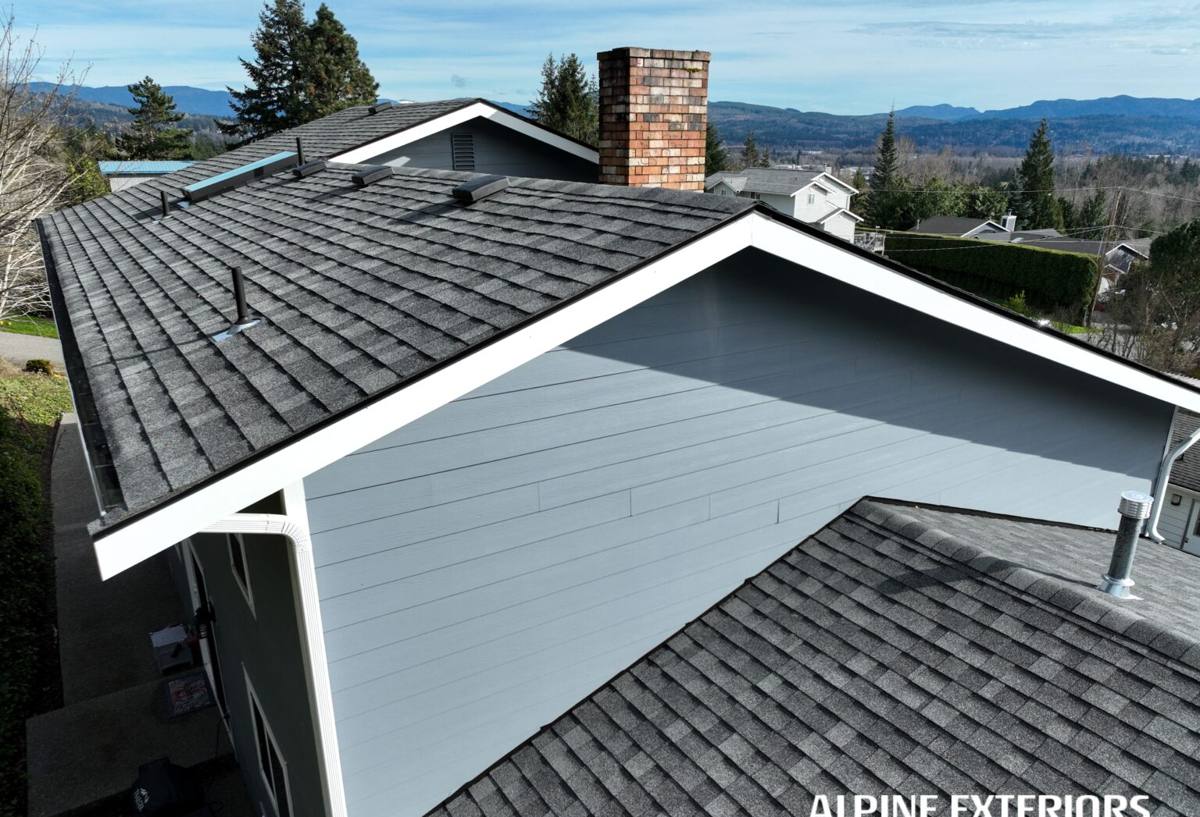
Signs Your Roof Has Moved From "Watch It" to "Replace It"
Patching makes sense for isolated damage. Replacement makes sense once the roof's underlying systems — decking, underlayment, flashing — are compromised in more than one spot. Here's what tips it from a repair to a full replacement conversation:
- Granules collecting in gutters or at downspout outlets, especially on the north- or shade-facing slopes
- Moss growing in mats rather than thin surface streaks, particularly under tree cover or on low-slope sections
- Soft or spongy decking felt underfoot in the attic, or daylight visible through the roof boards
- Repeated leaks around the same chimney, skylight, or valley despite prior flashing repairs
- Shingles that are curling, cupping, or losing their seal in patches larger than a few square feet
- A roof approaching or past 20 years old that has never had underlayment or flashing upgraded
If you're only seeing one of these, a repair or a targeted flashing fix is often the honest answer. A correct roofer will tell you that. Replacement makes sense once several of these are true at once, because at that point you're paying to patch a system that's failing structurally, not cosmetically.
What a Correct Roof Replacement Actually Involves
Tear-Off and Deck Inspection
A full tear-off, not an overlay, is the standard for this area. Overlaying a new layer of shingles over an existing roof traps moisture between layers instead of letting it escape, and in a climate with this much sustained dampness, that trapped moisture is exactly what accelerates rot. Tear-off also exposes the deck, which is the only way to actually confirm its condition. Any soft, delaminated, or water-stained sheathing gets replaced before anything new goes down — skipping this step is the single most common shortcut that causes a "new" roof to leak within a few years.
Underlayment and Flashing
Ice-and-water shield membrane belongs at eaves, valleys, and around every penetration — chimneys, vent stacks, skylights — regardless of whether ice damming is common here, because that same membrane is what stops wind-driven rain from working backward under the shingles during a hard storm. Synthetic underlayment across the rest of the field sheds water better than old-style felt and holds up through the inevitable delays a wet-climate install schedule brings. New flashing at every valley, wall intersection, and roof penetration matters more here than in drier regions, because failed flashing combined with sustained rain finds its way inside far faster than a failed shingle does on its own.
Ventilation
Balanced intake and exhaust ventilation — soffit vents feeding air in, ridge or roof vents letting it out — keeps moisture from condensing inside the attic. In a climate this humid, an under-ventilated attic traps warm, moist household air against cold sheathing, which rots the deck from underneath even when the shingles above are doing their job perfectly. Ventilation is easy to skip because it doesn't show from the ground, and it's one of the first things worth asking a bidder about directly.
Choosing Materials for This Climate
There's no single "correct" material — the right choice depends on the roof's slope, tree cover, and how long the homeowner plans to stay in the house. Here's how the common options actually perform under Skagit Valley conditions:
| Material | How It Handles This Climate | Trade-Offs |
|---|---|---|
| Algae-resistant (AR) asphalt shingles | Copper- or zinc-infused granules slow moss and algae growth; good balance of cost and performance | Still needs periodic cleaning under heavy shade; granule loss accelerates near end of life |
| Standard (non-AR) asphalt shingles | Lower upfront cost; performs fine on sun-exposed, well-ventilated roofs | Moss and algae take hold faster under tree cover; shorter realistic lifespan here |
| Standing seam metal | Sheds moss and heavy rain efficiently; long service life with minimal surface maintenance | Higher upfront cost; fastener and flashing detailing must be installer-sensitive |
| Cedar shake | Traditional look, but holds moisture against the wood in a climate that rarely lets it fully dry | Higher maintenance burden and shorter practical lifespan than in drier regions; we're upfront with homeowners about this before it's installed |
We install what fits the house and the homeowner's budget and maintenance expectations — but we'll always walk through these trade-offs honestly before the contract is signed, rather than let a homeowner find out about a moisture or maintenance issue two years in.
Moss, Algae, and the Long Wet Season
Sedro-Woolley sits far enough up the valley that moss pressure comes as much from tree cover and shade as from the salt air moving inland off the Sound, but the net effect is the same: roofs here stay damp longer between storms than roofs in drier climates, and moss and algae take advantage of that. Moss isn't just cosmetic — its root structure lifts shingle edges as it grows, breaking the seal and giving wind-driven rain a way underneath. Left alone through a wet season, that lifted edge turns into a leak.
Copper or zinc control strips installed near the ridge are a low-maintenance way to slow regrowth after a replacement, since rain carries trace metal ions down the roof face. They don't eliminate the need for occasional cleaning on heavily shaded slopes, but they meaningfully extend the time between cleanings, and we typically recommend them on any roof with significant tree cover.
What Replacement Costs Depend On
Every roof is different, but the same handful of factors drive the price on almost every job we quote in this area:
| Factor | Why It Matters |
|---|---|
| Roof size and number of planes | More square footage and more valleys/hips mean more material and more labor-intensive flashing work |
| Current deck condition | Rotted sheathing found during tear-off adds material and labor that can't be accurately quoted until the old roof is off |
| Material choice | Standard asphalt, AR shingles, and metal carry meaningfully different material costs and installation time |
| Roof pitch and access | Steep or hard-to-access roofs require more safety setup and slow the work down |
| Ventilation and flashing scope | Adding or correcting ventilation, and replacing all flashing rather than reusing old pieces, adds cost but is not optional for a correct job |
Because deck condition is often the biggest wildcard, we build a contingency into every estimate and explain up front what a per-sheet replacement rate looks like if we find rot once tear-off starts — no open-ended surprises after the fact.
Our Process, Start to Finish
- Inspection and estimate — we walk the roof (or use a lift for steep sections), check the attic for ventilation and moisture signs, and give a written scope and price
- Scheduling around weather — we plan tear-off days around the forecast and stage the job so no more roof is opened than can be dried in and covered the same day
- Tear-off and deck inspection — old roofing removed, deck inspected board by board, any damaged sheathing replaced
- Underlayment, flashing, and ventilation — ice-and-water membrane, synthetic underlayment, all-new flashing, and ventilation corrections installed to code
- New roofing installed — material installed to manufacturer spec, including proper nailing pattern and exposure for the pitch
- Cleanup and magnetic sweep — job site and yard cleared of debris and stray fasteners
- Final walkthrough — we review the finished roof and warranty paperwork with the homeowner directly
Why Hiring a Crew That Already Works Sedro-Woolley Matters
A roof replacement is only as good as the details a crew doesn't skip when no one's checking — and those details are shaped by the local building department's expectations, the local permit process, and knowing which flashing and ventilation choices actually hold up to a Skagit Valley winter versus which ones just look right on paper. A crew that works this area regularly already knows the local permitting requirements, has relationships with regional material suppliers so a mid-project material issue doesn't turn into a week-long delay, and has seen firsthand how different products and details hold up here over several wet seasons rather than in a showroom.
That local track record also means we can move fast when weather windows open. In a climate where driving rain can close a multi-day install window without much warning, a crew that plans around this weather pattern as routine — rather than as an unusual complication — finishes the job with less risk of a partially torn-off roof getting caught in a storm.
Caring for a New Roof in This Climate
A correctly installed roof still benefits from a little seasonal attention here. Keep gutters and downspouts clear so water isn't backing up under the eaves, especially during the heaviest fall and winter rain. Have overhanging branches trimmed back where practical — less shade and debris on the roof means less moss pressure over time. A visual check after major windstorms, looking for lifted shingles or debris in valleys, catches small issues before a wet season turns them into leaks. And if control strips weren't installed at the time of replacement, they can typically be added later during a routine inspection.
If your roof is showing its age or you just want an honest read on where it stands, we're happy to take a look. The estimate is free, there's no pressure attached to it, and you'll get a straight answer about whether you need a repair, a replacement, or nothing at all right now — just fill out the form below.