 Burlington
 Big Lake sits back from the open water of Puget Sound, tucked into the wooded, semi-rural country between Burlington and Sedro-Woolley. That inland position changes what a siding job here has to deal with compared to a house on the water in Anacortes or La Conner. You get less direct salt spray, but you trade it for something just as hard on exterior materials: shade, standing humidity off the lake, and a moss season that runs most of the year. A siding installation done right for Big Lake looks different in a few specific ways from one done for a wide-open, sun-exposed lot, and it's worth understanding those differences before you sign a contract.
What Big Lake's Setting Actually Does to Siding
Most of the homes around Big Lake sit under a mix of fir, cedar, and alder canopy, often close to the shoreline or set back into timber. That canopy is part of what makes the area appealing, but it's also the single biggest factor working against your siding.
Shade and slow-drying walls
Tree cover blocks the sun and slows the wind, which means north- and lake-facing walls can stay damp for days after a storm instead of drying out in an afternoon. Skagit County gets a long, wet fall and winter to begin with; add shade on top of that and you've got siding that spends more of the year holding moisture than shedding it.
Moss and algae growth
Damp, shaded siding is exactly what moss and green algae need to take hold. On wood-based products, that growth holds water against the surface and accelerates rot at seams, laps, and anywhere caulk has started to fail. On the north side of a shaded Big Lake home, you'll often see moss establish itself in places a sunnier lot in Burlington proper never would.
Driving rain and regional marine weather
Even set back from the water, Big Lake still gets the same wind-driven, sideways rain that moves through the rest of Skagit County off Puget Sound. It's not the direct salt exposure of a bluff-top house, but the marine air pattern still pushes moisture into every lap and joint that isn't detailed correctly. Combine that with lake humidity sitting in the trees overnight, and you have a wall system that needs a real drainage plan, not just a weather-resistant surface.
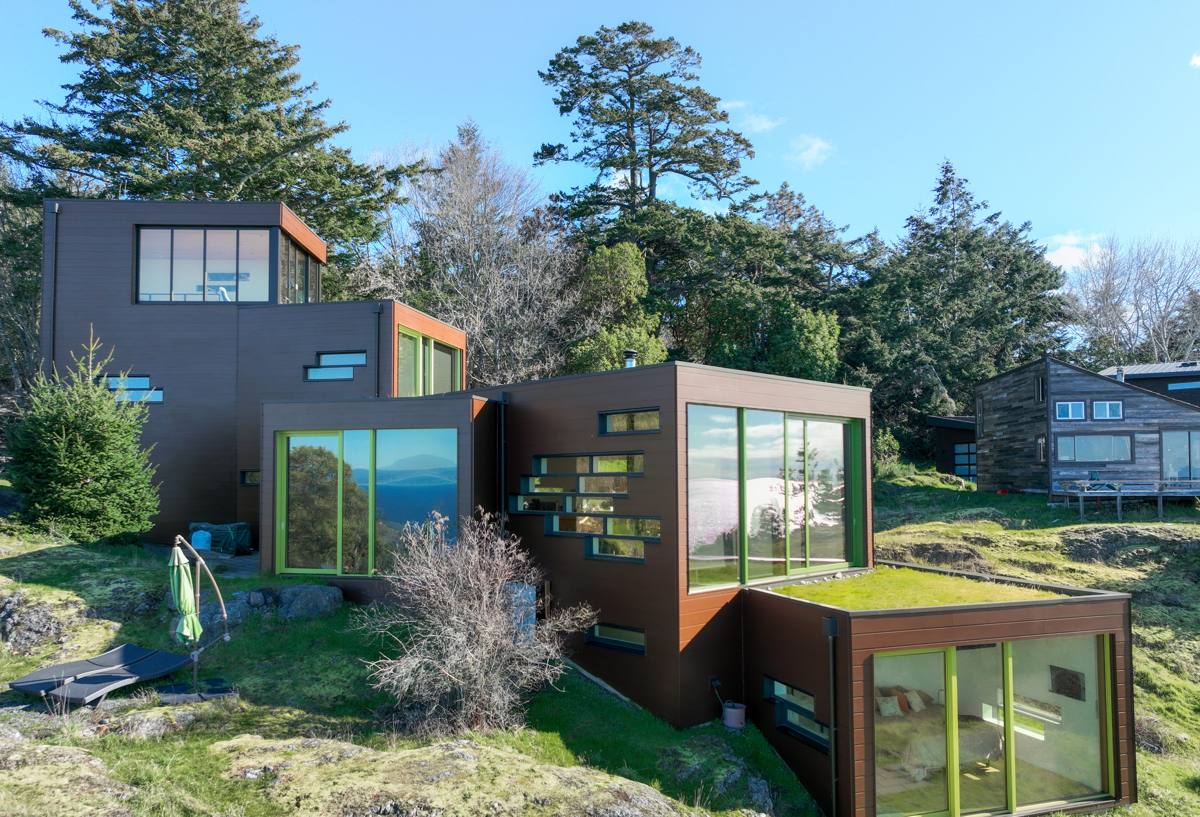
What a Correct Installation Involves Here
Given that climate profile, the installation details matter more at Big Lake than they would on a dry, open lot. This is where a lot of siding jobs go wrong — not because the wrong product was chosen, but because the wrong details were skipped.
- Drainage gap (rain screen): a ventilated space behind the siding so any moisture that gets past the surface can drain and the wall can dry out between storms — essential on shaded, slow-drying walls.
- Weather-resistive barrier: a continuous, correctly lapped moisture barrier underneath, with all penetrations (vents, hose bibs, lights) properly flashed before siding goes on.
- Flashing at every horizontal transition: window heads, door tops, deck ledgers, and roof-to-wall intersections are where water actually gets in — these need metal or membrane flashing, not just caulk.
- Correct fastener pattern and clearance: James Hardie panels and lap siding have specific nailing schedules and a minimum clearance from grade, decks, and roof lines that keeps splash-back and standing moisture away from the bottom edge.
- Factory-finished edges sealed on site: any field-cut piece needs its cut edge primed or sealed so the fiber cement isn't left absorbing water at every trim line.
None of this is unusual for James Hardie installation — it's the manufacturer's own spec. But on a shaded, humid lot like Big Lake, skipping any one of these steps shows up faster than it would on a drier property, because the wall never gets a long dry stretch to mask the mistake.
Why We Only Install James Hardie Fiber Cement
We made a standard years ago to install one siding system — James Hardie fiber cement — and not offer vinyl, LP SmartSide, or other wood-based composite products, even though we get asked. In an area like Big Lake, the reasoning is straightforward: fiber cement doesn't feed moss the way wood fiber does, it doesn't swell, delaminate, or take on water at cut edges the way engineered wood can if a seal fails, and it holds up to the freeze-thaw swings Skagit County gets in the shoulder seasons without the joints opening up. James Hardie's ColorPlus factory finish also means the color coat is baked on and warrantied separately from the substrate, so a shaded wall that stays damp longer isn't relying on a field-applied paint job to keep looking good. It costs more up front than vinyl and is a more exacting install than engineered wood siding — we tell every homeowner that plainly — but for a climate that punishes moisture-retentive materials, it's the product we're willing to warranty our work on.
Our Process for a Big Lake Job
- Site walk and moisture assessment: we look at tree cover, sun exposure per elevation, existing rot or moss, and how water currently moves off the roof and around the foundation.
- Tear-off and sheathing inspection: old siding comes off and we check the sheathing underneath for soft spots or existing water damage before anything new goes on — this is where hidden problems on shaded walls usually surface.
- Repair and re-flash: any damaged sheathing gets replaced and all window, door, and roofline flashing gets brought up to current standards, not just patched.
- Weather barrier and rain screen install: continuous barrier, properly lapped, with a drainage gap behind the siding.
- James Hardie installation to manufacturer spec: correct fastener schedule, clearances, and factory-finish touch-up at every cut and seam.
- Final walk-through: we go over what was done, what to expect from the finish over the first year, and basic care specific to your lot's sun and shade pattern.
Cost Factors for a Big Lake Siding Job
Every property is different, so we don't quote sight unseen, but these are the factors that most often move the number up or down on a lake-adjacent, tree-covered lot:
| Factor | Why it matters here |
|---|---|
| Extent of hidden sheathing damage | Shaded walls with a history of moss or slow-drying siding more often need sheathing repair once old siding is removed |
| Access and site clearance | Tree cover, slope toward the lake, and tight setbacks can affect scaffolding and material staging |
| Number of elevations needing flashing rework | North and lake-facing walls with prior moisture issues typically need more flashing correction than sun-exposed sides |
| Trim and siding profile | Lap width, trim detail, and any board-and-batten or panel accents change labor and material |
| Existing moss or algae remediation | Heavily grown-in siding sometimes needs cleaning and drying time before tear-off can proceed safely |
Why a Local Crew Matters for This Job
Big Lake isn't a subdivision with uniform lots — it's a mix of older cabins converted to full-time homes, newer lake houses, and wooded rural properties, each with its own sun exposure, well and septic layout, and access challenges. A crew that already works this specific pocket of Skagit County knows which elevations on a shaded lot tend to hold moisture, how the lake's humidity behaves differently than open-country weather ten minutes away in Burlington, and what the local building department expects for flashing and clearance details. That's not something a crew driving up from outside the area picks up on the first job — it's something you learn from doing houses on this lake and around it, storm season after storm season.
Keeping Big Lake Siding Performing After Install
Correct installation is most of the job, but a few habits help any siding — including James Hardie — perform well long-term on a shaded, humid lot:
- Trim back tree limbs and brush that keep specific wall sections in constant shade or contact with foliage
- Rinse visible moss or algae growth off with a garden hose and soft brush before it thickens — avoid pressure washing directly at seams
- Keep gutters clear so roof runoff isn't sheeting down a wall section repeatedly
- Check caulking at trim joints and penetrations every couple of years and have gaps re-sealed before they open into leaks
- Watch for soft spots or discoloration at the bottom few inches of siding near grade, decks, or downspouts
If you're planning a siding project on Big Lake and want a straight answer on what your specific lot needs, we're happy to walk the property with you and give a free, no-pressure estimate.