 Burlington
 Why Siding Repair Looks Different in Clear Lake
Clear Lake sits in a part of Skagit County where tree cover, lake moisture, and long stretches of overcast, wet weather combine to put steady pressure on exterior siding. Homes here don't just deal with rain — they deal with rain that comes sideways during winter storms, humidity that lingers under mature trees and near the water, and a moss season that can run from fall through spring. Add in the salt-tinged air that moves through this stretch of the Puget Sound lowlands, and you have a climate that's genuinely tougher on siding than most homeowners realize until something starts to fail.
A siding repair in this area isn't just patching a hole or replacing a cracked board. It's addressing whatever let moisture in, matching the fix to how the rest of the wall performs, and making sure the repair doesn't become the next weak point. That's a different job than a quick fix on a house in a drier climate, and it's why we treat repair calls in Clear Lake as a diagnostic job first and a repair job second.
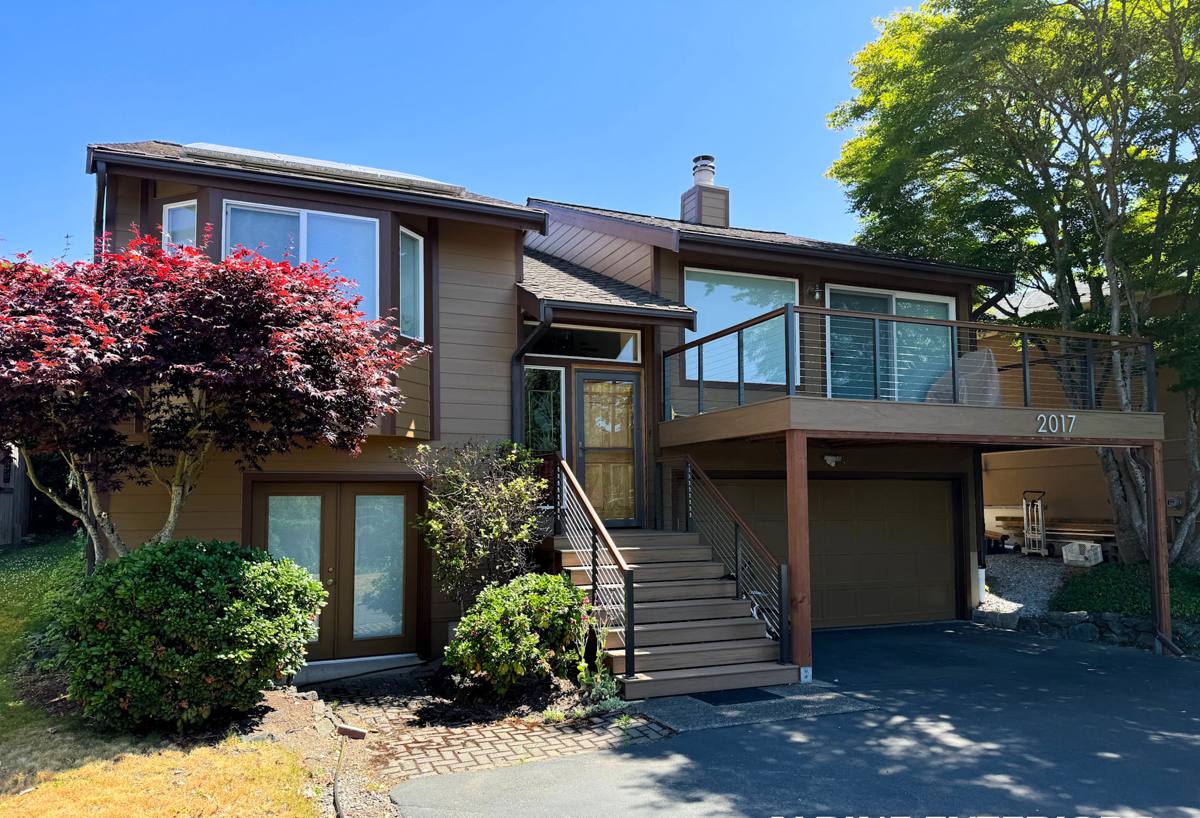
Common Repair Issues We See on Clear Lake Homes
Moisture Intrusion at Seams and Penetrations
Driving rain finds the weak points — unsealed seams, poorly flashed window and door trim, and spots where old caulk has shrunk or failed. Once water gets behind siding, it doesn't dry out quickly in this climate, which is how a small leak turns into rot, staining, or a soft spot in the wall behind the siding.
Moss and Algae Growth
North-facing walls, shaded sections near trees, and anywhere siding stays damp longer than it should are prone to moss and algae buildup. Beyond the cosmetic issue, moss holds moisture against the siding surface and can accelerate deterioration of certain materials, especially wood-based products and older painted siding.
Impact and Storm Damage
Wind-driven debris, falling branches, and the occasional hard freeze-thaw cycle cause cracked boards, dented panels, or popped fasteners. These are usually straightforward to repair — if they're caught before water gets behind the damaged section.
Failing Caulk and Sealant
Sealant has a service life, and in a climate with this much sustained moisture exposure, it doesn't last as long as manufacturers' best-case ratings suggest. Cracked or shrunken caulk at trim boards, corners, and penetrations is one of the most common things we find during a repair inspection — and often the actual root cause of a "mystery" leak elsewhere on the wall.
Fastener and Trim Corrosion
Metal fasteners and trim components exposed to persistent moisture and coastal-influenced air can corrode over time, especially if the wrong fastener type was used during the original installation. Corroded fasteners lose holding power, which shows up as loose panels or trim that's pulling away from the wall.
What a Correct Siding Repair Actually Involves
A repair that's done right starts before anyone touches the damaged board. Here's what we look at on every Clear Lake repair call:
- Root cause first. We find out why the damage happened — a flashing failure, a caulking gap, an impact, or a material issue — before we fix the symptom.
- Water-resistive barrier check. If moisture got behind the siding, the house wrap or building paper underneath may also need attention, not just the visible siding.
- Matching material and profile. Repairs need to match the existing siding's profile, exposure, and finish as closely as possible so the patch doesn't stand out or create a new water path.
- Proper flashing and sealant. Any repair touching a seam, corner, or penetration gets flashed and sealed to current best practice, not just caulked over.
- Fastener correction. If corrosion or improper fastener type contributed to the failure, we correct it as part of the repair rather than reusing what's already failing.
Skipping any of these steps is how a "quick fix" ends up needing to be redone within a year or two — especially in a climate that gives moisture every opportunity to find a way back in.
Repair vs. Replacement: How We Make the Call
Not every damaged section needs a full re-side, but not every problem is a simple patch either. Here's how we generally think through it:
| Situation | Usually a Repair | Usually Points to Replacement |
|---|---|---|
| Damage extent | Isolated to one or a few boards/panels | Spread across multiple walls or the whole elevation |
| Moisture history | Recent, caught early, limited intrusion | Long-term leak with rot in the sheathing or framing |
| Siding material | Sound material, isolated failure point | Original material is at or past its service life |
| Age of siding | Mid-life siding in otherwise good condition | Siding already near or past its expected lifespan |
| Underlying structure | Sheathing and framing intact | Structural wood damage found once siding is opened up |
We'll always tell you honestly which category your home falls into. If a repair is the right call, we won't push a replacement — and if the damage is more extensive than it looks from the ground, we'll show you what we found before recommending anything.
Our Process for Clear Lake Siding Repair Calls
- Inspection. We look at the damaged area and the surrounding siding, not just the spot you called about — hidden moisture issues rarely stay contained to one board.
- Honest diagnosis. We explain what caused the damage and what it will take to fix it correctly, including if there's a chance underlying rot or sheathing damage is involved.
- Straightforward estimate. You get a clear scope of work and price before anything is touched — no surprise add-ons mid-project.
- Repair to spec. Matching material, correct flashing and sealant details, proper fasteners — the same standards we hold for a full installation, applied to the repair.
- Cleanup and check. We clean the work area and walk the repair with you so you know exactly what was done and why.
Why We Only Work With James Hardie Fiber Cement
Repair calls are where the difference between siding materials becomes obvious. We install and repair James Hardie fiber cement exclusively — we don't install vinyl, LP SmartSide, Cemplank, Allura, or primed wood siding, and we're direct with homeowners about why.
Vinyl siding can crack in cold snaps and warp under sustained heat, and once a panel is compromised, matching discontinued colors or profiles years later is often impossible. Engineered wood products like LP SmartSide perform well when installed and maintained precisely, but they're more sensitive to sustained moisture exposure than fiber cement — a real consideration in a climate where damp conditions can persist for months. Primed wood and cedar require the most diligent maintenance of all, and in a moss-prone, moisture-heavy area like Clear Lake, that maintenance burden adds up fast.
James Hardie's fiber cement is non-combustible, dimensionally stable in wet-dry cycling, and its ColorPlus factory finish is engineered to hold up against UV and moisture exposure without repainting on the same schedule as painted wood. When we do repair Hardie siding, replacement boards match the original profile and finish cleanly, and the product's track record in wet Pacific Northwest climates is a big part of why it's the only system we stand behind — for new installs and for repairs.
Signs Your Siding Needs a Repair Call
- Visible cracks, splits, or holes in any siding panel or board
- Soft, spongy, or discolored spots when you press on the siding
- Bubbling, peeling, or persistent staining on the siding surface
- Moss or algae buildup that keeps returning after cleaning
- Gaps opening up at seams, corners, or trim boards
- Boards or panels that have pulled away from the wall or feel loose
- A musty smell or visible moisture on the interior wall behind exterior siding
- Fasteners that are rusted, popped out, or visibly failing
Catching any of these early is almost always cheaper and simpler than waiting until the damage spreads — moisture problems in this climate rarely stay small on their own.
Why a Crew That Already Works Clear Lake Matters
Siding repair isn't a one-size-fits-all trade. A crew that regularly works Clear Lake and the surrounding Burlington and Skagit County area already knows which sides of a house take the worst of the driving rain, where moss tends to establish first, and how the local moisture patterns tend to expose weak points in a wall assembly. That familiarity means less guesswork and a repair that's built for how this specific climate actually behaves — not a generic fix pulled from a manual written for a drier region.
It also means accountability. A contractor working steadily in this area has a reputation to protect with the neighbors down the street, which is a different incentive than a crew passing through on a one-off job.
After the Repair: Keeping Siding in Good Shape
Once a repair is complete, a little maintenance goes a long way in this climate:
- Rinse siding periodically to keep moss and algae from re-establishing, especially on shaded or north-facing walls
- Keep gutters clear so overflow doesn't run down the siding face repeatedly
- Trim back vegetation that keeps a section of wall shaded and damp longer than the rest of the house
- Have caulk and sealant checked every couple of years, since it's often the first thing to fail again
- Walk the exterior after major storms to catch new damage before it sits through another wet season
If you're seeing signs of trouble on your siding in Clear Lake or anywhere around Burlington, we're happy to take a look. Reach out for a free, no-pressure estimate — we'll give you a straight answer on whether it's a repair or something bigger, with no obligation either way.