 Burlington
 Building Decks That Actually Hold Up in Alger
Alger sits close enough to Samish Bay and the open water of Skagit County that homes here deal with a specific mix of weather most inland decks never see: salty, moisture-laden air off the water, long stretches of driving rain through fall and winter, and shaded, damp conditions that keep moss and algae growing for most of the year. A deck built without that combination in mind will look fine for a season or two and then start showing problems — soft spots, rusted fasteners, slick green boards, rot at the ledger board. A deck built for it holds its finish, its footing, and its safety for decades.
We build and repair decks throughout the Burlington and greater Skagit County area, and Alger properties get a specific approach because of where they sit. This page covers what that approach actually involves — the materials, the structural details, and the process — so you know what a correctly built deck for this location looks like before you hire anyone.
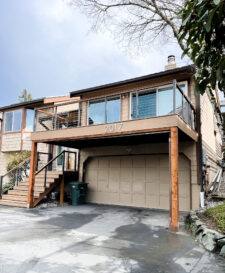
What Alger's Climate Does to an Outdoor Deck
Three things drive almost every deck problem we see in this part of Skagit County:
Salt air and moisture
Proximity to Samish Bay means airborne salt and near-constant humidity settle on exposed wood and metal. Salt speeds up corrosion in fasteners and connectors, and it holds moisture against surfaces longer than dry inland air would. Hardware that would last for years in a drier climate can start showing rust streaks and staining much sooner out here.
Driving rain
Western Washington rain isn't always gentle. When it comes in sideways off the water, it drives moisture into places a vertical rain never would — under railcaps, behind ledger flashing, into end-grain cuts that weren't sealed. Decks that aren't detailed for driving rain end up with hidden water intrusion long before anything looks wrong on the surface.
A long moss season
Shade, moisture, and mild temperatures give moss and algae a long growing window in Skagit County — often close to year-round on decks that don't get much direct sun. Beyond looking bad, moss holds moisture against the deck surface and turns boards slick and genuinely dangerous underfoot, especially on stairs.
Choosing Decking Material for This Location
There's no single "best" decking material — the right choice depends on how much upkeep you want to do, your budget, and how much shade and rain exposure the deck will actually see. Here's how the common options compare for an Alger property specifically.
| Material | How it handles our climate | Maintenance | Typical lifespan |
|---|---|---|---|
| Pressure-treated wood | Affordable and strong, but needs sealing to resist moisture and moss buildup; end cuts are vulnerable if not treated | Annual cleaning and re-sealing recommended | 15–20 years with upkeep |
| Cedar | Naturally moisture- and insect-resistant, ages to a silver-gray patina, but still needs periodic cleaning to keep moss off in shaded areas | Cleaning every 1–2 years, occasional oil or stain | 20–25 years with upkeep |
| Composite decking | Resists moisture absorption and won't rot, but can still grow surface algae in damp shade — needs occasional washing | Periodic washing, no sealing or staining | 25–30+ years |
| PVC/vinyl decking | Fully moisture-proof surface, best resistance to salt air and standing water; some products can feel harder underfoot | Occasional washing | 30+ years |
For homes closer to the water with heavier salt exposure, we generally steer clients toward composite or PVC decking for the walking surface, paired with corrosion-resistant fasteners throughout — the maintenance savings and moisture performance outweigh the higher upfront cost over the life of the deck. Wood is still a solid, honest choice if you're willing to keep up with sealing and cleaning, and we build plenty of them.
Structural Details That Matter More Here Than Elsewhere
The visible decking is maybe a third of what makes a deck last. The framing and connection points underneath are where most failures actually start, and they're where driving rain and salt air do the most damage.
Ledger board flashing
The ledger board — where the deck attaches to the house — is the single most common point of water intrusion on any deck. Correct flashing directs water away from this connection instead of letting it wick into the house rim joist. We don't skip this step or treat it as optional, even on smaller deck projects.
Joist protection
Exposed cut ends and joist tops absorb water fastest. Joist tape or a comparable moisture barrier on top of the framing, plus sealed end cuts, keeps rain from soaking into the structural wood even when the decking above is doing its job.
Footings and post bases
Skagit County soil holds moisture, and posts set directly in or near damp soil are prone to rot at the base. Proper footing depth and post bases that keep wood off the ground and out of standing water matter more here than in a drier climate.
Drainage and slope
A deck surface needs a slight slope away from the house so water sheds instead of pooling. On a rainy-season build, we check this during framing — not after the boards are down, when it's too late to correct.
Fasteners and Hardware: Where Salt Air Gets Overlooked
This is the detail that gets skipped most often on decks we're called out to repair. Standard galvanized fasteners can start corroding faster than expected in salt-influenced air, leading to rust streaking on the deck surface and, eventually, weakened connections. We use stainless steel or high-grade coated fasteners and structural connectors rated for coastal or corrosive exposure on every Alger-area build, not just as an upsell — it's a matter of the hardware actually lasting as long as the deck around it.
Railings and Stairs: Safety in Wet, Mossy Conditions
Railings and stairs see the most direct exposure to rain and moss, and they're the parts of a deck where a slick surface is genuinely dangerous rather than just unsightly. A few things we build into every deck here:
- Stair treads with enough texture or a non-slip surface treatment to stay safer when wet or mossy
- Railing posts anchored with corrosion-resistant hardware rated for the connection load, not just cosmetic fasteners
- Baluster spacing and railing height that meet current code, checked against Skagit County's adopted building code rather than assumed
- Drainage gaps between boards sized to shed water instead of trapping it against the stair structure
Our Deck Building Process
Every project runs through the same core steps, adjusted for your site and material choices:
- On-site assessment. We look at sun and shade exposure, drainage patterns, soil conditions, and how close the site is to prevailing wind and rain direction — all of which affect material and detailing choices for that specific spot.
- Design and material selection. We walk through decking, railing, and hardware options honestly, including trade-offs in cost, maintenance, and lifespan, so you're choosing with full information.
- Permitting. Deck permits in Skagit County depend on height, size, and attachment to the structure. We handle the permit process so the work is inspected and legal, which also protects you at resale.
- Footings and framing. This is where lifespan is decided — proper footing depth, ledger flashing, joist protection, and correct drainage slope all happen at this stage.
- Decking, railings, and stairs. Installed with corrosion-resistant fasteners and attention to gapping for drainage and seasonal wood movement.
- Final walkthrough. We go over the finished deck with you, including what maintenance it will need and when.
Permits and Code in Skagit County
Most new decks and many deck replacements in unincorporated Skagit County — which includes Alger — require a building permit, particularly when the deck is attached to the house or elevated above a certain height. Requirements can also touch on setback distances and railing specifications. We pull the necessary permits and build to inspected code rather than cutting that step, because an unpermitted deck can complicate a home sale or insurance claim down the road.
Keeping a Deck in Good Shape After It's Built
A well-built deck in this climate still needs some seasonal attention. A simple yearly routine goes a long way:
- Sweep debris off the surface regularly, especially fallen leaves and needles that trap moisture
- Wash the deck surface at least once a year to remove moss and algae before it builds up
- Check fastener heads and railing connections for early rust or looseness
- Reseal or re-stain wood decking on the manufacturer's recommended cycle, typically every 1–2 years
- Clear gaps between boards so water and debris keep draining instead of pooling
- Inspect under the deck once a year for signs of moisture at the ledger board or post bases
Why a Crew That Already Works in Alger Makes a Difference
Deck building isn't the same job everywhere in Washington. A crew used to drier, inland conditions may not think twice about standard hardware or skip the extra step of joist protection because it's never bitten them before. Working regularly in the Burlington and Alger area means we've already seen what salt air, driving rain, and a long moss season do to decks that weren't detailed for them — and we build to avoid those problems from the start rather than fixing them in five years. That local track record is the difference between a deck that needs attention every year and one that just quietly holds up.
If you're planning a new deck or replacing one that's showing its age, we're happy to take a look and talk through honest options for your property. Reach out for a free, no-pressure estimate using the form below.