 Burlington
 Why Stanwood Homes Need Siding That's Built for This Climate
Stanwood sits close enough to Puget Sound and the Stillaguamish delta that homes here deal with a specific combination of punishment: salt-laden air moving in off the water, long stretches of driving rain, and a moss and algae season that can run nine months out of the year in shaded, north-facing exposures. Any one of those factors is manageable. Together, they're exactly the conditions that expose weak siding systems faster than almost anywhere else in the region.
We install fiber cement siding on homes throughout this area, and the pattern is consistent: siding that isn't engineered for sustained moisture exposure and salt air starts showing problems years before it should — soft spots, swelling at seams, paint failure, or moss colonies that hold moisture against the wall assembly. Fiber cement done correctly doesn't eliminate the climate's effect on a house, but it gives the exterior a material that's dimensionally stable, doesn't absorb water the way wood-based products do, and holds a factory finish instead of relying on field-applied paint to keep water out.
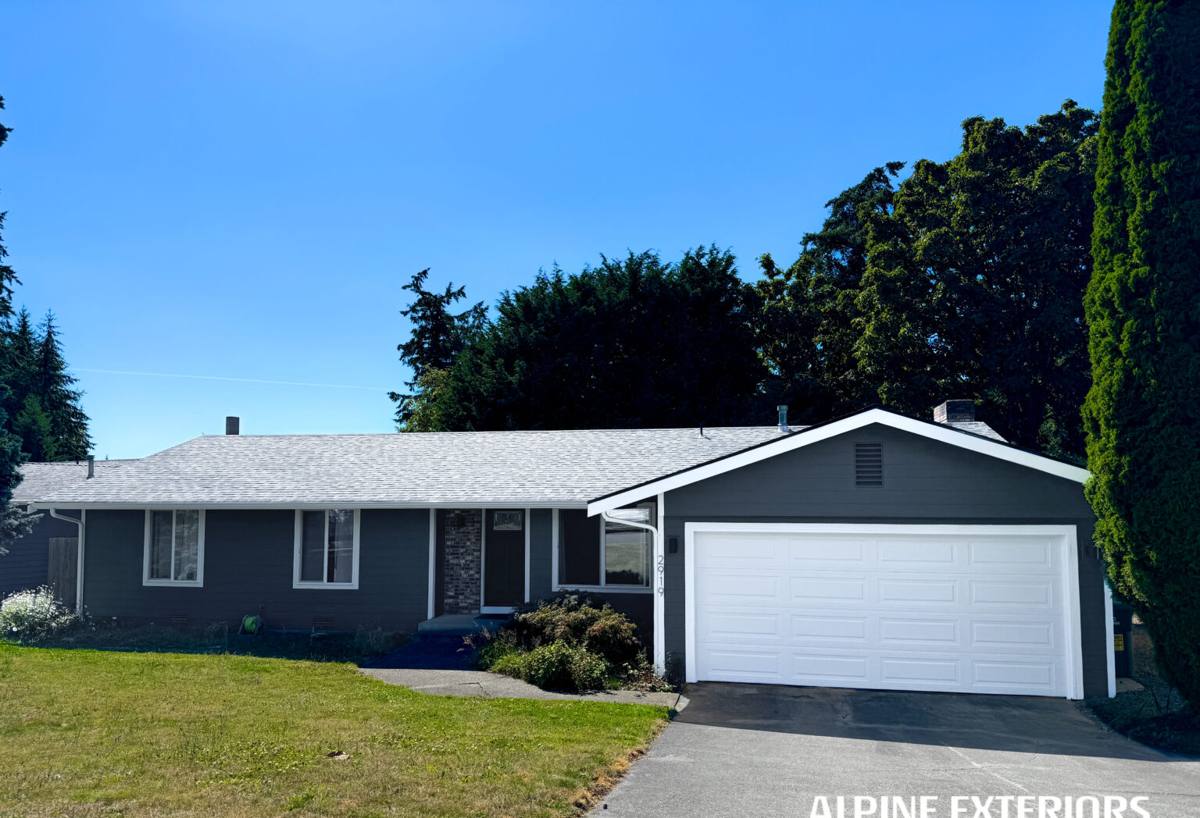
What Stanwood's Climate Actually Does to Siding
Salt Air and Corrosion
Proximity to Puget Sound means airborne salt is a real factor here, even a few miles inland. Salt air accelerates corrosion of exposed fasteners and metal trim, and it can degrade certain paint and coating systems faster than manufacturers' standard testing assumes. Siding materials and finish systems that weren't developed with coastal exposure in mind tend to chalk, fade, or fail at seams sooner in this kind of environment.
Driving Rain and Wind-Driven Moisture
This part of Washington gets rain that doesn't just fall — it drives sideways into wall assemblies during winter storms. That means water intrusion risk isn't limited to horizontal surfaces; it's a constant pressure at every seam, joint, and penetration. A siding system's water-management details (how it sheds water at laps, how it's flashed around windows and doors, how it drains at the bottom) matter as much as the siding material itself.
Extended Moss and Algae Season
Shaded exteriors, tree cover, and consistent moisture keep moss and algae active for most of the year on north- and east-facing walls. Moss holds water against the siding surface long after a storm has passed, which is a slow but steady stress on any material that isn't fully sealed and moisture-resistant at its core.
Why We Install Only James Hardie Fiber Cement
We don't install vinyl, LP SmartSide, primed spruce, cedar, or other fiber cement brands like Cemplank or Allura. That's a deliberate standard, not a sales pitch, and it comes from what these conditions do to a home over a 10-, 20-, and 30-year horizon.
- Non-combustible core: Hardie fiber cement is engineered from cement, sand, and cellulose fiber — it won't ignite, warp, or feed a fire the way wood-based siding can.
- ColorPlus factory finish: the color is baked on in a controlled factory process, not brushed or sprayed on site. That finish holds up better against UV, salt air, and the freeze-thaw cycling this region sees than field-applied paint.
- Climate-engineered HZ product lines: Hardie manufactures regional formulations (HZ5 for our climate zone) specifically to handle moisture exposure and freeze-thaw conditions like the Pacific Northwest sees.
- Dimensional stability: fiber cement doesn't expand, contract, or absorb moisture the way wood or wood-composite products do, which means fewer seam gaps and less risk of moisture getting behind the panel over time.
- Transferable warranty backed by a large manufacturer: Hardie's warranty structure is well established and transfers to a new owner if the home sells, which matters for resale value.
We're not saying every other product is unusable everywhere. We're saying that for what Stanwood's climate does to a house, we won't put our name on an install using a product we don't believe holds up to it.
What a Correct Fiber Cement Job Actually Involves
The siding panel is only part of the system. Most siding failures we get called out to inspect — regardless of brand — trace back to installation details, not the material itself. A correct job in this climate means:
| Install Detail | Why It Matters Here |
|---|---|
| Proper weather-resistive barrier and rainscreen gap | Lets any moisture that gets past the siding drain and dry out instead of sitting against the wall sheathing |
| Correct fastener type and spacing | Coastal salt air corrodes the wrong fastener grade; Hardie specifies fastener requirements by exposure zone |
| Flashing at every window, door, and penetration | Wind-driven rain finds any gap in flashing; this is the single most common failure point we see |
| Correct lap and clearance at the foundation | Keeps splashback and standing moisture off the bottom course, a common moss and rot starting point |
| Factory-cut and sealed panel edges where required | Field cuts need proper sealing or they become the weak point in an otherwise sound system |
Skipping or rushing any one of these doesn't show up on day one. It shows up in year four or five, usually as a soft spot near a window or a moss line that never seems to fully dry out.
Our Process for Stanwood Installs
1. On-Site Assessment
We walk the exterior, check the current siding and any water damage or rot at the sheathing, and look at exposure — which walls face weather, which stay shaded, where moss has already taken hold. This tells us if there's more going on behind the siding than what's visible from outside.
2. Tear-Off and Sheathing Check
We remove the existing siding and inspect the sheathing underneath. Any soft or water-damaged sheathing gets addressed before anything new goes up — installing new siding over compromised sheathing just hides a problem instead of fixing it.
3. Weather Barrier and Rainscreen Installation
We install a proper weather-resistive barrier with a drainage gap behind the siding, which is especially important given how much wind-driven rain this area sees.
4. Hardie Panel Installation to Spec
Panels, fasteners, and flashing go in following Hardie's published installation requirements for our climate zone — not shortcuts, not "close enough."
5. Final Walkthrough
We walk the finished job with the homeowner, checking seams, trim, and caulking lines before calling it done.
Why Hiring a Crew That Already Works Stanwood Matters
A siding installer who works this area regularly already knows which exposures collect moss first, which streets sit close enough to the water to warrant extra attention to fastener corrosion, and how the local weather pattern actually behaves through a full winter — not just what a spec sheet says in theory. That local experience shows up in the small decisions during a job: where to add extra flashing attention, which walls need a closer look at the existing sheathing before covering it up, and how to sequence work around the rain patterns typical to this part of Washington.
It also matters for accountability. A crew that works Stanwood regularly is going to be back in the area for other projects and has a reputation to protect with neighbors who talk to each other. That's a different incentive structure than an out-of-area crew that installs once and moves on.
Questions to Ask Before Hiring Anyone for Siding Work
- Are they installing to the manufacturer's published specifications for our climate zone, not a generic national standard?
- Do they inspect and address sheathing condition before installing new siding, or just cover what's there?
- What's their approach to flashing at windows, doors, and other penetrations?
- Is the warranty transferable if you sell the home?
- Can they explain, specifically, why they recommend the product they're proposing for your exterior — not just that it's what they sell?
What to Expect Cost-Wise
Fiber cement siding costs more up front than vinyl and is generally comparable to or somewhat above engineered wood products, reflecting the material, the factory finish, and the labor involved in a correct install. Total project cost depends on the size and complexity of the home, how much of the existing siding and sheathing needs to be removed and repaired, trim and detail work, and site access. Rather than quote a number that doesn't mean much without seeing the house, we provide a detailed, itemized estimate after an on-site assessment so you know exactly what you're paying for and why.
If you're considering siding work on a Stanwood home, we're happy to take a look and give you a straightforward, no-pressure assessment of what your exterior actually needs. Use the form below to request a free estimate.