 Burlington
 Storm Damage Roof Repair in Alger: What This Corner of Skagit County Puts a Roof Through
Alger sits in the wooded, semi-rural stretch of northern Skagit County between Mount Vernon and the Whatcom County line, the kind of setting where mature tree cover sits close to most rooflines and storms roll in off Puget Sound with real force behind them. When a wind and rain system moves through, an Alger roof deals with more than a typical in-town roof a few miles south: branches, and in the worst windstorms whole trees, coming down near or on the house; wind-driven rain finding every weak seam; and a moss season that's already been working on the roofing material before the storm ever arrives. Storm damage roof repair out here isn't a smaller version of routine roof maintenance. It starts with figuring out what actually happened to the roof, and it has to happen fast enough to stop a manageable problem from turning into a much bigger one.
We handle storm damage roof repair, along with siding, window, and general roofing work, for homes throughout Burlington and the surrounding Skagit County area, including Alger. This page covers what storm damage actually looks like on a roof out here, how we tell repairable damage from damage that needs more, and how our process works from the first call to the final walk-through.
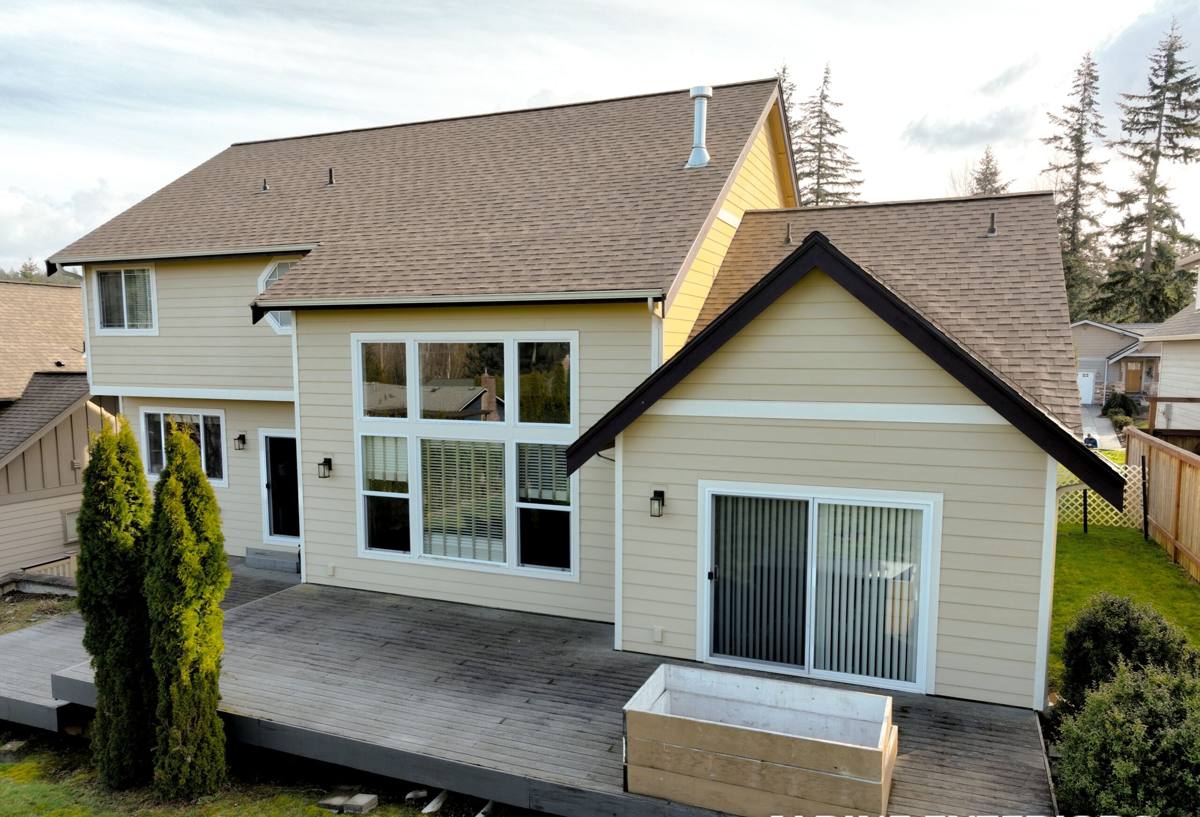
Why Storms Hit Alger Roofs Harder
Three things combine on an Alger property in a way they don't on a more open, in-town lot.
Wind and Driving Rain Off Puget Sound
Storm systems moving up through Skagit County off Puget Sound bring sustained wind along with the rain, and it doesn't arrive gently. It gets under shingle tabs and panel edges that weren't fastened to hold against a real gust, and it pushes rain sideways into flashing and laps that would stay dry in a calmer storm. A roof built to a bare minimum standard is more likely to lose material or take on water during one of these systems than a roof installed with wind exposure genuinely accounted for.
Falling Limbs and Debris From Tree Cover
Alger's wooded lots are a big part of what makes the area appealing, and they're also a real source of storm risk that a cleared, open lot doesn't carry. Dead or weakened limbs come down in wind, and in the hardest storms entire trees go over. Impact damage ranges from a handful of cracked or punctured shingles to a section of decking that needs to be opened up and repaired. We treat any storm call involving nearby tree cover as a decking and structure question first, not just a shingle question, until we've actually gotten eyes on it.
A Moss Season That Weakens the Roof Before the Storm Arrives
Shaded, tree-covered roofs in this part of the county carry moss for much of the year, and moss doesn't just sit on top of the roofing material, it lifts edges and holds moisture against the surface underneath. A roof that's been carrying moss for a season or two is often already weaker at the edges and laps than it looks from the ground, which means it takes less wind or less debris impact to cause real damage than it would on a cleaner, well-maintained roof.
What Actually Counts as Storm Damage
Not everything that looks bad after a storm is storm damage in the repair or insurance sense, and not everything that needs fixing is obvious from the ground. Storm damage generally falls into a few categories:
- Shingles or panels lifted, torn, or missing outright from wind
- Cracked, punctured, or dented roofing material from falling limbs or wind-blown debris
- Flashing bent, displaced, or pulled loose at chimneys, vents, or roof-to-wall transitions
- Granule loss concentrated in a wind- or impact-affected area rather than spread evenly with age
- Water staining on the underside of the deck or in the attic that lines up with a specific storm event
- Soft or sagging decking where wind-driven rain got past the roofing surface and sat
Gradual wear, curling shingles, general granule loss across the whole roof, moss buildup that's been accumulating for years, is a maintenance and replacement conversation, not a storm damage repair. Being honest about that distinction matters, especially if a claim is involved, and it's one of the first things we sort out during an inspection.
Repair or Replace: How We Make the Call
A storm doesn't always mean the whole roof needs to come off. We weigh a few specific factors before recommending a targeted repair versus a wider fix.
| Factor | Points Toward Repair | Points Toward Wider Replacement |
|---|---|---|
| Extent of the damage | Limited to one slope or a small, clearly bounded area | Spread across multiple slopes or a large share of the roof surface |
| Decking condition underneath | Sound and dry once the damaged section is opened up | Soft, stained, or saturated over a wider area than the visible damage |
| Age and condition of the existing roof | Roof is relatively current and otherwise in good shape | Roof is near the end of its service life or already showing unrelated wear |
| Material availability | Matching shingle or panel is available or close enough to blend | Discontinued product or faded material that won't match a patch |
Where the damage is isolated, a section of missing shingles from wind, a localized impact from a limb, a targeted repair that matches the existing material is usually the right call. Where the decking underneath is compromised over a wide area, or the rest of the roof was already close to needing replacement, patching just the storm damage delays a bigger job rather than solving it.
Our Storm Damage Response Process
- First contact and immediate risk check. If there's active water intrusion or exposed decking, we talk through what needs to happen right away, including temporary tarping to stop further damage before a full repair can be scheduled.
- On-site inspection. We get on the roof and in the attic where access allows, documenting the damage with photos rather than working off a description or a view from the ground.
- Honest assessment. We explain what we found in plain terms: what's storm damage, what's pre-existing wear, and whether we're looking at a repair or something larger.
- Written scope and estimate. Before any repair work starts, you get a clear scope covering materials, the repair area, and cost.
- Repair work. Damaged material comes off, the decking and flashing underneath get inspected and corrected as needed, and the repair is matched to the surrounding roof as closely as the material allows.
- Final walk-through. We go over the completed repair and what to watch for afterward, particularly if more weather is on the way before the next dry stretch.
Working With Your Insurance Claim
Most storm damage roof repairs in this area involve an insurance claim, and our job in that process is to document the damage accurately, not to promise a particular outcome. We photograph the affected area before any repair work covers it up, provide a written description of what we found and what we believe caused it, and give you a scope and estimate you can hand to your adjuster. Whether a specific claim is approved, and for how much, is between you and your insurance company, and we won't tell you otherwise. What we can control is giving you documentation that reflects what's actually on your roof, distinguishing genuine storm damage from age-related wear an adjuster is going to be looking for anyway.
If temporary protection is needed while a claim is being processed, we can tarp the affected area to prevent the damage from getting worse while the paperwork moves. That protects both the roof and the claim. An area that keeps taking on water while a claim sits in review tends to turn a repairable problem into a bigger one.
Materials and Standards for Storm Repairs
Matching What's Already There
Where possible, we repair with material that matches the existing roof, same shingle line or metal panel profile, so the repair blends in and performs the same way the rest of the roof does. Where an exact match isn't available, we'll say so up front and talk through the closest honest option rather than installing a visibly mismatched patch and hoping it goes unnoticed.
Fasteners and Flashing Built for This Exposure
Given the salt-laden air moving through this part of Skagit County, we use corrosion-resistant fasteners and flashing on repair work, not just on new installations. A repair that goes back together with standard hardware is a repair that's more likely to need doing again in a few years, especially on a roof that's already shown it's vulnerable to weather.
Full Reroofing, When That's the Honest Answer
When storm damage lands on a roof that was already near the end of its useful life, or when the damage is spread too widely to patch honestly, we'll say so rather than stretching a repair further than it should go. In that case, we go over the material options, architectural asphalt shingle, standing seam metal, and composition alternatives, that make sense for wind exposure, moss resistance, and budget in this climate.
Cost Factors for a Storm Damage Roof Repair in Alger
Every storm repair prices differently, and we don't quote a number without seeing the roof. These are the variables that move a repair estimate up or down the most.
| Factor | Why It Matters Here |
|---|---|
| Size and location of the damaged area | A small, single-slope repair costs far less than damage spread across multiple slopes |
| Decking condition once opened up | Rot or saturation found under the visible damage adds material and labor beyond the original estimate |
| Roof access and pitch | Steep roofs or limited access around tree cover and long driveways add setup time |
| Material match | An exact match to existing shingle or panel product is faster and cheaper than sourcing a discontinued line |
| Emergency tarping needs | Active leaks needing immediate temporary protection add a step before permanent repair can start |
| Insurance scope alignment | Repairs scoped to match an approved claim take coordination that a straightforward cash job doesn't need |
Why Hire a Crew That Already Works Alger
A roofer who mostly works drier, more open parts of Skagit County isn't wrong about roofing in general, they're just working from a different set of defaults. Fastener and flashing choices that hold up fine on a typical in-town roof are often undersized for what wind and tree cover throw at a roof out here. A crew that's already handled storm calls in Alger has a working sense of which failures actually show up on wooded, rural lots in this area, not just which ones show up in a general training manual.
It also matters for response time. Storm damage doesn't wait for a convenient week, and a crew that's already local can get out to inspect and tarp a damaged roof faster than one traveling in from well outside the area. On a wooded lot, where a compromised roof stays exposed to more falling debris and more rain than an open one, that gap in response time is exactly what turns a manageable repair into a bigger one.
If a recent storm has left your Alger roof missing shingles, showing signs of a leak, or carrying visible impact damage from a fallen limb, we're glad to take a look and give you a straightforward, honest assessment of what it needs. Reach out using the form below to schedule a free, no-pressure estimate.