 Burlington
 Building a Deck That Actually Holds Up in Anacortes
Anacortes sits right where the Salish Sea meets the mainland, and that location shapes everything about how a deck ages there. Homes close to the water deal with salt-laden air that settles on every exposed surface, driving rain that comes in sideways off Rosario Strait and Guemes Channel, and a wet season that stretches long enough to grow a real moss problem on anything left untreated. A deck built with generic, one-size-fits-all methods might look fine for a year or two before the cracks start showing — literally, in the case of fasteners bleeding rust through the decking or ledger boards trapping moisture against the house.
We build decks for homeowners throughout Burlington and the surrounding Skagit County area, and Anacortes jobs get their own approach. The framing choices, fastener grade, and flashing details we use on a deck a mile from saltwater are not the same ones we'd use on a deck twenty miles inland. This page walks through what that actually means, so you know what to expect and what to ask for.
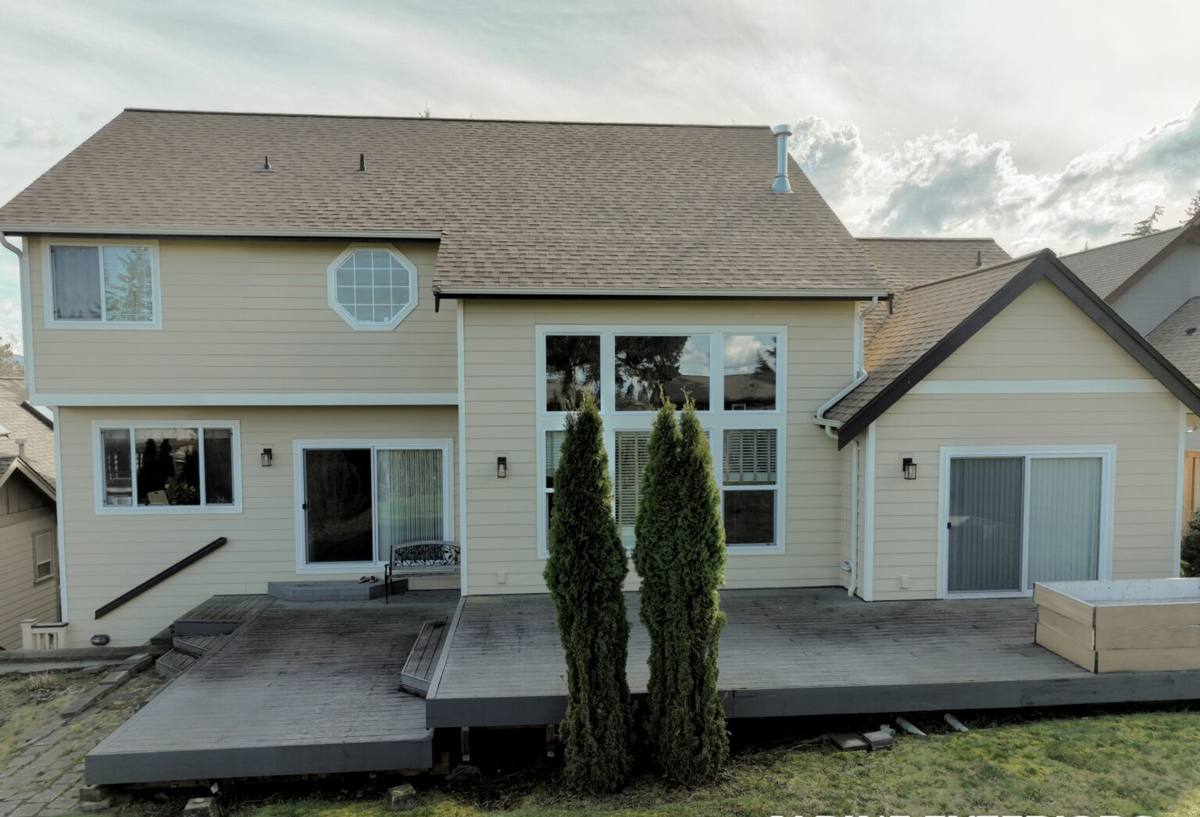
What Anacortes' Climate Does to an Ordinary Deck
Salt Air and Corrosion
Airborne salt is a slow, steady corrosive. It doesn't need direct ocean spray to do damage — it travels on the wind and settles on metal fasteners, hardware, and fixtures over time. Standard hot-dip galvanized screws and brackets that work fine inland can start showing rust streaks within a couple of seasons on a deck near Anacortes' shoreline areas. Once a fastener starts corroding, it weakens from the inside before you ever see a problem on the surface, and by the time you notice staining on the decking boards, the hardware underneath may already be compromised.
Driving Rain
Wind-driven rain off the water doesn't just fall straight down — it gets pushed sideways into ledger connections, under railings, and into any gap in the decking layout. That means water intrusion at the house connection point is a bigger risk here than in a calmer inland yard, and it's exactly where a lot of deck failures start: a ledger board that was never properly flashed, slowly rotting the rim joist behind it.
The Long Moss Season
Skagit County's wet months run long, and shaded or north-facing decks in Anacortes can stay damp for weeks at a stretch. That's ideal moss and algae territory. Beyond looking bad, moss holds moisture against the decking surface, which accelerates wood decay and makes boards slick and unsafe underfoot. A deck design that ignores drainage and airflow is signing up for a moss problem from year one.
What a Correctly Built Deck Needs Here
- Corrosion-resistant fasteners and structural hardware rated for coastal or high-moisture exposure, not just standard exterior-grade
- Proper ledger board flashing where the deck attaches to the house, with a drainage gap and weather-resistant barrier behind it
- Decking material and gap spacing that allows water to shed and air to move underneath
- Footings sized and placed for Skagit County soil conditions and frost depth, not guessed at
- Railings and structural connections that account for wind exposure, especially on open or elevated sites
- A finish or material choice that resists moss and mildew growth without demanding constant upkeep
Decking Material Options: What Holds Up and What Doesn't
There's no single "best" decking material for every yard — it depends on budget, how much upkeep you want to do, and how exposed the deck is. Here's how the common options actually perform in this climate.
| Material | Salt Air / Moisture Behavior | Moss Resistance | Maintenance |
|---|---|---|---|
| Pressure-treated wood | Holds up if sealed and re-sealed regularly; end grain and fastener holes are vulnerable points | Needs periodic cleaning and treatment or moss takes hold in shaded spots | Annual inspection, re-sealing every 1-3 years |
| Cedar | Naturally moisture-resistant, but still benefits from sealing near saltwater exposure | Better than untreated pine, still needs cleaning in damp, shaded areas | Periodic cleaning and oil/sealer application |
| Composite decking | Doesn't absorb moisture like wood; performs well in coastal air | Surface texture matters — some boards resist moss buildup better than others | Occasional washing, no sealing or staining |
| Capped/PVC decking | Fully sealed surface, excellent in high-moisture and salt-air conditions | Smooth cap resists moss adhesion best of the group | Lowest — soap and water as needed |
We're honest with homeowners about the trade-offs: wood costs less up front but asks for more of your time every year, while composite and capped boards cost more initially and largely remove the maintenance question. Neither is wrong — it depends on whether you'd rather spend money now or time later.
What We Don't Recommend Near the Water
We steer homeowners away from untreated softwood decking with no sealing plan on shoreline-adjacent lots. It's not that the wood itself is bad — it's that without a real maintenance commitment, the combination of salt air and standing moisture will outpace what the material can handle, and you end up with a deck that looks tired within a few years. If a client wants wood, we make sure they know what upkeep schedule keeps it performing.
The Structure You Don't See
A deck's surface gets all the attention, but the framing underneath is what determines whether it lasts fifteen years or thirty. In a climate like Anacortes', that means:
Footings and Posts
Footings need to be set below frost depth and sized appropriately for the load and soil conditions on your specific lot. We don't reuse a generic footing spec across every job — soil drainage varies even within Skagit County, and a footing that works on well-drained ground can settle differently on a lot that holds water longer.
Ledger Attachment
This is the single most common failure point we see on older decks in wetter climates. The ledger board bolts to the house's rim joist, and if it isn't flashed correctly — with a proper drip edge, waterproof membrane, and drainage gap — rainwater works its way behind it and rots the connection from the inside. It can look completely fine from outside for years while the structural connection deteriorates underneath.
Hardware Grade
We use structural connectors and fasteners rated for the exposure level of the site. That's a small line-item cost difference and a large difference in how the deck performs a decade in, especially for homes with more direct salt air exposure.
Our Process for an Anacortes Deck Build
- Site walk and assessment. We look at sun and shade exposure, wind direction, existing drainage patterns, and how close the site is to salt air influence — all of which shape material and hardware recommendations.
- Design and material selection. We go over decking, railing, and structural options honestly, including upkeep expectations for each, so you're choosing based on real trade-offs rather than guesswork.
- Permitting. Deck projects typically require a permit depending on size and height — we handle that process rather than leaving it on you.
- Footings and framing. Built to the load, soil, and exposure conditions of your specific lot, not a generic template.
- Ledger flashing and waterproofing. Done correctly the first time, since this is the hardest part to fix later without tearing into the deck.
- Decking, railing, and finish work. Installed with appropriate gap spacing and fastener choice for drainage and long-term stability.
- Final walkthrough. We go over care and maintenance specific to the material you chose, so you know what upkeep actually looks like.
Why It Matters That We Already Work in Anacortes
A crew that mostly builds decks in drier, inland conditions can still build a structurally sound deck — but they may not default to coastal-grade fasteners, won't necessarily flag moss-prone shade patterns during design, and might not have a feel for how quickly untreated wood degrades this close to saltwater. Working regularly in Anacortes and the rest of Skagit County means we've seen how decks actually age here, not just how they're supposed to perform on paper. That shows up in small decisions — hardware grade, board spacing, ledger detailing — that don't cost much more up front but matter a lot ten years down the road.
Maintenance Realities for Anacortes Decks
Whatever material you choose, a few habits go a long way in this climate:
- Clean debris out of gaps between boards regularly — trapped leaves and needles hold moisture and feed moss growth
- Rinse salt residue off the deck periodically if you're close to the water, especially on metal railings and hardware
- Check ledger flashing and any visible fasteners once a year for early rust or staining
- Keep an eye on shaded corners for moss buildup and address it before it spreads
- Re-seal wood decking on the schedule appropriate to the product, not "whenever it looks dry"
What a Deck Project Typically Costs
Costs vary based on size, decking material, railing choice, and site conditions like grade changes or access. As a broad range, a straightforward ground-level or low-elevation deck typically runs from the low thousands into the mid five-figures depending on materials and scope, with composite and capped decking sitting above pressure-treated wood, and larger or multi-level designs adding to both material and labor. We give you a firm, itemized number after seeing the site — not a phone estimate — since footing conditions, grade, and access all affect the real cost.
If you're planning a new deck or replacing an aging one in Anacortes, we're happy to come take a look and walk you through your options with no pressure. Reach out using the form below for a free estimate.