 Burlington
 Why Anacortes Windows Take More Punishment Than Most
Anacortes sits close enough to the water that salt air is a daily fact of life, not an occasional nuisance. Add Skagit County's long stretch of wet months, driving rain off Fidalgo Bay and the Salish Sea, and a moss season that can run from October well into spring, and you have a climate that is genuinely harder on window assemblies than most of the country ever deals with. This isn't a page about windows in general. It's about what energy-efficient windows need to do specifically for homes in and around Anacortes, and what a correct installation looks like when the weather doesn't cooperate for eight or nine months of the year.
Salt-laden air corrodes exposed metal hardware and accelerates the breakdown of cheap seals and gaskets. Driving rain — rain that comes in sideways during a southwesterly blow — tests flashing and sill design in ways that a light vertical drizzle never will. And moss, while it's usually thought of as a roof problem, also colonizes window sills, trim, and any horizontal or shaded surface where moisture sits and doesn't fully dry between storms. None of this is exotic knowledge to anyone who has lived here a while, but it matters enormously when you're deciding what to install and how it needs to go in.
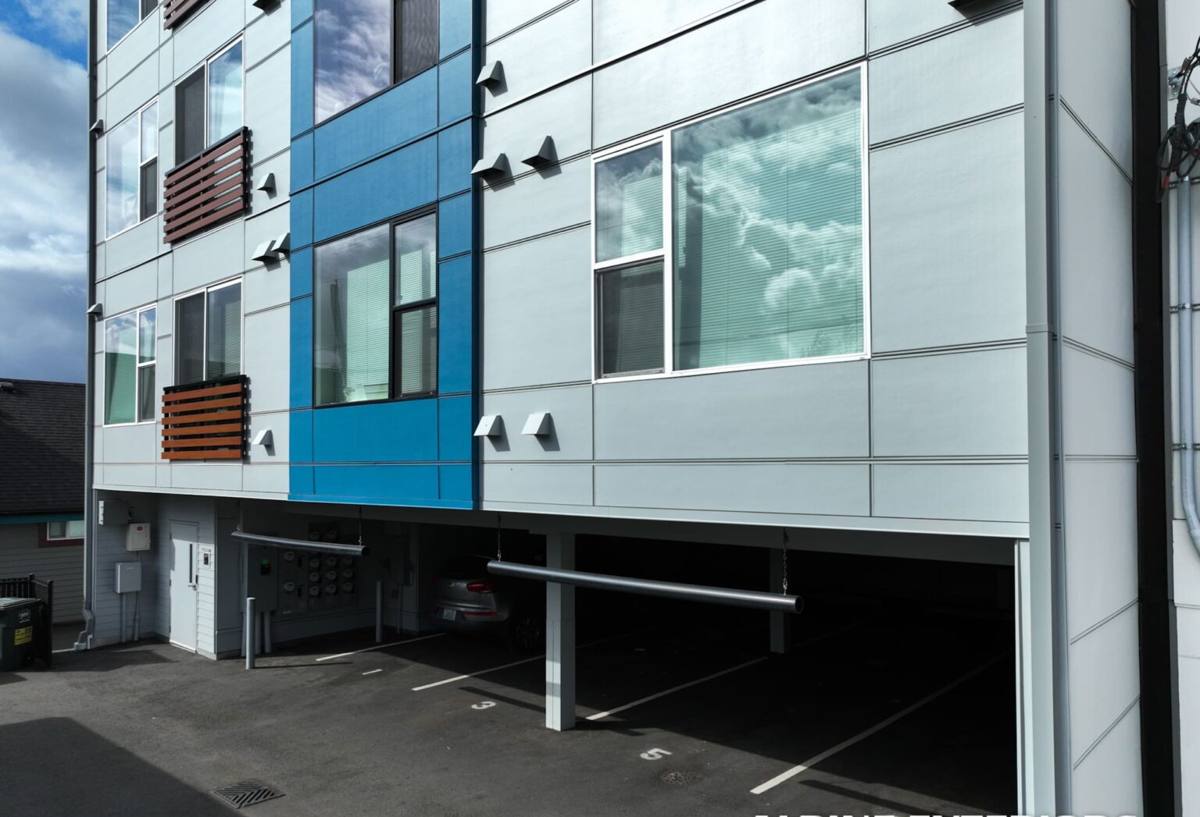
What "Energy-Efficient" Actually Means for This Climate
Energy efficiency in window terms usually gets marketed around U-factor and solar heat gain coefficient, and those numbers do matter here — Western Washington winters are long and gray, and a window that leaks heat costs you money every single month, not just during a cold snap. But in a marine climate like Anacortes, efficiency is inseparable from moisture management. A window can have excellent thermal numbers on paper and still perform poorly if it isn't sealed and flashed correctly, because water intrusion around a window frame will rot sheathing, degrade insulation, and eventually undermine the very seals that made the window efficient in the first place.
So when we talk about energy-efficient windows for Anacortes homes, we mean three things working together:
- Glass and frame performance suited to a mild-but-damp, moderately windy coastal climate (not a desert or a deep-freeze climate)
- Weatherstripping and hardware that resist salt-air corrosion over the long term
- Installation detailing — flashing, sealants, sill pans — that actually keeps driving rain out, because no window is efficient once water gets behind it
Skip any one of those three and the other two stop mattering much within a few years.
Signs an Anacortes Home Is Overdue for Window Work
Most homeowners don't wake up one day and decide they want new windows. They notice something specific first. In this area, the tells are pretty consistent:
- Condensation or fogging between the panes of a double-pane unit — the seal has failed and the argon or air gap is gone
- Visible corrosion or pitting on hinges, locks, or cranks, especially on the sides of the house that face prevailing wind and salt spray
- Soft or discolored wood trim around the window, or paint that keeps failing in the same spot no matter how often it's repainted
- A noticeable draft during a windstorm, or a room that's harder to heat than the rest of the house
- Green or black growth building up on the sill or bottom rail faster than it can be cleaned off
- Difficulty opening or closing sashes that used to move freely — often swelling from moisture intrusion, not just age
Any one of these on its own might just mean a repair. Several at once, especially on a home that's been through a couple of decades of Skagit County weather, usually means the windows themselves have reached the end of their useful service life.
Choosing Frame and Glass for a Salt-Air, High-Rain Climate
Frame Material Trade-Offs
There's no single "best" window material — there's a best fit for the exposure, the home's style, and the budget. Here's how the common options actually behave in this specific climate, based on how they hold up over years of service rather than how they look on a showroom floor:
| Frame Material | Salt-Air Behavior | Moisture/Moss Behavior | Long-Term Consideration |
|---|---|---|---|
| Vinyl | Doesn't corrode; hardware inside can still wear | Won't rot; can trap moisture if flashing is poor | Budget-friendly, good thermal performance, limited color options |
| Fiberglass | Very stable, minimal expansion/contraction | Handles wet cycles well, low maintenance | Higher upfront cost, excellent longevity |
| Aluminum | Prone to corrosion near salt air unless marine-grade finish | Conducts cold, can condense heavily in damp weather | We steer clients away from standard aluminum this close to the water |
| Wood (unclad) | Needs diligent upkeep near salt spray | Highest moss/rot risk if paint or finish is neglected | Best reserved for interior-facing or well-protected elevations |
| Wood-clad (vinyl or aluminum exterior) | Exterior shell resists salt; interior wood stays protected | Good moisture resistance if cladding seams are sealed well | Popular middle ground for a traditional look with less upkeep |
We don't recommend one material as universally "right" for Anacortes — a fully wooded, protected lot a few miles inland has very different exposure than a home with an open view toward the water. What we won't do is put standard mill-finish aluminum on a home with direct salt exposure and call it a good long-term investment. That's a professional judgment call based on how that material actually ages here, not a knock on any manufacturer.
Glass Packages
For most Anacortes homes, a double-pane unit with low-E coating and argon fill hits the right balance of cost and performance. Triple-pane glass adds meaningful benefit mainly on north-facing rooms with heavy wind exposure, or for homeowners specifically prioritizing sound dampening from wind and weather noise. It's rarely necessary on every window in the house, and we'll tell you plainly when it isn't worth the added cost for a given elevation.
Why Installation Quality Matters More Than the Window Itself
This is the part that gets skipped in most window sales conversations, and it's the part that determines whether a window performs for twenty-five years or fails in five. A correct installation in this climate includes:
- A sloped sill pan that directs any water reaching the rough opening back outside, rather than letting it sit against the framing
- Properly lapped flashing — house wrap and flashing tape installed shingle-style so water always sheds downward and outward, never trapped behind a layer above it
- Correct sealant placement — sealed on the sides and top, with the bottom of the window left to drain rather than fully caulked shut, which is a common mistake that traps water inside the wall
- Shimming and squaring so the sash operates correctly and the weatherstripping seals evenly all the way around
- Interior air sealing with low-expansion foam or backer rod, so conditioned air doesn't leak out around the frame even though the window itself is efficient
A high-end window installed with a rushed flashing job will underperform a mid-range window installed correctly, every time, in a climate like this one. Driving rain finds every shortcut eventually.
Our Process for an Anacortes Window Project
We run window replacement the same deliberate way regardless of house size, because skipping steps is exactly how water problems get built into a wall:
- On-site assessment — we look at exposure, existing water damage, sill condition, and which elevations take the worst of the weather before recommending anything
- Product selection — matched to that specific home's exposure, not a one-size-fits-all package
- Removal — careful removal of the old unit with immediate inspection of the rough opening for hidden rot or prior water intrusion
- Rot repair if needed — any compromised sheathing or framing gets addressed before a new window ever goes in; installing a new window over a damaged opening just hides the problem
- Sill pan and flashing installation — built up in the correct shingle-lap order
- Window setting, shimming, and sealing — squared, secured, and sealed per the manufacturer's specification and our own moisture-management standards
- Interior and exterior trim finish — matched to the home's existing look
- Final walkthrough — operation check on every sash and a review of what to expect during the first few rain events
We don't consider a window job finished until it's been checked for smooth operation and a clean seal — not just fastened in place and caulked.
What Drives Cost on an Anacortes Window Project
We're not going to quote a number here, because it depends on too many specifics to be honest about in general terms. What we can tell you is what actually moves the price up or down on real jobs in this area:
| Factor | Why It Matters Here |
|---|---|
| Number and size of openings | Straightforward — more and larger windows means more material and labor |
| Frame material chosen | Vinyl, fiberglass, and clad-wood options span a wide cost range |
| Existing water or rot damage | Hidden damage found during removal is common in older coastal homes and needs repair before installation |
| Elevation exposure | Water- and wind-facing sides may warrant upgraded flashing details or glass packages |
| Access and story height | Second-story or hard-to-access windows add labor and equipment time |
| Trim and finish work | Matching existing wood trim or historic detailing takes more time than standard trim wrap |
We'll always separate "what the windows cost" from "what fixing damage we found costs," so you know exactly what you're paying for and why.
Living With Windows in a Moss-and-Salt Climate
Even a well-installed window needs a little seasonal attention here. A short annual routine keeps things working and catches small issues before they become expensive ones:
- Rinse salt residue off frames and glass a few times a year, especially on water-facing sides of the house
- Clear moss and debris from sills and tracks before it holds moisture against the frame
- Check weatherstripping for gaps or compression once a year — it's cheap to replace and expensive to ignore
- Test drainage weep holes on vinyl and fiberglass units to make sure they aren't clogged with debris or moss
- Watch for any new soft spots in surrounding trim after a hard storm season, and address them promptly
None of this is heavy maintenance, but skipping it entirely for years at a time is how minor issues in this climate turn into rot repairs.
Why a Local Crew That Already Works Anacortes Is Worth Choosing
Window installation done right requires knowing how a specific climate behaves, not just how to follow a manufacturer's generic instructions. A crew that regularly works homes in Anacortes and across Skagit County has already seen how salt air ages different hardware finishes, how a particular flashing detail holds up after a winter of driving rain, and where moss tends to build up first on local homes. That's the kind of judgment that doesn't come from a spec sheet — it comes from doing the work here, season after season, and paying attention to what actually holds up.
We're based in Burlington, which puts us a short drive from Anacortes for both the initial assessment and any follow-up if a question comes up after the install. That local presence matters when weather is part of the equation — we're not scheduling a crew from across the region and hoping the forecast cooperates.
If your windows are showing their age, drafting, fogging, or just not holding up to what Anacortes weather throws at them, we're happy to take a look and give you an honest read on what's needed. Request a free, no-pressure estimate using the form below.