 Burlington
 Why Anacortes Homes Wear Out Siding Faster Than You'd Expect
Anacortes sits right where Skagit County meets Fidalgo Bay and the Guemes Channel, and that waterfront location changes what siding has to deal with. Homes just a few blocks from the water take on salt-laden air that settles into every crack, seam, and fastener point on a house. Add in driving rain that comes sideways off the water during winter storms, plus a long, damp moss season that can stretch from October well into spring, and you have a climate that is genuinely tougher on exterior materials than most inland neighborhoods in the same county. Siding that would hold up fine in a drier part of Washington can start showing problems here years ahead of schedule.
We work throughout the Burlington and greater Skagit County area, and Anacortes jobs are a regular part of that work. The failure patterns we see on Anacortes homes are consistent: paint that's chalking and peeling well before its expected lifespan, soft or delaminating panels near ground level and roof lines, and moss or algae staining on north-facing and shaded walls that never fully dries out between rain events. None of that is a mystery once you understand what the local environment is doing to the material.
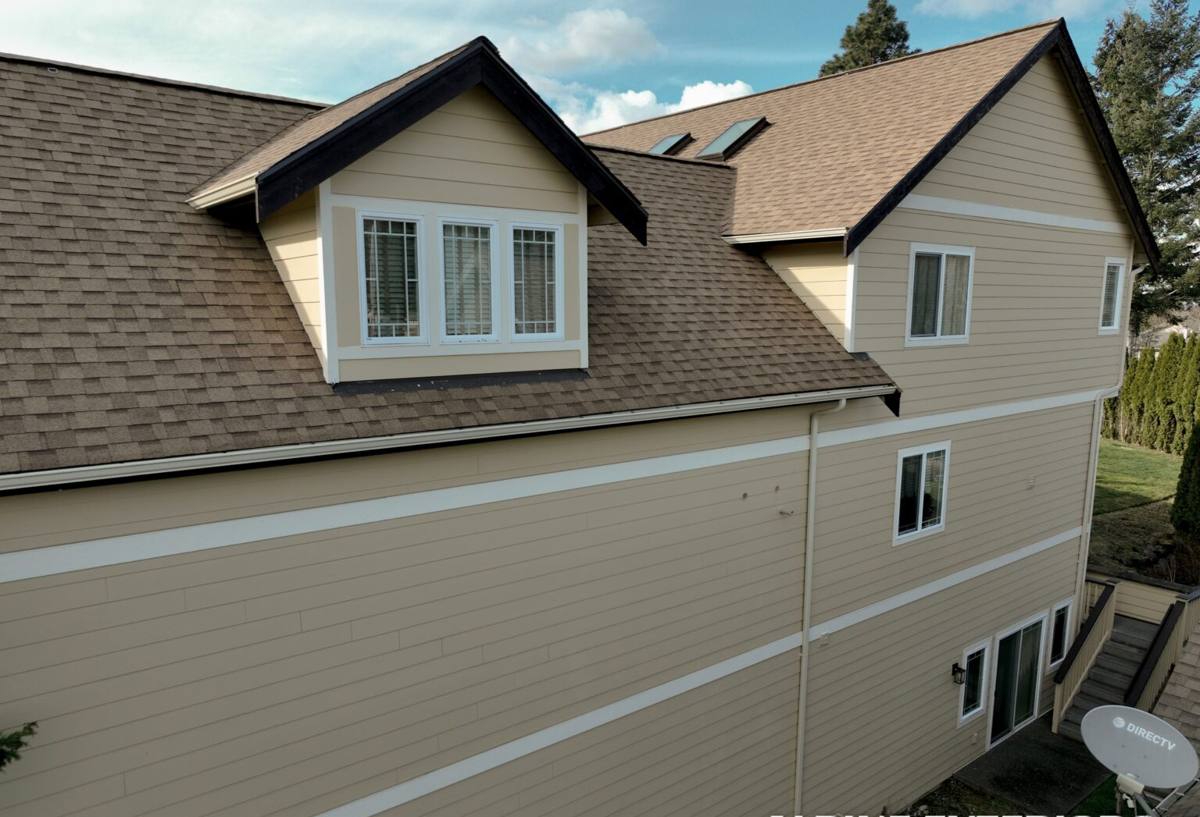
What Salt Air Actually Does to Siding
Salt air isn't just a coastal talking point — it's a real chemical stressor. Airborne salt is hygroscopic, meaning it pulls moisture out of the air and holds it against whatever surface it lands on. On siding, that means fastener heads, seams, and any exposed edges stay damper longer than they would in a non-coastal setting. For materials that aren't engineered to handle that, the results show up as:
- Accelerated corrosion on fasteners, trim flashing, and any exposed metal components
- Faster breakdown of paint and factory finishes, since salt residue interferes with how coatings bond and weather
- Higher moisture content sitting in the siding material itself for longer stretches of the year
- Visible white salt residue or streaking on darker siding colors after dry spells followed by rain
This is why fastener selection and finish quality matter more in Anacortes than they do twenty miles inland. A siding job that ignores the coastal environment is a job that's going to need attention again sooner than it should.
Driving Rain and Wind-Driven Moisture
Anacortes gets exposed to weather systems moving in off the water with real force behind them. That means rain doesn't just fall — it gets pushed sideways into wall assemblies, especially on west- and south-facing elevations. Wind-driven rain tests the parts of a siding installation that are invisible once the job is done: the water-resistive barrier behind the siding, the flashing details around windows and doors, the way panels are lapped and sealed at seams, and the drainage plane that's supposed to let any moisture that does get behind the siding find its way back out.
This is where a lot of siding failures actually start. The siding material itself might be fine, but if the water management behind it was rushed or done wrong, moisture gets trapped against sheathing and framing. By the time you see a problem on the outside — a soft spot, a stain, a section that's starting to bow — there's often already deeper damage that's been developing for a while.
Moss Season and Shaded Wall Exposure
Skagit County's long wet season, combined with the tree cover common in and around Anacortes neighborhoods, creates ideal conditions for moss and algae growth on siding — particularly on north-facing walls and anywhere shaded by trees or structures that limits sun exposure and drying time. Moss holds moisture directly against the siding surface for extended periods, which is a problem for wood-based products and can also stress paint films and caulked joints over time. Homes with heavy moss staining aren't just dealing with a cosmetic issue; it's usually a sign that a wall isn't drying out between rain events the way it should.
What a Correct Siding Replacement Involves
Replacing siding in a coastal, high-moisture area isn't just swapping old panels for new ones. A job done right addresses the whole wall assembly, not just the visible surface:
- Tear-off and inspection. Removing the old siding down to the sheathing lets us actually see the condition of the wall — any rot, soft sheathing, or existing moisture damage gets identified before anything new goes on.
- Sheathing repair. Any compromised sheathing gets replaced. Installing new siding over damaged sheathing just locks the problem inside the wall.
- Water-resistive barrier. A proper weather barrier goes on with correct lapping and sealing, giving the wall a drainage plane that moves incidental moisture back out instead of trapping it.
- Flashing details. Windows, doors, and any wall penetrations get flashed correctly so wind-driven rain can't work its way behind the new siding at those vulnerable points.
- Fastener selection. In a coastal environment, fastener material and spacing matter. Corrosion-resistant fasteners installed to the manufacturer's specification are non-negotiable here.
- Siding installation to spec. Proper gapping, lapping, and clearance from grade and roof lines — installed exactly the way the manufacturer engineered it to perform.
- Finish and detail work. Trim, caulking at appropriate joints, and paint or factory finish completed to hold up under the conditions the wall will actually face.
Why We Only Install James Hardie Fiber Cement
We don't install vinyl, LP SmartSide, primed wood, cedar, or other fiber cement brands, and in a place like Anacortes that's not a marketing position — it's a practical one. Vinyl can warp and become brittle with the kind of temperature swings and driving wind this area sees, and its seams give wind-driven rain more opportunities to find a way in. Wood-based and engineered wood products are organic materials at their core, which means they're more vulnerable to the sustained moisture exposure that salt air and moss season create, even with good coatings. Other fiber cement brands vary in formulation and finish quality, and we've standardized on the one system we trust to perform consistently in this climate.
James Hardie fiber cement is non-combustible, dimensionally stable, and manufactured in climate-specific HZ formulations engineered for the kind of wet, coastal weather Anacortes deals with every winter. The ColorPlus factory finish process bakes color onto the panel under controlled conditions, which produces a more consistent, longer-lasting finish than field-applied paint — a real advantage when you're fighting salt residue and constant moisture. It also comes with a strong transferable warranty backed by a manufacturer with decades of performance data in coastal Pacific Northwest markets, not just general climate zones.
Comparing Siding Materials for a Coastal Climate
| Material | Moisture/Salt Air Resistance | Finish Durability | Long-Term Maintenance |
|---|---|---|---|
| James Hardie Fiber Cement | Engineered HZ formulations for wet coastal climates | Factory-baked ColorPlus finish | Low; periodic inspection and caulk touch-up |
| Vinyl Siding | Prone to warping under wind and temperature stress | Color molded in, fades over time, cannot be repainted easily | Low upfront, but seams are moisture entry points |
| Wood/LP SmartSide/Cedar | Organic material, vulnerable to sustained moisture | Field-applied finish, needs recoating | Higher; regular inspection for rot and coating wear |
| Other Fiber Cement Brands | Varies by manufacturer formulation | Varies; not all offer factory-cured finishes | Depends on brand and installation quality |
Cost Factors for an Anacortes Siding Replacement
Every home is different, so we won't quote a number without seeing the job, but a few factors consistently affect the scope and cost of a siding replacement in this area:
- Extent of sheathing damage found once old siding comes off — coastal homes with a history of hidden moisture sometimes need more structural repair than expected
- Home size, wall complexity, and number of stories, which affect labor time and staging
- Trim, window, and door detailing, since correct flashing takes more time than a rushed job
- Siding profile and finish selection within the James Hardie product line
- Accessibility of the property, including proximity to water, slopes, and vegetation that affects staging and cleanup
Why a Crew That Already Works Anacortes Matters
Siding installation isn't one-size-fits-all across Washington. A crew that mostly works drier inland areas may not think twice about details that are critical here — fastener corrosion resistance, drainage plane continuity, or how much clearance to leave near grade in a spot prone to standing moisture. Working regularly in Skagit County and along the Anacortes waterfront means we've already seen how salt air, wind-driven rain, and moss exposure show up in real installations over time, and we build for those conditions from the start rather than treating this as a generic siding job.
We also know the practical side of working in this area — permitting expectations, typical site access on Anacortes lots, and how to sequence a tear-off and install around this region's rain patterns so your home isn't sitting exposed longer than necessary.
Signs It's Time to Consider Replacement
Not every issue means a full replacement, but these are the signs worth having evaluated:
- Paint that's chalking, peeling, or failing across large sections of the wall
- Soft, spongy, or visibly warped panels, especially near the ground or roofline
- Persistent moss or algae staining that returns shortly after cleaning
- Visible gaps, cracking, or separation at seams and corners
- Rising energy bills that may point to compromised wall insulation and air sealing behind old siding
If your Anacortes home is showing any of these signs, or you're simply ready to stop fighting the salt air and rain with a product that wasn't built for it, we'd be glad to take a look. Reach out for a free, no-pressure estimate using the form below.