 Burlington
 Asphalt Shingle Roofing Built for Big Lake's Weather
Homes around Big Lake sit in a spot that takes more punishment than a lot of homeowners realize. You're close enough to Puget Sound and the Skagit River valley to pick up salt-laden air, you're in the direct path of driving rain off the water during fall and winter storms, and you get a moss season that runs longer here than it does further inland. Add in the shade from mature trees that ring a lot of the lake-area lots, and you've got a roofing environment that's genuinely harder on asphalt shingles than a typical suburban roof.
None of that means asphalt shingles are the wrong choice for a Big Lake home — they're still the most practical, cost-effective roofing material for the vast majority of houses out here. It means the installation has to account for the specific ways this climate attacks a roof, not just follow a generic manufacturer spec sheet. That's the difference between a shingle roof that looks tired in eight years and one that still looks tight at twenty-five.
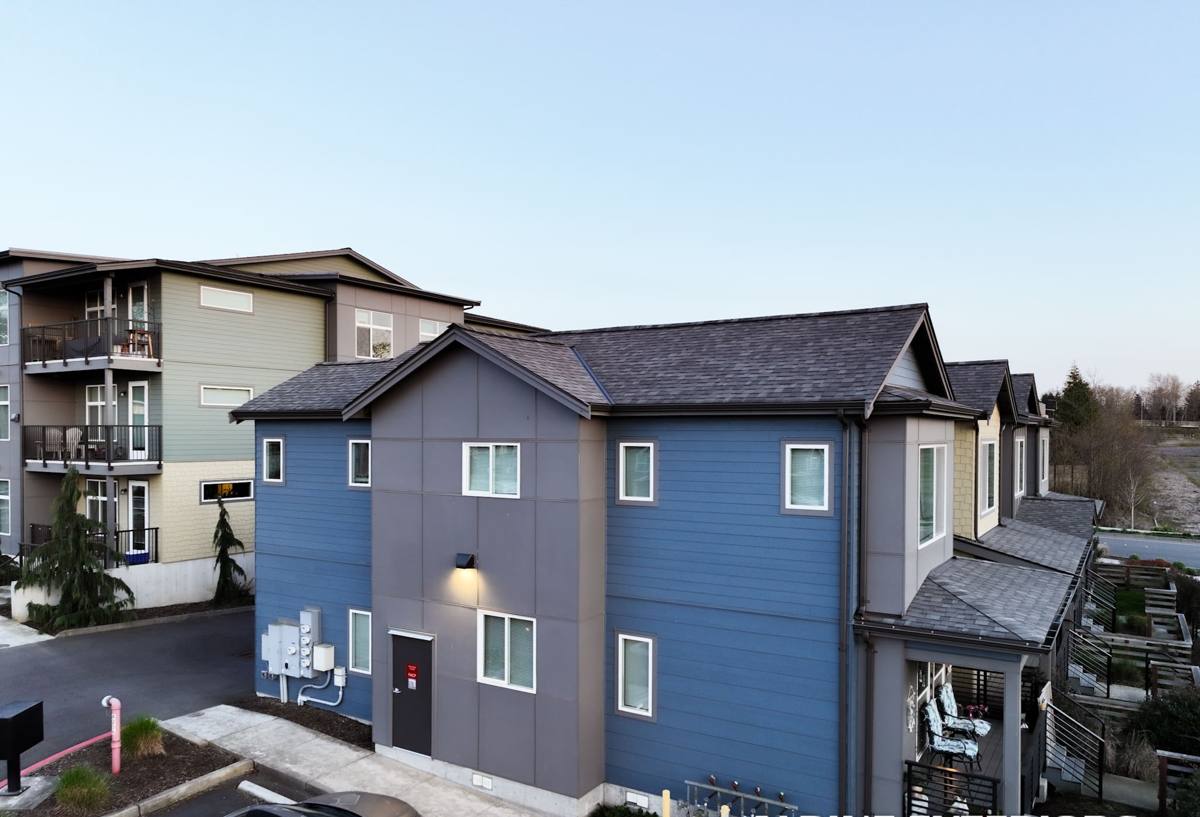
What Big Lake's Climate Actually Does to a Shingle Roof
Salt Air and Granule Wear
Salt-tinged moisture in the air accelerates the breakdown of the asphalt and the adhesion of the mineral granules that protect a shingle from UV and weather. Over years, you'll see granule loss show up faster on roofs facing the prevailing wind and weather off the water than on the leeward side of the same house.
Driving Rain and Wind-Driven Water
Storms that come through Skagit County in the fall and winter don't just drop rain straight down — the wind pushes it sideways, under shingle tabs, into valleys, and around any flashing that isn't sealed properly. A roof that would be fine in a calm, straight-down rain climate can leak here if the underlayment, valleys, and flashing details aren't built for wind-driven water specifically.
Moss, Shade, and a Long Wet Season
Big Lake's tree cover and proximity to the water keep humidity and shade levels high for much of the year, which is exactly what moss and algae need to take hold. Moss doesn't just look bad — it holds moisture against the shingle surface, works its way under tabs, lifts them, and creates the entry points that eventually turn into leaks and premature shingle failure.
What a Correct Asphalt Shingle Roof Involves Here
A shingle roof is a system, not just a layer of shingles nailed to plywood. In a climate like this one, every layer of that system earns its place.
Tear-Off vs. Overlay
We tear off old roofing rather than layering new shingles over old ones in almost every case. An overlay traps moisture, hides deck damage, and voids most manufacturer warranties. A full tear-off also lets us actually see the roof deck — which matters a lot around a humid, shaded lake environment where sheathing can hold moisture longer than it would on a more exposed, sun-drying roof.
Ice-and-Water Shield at the Vulnerable Spots
Valleys, eaves, and roof penetrations get a self-adhering waterproof membrane underneath the shingles, not just standard felt. This is the detail that matters most for wind-driven rain — it's a backup layer that keeps water out even if wind pushes it past the shingle surface itself.
Ventilation That Actually Balances
Proper intake at the eaves and exhaust at the ridge keeps the attic dry and temperature-balanced. Poor ventilation traps moisture, which speeds up deck rot and, ironically, makes moss and algae growth worse on the shingle surface above. We check the balance, not just whether vents exist.
Flashing, Not Just Caulk
Chimneys, skylights, sidewalls, and any roof-to-wall transitions get proper metal flashing, step-flashed and integrated with the underlayment — not just sealant smeared over a gap. Caulk fails; correctly lapped flashing doesn't rely on staying intact to keep water out.
Choosing the Right Shingle for This Climate
Not every asphalt shingle product holds up the same way out here. We steer most Big Lake homeowners toward algae-resistant, architectural-grade shingles rather than basic 3-tab product, mainly because of the maintenance burden and appearance trade-offs over time — not because 3-tab shingles are defective, just because they're a poorer fit for this specific environment.
| Feature | Standard 3-Tab | Architectural / Dimensional |
|---|---|---|
| Typical lifespan in this climate | 15–20 years | 25–30+ years |
| Algae/moss resistance | Basic, unless treated | Usually copper-infused granules available |
| Wind rating | Lower (60–70 mph typical) | Higher (110–130 mph typical) |
| Appearance | Flat, uniform | Dimensional, shadow-line look |
| Upfront cost | Lower | Moderate premium |
Algae-resistant shingles use copper- or zinc-infused granules that slow biological growth on the shingle surface itself. It's not a permanent fix — nothing is, in an environment this humid and shaded — but it buys years before moss and algae staining become a real problem, and it holds up better against the salt air moving off the water.
Our Process for a Big Lake Roof
- Inspection and honest assessment — we get on the roof (or use a close visual and photo inspection where access is limited), check the deck condition, flashing, ventilation, and current shingle wear before recommending anything.
- Written estimate — a clear scope of work and price, with the reasoning behind any recommended upgrades like added ventilation or ice-and-water shield in vulnerable areas.
- Tear-off and deck check — old roofing comes off, the deck gets inspected, and any soft or damaged sheathing is flagged and repaired before anything new goes down.
- Underlayment, flashing, and shingle installation — installed to manufacturer spec and to the climate-specific details this area needs.
- Cleanup and final walkthrough — magnetic nail sweep, debris removal, and a walkthrough so you know what was done and what to expect going forward.
Keeping a Big Lake Shingle Roof Healthy After Installation
A correct installation is most of the battle, but a bit of homeowner upkeep goes a long way in this climate. None of this requires getting on the roof yourself — most of it is about knowing what to watch for and when to call someone.
- Keep gutters clear of needles and leaves, especially under overhanging trees common around the lake
- Have moss growth treated or gently removed before it spreads across a slope, not after
- Trim back tree limbs that keep a section of roof shaded and damp longer than the rest
- Watch for granules collecting in gutters — a sign of accelerating shingle wear
- Get a roof looked at after any major windstorm, even if nothing looks obviously wrong from the ground
- Schedule a general inspection every couple of years, more often as the roof passes the 15-year mark
Why a Crew That Already Works Big Lake Matters
A roofer who mostly works drier, more exposed neighborhoods can still do competent work, but they may not default to the details that matter specifically around Big Lake — the extra attention to valley and eave protection, the ventilation balance for shaded, humid lots, or the shingle selection that actually resists moss and algae rather than just meeting a spec sheet minimum. A crew that regularly works this part of Skagit County has already seen which details hold up here and which ones don't, and builds that into the job by default rather than as an upsell.
Local familiarity also helps with practical logistics — knowing typical access constraints on lake-area lots, working efficiently around the rain windows this area gets in fall and winter, and being available for a follow-up check if a question comes up after a storm.
What Affects the Cost of This Job
| Cost Factor | Why It Matters |
|---|---|
| Roof size and pitch | More material and steeper, slower work to install safely |
| Number of existing layers | Extra tear-off labor and disposal if roofing was layered before |
| Deck repair needed | Soft or rotted sheathing found during tear-off adds material and labor |
| Shingle grade chosen | 3-tab vs. architectural vs. algae-resistant pricing differences |
| Ventilation or flashing upgrades | Added intake/exhaust vents or new flashing at chimneys and walls |
| Roof complexity | Valleys, dormers, skylights, and penetrations add labor and detail work |
We don't quote a job without seeing it — a roof with straightforward geometry and a sound deck costs meaningfully less than one with multiple valleys, skylights, and hidden deck damage. An honest estimate accounts for what's actually there, not a flat per-square rate that ignores the specifics of your roof.
Get a Straight Answer on Your Roof
If you're dealing with moss buildup, granule loss, a roof that's getting close to the end of its expected life, or you just want an honest read on where things stand, we're happy to take a look. We'll tell you what we actually see — including if the answer is that your roof still has good years left. Reach out for a free, no-pressure estimate using the form below.