 Burlington
 Windows in Avon Work Harder Than You'd Think
Avon sits low in the Skagit Valley, close enough to Padilla Bay and the Sound that salt-laden air is a constant, not an occasional thing. Add in the driving rain that comes sideways off Pacific storms most of the fall and winter, plus a moss season that can run from October clear through April on shaded north and west walls, and you've got three separate forces working against every window opening on a house. None of that is dramatic on its own. It's the slow accumulation — salt film breaking down finishes and hardware, wind-driven rain finding any gap in the flashing, moss holding moisture against trim and sills — that eventually shows up as fogged glass, soft wood, or a window that won't latch right anymore.
Custom windows done properly for this specific area account for all three from the start, not just the energy code minimums. That's the difference between a window that looks good for two years and one that's still tight and clean-operating in fifteen.
What "Custom" Actually Means Out Here
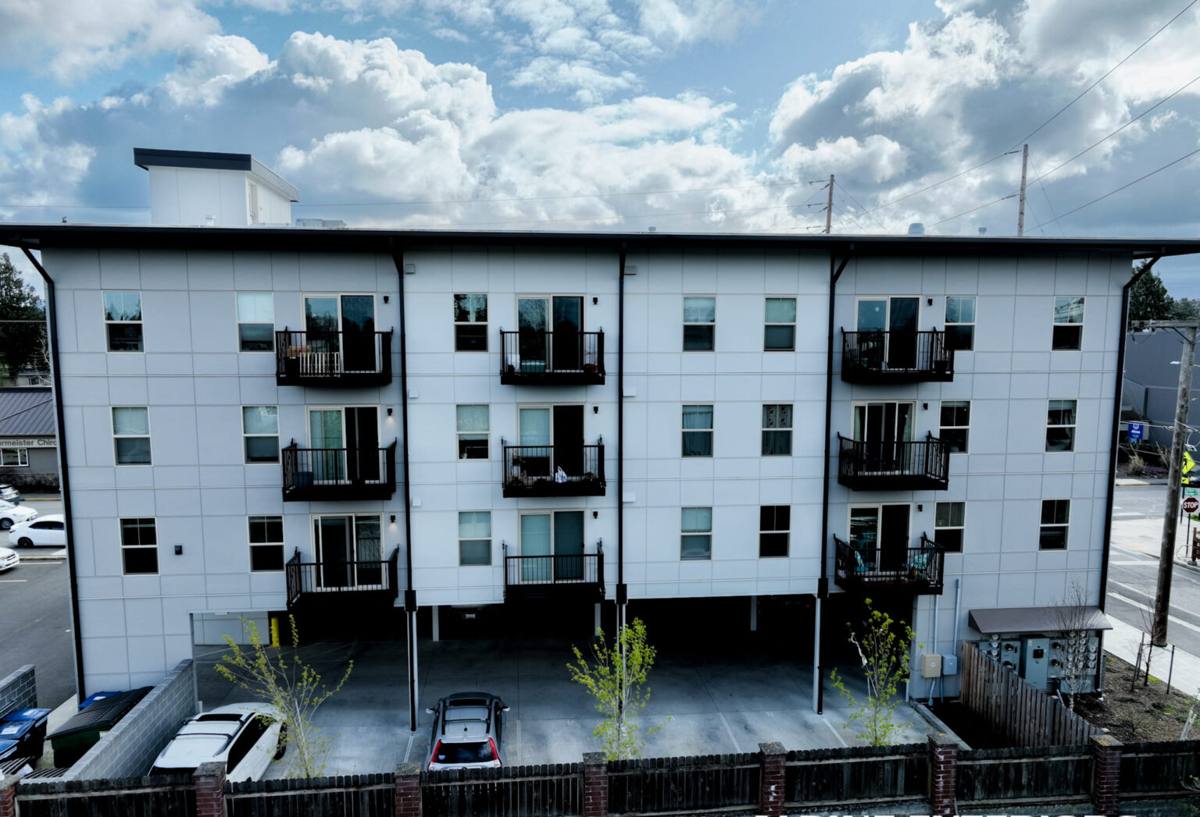
A lot of homes around Avon and the surrounding Skagit County farmland weren't built to modern stock window sizes. You've got older farmhouses with settled, slightly out-of-square openings, additions built at different times with mismatched rough openings, and newer builds where an architect specified a size that doesn't match any off-the-shelf unit. "Custom" in our line of work covers a few different situations:
- Openings that are genuinely non-standard dimensions and need a window built or special-ordered to fit
- Standard-size openings where the surrounding wall, siding, or trim is out of square enough that a stock install would leave gaps
- Replacing a window shape that doesn't exist in typical replacement lines — arched tops, odd bays, or matched sets of different sizes that need to look uniform
- Matching an existing architectural style (farmhouse trim profiles, older divided-light patterns) where a generic replacement window would look out of place
The common thread is that measuring wrong, or forcing a stock unit into a non-stock opening, is exactly how you get the gaps and callbacks that let this area's weather in.
The Part That Actually Determines Whether the Window Lasts
Flashing and Water Management
The window itself is rarely what fails first. It's almost always the flashing detail around it — the sequencing of house wrap, flashing tape, sill pan, and trim that decides whether wind-driven rain sheds away from the opening or gets pulled in behind the siding. Skip a proper sill pan or lap the flashing wrong, and you won't see the problem for a year or two — by then the sheathing under the window is already staining or softening. On a house getting regular sideways rain off the Sound, this detail matters more than almost any other decision in the project.
Sealing and Insulation
Around the frame, we backer-rod and seal the gap between the window and the rough opening rather than just relying on foam or caulk alone. Done right, this stops both air infiltration and the kind of condensation that shows up as mysterious water inside a wall a year later — a real risk in a valley climate with this much ambient humidity.
Hardware and Finish Selection
Salt air corrodes cheap hardware faster than most homeowners expect. Locks, hinges, and cranks that would last decades inland can start sticking or pitting within a few years this close to the water. We spec hardware and finishes rated for coastal exposure on projects in this area — it costs a little more up front and saves the "my window won't latch" call three years down the road.
Material Choices That Actually Hold Up Here
There's no single "best" window material — it depends on budget, the look you're after, and how much upkeep you're willing to do. Here's how the common options actually perform under Avon's specific conditions:
| Material | Salt Air / Corrosion | Moisture & Moss Exposure | Upkeep |
|---|---|---|---|
| Vinyl | Very good — won't corrode; hardware is the weak point | Handles wet climates well; won't rot | Low — occasional cleaning |
| Fiberglass | Excellent — dimensionally stable, resists pitting | Excellent; doesn't absorb moisture or swell | Low |
| Wood-clad | Good on the clad exterior; interior wood needs care | Good if maintained; failure point is usually a compromised seal letting water reach the wood core | Higher — periodic finish/seal checks |
| Aluminum | Prone to pitting and corrosion near salt air over time | Conducts cold, prone to interior condensation in this humidity | Moderate |
For most Avon homes we lean toward vinyl or fiberglass for the combination of low maintenance and genuine resistance to salt exposure. Wood-clad still makes sense where matching an existing historic or farmhouse look matters more than minimizing upkeep — we just make sure the client understands the maintenance commitment going in, honestly, not glossed over.
How the Job Actually Goes
- On-site measurement and assessment — we check the opening for square, look at existing flashing and sill condition, and note any moss, staining, or soft wood that signals a moisture problem beyond just the window itself.
- Product selection — we walk through material, glass package, and hardware options suited to the exposure of that specific wall (a west-facing wall catching driving rain gets different attention than a sheltered side).
- Order and lead time — true custom sizes and special orders take longer than stock units; we give you a realistic timeline rather than an optimistic one.
- Removal and opening prep — we check the sheathing behind the old window before installing anything new. If there's rot or moisture damage, that gets addressed first, not covered over.
- Install with proper flashing sequence — sill pan, flashing tape, window, then integration back into the house wrap and siding in the correct shingle-lap order so water always sheds outward.
- Interior and exterior trim, sealing, and cleanup — including hauling away the old units and debris.
Signs It's Time to Look at Your Windows
- Fogging or moisture between panes of double- or triple-glazed glass
- Difficulty latching, locking, or opening smoothly
- Visible gaps, soft or discolored trim, or paint bubbling around the frame
- Moss or persistent green staining building up on sills or nearby trim
- Noticeable draft or cold spot near the window in winter
- Condensation forming on the interior glass or sill regularly
Any one of these on its own isn't an emergency. Two or three together, especially on a wall that takes direct weather, usually means the seal or flashing has already started to fail.
What Affects the Cost
| Factor | Why It Moves the Price |
|---|---|
| Standard vs. true custom size | Special-order and non-standard shapes cost more and take longer to source than stock sizes |
| Material | Fiberglass typically costs more than vinyl; wood-clad more still |
| Number of openings | Doing a full house at once is usually more efficient per-window than one-off replacements over time |
| Existing damage | Rotted sheathing or trim found during removal adds repair scope beyond the window itself |
| Glass package | Upgraded glazing for energy performance or sound adds cost but pays back over time |
| Trim and matching | Custom trim work to match existing farmhouse or period details takes more labor than a simple swap |
We won't quote a number without seeing the openings — anyone who does is guessing, and guesses on custom work tend to be wrong in one direction or another. What we can promise is a written estimate that breaks out material, labor, and any repair work separately, so you know what you're actually paying for.
Why It Matters to Hire a Crew That Already Works This Area
Window installation looks similar everywhere on paper, but the details that keep a window performing in Avon's conditions are specific to this stretch of Skagit County — how far a given wall sits from open water, how much shade and moss buildup a north side gets, how the local wind pattern drives rain into certain elevations more than others. A crew that installs windows regularly in this area already knows which walls need extra attention on flashing and which hardware finishes actually hold up, instead of learning that the hard way on your house.
We're a Burlington-based crew, so Avon isn't a special trip for us — it's part of the territory we work in every week, and we stand behind the work with that in mind.
If your windows are drafty, fogged, hard to operate, or you're planning a custom replacement project, we're happy to take a look and give you a straightforward, no-pressure estimate. Use the form below to get started.