 Burlington
 Siding Built for Avon's Delta Climate
Avon sits low in the Skagit River delta just outside Burlington, on flat farmland that stays damp for months at a time. That geography brings three things together that are hard on exterior siding: salt-tinged air moving in off Skagit Bay and Padilla Bay, driving rain that comes in sideways during fall and winter storms, and a moss and algae season that can run from October through May. Any siding material on an Avon home has to handle all three at once, year after year, without curling, rotting, or turning green.
We install James Hardie fiber cement siding exclusively, and this page is about what that means specifically for homes in and around Avon — not a generic overview of the product. If you're comparing siding options for a home in this part of Skagit County, the climate should drive the decision more than the catalog photo.
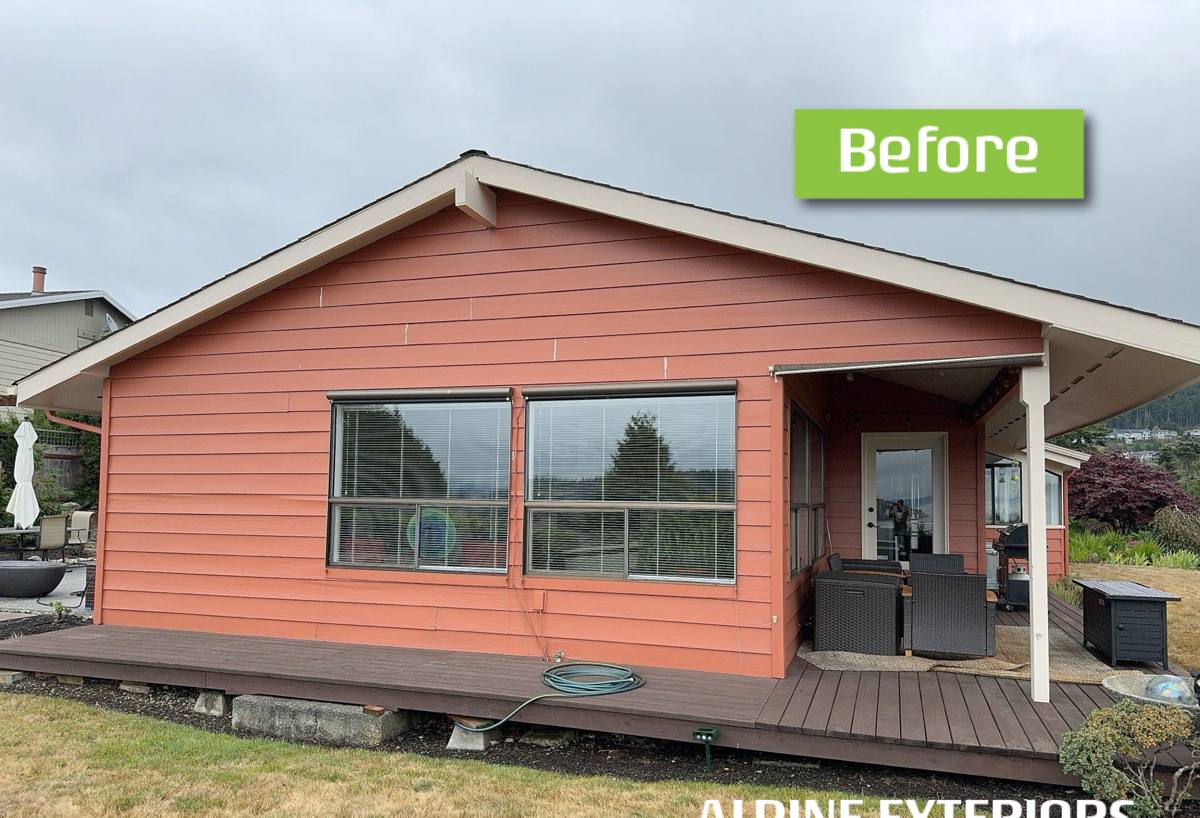
What Avon's Climate Actually Does to Siding
Salt Air and Humidity
Avon isn't right on saltwater, but it's close enough that airborne salt and near-constant humidity off the bay reach it regularly. Salt-laden moisture accelerates corrosion on fasteners and trim, and it keeps painted and wood surfaces damp longer than they'd stay in a drier inland town. Materials that absorb moisture — or that rely on paint film alone to keep water out — lose that battle slowly but steadily.
Driving Rain
Storms coming off the Pacific don't fall straight down here; wind pushes rain sideways into wall assemblies, especially on the west and south-facing sides of a house. That means lap joints, butt seams, and anything around windows and doors take on water pressure that a calm-weather installation would never see. A siding job that looks fine in July can leak in November if the flashing and laps weren't detailed for wind-driven rain.
Moss and Algae Season
Low-lying, shaded, and often tree-lined lots around Avon stay damp long after a storm passes, which is exactly what moss and algae need to take hold. Once organic growth gets a foothold on a siding surface — especially in seams, under trim, or on north-facing walls — it holds moisture against the material and accelerates whatever damage is already happening underneath.
Why James Hardie Fits This Environment
James Hardie fiber cement is non-combustible and dimensionally stable, meaning it doesn't swell, warp, or rot the way wood-based products can when they stay damp for weeks at a stretch. Two things about the product line matter specifically for a place like Avon:
- HZ5 engineered formulation: Hardie makes region-specific formulations, and the versions specified for the Pacific Northwest are engineered for exactly this pattern of sustained moisture exposure and freeze-thaw cycling.
- ColorPlus factory finish: a baked-on, resin-based finish that resists fading and holds up to damp conditions far better than field-applied paint, which reduces the surface weathering that gives moss and algae something to grip.
Fiber cement also gives mildew and algae less to work with than raw wood siding, because it doesn't feed organic growth as a food source the way wood fiber can. That doesn't mean an Avon home will never need a gentle wash — it means the siding itself isn't degrading underneath whatever growth shows up on the surface.
What a Correct Installation Involves
James Hardie siding performs to spec only when it's installed to spec. In a wind-driven-rain climate like Avon's, the details that get skipped on a rushed job are exactly the details that matter most:
- Proper weather-resistive barrier and rainscreen gap behind the siding, so any moisture that gets past the surface has somewhere to drain and dry
- Correct starter strip and clearance from grade, decks, and roof lines so water doesn't wick into the bottom edge of the boards
- Manufacturer-specified fastener pattern and fastener type — the wrong nail or spacing shows up years later as popped fasteners and hairline cracks
- Flashing detailed around every window, door, and penetration, lapped correctly for the direction water actually travels in a storm here, not just downhill
- Butt joints and laps sealed and gapped per Hardie's written instructions, not just caulked over and hoped for
- Field cuts sealed on all sides, since an unsealed cut edge is the single most common place fiber cement siding fails early
Every one of those steps is in James Hardie's published installation instructions. None of them are optional if you want the product's warranty to actually apply, and none of them are visible once the job is finished and the walls look good from the driveway.
Our Process on an Avon Home
1. Site and Exposure Assessment
We look at which sides of the house take the worst wind-driven rain, how much shade and ground moisture the lot holds, and what's happening behind the current siding before we ever price a job. A home tucked against trees on a low lot needs different attention than one standing open to the wind off the delta.
2. Tear-Off and Sheathing Check
Old siding comes off and we inspect the sheathing underneath. This is often the first real look anyone's had at the wall assembly in years, and in a climate like this it's common to find moisture damage that the old siding was hiding.
3. Weather Barrier and Rainscreen Install
We install a weather-resistive barrier and rainscreen gap sized for the exposure, giving the wall a drainage path that raw caulk-and-hope siding jobs skip.
4. James Hardie Installation to Manufacturer Spec
Boards, panels, or trim go up following Hardie's fastening, clearance, and flashing requirements — not a generalized "siding is siding" approach.
5. Final Walkthrough
We walk the whole exterior with you, checking seams, trim, and paint lines before calling the job done.
Why Local Experience in Avon Matters
A crew that already works this part of Skagit County knows which lots hold water longest, which orientations take the worst of the winter storms, and how Burlington-area permitting and inspection actually works in practice — not in theory. That familiarity shows up in small decisions: where to add extra flashing that isn't strictly required by code but is smart given the site, which walls need a wider rainscreen gap, and how to sequence a job around the wetter months so materials aren't sitting exposed during a stretch of driving rain. None of that is exotic knowledge, but it only comes from actually working these streets and these lots season after season.
Comparing Siding Materials for Avon's Conditions
| Material | Moisture Behavior in This Climate | Maintenance Burden | Typical Lifespan Here |
|---|---|---|---|
| James Hardie fiber cement | Non-combustible, dimensionally stable, resists moisture-driven warping | Occasional wash; factory finish reduces repainting | Multiple decades when installed to spec |
| Vinyl siding | Doesn't rot, but can warp or crack in temperature swings; seams are a moisture entry point | Low, but cracked panels are hard to color-match years later | Moderate, shorter in high-wind exposure |
| Primed wood or cedar | Absorbs moisture readily; prone to rot and moss growth in shaded, damp lots | High — repainting and moss treatment on a recurring cycle | Shorter without aggressive upkeep |
| Engineered wood (LP-type products) | Resists rot better than raw wood but still moisture-sensitive at cut edges and seams | Moderate; edge sealing and inspection matter more here than in drier climates | Depends heavily on installation quality |
We only install the top row of that table. It's the reason we standardized on one product instead of offering several — we'd rather be excellent at the material that actually holds up in Skagit County weather than stock a shelf of options with different failure points.
Cost Factors for an Avon Siding Project
| Factor | Why It Moves the Price |
|---|---|
| Sheathing condition after tear-off | Moisture-damaged sheathing found during removal has to be repaired before new siding goes on |
| Home size and wall complexity | More corners, dormers, and trim details mean more flashing and cutting labor |
| Siding profile and ColorPlus color choice | Lap width and factory-finish color options carry different material costs |
| Site access and exposure | Lots with tree cover, tight access, or heavy wind exposure can add setup and protection time |
| Trim and accessory scope | Fascia, soffit, and trim board work is often bundled with a full siding project |
Signs an Avon Home May Need New Siding
- Soft or spongy spots when you press on the siding, especially near the bottom courses
- Persistent moss or algae streaking that comes back within weeks of cleaning
- Paint that's bubbling, peeling, or chalking heavily on the west or south-facing walls
- Visible gaps, warping, or buckling at seams and butt joints
- Rising energy bills that point to a wall assembly no longer sealing properly
- Fastener heads showing through the surface or popping out over time
If you're seeing more than one of these, it's worth getting a straightforward look at what's happening behind the surface before it turns into a sheathing repair on top of a siding job.
Get a Straightforward Look at Your Home
If you're weighing siding options for a home in Avon or elsewhere around Burlington, we're happy to walk the exterior with you, point out what the current siding is telling us, and give you a clear, no-pressure estimate for a James Hardie install done to spec for this climate. Use the form below to get started.