 Burlington
 Board & Batten Siding Built for Big Lake's Setting
Big Lake sits in a wooded pocket of Skagit County, and homes here live a different reality than a house out on open farmland or a downtown Burlington lot. Tree canopy holds shade on the north and east walls most of the day, the lake itself keeps humidity higher than surrounding areas, and moist marine air moves up the valley from Skagit Bay and Puget Sound often enough that it shows up in how siding ages here. Board & batten is a popular choice around the lake because the vertical lines suit cabin-style and lake-house architecture so well, but that same style choice comes with real installation and material decisions that matter more here than in a drier, more open setting.
This page is specifically about board & batten siding for homes in and around Big Lake — what the climate demands from it, what a correctly installed system actually involves, and why we've standardized on one product for it rather than offering everything on the market.
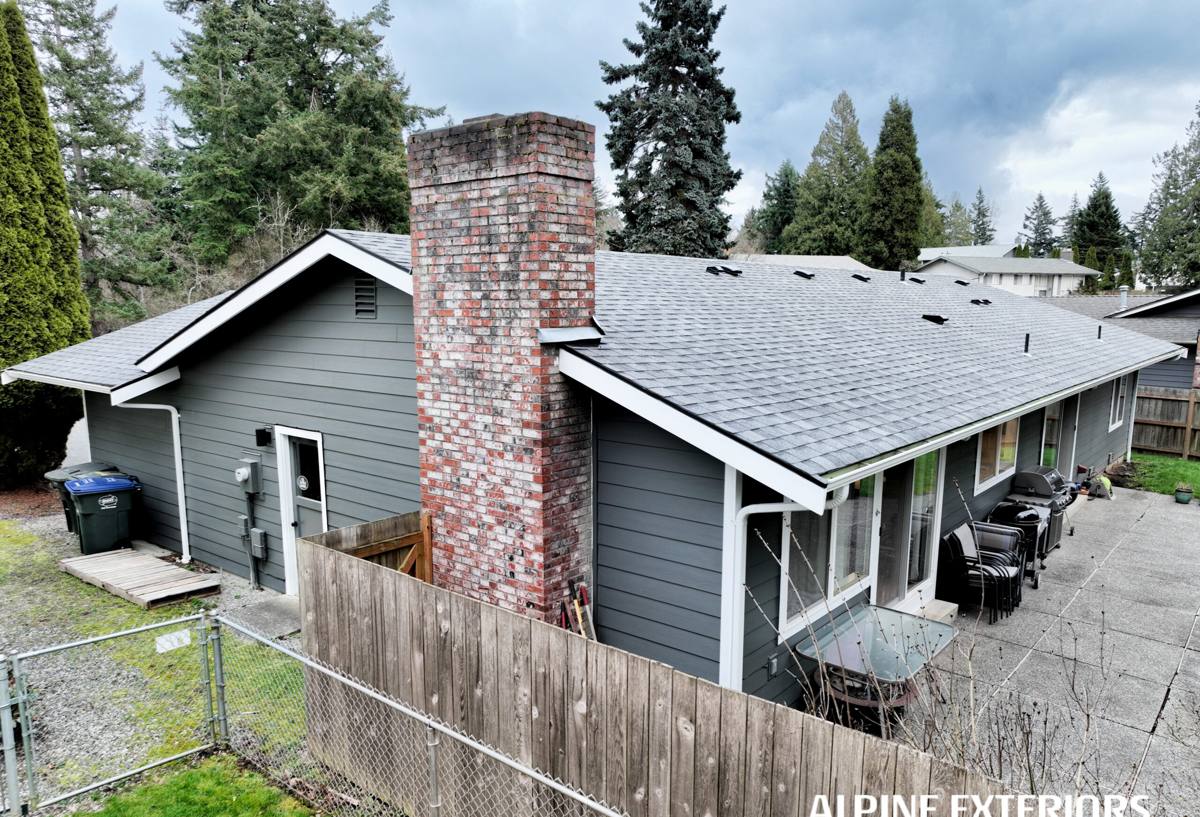
Why Board & Batten Fits Big Lake Homes
The vertical board-and-batten look reads as lake-house and mountain-cabin architecture almost instinctively, which is part of why it shows up so often on gable ends, dormers, and full exteriors around Big Lake. It works well as a full-home siding on newer builds and just as well as an accent — a garage face, a gable, or a porch surround — paired with horizontal lap on the rest of the house. Beyond looks, the vertical channel design can shed water effectively when it's detailed correctly, which matters on a site where wind-driven rain off the lake and valley moisture are a near-constant.
The key phrase there is "detailed correctly." Board & batten is less forgiving of installation shortcuts than standard lap siding, and on a shaded, moisture-heavy lot like most properties around Big Lake, a shortcut shows up faster — usually as moss, staining, or soft trim within a few seasons rather than a decade.
What Big Lake's Climate Does to Siding Over Time
Shade and a long moss season
Conifer cover around the lake keeps large sections of most homes out of direct sun for long stretches of the day. That shade is pleasant to live under but it means siding surfaces dry slower after rain, and the vertical grooves between battens are exactly the kind of tight, shaded channel that moss and algae colonize first. On siding that isn't factory-sealed or properly primed on all faces, that moisture sits against the substrate instead of evaporating off.
Lake humidity and driving rain
Sitting right on the water means ambient humidity around Big Lake runs higher than it does a few miles inland, and wind off the lake can drive rain sideways into wall assemblies during storms. Add the moist marine air that pushes into the Skagit valley from Puget Sound and Skagit Bay, and you get a climate that keeps exterior wood-based products damp more often than most manufacturer warranties assume.
What this means for board & batten specifically
Because board & batten uses more linear trim, more butt joints, and narrower reveal gaps than lap siding, it has more places for water to get trapped if the install isn't right. A system that isn't inherently rot- and moss-resistant is fighting Big Lake's conditions from day one.
Where Board & Batten Installs Commonly Go Wrong
Most board & batten failures we get called to look at aren't product failures — they're installation failures. The product only performs as well as the details behind it:
- Batten spacing and fastening: Battens fastened directly through both layers into structure, or spaced without allowing for material movement, crack and split over time.
- Missing rain-screen gap: Board & batten installed flat against the weather-resistive barrier with no drainage gap traps moisture behind the panel — a bigger problem in a shaded, humid setting than a dry one.
- Unsealed cut ends and joints: Every field cut is a potential water entry point unless it's sealed to spec; on a shaded lot, an unsealed cut stays wet longer before it dries.
- Grade clearance: Board & batten run too close to soil, mulch beds, or lawn wicks moisture straight into the bottom courses — common on lake lots where landscaping runs right up to the foundation.
- Flashing at windows, doors, and transitions: Vertical siding depends on flashing details being right at every horizontal interruption, since water runs straight down the panel face toward them.
Our Process for Board & Batten Jobs Around Big Lake
We work Big Lake regularly enough that the assessment starts with the site, not the product brochure:
- Exposure walk: We map which walls sit in shade most of the day, where wind off the lake hits hardest, and where existing moss or staining shows us how water is currently moving on the house.
- Substrate check: On a re-side, we check sheathing and framing behind the existing siding for any rot that's already taken hold — common on shaded walls that have gone years with trapped moisture.
- Rain-screen and flashing plan: We plan the drainage gap and flashing details before the first panel goes up, not as an afterthought.
- Installation to manufacturer spec: Correct fastening pattern, batten spacing, sealed cut ends, and proper grade clearance — every time, not just where it's visible.
- Final walk-through: We check every joint, corner, and transition with you before calling the job done.
Why We Install Only James Hardie Board & Batten
We don't offer cedar, LP SmartSide, vinyl, or other fiber cement brands for board & batten work, and that's a deliberate standard, not a lack of options.
Cedar gives you the most traditional look and it's a genuinely good-looking material, but real wood in a shaded, humid setting like Big Lake needs regular refinishing to keep water out, and once a shaded panel starts absorbing moisture, rot follows faster than on a sunnier wall.
LP SmartSide is an engineered wood product with a factory treatment that holds up reasonably well in a lot of climates, but it's still wood at its core — cut edges and any coating breach are the vulnerable points, and that's a harder risk to manage on lots where siding stays damp longer between dry spells.
Vinyl board & batten is the lowest-cost option and easiest to install, but it's a thin panel system that reads as a lighter, less substantial version of the look, and it expands and contracts more with temperature swings than fiber cement — over time that shows in wavy panels and gaps at battens.
James Hardie board & batten is fiber cement: non-combustible, dimensionally stable, and engineered specifically for Pacific Northwest moisture exposure in its HZ5 product line. It comes with a factory-applied ColorPlus finish baked on rather than field-painted, which matters directly for moss and mildew resistance in a shaded environment, and it carries a strong transferable warranty when installed to Hardie's specifications. That combination is why it's the only board & batten system we put on Big Lake homes.
What Affects Your Board & Batten Quote
| Factor | Why it matters for a Big Lake job |
|---|---|
| Wall height and coverage area | More linear footage of board and batten trim than lap siding of the same wall area, which affects material and labor |
| Existing siding removal | Tear-off adds time, and shaded walls often reveal sheathing that needs repair before new siding goes up |
| Trim and corner detail | Full-home board and batten with detailed corner boards and window trim costs more than an accent application |
| Access and tree cover | Tight, wooded lots common around the lake can slow staging and require extra care around landscaping and low branches |
| Color and finish selection | Factory ColorPlus finishes come at a range of price points depending on color depth and product line |
Living With Board & Batten Around Big Lake
A correctly installed Hardie board & batten system needs far less upkeep than cedar or LP, but "far less" isn't "none." A short seasonal routine keeps it performing the way it's supposed to:
- Rinse pollen, algae film, and moss buildup off shaded walls once or twice a year — a garden hose is enough, no pressure washer needed.
- Keep landscaping and low branches trimmed back from the siding so walls can dry between rains.
- Check caulking at window and door transitions annually and touch up before gaps open up.
- Confirm gutters and downspouts are directing water away from the foundation and not splashing back onto lower courses.
- Look at grade lines near planting beds each spring to make sure soil or mulch hasn't crept up against the bottom of the siding.
Why Hiring a Crew That Already Works Big Lake Matters
A siding job around Big Lake isn't identical to one on an open lot in town. Wooded, sloped lots change how material gets staged and moved to the wall. Septic and well systems on older lake properties can limit where equipment and dumpsters can sit. Many properties around the lake carry community or covenant conditions on exterior changes that a crew unfamiliar with the area might not think to ask about up front. And Skagit County permitting requirements apply the same way here as anywhere else in the county — a contractor who already knows the process doesn't slow your project down figuring it out.
None of that is exotic knowledge, but it's the difference between a job that goes smoothly and one that runs into avoidable delays. A crew that's already worked houses on the lake has seen where the shade sits, where the moss takes hold first, and what a correct install actually needs to hold up here — not just on paper, but on a specific kind of lot.
If you're weighing board & batten for a home on or near Big Lake, we're happy to walk the property, look at your exposure and existing siding condition, and give you a straight answer on what it would take. The estimate is free and there's no pressure attached — just use the form below to get started.