 Burlington
 Why Big Lake Roofs Take a Different Kind of Beating
Big Lake sits in a pocket of Skagit County where three things gang up on a roof at once: moisture off the lake and surrounding tree cover, salt-laden air that rides inland off the Sound on westerly weather systems, and long stretches of shade that never let a roof fully dry out between storms. None of that is dramatic on its own. The damage shows up slowly — a streak of moss here, a soft spot in the decking there — which is exactly why so many roofs in this area get replaced years before they should have needed it.
A roof built for a dry inland climate doesn't hold up the same way out here. Fasteners corrode faster, organic growth gets a head start in shaded valleys, and any weak point in the underlayment or flashing gets tested by driving rain dozens of times a year instead of a handful. Metal roofing, done correctly, handles this environment better than most alternatives — but "done correctly" is doing a lot of work in that sentence, and it's worth understanding what that actually means before you sign a contract.
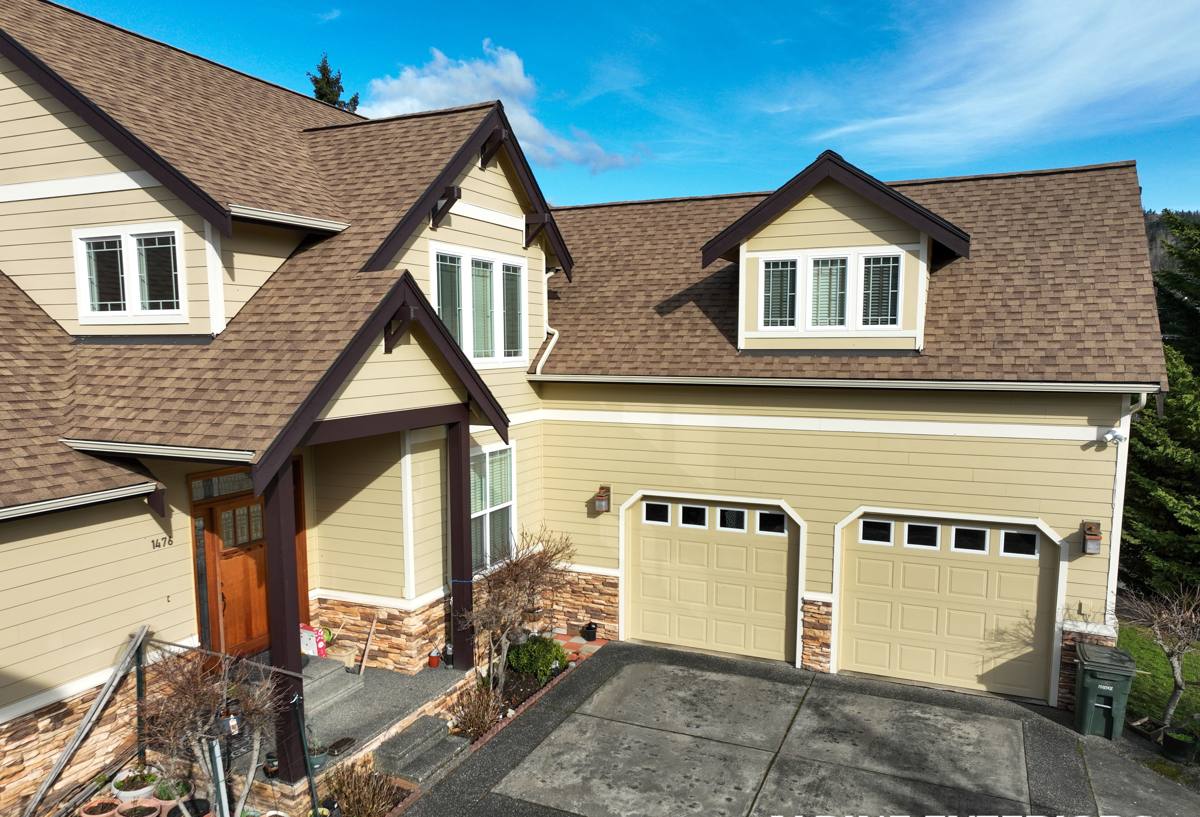
What a Correctly Installed Metal Roof Needs in This Climate
Metal panels themselves are durable. Where metal roofs fail early in Skagit County, it's almost never the panel — it's everything underneath and around it. That's where the real work of a metal roofing job happens.
Underlayment and Moisture Control
Metal expands and contracts more than composition shingle with temperature swings, and in a wet climate that movement has to happen over a underlayment system that won't trap moisture against the deck. We use synthetic or self-adhered underlayment rated for the exposure, with particular attention at valleys, eaves, and anywhere water tends to pool or run in sheets during a heavy rain event — which around here isn't an occasional thing, it's a fall-through-spring reality.
Fastener and Flashing Details
This is where cheap installs show themselves within a few years. Exposed fasteners need the right gasket and the right torque, or they back out and become a leak point. Flashing at chimneys, skylights, dormers, and wall intersections has to be layered correctly with the underlayment, not just caulked over the top — caulk is a maintenance item, not a waterproofing strategy. On a lake-adjacent property with more shade and moisture cycling, these details matter more, not less.
Ventilation to Fight Moss and Condensation
A roof that can't breathe holds moisture against the underside of the decking, which encourages rot from the inside while moss works on it from the outside. Proper intake and exhaust ventilation keeps the deck drier and slows moss and algae growth on the roof surface itself. This is one of the most overlooked parts of a roofing job because it's invisible once the roof is done — but it's often the difference between a roof that looks good in year ten and one that doesn't.
Choosing the Right Panel and Finish for a Big Lake Property
Not every metal roofing product is a good fit for every property, especially with shade, moisture, and airborne salt all in play. Here's how the common options stack up for this specific environment.
| Option | Strengths Here | Trade-Offs to Know |
|---|---|---|
| Steel, standing seam, factory paint finish | Concealed fasteners mean fewer long-term leak points; strong performance against wind-driven rain | Higher upfront cost than exposed-fastener panel; requires precise installation |
| Steel, exposed-fastener panel | Lower cost, faster install, widely available | Fastener gaskets need periodic checking; more penetration points to maintain over time |
| Aluminum panel systems | Naturally resists corrosion, a real advantage with salt-influenced air | Softer metal, more care needed during install and around foot traffic or debris impact |
| Standard galvanized without premium coating | Lowest material cost | Coating breaks down faster in this moisture and salt exposure; we generally steer homeowners away from it here |
For most Big Lake homes, we lean toward standing seam steel or aluminum with a quality factory finish (Kynar/PVDF-type coatings) because the concealed-fastener and corrosion-resistance combination matches what this specific environment demands. That said, budget and roof design are real factors, and an exposed-fastener system installed correctly will still outperform a poorly installed standing seam roof. The install quality matters more than the brand name on the panel.
Metal Roofing Versus Other Options in a Wet, Shaded Climate
Homeowners near the lake often ask why we steer them toward metal over composition shingle for this kind of exposure. It comes down to how each material handles sustained moisture and shade rather than any one dramatic failure point.
- Moss resistance: Metal's smooth, non-porous surface gives moss and algae far less to grip onto compared to the textured surface of shingles.
- Water shedding: A properly seamed metal roof sheds driving rain fast, with fewer overlapping edges for water to work into.
- Longevity under shade: Shingles in shaded, damp areas tend to degrade faster than their rated lifespan suggests. Metal is far less sensitive to that specific stress.
- Upfront cost: This is the honest trade-off — metal costs more upfront than composition shingle. The value case is in reduced maintenance and a longer service life, not a cheaper install.
Our Process for a Big Lake Metal Roof
The steps aren't unusual, but the discipline in each one is what separates a roof that lasts from one that doesn't.
- On-site assessment: We look at existing moss and algae patterns, shade exposure, roof pitch, and any signs of trapped moisture or deck damage before recommending a panel system.
- Deck inspection and repair: Any soft, rotted, or moisture-compromised decking gets addressed before a single panel goes on. Installing new roofing over a bad deck just hides the problem.
- Underlayment and flashing install: Full moisture barrier with reinforced attention at valleys, penetrations, and wall transitions.
- Ventilation check and correction: We verify intake and exhaust airflow is adequate for the home's attic space, adding or adjusting vents where needed.
- Panel installation: Fastener spacing, seam alignment, and edge detailing done to manufacturer spec, not shortcuts.
- Final walkthrough: We go over the finished roof and what maintenance, if any, it'll actually need going forward.
Living With Moss, Debris, and Tree Cover Near the Lake
Even a well-installed metal roof isn't maintenance-free in this environment — it's low-maintenance, which is a different thing. Needles, leaves, and organic debris from surrounding trees can collect in valleys and against any obstruction on the roof, and if left to sit, that debris holds moisture against the metal longer than it should. A periodic rinse-off and debris clearing, especially heading into the wet season, keeps a metal roof performing the way it's designed to. This is a lighter lift than shingle maintenance, but it's not nothing, and we tell homeowners that upfront rather than overselling "zero maintenance."
Signs Your Current Roof Is Already Losing the Fight
Before we talk about a new roof, it's worth knowing what to look for on the one you have. Any of these are worth a professional look, not necessarily a full replacement.
- Visible moss growth concentrated in shaded valleys or north-facing slopes
- Granule buildup in gutters (a shingle roof shedding its protective surface)
- Soft or spongy spots when walking the roof, or sagging visible from the ground
- Rust streaking at fasteners or flashing on an existing metal or metal-accented roof
- Interior ceiling stains, especially near valleys, chimneys, or skylights
- Daylight visible through the attic at eaves or ridge lines
- Curling, cracking, or missing shingles concentrated on the shaded side of the roof
Why Hiring a Crew That Already Works This Area Matters
A lot of roofing problems in this part of Skagit County trace back to installs designed for a drier, less shaded climate than what Big Lake actually gets. A crew that's already worked properties in and around this area knows where moss tends to establish first, which roof orientations hold moisture longest, and how much ventilation a given roof design actually needs versus the bare minimum code requires. That local pattern recognition doesn't replace good workmanship, but it does mean fewer surprises and a roof spec'd for the conditions it'll actually face, not a generic template.
If you're weighing options for a Big Lake home, we're happy to walk the roof with you, explain what we're seeing, and put together a straightforward, no-pressure estimate — no upsell script, just what the roof actually needs. Use the form below to get started.