 Burlington
 New Roof Installation Built for Big Lake's Weather
Homes around Big Lake sit in a spot where the weather doesn't cut anyone slack. You're close enough to the water and the marine air moving up from the Sound and Skagit Bay that salt-laden moisture works its way into anything with exposed fasteners or thin coatings. Add Skagit County's long wet season, driving rain that comes in sideways during fall and winter storms, and a moss season that can run eight months out of the year on shaded, north-facing slopes, and you've got a roof that's under real stress almost year-round. A new roof installation out here isn't just about swapping old shingles for new ones — it's about building an assembly that's going to hold up to that specific combination of conditions.
We install roofs in Burlington and the surrounding Big Lake area regularly, so we're not guessing at what fails first. We know which parts of a roof take the worst of the wind-driven rain, where moss gets a foothold fastest, and which details get skipped on cheap installs that show up as leaks two or three winters later.
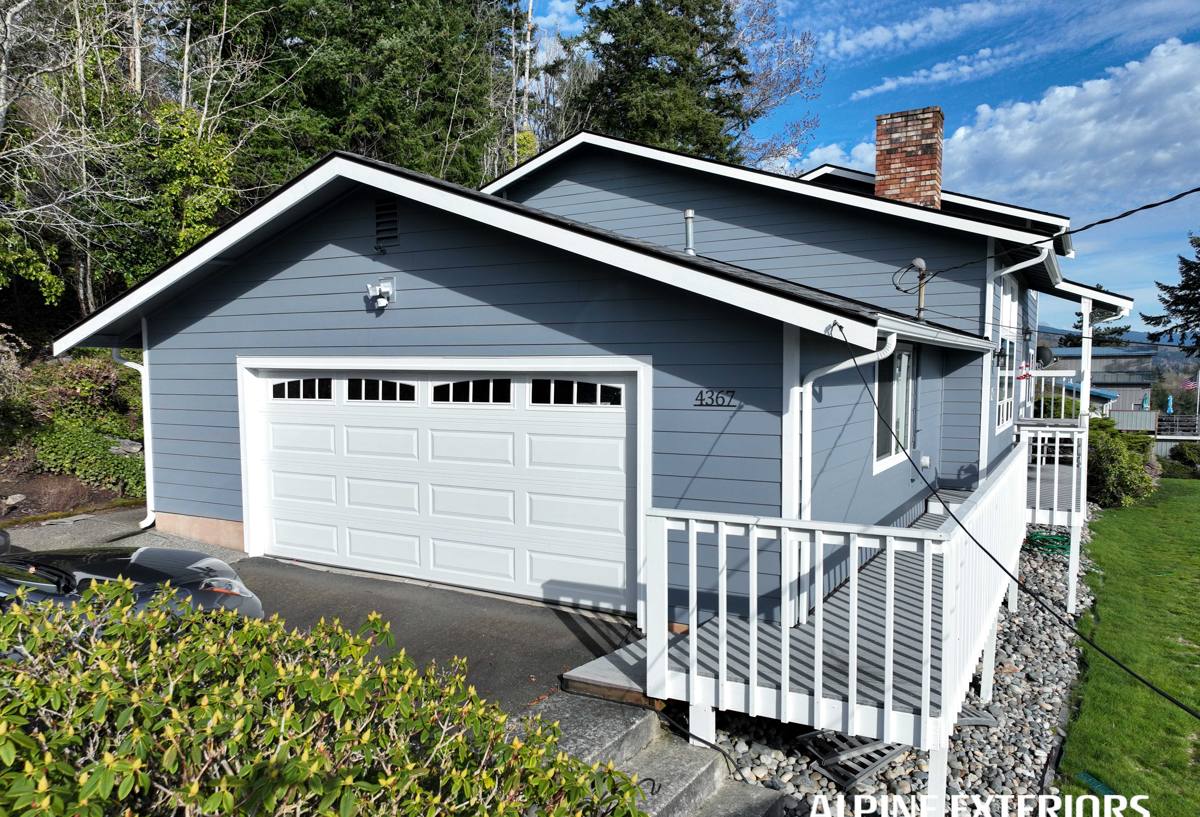
What Driving Rain and Salt Air Actually Do to a Roof
Wind-driven rain doesn't behave like a normal downpour. Instead of running straight down and off the roof, it gets pushed sideways and even slightly upward under shingle tabs, around vents, and into any gap in flashing that wouldn't matter in calmer weather. That's why roofs installed with shortcuts around chimneys, skylights, valleys, and wall transitions tend to leak specifically in storms, not during a light rain.
Salt air adds a second layer of wear. It accelerates corrosion on exposed metal — nail heads, flashing, vent stacks, and fastener coatings all degrade faster near the water than they would further inland. A roof installed with the wrong fastener spec or unprotected metal will show rust streaks and early failure well before the shingles themselves are worn out.
- Flashing and fasteners rated for coastal exposure, not generic inland-grade hardware
- Ice-and-water shield or equivalent underlayment at all vulnerable transitions, not just the eaves
- Properly lapped and sealed valleys, since valleys concentrate the most water volume in a storm
- Ventilation that keeps moisture from condensing inside the attic during long wet stretches
Moss Season: The Slow Roof Killer
Big Lake's tree cover and shaded rooflines make moss almost unavoidable without some intervention. Moss itself doesn't just sit on top of shingles looking bad — its root structure works into the granule surface and shingle mat, holding moisture against the roofing material long after the rest of the roof has dried out. Over a full moss season, that constant dampness shortens the life of asphalt shingles noticeably, and on wood or older composition roofs it can accelerate rot in the decking underneath.
A correctly installed new roof won't stop moss from growing entirely — nothing does that permanently in this climate — but the right materials, proper attic ventilation, and details like zinc or copper strips at the ridge can slow moss growth significantly and buy years of extra service life. We talk through moss-resistant options with every Big Lake homeowner, because it's one of the biggest factors in how long a roof actually lasts out here versus how long it's rated to last on paper.
What a Correct New Roof Installation Involves
Tear-Off and Deck Inspection
We don't install new roofing over old material, and we don't skip inspecting the deck once the old roofing is off. Roof decking that's been hiding a slow leak often has soft spots, delamination, or rot that won't show from above. Installing new shingles over a compromised deck just locks the problem in place. Any damaged sheathing gets replaced before anything new goes down.
Underlayment and Water Barrier
Given how much wind-driven rain this area sees, underlayment choice matters more here than in drier climates. We use synthetic or self-adhering ice-and-water membrane at eaves, valleys, and roof penetrations — the spots where water is most likely to be pushed backward or pooled during a storm — rather than relying on felt paper alone across the whole field.
Flashing Details
Flashing around chimneys, skylights, dormers, and sidewalls is where most roof leaks actually start, not in the open field of shingles. We fabricate and install flashing to shed water correctly at every transition, with corrosion-resistant material appropriate for the salt-air exposure this area gets.
Ventilation
Balanced intake and exhaust ventilation keeps attic moisture from condensing on the underside of the deck during the wet months. Poor ventilation is a quiet cause of premature deck rot and shortened shingle life, and it's easy to get wrong if it's not calculated for the specific roof shape and attic volume.
Material Installation
Nailing patterns, exposure, and sealant application all follow manufacturer specification — not a faster shortcut version of it. This is especially important for wind and rain performance, since underdriven or overdriven fasteners are a common cause of shingles lifting or leaking in exactly the storm conditions this area gets most.
Choosing a Roofing Material for a Big Lake Home
There's no single "best" roofing material for every house — it depends on your roof's exposure, your budget, and how much long-term maintenance you're willing to do. Here's how the common options compare for this specific climate.
| Material | Performance in Salt Air & Rain | Moss Resistance | Typical Lifespan Here |
|---|---|---|---|
| Architectural asphalt shingle | Good, with correct flashing and fasteners | Moderate; benefits from zinc strips | 20-30 years |
| Standing seam metal | Excellent when properly coated fasteners are used | High; moss struggles to root on smooth metal | 40-50+ years |
| Composite/synthetic shingle | Good; consistent, low water absorption | Moderate to high depending on product | 30-50 years |
| Cedar shake | Requires diligent maintenance in wet climates | Low without regular treatment | 20-30 years with upkeep |
We steer most Big Lake homeowners toward architectural asphalt or metal because both hold up well against the combination of moisture and salt exposure without demanding constant upkeep. Cedar shake can look great, but in this climate it needs more consistent maintenance to avoid moss and rot issues than most homeowners want to keep up with — that's a maintenance trade-off worth weighing honestly before committing to it.
Cost Factors for a New Roof Installation
We won't quote a price without seeing your roof, but the honest range for a full new roof installation on a typical single-family home in this area generally runs from the low thousands into the higher end of five figures, depending on these factors:
- Roof size and number of planes, valleys, and penetrations
- Pitch — steeper roofs take longer and require more safety setup
- Material choice — asphalt, metal, and composite all price differently
- Deck condition once the old roofing is removed
- Ventilation upgrades needed to bring the attic up to a proper standard
- Tear-off and disposal of the existing roofing layers
Our Installation Process
- On-site inspection and honest assessment of your current roof's condition
- Written estimate covering material options, scope, and timeline
- Scheduling that accounts for Skagit County's wet-season windows
- Tear-off, deck inspection, and any necessary sheathing repair
- Installation of underlayment, flashing, ventilation, and roofing material to spec
- Final walkthrough and cleanup before we consider the job done
Signs Your Big Lake Home May Need a New Roof
- Shingles that are curling, cracking, or missing granules in patches
- Persistent moss growth that returns quickly after cleaning
- Daylight visible through the attic roof boards
- Water stains on interior ceilings, especially after wind-driven storms
- Soft or spongy spots when walking the roof deck
- A roof approaching or past 20-25 years old, particularly on the shadier, moss-prone sides
Why Hire a Crew That Already Works in Big Lake
A roofing crew that only occasionally works this area doesn't always know which details matter most locally — where wind-driven rain tends to find weak spots, which slopes hold moss longest, or how fast salt air chews through the wrong grade of fastener. We work in Burlington and the greater Skagit County area regularly, so those aren't unknowns to us. That local familiarity shows up in the details: flashing choices, underlayment placement, and material recommendations that are matched to how this specific climate actually treats a roof over the years, not just how it performs on a spec sheet.
Get a Free, No-Pressure Estimate
If your Big Lake home's roof is showing its age, or you just want a straight answer on what a new roof installation would actually take, we're glad to come take a look. There's no pressure and no obligation — just an honest assessment and a clear estimate. Use the form below to get started.