 Burlington
 Windows Built for Life Around Big Lake
Big Lake sits in a pocket of Skagit County where the water, the tree cover, and the weather all work together to put extra strain on a home's exterior. Homes here spend most of the year wrapped in moisture — lake humidity in the warmer months, driving rain off and on through fall and winter, and long stretches of overcast, damp air that never fully dries the siding or window trim between storms. Add in the shade from mature evergreens around much of the lake and you get ideal conditions for moss and algae growth on anything that stays wet too long, windows included.
Homes closer to the Skagit River delta and the Salish Sea get a real dose of salt-laden air; Big Lake is set back from that direct exposure, but the broader regional climate still shows up here as sustained humidity and near-constant moisture cycling. That distinction matters for window installation, because the failure points aren't identical everywhere in the county — a Big Lake home's windows are more likely to suffer from trapped moisture, wood rot at the sill, and moss creeping into frame joints than from salt corrosion on hardware. Getting the installation right means understanding which of these pressures your specific home actually faces.
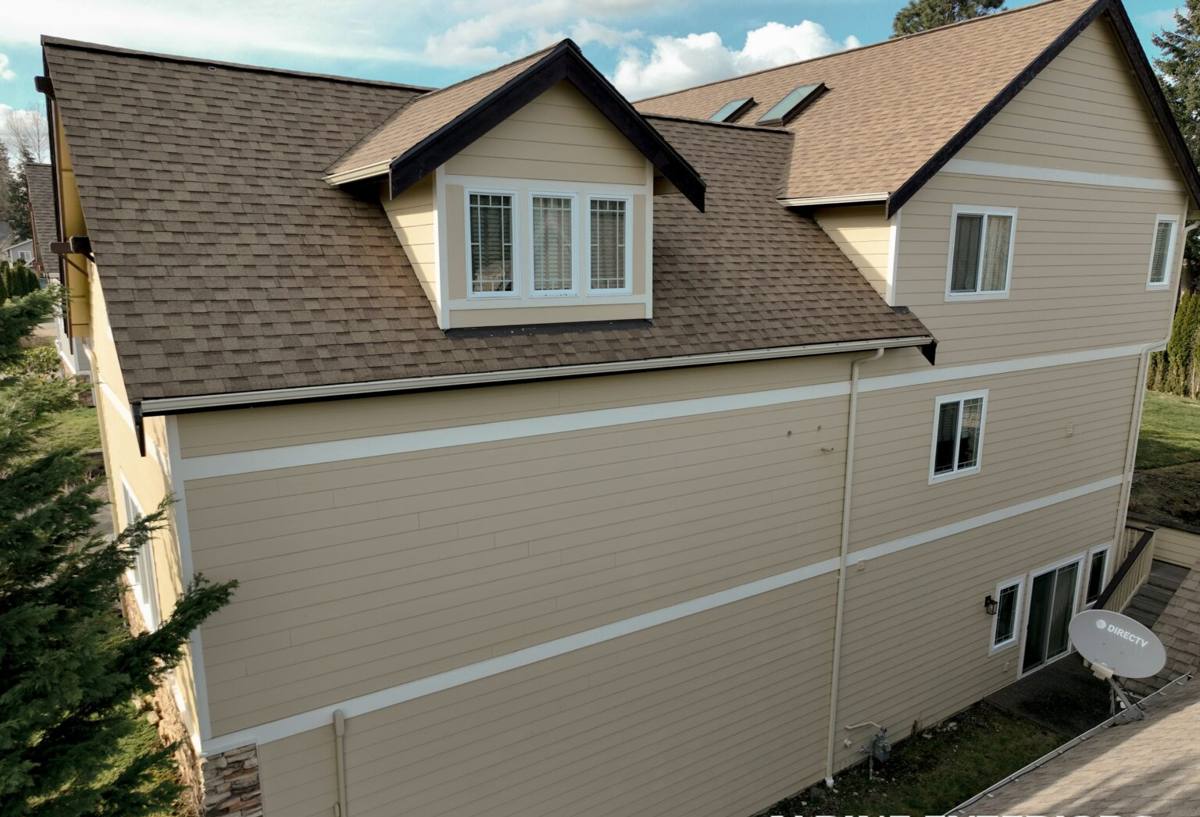
How Skagit County Conditions Wear Down Windows
Window failure around Big Lake rarely happens all at once. It's usually a slow process that starts with a small gap in the seal or flashing and ends, years later, with soft wood, fogged glass, or a window that won't close square anymore. The main culprits we see on service calls in this area:
- Trapped moisture behind trim — when flashing or house wrap isn't lapped correctly, water gets behind the window instead of running off it, and it has nowhere to go in a climate that doesn't get long dry stretches to let things air out.
- Moss and algae buildup — shaded, north-facing, or lake-facing windows can develop moss in the frame joints and weep holes, which holds moisture against the material and blocks proper drainage.
- Condensation between panes — a failed seal on older double-pane units shows up as permanent fogging, which is a sign the argon fill (if present) is gone and the insulating value has dropped.
- Wood rot at sills and corners — especially on older wood-frame windows that weren't back-primed or flashed to modern standards when installed.
- Swollen or sticking sashes — humidity cycling causes wood and some composite frames to expand and contract, and over years that movement loosens the fit.
Signs a Big Lake Home Needs New Windows
Not every issue means full replacement, but these are the signs we take seriously when we walk a property near Big Lake:
- Visible fog or moisture between panes that doesn't clear
- Soft or discolored wood at the sill, jamb, or exterior trim
- Moss or dark streaking building up in frame corners or tracks
- Drafts you can feel near the frame on a windy day off the lake
- Windows that are hard to open, close, or latch — a sign the frame has shifted
- A noticeable jump in heating costs with no other explanation
If you're only seeing one or two of these on a single window, a repair or reseal might be enough. If it's showing up across multiple windows, especially on the same side of the house, that's usually a sign the original installation or flashing detail was the problem, not just the window itself — and it's worth addressing the whole run rather than patching one unit at a time.
What a Correct Installation Actually Involves
A window is only as good as the way it's tied into the wall around it. This is the part homeowners don't see once the trim goes back on, and it's also the part that determines whether a window lasts 20 years or starts leaking in five. For Big Lake's wet, low-drying-potential climate, we pay particular attention to:
Flashing and drainage
Every opening gets flashed so that any water that reaches the window sheds outward and down, never inward toward the framing. That means correctly lapped flashing tape at the sill, jambs, and head, in the right order, so water always moves downhill over the layer beneath it rather than behind it.
Sealing without trapping moisture
Sealant matters, but so does knowing where not to seal. A fully sealed perimeter with no way for incidental moisture to escape can trap water inside the wall assembly — which is worse than a small amount of managed drainage. We leave weep paths where the window design calls for them.
Proper shimming and square
A window that's out of square binds, leaks at the corners, and wears its weatherstripping unevenly. Shimming it level and plumb before fastening is a basic step that gets rushed on lower-quality installs — it shouldn't be.
Insulation at the gap
The gap between the window frame and the rough opening needs to be filled with a low-expansion foam or backer rod and sealant — not stuffed with fiberglass batting, which does little to stop air movement and can hold moisture against the frame.
Choosing a Window Frame for This Climate
There's no single "best" frame material for every home — it depends on your budget, your home's style, and how much upkeep you want to take on. Here's how the common options hold up under Skagit County's humidity and moss-prone conditions:
| Frame Material | Moisture Performance | Maintenance | Notes for This Area |
|---|---|---|---|
| Vinyl | Excellent — won't rot or corrode | Low — occasional cleaning | Good default choice for lake-adjacent homes with heavy shade and moss exposure |
| Fiberglass | Excellent — very stable, resists warping | Low to moderate | Strong option where temperature swings and moisture cycling are both factors |
| Wood | Requires diligent upkeep to prevent rot | High — regular painting/sealing | Can work well if it's maintained, but it's the least forgiving option in a climate that stays damp this much of the year |
| Aluminum | Moderate — prone to condensation without thermal breaks | Low | Less common for residential in this area due to heat loss and condensation risk in cold, humid conditions |
| Clad wood (wood interior, vinyl or aluminum exterior) | Good — exterior shell protects the wood | Moderate | A middle-ground choice for homeowners who want a wood interior look without full wood maintenance |
We don't push one brand or material on every job. Our standard is to size the frame material to the exposure — a window under deep eave cover on a dry-fitted wall behaves differently than one facing open weather toward the lake, and the recommendation should reflect that instead of a one-size answer.
Our Installation Process
- On-site assessment — we look at the existing window, the surrounding trim, sheathing, and siding condition before quoting anything, since hidden rot or flashing issues change the scope.
- Removal and opening inspection — once the old window is out, we check the rough opening, sill, and framing for moisture damage before anything new goes in.
- Repair as needed — any soft wood or damaged sheathing gets addressed first. Installing a new window over a compromised opening just hides the problem.
- Flashing and air/water barrier work — done in the correct sequence so water always drains outward.
- Setting, shimming, and fastening — the window is leveled, squared, and secured per manufacturer specs.
- Insulating and sealing — gap filled correctly, interior and exterior sealant applied where it belongs.
- Trim and finish work — interior and exterior trim reinstalled or replaced, and the area cleaned up.
- Final walkthrough — we test operation, check the seal, and go over care with you before we call it done.
What Window Installation Typically Costs
Pricing depends on window size, frame material, whether it's a straightforward replacement or one that involves opening repair, and how many windows are done at once. Broad ranges for a single-window replacement, installed:
| Factor | Lower Cost | Higher Cost |
|---|---|---|
| Frame material | Standard vinyl | Fiberglass or wood-clad |
| Opening condition | Sound framing, straightforward swap | Rot repair or reframing required |
| Window size/type | Standard single or double-hung | Large picture windows, bays, or custom shapes |
| Job scope | Bundled, whole-house replacement | Single window as a one-off |
We won't quote a number without seeing the window and opening in person — too much of the cost depends on what's behind the trim, and giving a figure sight unseen isn't honest pricing.
Why a Crew That Already Works Big Lake Matters
Window installation quality has a lot to do with judgment calls that don't show up in a spec sheet — how much weep path to leave on a shaded, moss-prone elevation, whether an opening needs extra drying time before closing it back up, how a particular frame material has actually held up on homes a mile down the road. A crew that regularly works this part of Skagit County has already seen how these houses age in this specific climate, not a generic one. That's the difference between an installation that's technically correct on paper and one that's actually built for what Big Lake weather does to a house year after year.
Simple Upkeep That Extends Window Life
- Rinse frames and tracks periodically to keep moss and algae from establishing, especially on shaded or lake-facing sides
- Clear weep holes of debris so water can drain as designed
- Check exterior caulking annually and touch up any cracked or missing sections
- Trim back vegetation that keeps a window in constant shade and damp
- Address any soft trim or discoloration early, before it spreads to the frame
If you're noticing drafts, fogged glass, or moss buildup on your windows, or you're planning ahead for a home near Big Lake, we're happy to take a look and give you a straightforward, no-pressure estimate. There's a form below to get that started.