 Burlington
 Building Decks in Blanchard's Weather
Blanchard sits at the foot of Blanchard Mountain along the edge of Skagit County, close enough to open water that homes here deal with a mix of driving rain, salt-laden air, and heavy tree cover that keeps decks shaded and damp for long stretches of the year. A deck built to a generic spec sheet doesn't hold up in that environment. One built with this climate in mind — the right decking material, the right fasteners, the right drainage details — will outlast one that wasn't, often by a decade or more.
We've built and repaired decks throughout the Burlington area long enough to know which shortcuts show up as rot, mildew stains, and loose railings three or four winters later. This page covers what a Blanchard deck actually needs, what a correct install looks like, and how we run the job from first call to final walkthrough.
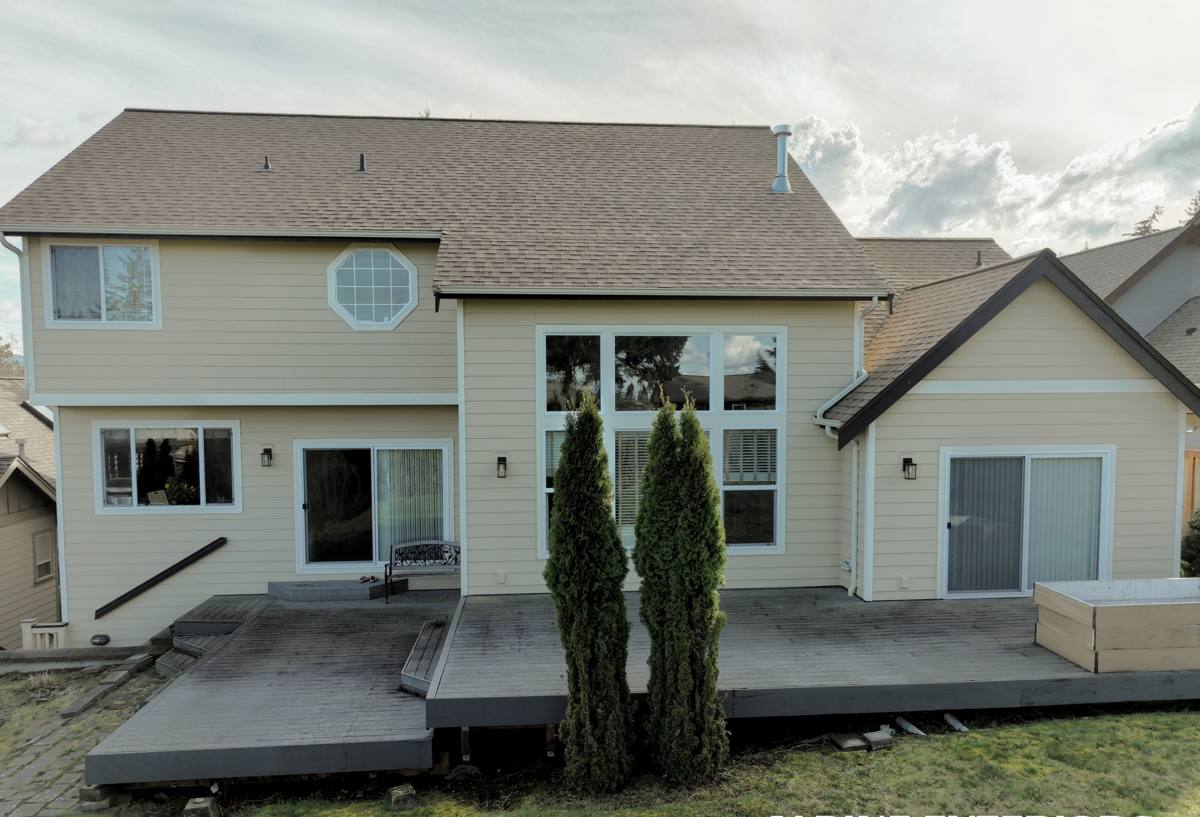
What Local Conditions Do to a Deck
Three things drive most of the deck problems we see in this part of Skagit County.
Driving Rain and Standing Moisture
Rain here doesn't just fall straight down — wind pushes it sideways into ledger boards, under railings, and into any gap that wasn't flashed correctly. Decks with poor drainage hold water in the framing long after the surface looks dry, which is where rot starts.
Salt Air and Corrosion
Proximity to Samish Bay and the greater Puget Sound means a steady low level of salt in the air, even well inland from the shoreline. Salt air speeds up corrosion on any fastener, bracket, or hanger that isn't rated for it. A deck that looks fine on the surface can fail structurally at the connection points if the hardware was never upgraded for coastal-adjacent exposure.
Shade, Tree Cover, and Moss
Wooded lots are common around Blanchard, and shade plus persistent dampness is exactly what moss and algae need to take hold. Once moss establishes on decking or in the gaps between boards, it holds moisture against the wood and makes the surface slick — a real slip hazard on stairs and ramps, not just a cosmetic issue.
What a Correctly Built Deck Includes
Regardless of the decking material a homeowner picks, a deck built for this climate needs the same underlying details done right:
- Ledger board flashing that sheds water away from the house band board, not into it
- Joist tape or an equivalent moisture barrier on top of every joist
- Corrosion-resistant fasteners and structural hardware rated for exterior, coastal-adjacent use
- Board spacing and layout that allows water to drain through rather than pool
- Adequate ventilation underneath the deck so the framing can dry out between rain events
- Footings sized and set below frost depth, on soil that's been checked for drainage, not just tamped and poured
Skip any one of these and the deck may look complete for a year or two before the real problems show up.
Footings on Sloped or Wooded Ground
Blanchard sits at the base of Blanchard Mountain, and a fair number of lots in the area have some grade to them, along with root systems from established trees nearby. That combination means footing placement and depth can't be assumed from a standard plan. We check actual soil conditions and grade at each footing location before pouring, especially on any deck that sits more than a step or two above ground level.
Railings, Stairs, and Hardware
Railings and stairs are where corrosion problems tend to show up first — they take more direct weather exposure and more mechanical stress from everyday use than the deck surface. We use fasteners and brackets rated for coastal-adjacent exposure on every connection point, not just where it's visible. Baluster spacing and rail height are built to current code, and stair treads get the same drainage and slip-resistance thinking as the main deck surface, since stairs are usually the first place moss becomes a safety issue rather than just an eyesore.
Choosing a Decking Material for Blanchard's Climate
There's no single right answer here — it depends on budget, how much upkeep a homeowner wants to do, and how shaded the site is. The table below reflects how each common option actually performs once it's dealing with real Skagit County weather, not showroom conditions.
| Material | Moss/Mildew Resistance | Maintenance | Relative Cost |
|---|---|---|---|
| Pressure-treated wood | Low — needs regular cleaning and sealing to resist moss | High — annual cleaning, periodic sealing/staining | $ |
| Cedar | Moderate — naturally rot-resistant but still needs upkeep in constant shade | Moderate to high — sealing every 1-2 years | $$ |
| Composite decking | Good — dense material resists moisture absorption | Low — occasional washing, no sealing | $$ |
| Capped PVC decking | Best — fully sealed surface, nothing for moss to grip | Lowest — soap and water as needed | $$$ |
Why We Lean Toward Capped Composite or PVC on Shaded Lots
On a sunny, open lot, a well-maintained wood deck can do fine for years. On a shaded Blanchard lot that stays damp under tree cover, wood needs a level of upkeep most homeowners underestimate — and once moss gets into the grain, cleaning it out gets harder every season. Capped composite and PVC decking cost more up front, but they don't give moss anything to hold onto, which matters more here than in drier, sunnier parts of the county. We'll walk through the real trade-offs for your specific lot rather than push one product across the board.
What Drives the Cost of a Custom Deck
Every deck is priced around a handful of the same variables. Understanding them helps you get an accurate estimate instead of a rough guess.
| Factor | Why It Matters |
|---|---|
| Square footage | The single biggest driver of material and labor cost |
| Decking material | Pressure-treated wood costs least up front; capped PVC costs the most but needs the least upkeep over time |
| Height and grade | A deck built high off a sloped Blanchard lot needs taller footings, more structural framing, and code-required guardrails |
| Railing style | Standard wood rail costs less than metal cable or glass-panel systems |
| Site access | Wooded or tight-access lots can add time for material staging and equipment access |
| Stairs | Each additional stair run adds its own framing, footings, and code requirements |
We walk every site in person before quoting, because two decks of the same square footage can cost noticeably different amounts depending on slope, access, and existing site conditions.
Our Process, Start to Finish
- Site visit and consultation. We walk the lot, check sun and shade exposure, existing drainage, and soil and grade conditions before recommending materials.
- Design and material selection. We go over decking options, layout, and railing style, with honest pros and cons for your specific site rather than a one-size-fits-all pitch.
- Permitting. Most new decks and significant rebuilds in Skagit County require a permit; we handle that paperwork so you don't have to track it down yourself.
- Build. Footings, framing, flashing, and decking installed in sequence, with each stage checked before we move to the next.
- Final walkthrough. We go over the finished deck together, including basic maintenance expectations for whatever material you chose.
Permits and Local Considerations
Deck permitting in Skagit County depends on size, height, and how the deck attaches to the home — a low, freestanding deck may fall under different rules than a raised deck attached to the house. Setback requirements also come into play on smaller Blanchard lots, and grade can affect where a deck is allowed to sit relative to the property line. We check the specifics for your property before finalizing a design, so there are no surprises partway through the build.
Reducing Moss and Mildew Before It Starts
The best moss control is designing it out rather than fighting it every spring. A few details make a real difference on shaded Blanchard properties:
- Consistent board gaps that let water drain instead of collecting in tight seams
- Hidden fastener systems that avoid the small ledges around screw heads where moss and debris collect
- Enough clearance underneath the deck for airflow, so the framing actually dries out between storms
- Keeping nearby vegetation trimmed back where it's shading the deck surface directly
- Choosing a decking material and finish that don't give moss spores a rough surface to grip
Why Hire a Crew That Already Works This Area
A contractor who mainly builds in drier, more open parts of the county may not think twice about standard wood decking or standard fasteners, and in a lot of places that's a fine call. Around Blanchard, those same choices tend to age faster because of the shade, grade, and moisture that come with the terrain. We already know which details matter here: how far to hold a ledger board off a shaded wall, which hardware holds up under salt-tinged rain year after year, how to set footings on uneven or root-filled ground, and how the local permitting process actually works. That local familiarity shows up as fewer callbacks and a deck that still looks and performs well after several Skagit County winters, not just the first one.
Maintenance Checklist for Homeowners
Whatever material you choose, a little seasonal attention goes a long way in this climate:
- Sweep leaves and debris off the deck surface regularly, especially in fall
- Rinse or wash the surface a couple of times a year to keep moss and algae from establishing
- Check for standing water after heavy rain and confirm it's draining as designed
- Inspect railings and stair connections annually for looseness or corrosion
- Reseal wood decking on the manufacturer's recommended schedule, rather than waiting until it looks dry and gray
- Trim back overhanging branches or brush that keep the deck in constant shade
If you're planning a new deck in Blanchard or need an honest look at an existing one, we're happy to come take a look. Reach out for a free, no-pressure estimate using the form below.