 Burlington
 Why Edison Decks Take More Punishment Than Most
Edison sits in one of the wetter, more exposed corners of Skagit County. Homes here deal with driving rain off the water, salt-laden air that never fully lets up, and a moss season that can run half the year on a shaded or north-facing deck. A deck built the same way you'd build one in a drier inland town simply doesn't hold up the same way out here. Fasteners corrode faster, wood stays damp longer between dry spells, and moss gets a foothold in places that would stay clean somewhere with more sun and less humidity.
None of that means a deck in Edison is doomed to fail early. It means the repair work has to account for the actual conditions instead of treating every deck like it's in a generic climate. That's the difference between a repair that lasts a few seasons and one that lasts as long as the rest of the structure.
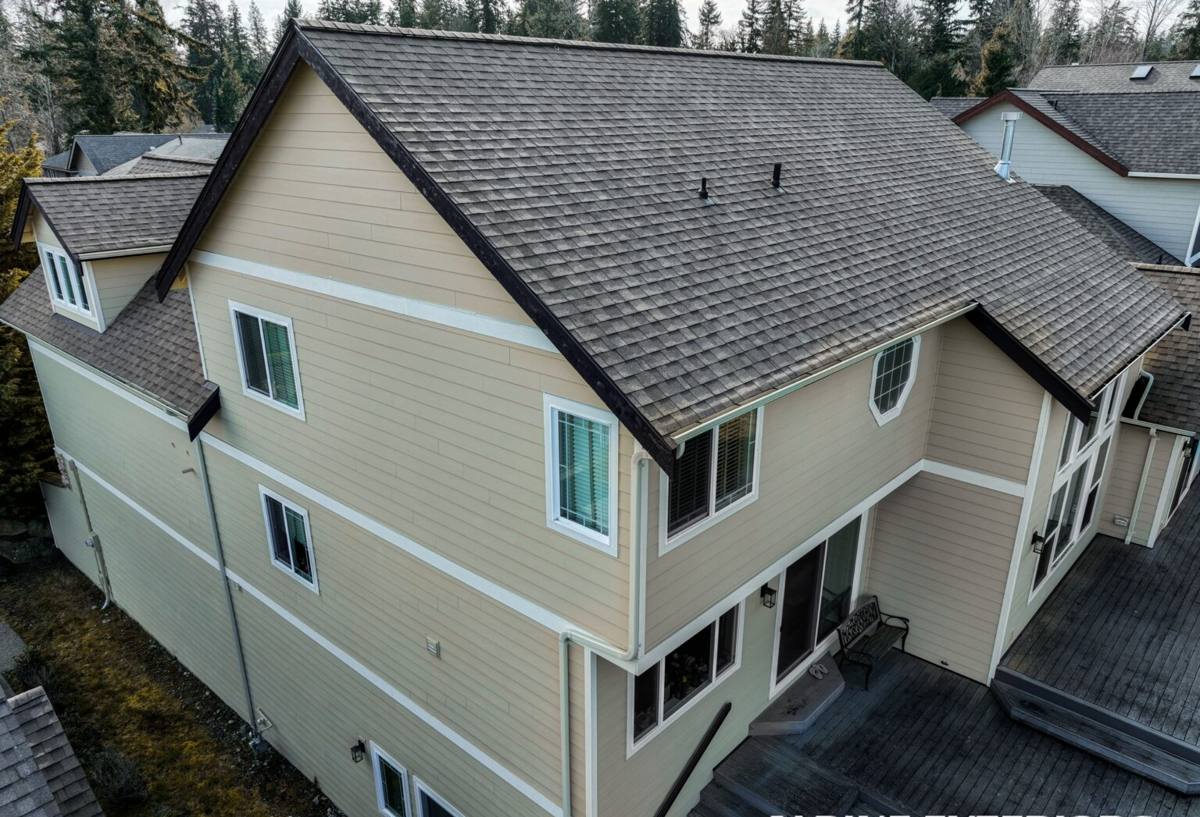
What Salt Air, Rain, and Moss Actually Do to a Deck
Salt Air and Metal Fasteners
Salt air accelerates corrosion on anything metal — nails, screws, joist hangers, bolts. Once a fastener starts rusting, it loses holding strength long before it looks obviously bad. On older decks, especially ones built before galvanized or stainless hardware was standard practice, this is one of the most common hidden problems we find. The deck boards can look fine while the connections underneath are quietly failing.
Driving Rain and Water Intrusion
Wind-driven rain doesn't just fall straight down — it gets pushed sideways into ledger boards, under railing posts, and into any gap where flashing is missing or has failed. Water that gets trapped against a house band board or pools where a deck meets siding is one of the leading causes of structural rot, and it's often invisible until the damage is well established.
Moss, Algae, and Trapped Moisture
Moss and algae don't just make a deck slippery — they hold moisture directly against the wood surface, which keeps boards damp far longer than open air and sun would allow. Over a full Skagit County winter, a moss-covered deck can stay wet for weeks at a stretch. That constant dampness is what drives rot, not any single rainstorm.
Signs an Edison Deck Needs Repair
Most deck problems give some warning before they become a safety issue. Homeowners who catch these early usually pay for a repair instead of a rebuild.
- Soft or spongy spots when you walk across the decking
- Boards that have visibly cupped, split, or pulled away from their fasteners
- Rust streaks running down from screws, nails, or metal connectors
- A railing or post that flexes or wobbles under normal pressure
- Green or black staining that keeps coming back even after cleaning
- Gaps or separation where the deck meets the house
- Stairs that feel uneven or have visible sagging in the stringers
If you're seeing more than one or two of these, it's worth having someone look underneath the deck, not just at the surface. Surface wear and structural wear don't always show up at the same time.
What a Correct Repair Actually Involves
Starting Underneath, Not on Top
A repair that only replaces visible decking boards without checking the framing underneath is addressing the symptom, not the cause. A proper job starts with an inspection of the ledger board, joists, beams, and post connections — the parts that actually hold the deck up and that take the worst of the water damage.
Ledger Flashing
The ledger board — where the deck attaches to the house — is the single most common failure point on older decks in wet climates. If the flashing behind it is missing, cracked, or was never properly installed, water gets channeled directly into the house framing. Fixing this properly sometimes means pulling the ledger, correcting the flashing, and reattaching with the right hardware, rather than just caulking a gap and calling it done.
Sistering and Reinforcing Framing
Joists or beams with surface rot but sound cores can often be reinforced by sistering a new board alongside the damaged one, rather than replacing the whole structural member. This is a judgment call that depends on how far the rot has spread — which is why the underside inspection matters as much as the visible boards.
Fastener Upgrades
Where corrosion is part of the problem, replacing old fasteners with stainless or hot-dip galvanized hardware rated for coastal and marine-air exposure is a small cost that prevents the same failure from happening again in a few years.
Repair or Replace: How We Decide
Not every damaged deck needs to come down. The decision usually comes down to how much of the structural framing is still sound versus how much has been compromised.
| Factor | Leans Toward Repair | Leans Toward Replacement |
|---|---|---|
| Framing condition | Joists and beams solid, isolated soft spots | Widespread rot in multiple structural members |
| Ledger board | Sound, or flashing can be corrected in place | Rotted or improperly attached to the house |
| Age of deck | Under 15-20 years, built to a reasonable standard | Original construction was already substandard |
| Decking surface | A portion of boards worn or cupped | Most boards cracked, splintering, or failing |
| Footings and posts | Stable, no movement or settling | Heaving, rot at post bases, or undersized footings |
As a general range, targeted repairs — ledger, framing sections, decking boards, and hardware — tend to run a fraction of a full rebuild, but the real number depends entirely on how much of the structure underneath is still good. We won't know that for certain until we've actually looked underneath the deck.
How Our Process Works
1. On-Site Assessment
We look at the deck from top to bottom — surface boards, railings, stairs, and the framing underneath, including the ledger connection to the house. This is where most of the real information comes from, not from a quick visual pass.
2. A Straight Answer on Repair vs. Replace
You get an honest recommendation based on what we actually find, along with the reasoning behind it. If a repair will hold up, we'll say so. If the framing is too far gone to justify patching it, we'll say that too.
3. A Written Estimate
Before any work starts, you get a clear scope of what's being repaired, what materials and hardware will be used, and what it costs — no vague allowances that turn into surprise add-ons later.
4. The Repair Itself
Work is sequenced to address the structural issues first — framing, flashing, connections — before moving to decking, railings, and finish work. Cutting corners on the parts you can't see is how decks end up needing the same repair again in five years.
5. Cleanup and Walkthrough
We clear debris and old material from the site and walk the finished repair with you so you know exactly what was done and what to watch for going forward.
Materials We Use, and the Trade-Offs Involved
For decking material, both quality wood and composite have a place, and the right choice depends on your priorities more than any single "best" answer.
Wood decking costs less upfront and is easy to spot-repair board by board, but it needs regular cleaning and sealing to hold up against moss and moisture — skip that maintenance in this climate for a couple of years and you'll see it. Composite decking costs more initially and doesn't need sealing, but it's less forgiving to install correctly: gaps, fastening, and drainage details all have to be right the first time, because composite doesn't hide sloppy work the way wood sometimes does, and warranty coverage typically depends on following the manufacturer's installation specs exactly. We'll walk you through both honestly rather than pushing whichever is easier for us to install.
For fasteners and structural hardware, we standardize on stainless steel or hot-dip galvanized products rated for coastal exposure. It costs a little more than standard hardware, but given what salt air does to fasteners here, it's not a place worth cutting the budget.
Why It Matters to Hire a Crew That Already Works in Edison
A lot of deck problems in this area follow the same pattern — ledger flashing that wasn't detailed for a wet climate, standard hardware that wasn't rated for salt exposure, moss buildup in shaded corners that got ignored too long. A crew that regularly works Skagit County homes recognizes that pattern quickly instead of treating your deck as a one-off puzzle. That familiarity also extends to knowing what Burlington and unincorporated Skagit County permitting typically requires for structural deck repairs, so the work is done to code without unnecessary delays.
It also means we're not guessing at what materials and details actually hold up here versus what looks fine on paper. We've seen how different fasteners, flashing details, and decking materials perform after a few real Skagit County winters, not just what a spec sheet promises.
Keeping Your Deck in Good Shape After the Repair
A repaired deck still needs some seasonal attention to get the most life out of it, especially in a climate that grows moss this readily.
- Sweep debris and standing leaves off the surface regularly, especially in fall
- Treat moss and algae growth early, before it spreads and traps moisture
- Check that gaps between boards stay clear so water can drain instead of pooling
- Reseal wood decking on the manufacturer's recommended schedule, not just when it looks dry
- Look at the ledger board and flashing once a year for any sign of new water staining
Catching small issues during a five-minute walk-around each year is a lot cheaper than catching them after they've turned into a framing repair.
If your deck in Edison is showing soft spots, rust stains, moss that won't quit, or just feels less solid than it used to, we're happy to take a look and give you a straight answer on what it needs. Fill out the form below for a free, no-pressure estimate.