 Burlington
 Blanchard's Roofs Work Harder Than Most
Tucked between Chuckanut Mountain and Samish Bay just outside Burlington, Blanchard sits in a spot where several rough weather patterns overlap at once. You've got salt-laden air rolling in off the bay, heavy driving rain funneling down off the hillsides, and a tree canopy dense enough to keep large sections of roof shaded and damp for months at a stretch. Add in the long Skagit County moss season — realistically eight or nine months out of the year when conditions favor growth — and you have a roof environment that's genuinely tougher on materials than what you'd find a few miles inland.
None of that means a Blanchard roof is doomed to fail early. It means the repair work has to account for those specific stresses instead of treating every leak or shingle problem as a generic fix. A patch that would hold up fine on a dry, open lot in the valley can fail within a season on a shaded, salt-exposed roof near the bay.
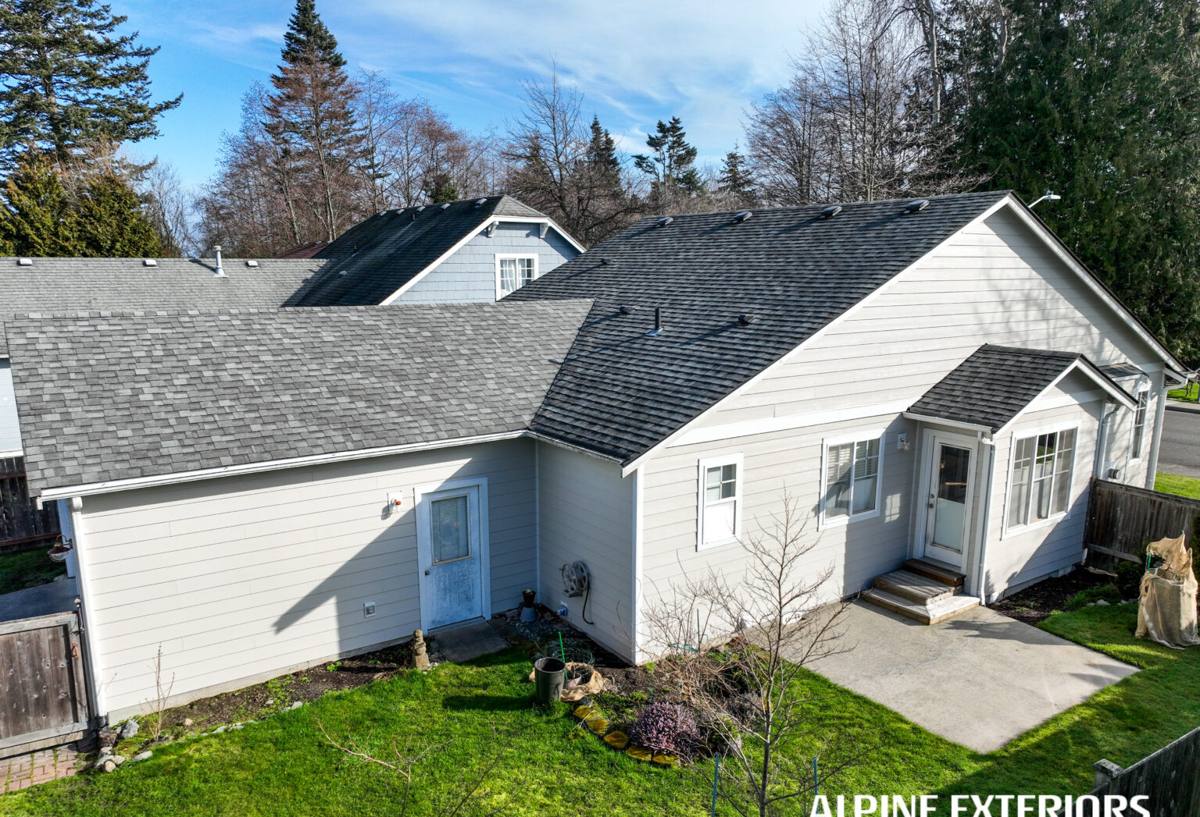
How Salt Air, Rain, and Moss Actually Damage a Roof
Salt Air
Salt-carrying moisture accelerates corrosion on any exposed metal — flashing, fasteners, gutter hardware, and vent caps. Once flashing starts to pit or thin, water finds its way underneath it at seams and valleys long before the shingles themselves show obvious wear.
Driving Rain
Rain that comes in at an angle, pushed by wind off the water, behaves differently than a straight vertical downpour. It gets forced sideways and upward under shingle edges, around vent boots, and into any gap in flashing that would otherwise stay dry in calmer weather. This is why leaks in Blanchard often show up during specific storms rather than every time it rains.
Moss and Shade
Moss doesn't just look bad — it holds moisture directly against the shingle surface, works its way under tabs as it grows, and gradually lifts them. Over time that traps water against the underlayment and decking, which is where the real structural damage starts. Roofs under heavy tree cover or on north-facing slopes in Blanchard tend to see this first and worst.
Signs a Blanchard Roof Needs Repair Now
Catching problems early is almost always the difference between a straightforward repair and a much larger job. Walk your property and check for these:
- Dark streaking or visible moss growth concentrated on shaded or north-facing roof planes
- Granules collecting in gutters or at the base of downspouts
- Shingle tabs that look lifted, curled, or cracked, especially near valleys and edges
- Rust staining or visible corrosion around flashing, vent pipes, or chimney bases
- Water stains on interior ceilings, especially ones that appear only after wind-driven storms
- Soft or spongy spots when walking the roof (or visible sagging from the ground)
- Daylight visible through the attic roof deck
If you're seeing more than one or two of these, it's worth having someone look before the next heavy storm season.
What a Correct Roof Repair Actually Involves
A repair that actually lasts in this climate isn't just about swapping a shingle. It requires looking at the whole assembly around the damaged area.
Diagnosing the Real Source
Leaks are notoriously misleading — water often travels along the underlayment or decking before it drips somewhere visible, so the wet spot on your ceiling isn't always directly below the actual failure point. A correct repair starts with tracing the path back to the source, not just patching where the stain shows up.
Flashing First
Given how hard salt air is on metal flashing here, any repair around a chimney, skylight, vent pipe, or valley should include an honest inspection of the flashing itself. Reusing corroded or thinned flashing to save a step is one of the most common reasons a "repaired" leak comes back within a year.
Decking Condition
If moss or a slow leak has been sitting against the roof deck for a while, the plywood or OSB underneath may be soft or delaminating. Patching shingles over compromised decking doesn't hold — that section needs to be cut out and replaced before new roofing goes back down.
Matching Materials
Shingles fade and weather over time, so an exact color match on an older roof usually isn't realistic. What matters more is matching the shingle type, weight, and profile so the repaired section performs the same as the rest of the roof, not just looks close from the ground.
Common Repair Scenarios in Blanchard
| Scenario | What's Usually Happening | Typical Fix |
|---|---|---|
| Moss-related shingle lift | Moss growth under tabs holding moisture against shingles and decking | Moss removal, damaged shingle replacement, treatment to slow regrowth |
| Valley leaks after storms | Wind-driven rain overwhelming worn or undersized valley flashing | Valley flashing replacement, underlayment repair |
| Chimney or vent leaks | Corroded or improperly sealed flashing around penetrations | Flashing replacement, resealing, boot replacement |
| Wind-lifted or missing shingles | Aging adhesive seal or storm damage from gusts off the bay | Shingle replacement, re-securing adjacent courses |
| Interior ceiling stains | Slow leak traveling along decking from a source elsewhere on the roof | Leak tracing, targeted repair at true source |
Repair or Replace? What Actually Decides It
Homeowners often assume any leak means a full new roof is coming. That's frequently not true — but it's also not something to guess at. A few honest factors determine which way it should go:
| Factor | Favors Repair | Favors Replacement |
|---|---|---|
| Roof age | Within manufacturer's expected service life | At or past expected lifespan for the material |
| Extent of damage | Isolated to one section, valley, or penetration | Widespread across multiple roof planes |
| Decking condition | Solid, no soft spots or rot | Soft, delaminated, or repeatedly compromised |
| Moss/shading history | Recent onset, caught early | Years of untreated growth and moisture intrusion |
| Number of prior repairs | First or second repair on the roof | Repeated patches to the same areas over time |
Cost for a repair depends heavily on scope — a single flashing fix is a different job than replacing rotted decking across a valley — so we'd rather look at the actual roof than quote a number blind. In general, straightforward repairs run in the low hundreds to low thousands of dollars; anything involving structural decking work runs higher. We'll always tell you plainly if replacement is the more honest long-term answer.
Our Repair Process
- Inspection: We walk the roof and attic (where accessible) to trace the actual source of any leak or damage, not just the symptom.
- Honest assessment: We explain what we found in plain terms, including whether a repair is the right call or whether you're better served by replacement.
- Written estimate: You get a clear scope of work and price before anything starts — no surprise add-ons mid-job.
- The repair: We address the source first — decking, flashing, or underlayment — then finish with matched shingle work.
- Cleanup and check: Debris and old materials are removed, and we walk the completed area with you.
Why a Crew That Already Works Blanchard Matters
Roof repair advice that works in a dry inland climate doesn't automatically translate here. A crew that regularly works Blanchard and the surrounding Skagit County communities already knows which roof orientations get hit hardest by wind-driven rain off the bay, which flashing details tend to fail first under salt exposure, and how aggressively moss needs to be managed on shaded lots to actually keep it from coming back. That local pattern recognition shortens the diagnostic process and reduces the odds of a repair that looks fine for a season and then fails at the exact point that gets stressed hardest during the next big storm.
It also means practical things like knowing typical access conditions on wooded or sloped Blanchard properties, and being realistic with you about how much moss maintenance is reasonable to expect between visits given the tree cover in the area.
Keeping a Repaired Roof in Good Shape
Once a repair is done right, a bit of routine attention keeps small issues from turning into repeat calls:
- Have gutters and downspouts cleared at least twice a year, more often under heavy tree cover
- Keep overhanging branches trimmed back to reduce shade and debris buildup
- Have moss treated before it becomes visible growth, not after
- Walk the attic after major windstorms and check for new light or moisture
- Get flashing and valleys checked every few years, even without an active leak
If you're dealing with a leak, missing shingles, or moss damage on a Blanchard roof, we're glad to come take an honest look. There's no pressure and no obligation — just a straightforward assessment of what's actually going on and what it would take to fix it right. Fill out the form below to schedule a free estimate.