 Burlington
 Why Siding Takes a Beating in Blanchard
Blanchard sits in one of the more demanding pockets of Skagit County for exterior materials. Homes here deal with a combination most inland neighborhoods don't: salt-laden air drifting in off the water, driving rain that comes in sideways during fall and winter storms, and deep shade from surrounding tree cover that keeps north- and west-facing walls damp for days after a storm passes. That combination is exactly what accelerates siding failure — not one big event, but years of small moisture cycles that most homeowners never see happening until paint starts peeling or a board goes soft.
Salt air is corrosive to fasteners and hard on any finish that isn't factory-cured. Driving rain finds every gap in flashing, caulking, and butt joints and pushes water sideways instead of letting gravity carry it down and away. And moss season in this part of Skagit County isn't a two-month nuisance — it's closer to seven or eight months of the year when conditions stay wet enough for moss, algae, and mildew to take hold on siding, trim, and anything else that doesn't get direct sun. None of this means siding is destined to fail. It means repairs done in Blanchard have to account for a wetter, saltier, shadier environment than a generic repair job assumes.
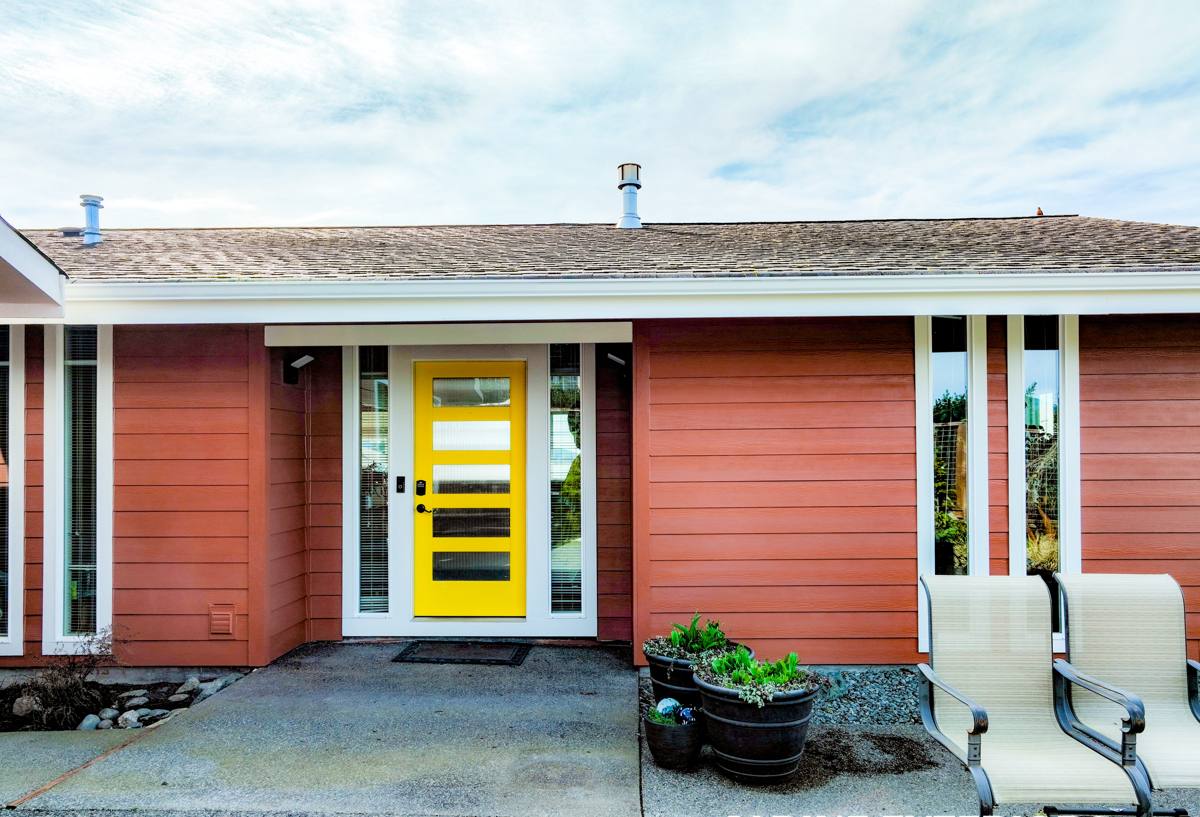
Signs a Repair Is Needed — Before It Becomes a Replacement
Most siding repair calls we get in this area started as something small. Catching these early is the difference between a patch and a full re-side.
- Soft or spongy spots when you press on the siding, especially near the bottom courses or under windows
- Paint that's peeling, bubbling, or chalking in patches rather than evenly across the wall
- Visible gaps opening up at butt joints, corners, or where siding meets trim
- Persistent moss or black streaking that comes back within weeks of being cleaned
- Warping, cupping, or boards that no longer sit flat against the wall
- Water stains or discoloration on interior walls near exterior siding damage
- Caulk that's cracked, shrunk, or pulled away from joints and penetrations
Any one of these on its own might just need a localized fix. Several of them together, especially on the same wall, usually points to a moisture path that's been active for a while and needs to be traced back to its source before any new material goes up.
What a Correct Siding Repair Actually Involves
Finding the Water, Not Just the Damage
The visible damage — a stained board, a soft corner — is almost never where the water actually got in. It's the endpoint. A repair that just cuts out the bad piece and nails up a new one without tracing the entry point is a repair that fails again in a year or two. That means checking flashing above windows and doors, kick-out flashing at roof-to-wall intersections, the condition of the water-resistive barrier behind the siding, and whether the original installation left any gaps for water to travel behind the cladding.
Matching Material and Finish
A patch that doesn't match the surrounding siding in profile, reveal, or finish sticks out and, worse, can create a seam that behaves differently in moisture than the rest of the wall. Getting a clean match matters as much for performance as it does for appearance.
Rebuilding the Moisture Path Correctly
Once the damaged material is out, the repair has to restore proper drainage: correct lap and overlap at joints, flashing that sheds water outward rather than trapping it, and fasteners set at the right depth and location. Sealant has a place in a repair, but it's a backup to good flashing and lap technique — not a substitute for it.
Repair or Replacement? How to Tell the Difference
Not every damaged section needs a full re-side, but not every problem should be patched either. This is usually the deciding factor:
| Factor | Repair Usually Makes Sense | Replacement Should Be Considered |
|---|---|---|
| Extent of damage | Isolated to one or two walls or sections | Recurring across multiple walls or the whole exterior |
| Underlying material | Still structurally sound elsewhere | Widespread rot, delamination, or fastener failure |
| Age of existing siding | Well within expected service life | Near or past the end of its realistic lifespan |
| Cause of damage | A specific, fixable source (one flashing failure, one impact) | Systemic issue like a failed water-resistive barrier or poor original installation |
| Finish condition | Localized paint failure | Chalking, fading, or peeling across most of the house |
A straight answer on which category a home falls into is one of the more valuable things an honest inspection can give a homeowner — it's not in our interest to sell a full re-side when a targeted repair will hold up fine, and it's not fair to a homeowner to patch something that's going to need redoing within a year or two.
Why the Material We Repair With Matters
We install and repair with James Hardie fiber cement exclusively — we don't work with vinyl, LP SmartSide, primed wood, or other fiber cement brands. That's not a marketing position, it's a practical one that shows up clearly in repair work. Fiber cement doesn't rot, and it holds paint and factory finish far more consistently than wood-based or engineered-wood alternatives, which matters enormously in an environment like Blanchard's where boards stay damp for extended stretches during moss season.
James Hardie's ColorPlus factory finish is baked on under controlled conditions and backed by its own finish warranty, which means a well-matched repair patch keeps its color and doesn't chalk out of step with the surrounding siding the way field-applied paint on other materials tends to. Hardie's HZ5 product line in particular is engineered for wet, freeze-thaw-prone climates like ours, with a moisture and durability profile that's a meaningfully different starting point than vinyl (which can warp and doesn't stop water intrusion behind it) or engineered wood products (which are more sensitive to sustained moisture exposure at cut edges and seams). When we repair a section of Hardie siding, we're working with a material that was designed for exactly the conditions Blanchard sees most of the year.
Our Repair Process
1. Inspection and Diagnosis
We start by identifying every symptom on the exterior, then work backward to the moisture source — checking flashing, trim, penetrations, and the condition of the material itself before recommending anything.
2. Honest Scope
We tell you plainly whether it's a repair, a larger repair, or something that's crossed the line into replacement territory, along with why. We'd rather lose a job than talk someone into more or less work than their house actually needs.
3. Correct Removal
Damaged material comes out cleanly, with attention to what's underneath — sheathing, house wrap, flashing — since a repair that only replaces the visible siding while ignoring compromised material behind it doesn't hold.
4. Rebuild and Match
New Hardie material goes in with correct lap, flashing, and fastening, matched to the existing profile and finish as closely as the product line allows.
5. Final Check
Before we consider the job done, we walk the repair and the surrounding area to confirm drainage paths are restored and nothing was missed nearby.
Why a Crew That Already Works Blanchard Matters
Siding repair in this area isn't the same problem as siding repair in a dry inland town. A crew that mostly works drier parts of the county can miss how much shade and standing moisture affect a particular wall, or underestimate how much flashing work a repair near the water actually needs. Working regularly in Burlington and the surrounding Skagit County communities, including areas like Blanchard, means seeing the same failure patterns repeatedly — where moss builds up fastest, which wall orientations take the worst of the driving rain, and which original installation shortcuts tend to fail first in this climate. That pattern recognition is what keeps a repair from becoming a repeat visit.
Living With Repaired Siding Through Moss Season
A correct repair reduces future problems, but ongoing care still matters in a climate this wet. A few habits go a long way:
- Keep gutters clear so overflow doesn't run down the siding face
- Trim back vegetation that shades siding and keeps it from drying out between rains
- Rinse moss and algae buildup gently at least once a year rather than letting it establish
- Re-caulk penetrations and trim joints on a normal maintenance schedule, not just when something looks obviously wrong
- Have any new staining or soft spots checked promptly rather than waiting for a dry season
None of this is unique to fiber cement — it's just good practice for any home in a climate like ours. But it's a lot less work, and a lot less risky, on a material engineered to handle sustained moisture in the first place.
Get an Honest Look at Your Siding
If you're seeing soft spots, peeling paint, or moss that won't stay gone on your Blanchard-area home, it's worth getting a straight assessment before the damage spreads. We'll tell you plainly whether you're looking at a repair or something bigger, and what it would actually take to fix it right. Reach out for a free, no-pressure estimate — there's a form below to get started.