 Burlington
 Board & Batten Siding for Lyman Homes
Lyman sits back in the Skagit River valley, tucked against tree-covered hillsides where the sun doesn't reach every wall of a house the way it does out on open farmland. That shade, combined with the steady moisture that rolls up the valley off Puget Sound, is exactly the kind of environment that separates a board and batten job that lasts thirty years from one that's showing rot and paint failure in five. We install board and batten siding for homeowners in and around Lyman using James Hardie fiber cement, and this page walks through what that actually involves — not the sales pitch, the real mechanics of doing it right in this specific climate.
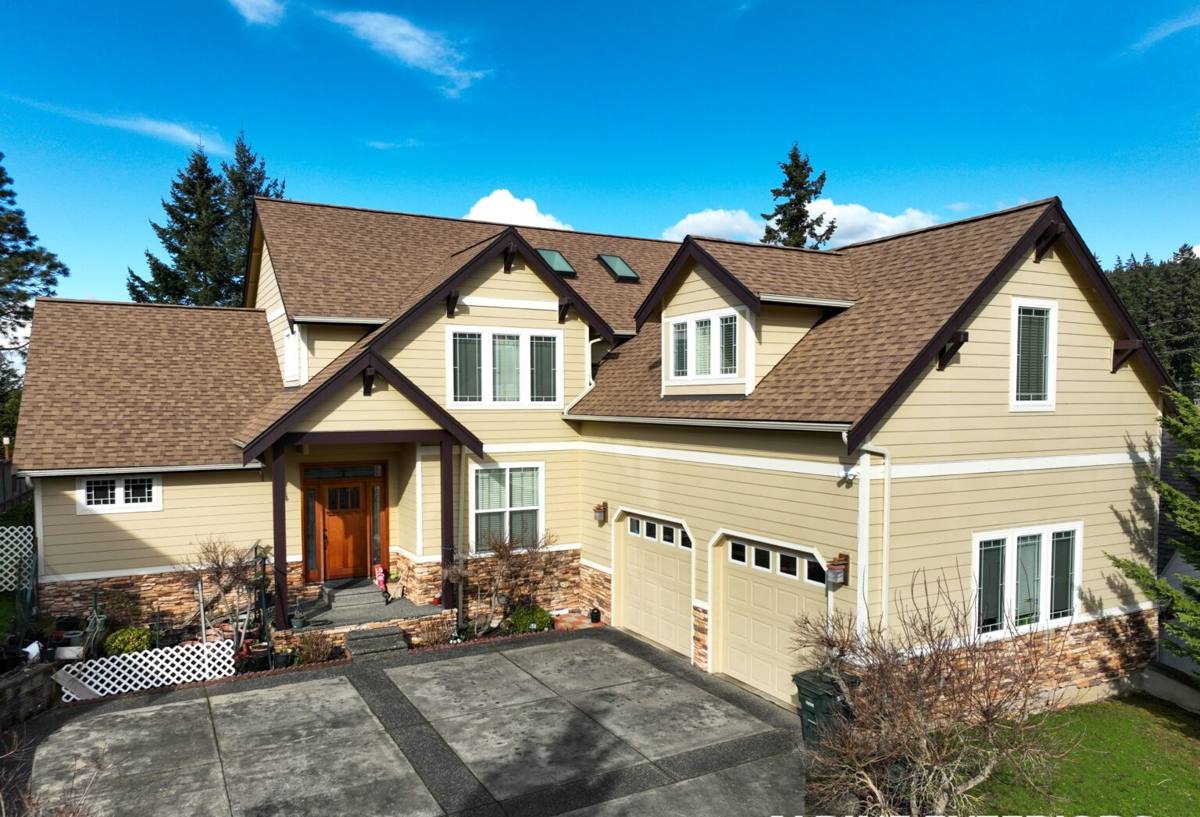
Why Board & Batten Fits This Area
Board and batten has always been a natural fit for the Skagit Valley's farmhouses, barns, and river-corridor homes — it's a vertical-plank profile with narrow battens covering the seams, and it reads as clean, tall, and distinctly Pacific Northwest. It also happens to shed water well when it's built correctly, which matters more here than in drier parts of the state. The vertical lines give rain a straight path down and off the wall instead of pooling in horizontal laps, which is one reason it holds up under the long, low-intensity rain events that define a Skagit County winter.
The catch is that board and batten's good looks depend entirely on what's underneath it. Get the water management wrong and you've built a siding profile that looks great for a season and then traps moisture behind the boards for the other eleven months.
What Driving Rain Does to a Bad Installation
Western Washington rain isn't usually a downpour — it's weeks of steady, wind-driven moisture that finds every gap a roofer or sider left. On a vertical siding profile, that means:
- Battens fastened without a drainage gap behind them, so water gets wicked into the seam instead of running past it
- Butt joints that weren't flashed, letting water track behind the board at every horizontal break
- Bottom edges sitting too close to grade, roofs, or decks, where splash-back keeps the lowest boards wet far longer than the rest of the wall
- Caulk used to "solve" a gap that should have been flashed instead — caulk fails; flashing doesn't
None of that is visible on install day. It shows up two, three, five years later as soft spots, peeling paint, or dark staining at the seams — usually right when the original crew is long gone.
Moss, Shade, and the Lyman Tree Line
Lyman's setting near the Skagit River and the surrounding tree cover means a lot of homes here get partial shade for most of the day, especially on north- and east-facing walls. Less direct sun means siding stays damp longer after every rain, and that's the exact condition moss and mildew need to take hold. On untreated wood or wood-composite siding, that moss isn't just cosmetic — it holds moisture directly against the substrate and accelerates rot from the surface in.
James Hardie fiber cement doesn't feed mold or moss growth the way wood-based products can, because it's not an organic material — there's no cellulose for spores to break down. That doesn't mean a shaded wall in Lyman will never see algae or moss buildup; anything can collect surface growth in a wet, shaded microclimate. But the siding itself isn't degrading underneath it, and a rinse or gentle wash restores it instead of revealing soft, damaged board underneath.
What Correct Board & Batten Installation Involves
The Drainage Plane
Every board and batten installation we do starts with a weather-resistant barrier and a drainage gap — typically a furring strip or engineered drainage wrap — between the siding and the sheathing. This gap gives any water that does get past the surface boards a path to run down and out at the bottom, instead of sitting against the wall assembly. This is the single most important part of the job and the part that's completely invisible once the siding goes up, which is exactly why so many corners get cut here on lower-bid installs.
Fastening and Board Layout
Battens and boards need to be fastened according to Hardie's engineering specs — correct nail or screw type, correct spacing, correct penetration into framing, not just into sheathing. Boards are run with consistent reveal and batten spacing, joints staggered and flashed, and everything held off grade, roof lines, and hard surfaces with the clearances Hardie's install guide calls for.
Trim, Flashing, and Penetrations
Every window, door, vent, and utility penetration is a place water wants to get behind the siding. Correct flashing at each of these — not caulk as a substitute — is what keeps a board and batten wall performing for decades instead of years. We flash first, then trim, in that order, every time.
Comparing Board & Batten to Other Siding Approaches in Lyman's Climate
| Factor | Board & Batten (Hardie fiber cement) | Wood board & batten | Vinyl vertical panel |
|---|---|---|---|
| Moisture resistance | Engineered for wet climates, won't rot | Absorbs moisture, prone to rot without diligent upkeep | Won't rot, but seams and fasteners can let water track behind panels |
| Moss/mildew behavior | Non-organic, doesn't feed growth | Organic material, moss and mildew break it down over time | Non-organic, but plastic surface can trap moisture in poor installs |
| Impact resistance | Dense fiber cement, holds up to branches/debris | Dents and splits | Can crack in cold, dents easily |
| Repainting needs | ColorPlus factory finish, decades before repaint | Repaint every 3-7 years in this climate | Never painted, but fades and can't be refreshed |
| Appearance longevity | Holds crisp lines and color | Warps, cups, and grays without maintenance | Can warp/bow in heat, looks plastic up close |
Why a Crew That Works Lyman Regularly Matters
Board and batten looks simple from the street, but the details that make it perform in a wet, shaded Skagit Valley setting are the details you can't see once the job's done. A crew that's worked homes throughout the Burlington and Lyman area knows the wall assemblies common to this region's building stock, understands how sun exposure and tree cover vary block to block along the river corridor, and has already seen what happens to installations that skipped the drainage gap or flashed a window opening the wrong way. That's the difference between a crew reading a spec sheet for the first time and one that's watched their own past installs hold up — or not — through several Skagit County winters.
It also matters for warranty follow-through. James Hardie's product warranty is strongest when installation follows their published specifications exactly, and a local crew familiar with those specs and with this area's conditions is far less likely to create the kind of installation gaps that can complicate a warranty claim down the road.
Maintenance Expectations After Installation
Correctly installed board and batten fiber cement siding is low-maintenance, not no-maintenance. In a shaded, moisture-heavy setting like Lyman, a homeowner should plan on:
- An annual walk-around to check caulking at trim joints and penetrations
- Periodic gentle washing on shaded walls where moss or algae builds up faster
- Keeping gutters and downspouts clear so roof runoff isn't dumping extra water onto siding below
- Trimming back vegetation and tree limbs that hold moisture against the wall or drop debris
- Watching for any settling, cracking, or gaps at flashing points after major storms
None of that is unusual upkeep — it's the same short list any exterior surface in this climate needs. The difference with correctly installed Hardie board and batten is that skipping a year of it doesn't put the wall assembly at risk the way it can with wood siding.
What This Means for Your Project
If you're planning board and batten siding for a home in Lyman, the questions worth asking any contractor are less about the look you want — board and batten pretty much always looks good — and more about what's happening behind the boards. Ask about drainage gap details, fastening schedule, flashing approach at windows and joints, and how they handle clearance at grade and roof lines. A contractor who can answer those specifically, without hedging, is one who's actually done this in a climate like ours.
If you'd like to talk through what board and batten would look like on your home, we're happy to come take a look and put together a free, no-pressure estimate.