 Burlington
 Building Decks for Bow's Coastal Microclimate
Bow sits close enough to Samish Bay and the greater Puget Sound shoreline that homes here deal with a version of Skagit County weather that inland Burlington properties don't see as often: salt-laden air moving in off the water, wind-driven rain that gets pushed sideways into ledger boards and railings, and a wet season that stretches long enough to grow moss on almost any horizontal wood surface that isn't detailed correctly. A deck built here isn't just an outdoor living space — it's a structure that has to shed water, resist corrosion, and stay stable on ground that rarely fully dries out between October and May.
We've built and repaired enough decks in and around Bow to know which shortcuts show up as problems in year two versus year ten. This page covers what actually matters for a Bow deck project: material choice, framing details, hardware, and the maintenance rhythm that keeps a well-built deck looking and performing like new.
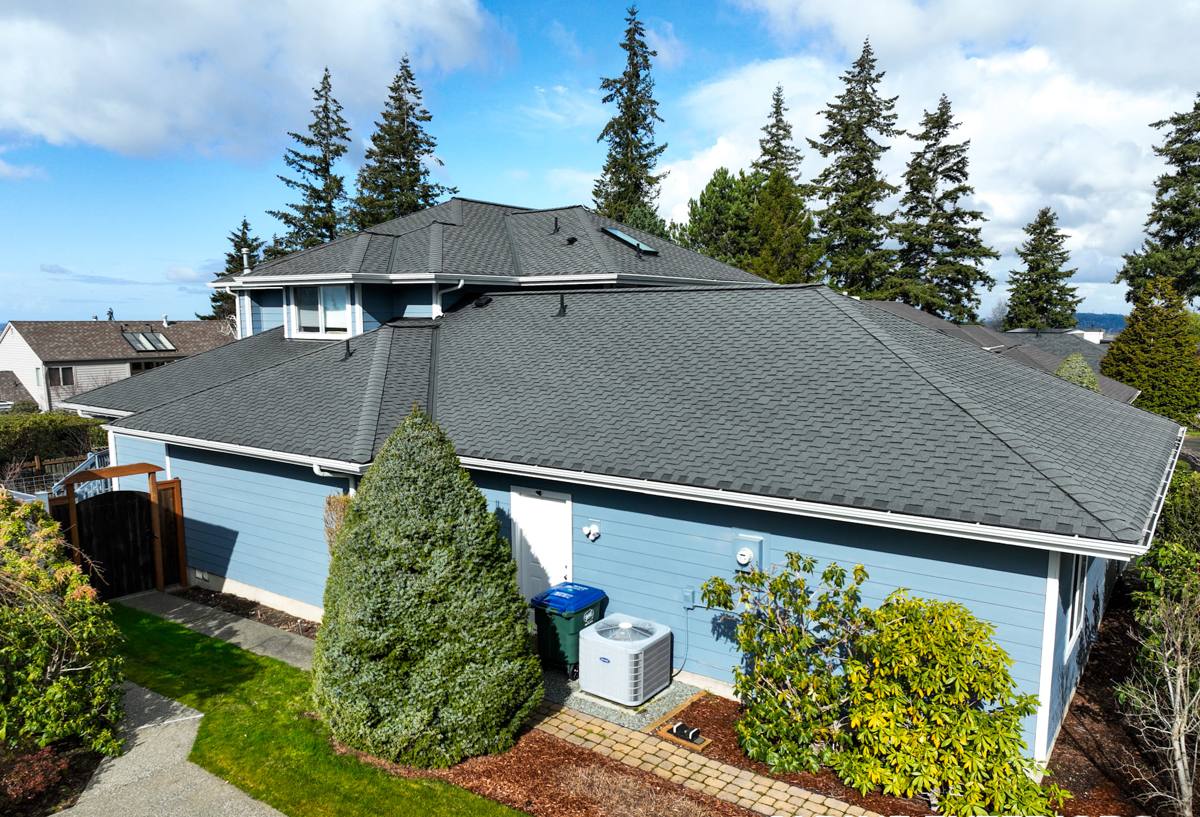
What Salt Air and Moss Season Do to an Improperly Built Deck
Salt air accelerates corrosion on any exposed metal — fasteners, joist hangers, railing brackets — long before it visibly damages the wood or decking around it. A screw or hanger that would last decades in a dry inland climate can start rusting and staining within a few seasons this close to the water if it isn't rated for the exposure. Once a fastener corrodes, it loses holding strength quietly, often with no visible sign until a board works loose or a railing feels less solid than it should.
Moss and algae are the other constant. Skagit County's wet season means moisture sits on shaded, north-facing, or poorly ventilated deck surfaces for weeks at a time. Moss itself isn't just cosmetic — it holds moisture against the decking surface, which speeds up wood rot on untreated boards and creates a slick, slip-hazard surface on any material. Decks with tight board spacing, poor airflow underneath, or low ground clearance are the ones that develop moss and soft spots first.
The Combination Effect
The real damage in a coastal Skagit County climate comes from salt air and standing moisture working together — corroded fasteners loosen structural connections while trapped moisture rots the wood around them. A deck designed without both of these in mind will show its weak points earlier than the same design would in a drier part of the state.
Choosing the Right Decking Material for a Bow Property
There's no single "best" decking material — the right choice depends on your budget, how much upkeep you want to do, and how exposed the deck is to weather off the bay. Here's how the common options actually perform in this specific climate.
| Material | Salt Air / Moisture Behavior | Moss Resistance | Typical Lifespan | Maintenance Burden |
|---|---|---|---|---|
| Pressure-treated wood | Treatment resists rot but exposed cut ends and fasteners need ongoing attention | Low — needs regular cleaning and sealing | 10-15 years with upkeep | High — annual cleaning, re-sealing every 2-3 years |
| Cedar | Naturally rot-resistant but softer and more sensitive to standing water | Low-moderate | 15-20 years with upkeep | High — regular sealing and moss treatment |
| Composite decking | Doesn't absorb moisture or rot; fasteners are the main corrosion point | Moderate — surface can still host moss without airflow underneath | 25-30+ years | Low — periodic washing |
| PVC / vinyl decking | Fully moisture-resistant; best option for constant salt-air exposure | Moderate-high with proper ventilation | 30+ years | Low — occasional washing |
We install all of these depending on what a homeowner wants, but for a property this close to the bay, we're honest about the trade-off: wood decking looks and feels great and costs less up front, but it asks for real annual maintenance in this climate. Composite and PVC cost more initially but remove most of the moisture-related maintenance burden, which matters more here than it would twenty miles inland.
Framing and Substructure — Where Most Deck Failures Start
The decking surface is what you see, but the framing underneath is what determines whether a deck lasts fifteen years or forty. In a wet, salt-influenced climate, three framing details matter more than most homeowners realize.
Ledger Board Attachment and Flashing
The ledger board — where the deck attaches to the house — is the single most common failure point on decks anywhere, and driving coastal rain makes it worse in Bow. Correct ledger flashing directs water away from the house band joist instead of letting it wick behind the siding. We flash every ledger connection properly and never rely on caulk alone to keep water out of that joint.
Joist Spacing and Ventilation
Tighter joist spacing and low deck height cut off airflow underneath the structure, which is exactly the condition that lets moisture sit and moss take hold on the underside of decking. We frame with enough clearance and spacing for air to move, which slows both rot and moss growth without changing how the deck looks from above.
Footings and Post Bases
Skagit County's wet ground conditions mean footings need to be set to proper frost depth with post bases that keep wood posts off direct soil or standing water contact. A post base that traps moisture against the end grain of a post is a slow, hidden failure point — one we design out from the start rather than fixing later.
Railings, Fasteners, and Hardware for a Salt-Air Environment
Hardware is where a lot of otherwise well-built decks quietly fail in coastal climates. Standard galvanized fasteners can corrode faster than expected this close to salt air, especially where they're in constant contact with treated lumber, which is chemically more corrosive to metal than untreated wood. We use stainless steel or coated fasteners rated for treated lumber and coastal exposure on structural connections — hangers, ledger bolts, and railing posts — because those are the connections that hold the whole structure together.
Railings deserve the same attention. A railing system that looks fine for the first year but uses undersized or unrated hardware at the post connections is a safety issue waiting to surface, not just a cosmetic one. We treat railing attachment with the same standard as structural framing, because it is structural.
Our Process for a Custom Deck Build in Bow
Site Visit and Design
We start on-site, looking at sun exposure, prevailing wind and rain direction, drainage, and how close the build is to salt-air exposure. That determines material recommendations and framing details before we ever talk final design.
Permitting
Deck projects in unincorporated Skagit County typically require a permit depending on size and height — we handle that process as part of the job so it isn't left for the homeowner to sort out.
Build
Framing first, with every ledger, footing, and hanger connection built to the standards above — then decking, railing, and any stairs. We don't cut framing corners to save time on the parts that won't be visible once the deck is finished, because those are the parts that determine how long it lasts.
Final Walkthrough
We walk the finished deck with you, cover how the specific materials you chose need to be cared for in this climate, and answer questions before we consider the job done.
Maintenance Checklist for Bow Homeowners
Whatever material you choose, a little seasonal attention goes a long way in this climate. A practical maintenance routine for a Bow deck:
- Sweep debris and standing leaves off the deck surface regularly through fall to prevent trapped moisture
- Check for early moss growth in shaded or low-airflow areas each winter and clean it off before it spreads
- Inspect visible fasteners and railing connections annually for rust staining or looseness
- Re-seal or re-stain wood decking on the schedule recommended for the specific product — don't wait for visible graying
- Confirm gutters and downspouts near the deck are directing water away from the structure, not onto it
- Rinse composite or PVC decking periodically to remove salt residue and organic buildup
- Check under-deck ventilation isn't blocked by stored items, planters, or overgrown landscaping
Why Hire a Crew That Already Works in Bow
A deck built to a generic regional standard will function fine in a drier part of the state. Built the same way this close to Samish Bay, it will show corrosion, rot, and moss problems years earlier than it should. The value of hiring a crew that already works in Bow and the surrounding Burlington area isn't a sales pitch — it's that we've already seen which framing details, fasteners, and materials hold up here and which ones cause callbacks. That knowledge gets built into your project from the design stage, not added after something fails.
If you're planning a new custom deck or replacing one that's showing its age, we're happy to come take a look and talk through what makes sense for your property. Reach out for a free, no-pressure estimate using the form below.