 Burlington
 Clear Lake Roofs Work Harder Than Most
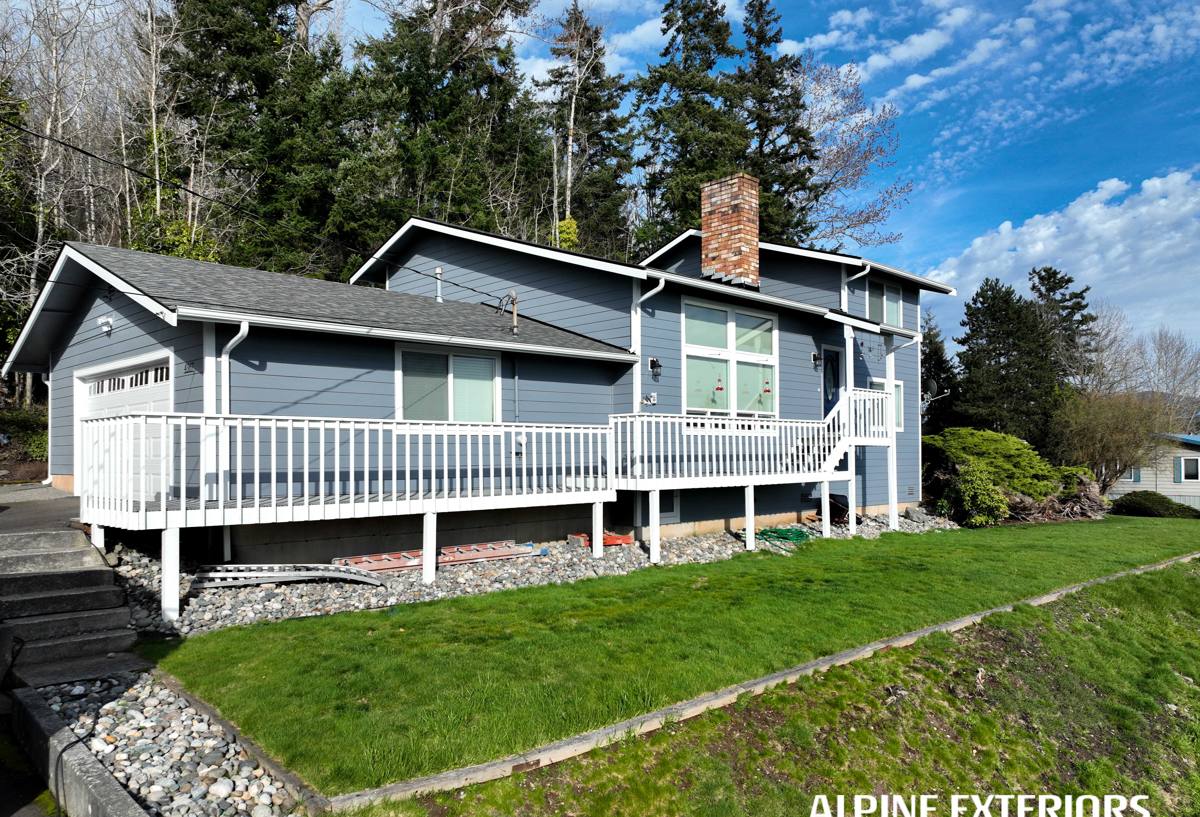
Homes around Clear Lake sit in a pocket of Skagit County that gets the full Pacific Northwest treatment: long stretches of soaking rain, humid air moving off the nearby water and lowlands, and heavy tree cover that keeps roof surfaces shaded and damp for weeks at a time. That combination is exactly what asphalt shingles were not designed to enjoy. Shingles are tough, but sustained moisture, salt-tinged coastal air drifting in off Puget Sound, and low winter sun angles that never quite dry a north-facing slope all add up over the life of a roof.
We install and repair a lot of asphalt shingle roofs in this stretch of Burlington and Skagit County, and the failures we get called out for are rarely dramatic. They're slow: a shingle mat that stayed wet too long, a valley that was never properly flashed, an attic that never got enough airflow to let the roof deck dry between storms. A shingle roof built for Clear Lake's climate looks the same as one built anywhere else on the outside — the difference is entirely in the details you can't see from the driveway.
What "Done Right" Actually Means Here
Asphalt shingle roofing is a system, not just a layer of shingles nailed to plywood. In a climate that stays wet as long as ours does, every layer under the shingles matters as much as the shingles themselves.
The Roof Deck
Before anything goes down, the deck itself has to be sound — no soft spots, no delaminated plywood, no hidden rot from a slow leak that's been running for years. Skipping this step is one of the most common ways a "new roof" fails early, because a beautiful shingle job over a compromised deck is still sitting on a compromised deck.
Underlayment and Ice/Water Protection
In a region where driving rain can blow sideways under standard shingle laps, synthetic underlayment matters more than it does in drier climates. We pay particular attention to eaves, valleys, and any low-slope transitions, where self-adhered ice and water membrane gives an extra layer of protection against wind-driven moisture working its way backward under the shingles.
Flashing
Chimneys, skylights, dormers, and valleys are where the overwhelming majority of shingle roof leaks actually start — not in the open field of shingles. Properly stepped and counter-flashed details, tied correctly into the underlayment, are what keep water moving off the roof instead of finding a seam to exploit.
The Moss Season Problem
Skagit County's shaded, wet lots make moss almost inevitable on north and east-facing slopes, and Clear Lake's tree cover is no exception. Moss isn't just cosmetic. It holds moisture against the shingle surface long after the rest of the roof has dried, and as it grows it can lift shingle edges and grow into the granule layer that protects the asphalt mat underneath.
| Moss Condition | What's Happening | What It Means for the Roof |
|---|---|---|
| Light surface growth | Spores establishing on granule surface | Cosmetic now; worth treating before it spreads |
| Established patches | Moss holding moisture against shingle mat | Accelerated granule loss, shortened shingle life |
| Thick mats along ridges/valleys | Water diverted, shingle edges lifted | Active risk of water intrusion under shingles |
| Moss in gutters/valleys | Drainage paths blocked | Water backs up under shingle courses |
We don't chase moss with harsh pressure washing, which strips granules and does more damage than the moss itself. Proper treatment is a soft, low-pressure moss treatment application combined with keeping gutters, valleys, and roof-to-wall transitions clear so water actually leaves the roof instead of sitting on it.
Our Asphalt Shingle Roofing Process
1. On-Roof Inspection and Honest Assessment
We get on the roof, not just in the yard with binoculars. We're looking at deck condition, flashing details, ventilation, and how the existing roof has actually held up to this specific lot's exposure — sun, shade, tree drip line, and wind direction all factor in.
2. A Written Scope Before Any Work Starts
You get a clear description of what's being replaced, what underlayment and ice/water protection is going where, and why — not a vague line item that just says "reroof."
3. Tear-Off and Deck Repair
Old roofing comes off down to the deck so we can actually see what's underneath, rather than layering over problems. Any soft or rotted decking gets replaced before anything new goes down.
4. Underlayment, Ice/Water Shield, and Flashing
This is the layer that does the real work in our climate. Eaves, valleys, and penetrations get ice and water membrane; the rest of the field gets synthetic underlayment sized for the roof's exposure.
5. Shingle Installation to Manufacturer Spec
Nailing pattern, exposure, and starter course details all follow manufacturer requirements — this is also what keeps a manufacturer's warranty valid if something does go wrong down the road.
6. Ventilation Check and Cleanup
We confirm intake and exhaust venting are balanced before we consider the job finished, and the site gets cleaned of nails and debris, including a magnetic sweep.
Choosing the Right Shingle for This Climate
Not every asphalt shingle product handles sustained Pacific Northwest moisture the same way. We generally steer homeowners toward algae-resistant, higher-weight architectural shingles for anything with shade exposure or tree cover, which describes a lot of Clear Lake lots.
| Shingle Type | Typical Lifespan Here | Best Fit |
|---|---|---|
| 3-tab (standard) | 15-20 years in wet, shaded conditions | Budget-driven projects on sun-exposed roofs |
| Architectural / dimensional | 25-30+ years with proper ventilation | Most Clear Lake homes, especially shaded lots |
| Algae-resistant (AR) architectural | 25-30+ years, better staining resistance | North-facing slopes, heavy tree cover, moss-prone roofs |
Algae-resistant shingles use copper-infused granules that slow the dark streaking common on shaded roofs in wet climates. It doesn't make moss impossible, but it meaningfully slows the staining and buildup that comes with our long wet season, which is why it's our default recommendation rather than an upsell.
Ventilation: The Part Nobody Sees but Everybody Needs
An asphalt shingle roof relies on balanced attic ventilation to let moisture escape and to keep the roof deck at a stable temperature. In a climate as consistently damp as ours, poor ventilation shows up as trapped moisture, premature shingle aging from the underside, and in colder stretches, ice damming at the eaves when heat escapes unevenly through the roof.
We check both intake (typically at the soffits) and exhaust (ridge or roof vents) during any reroof, because one without the other doesn't work — intake without exhaust just traps humid air, and exhaust without intake pulls conditioned air out of the living space instead of attic air.
Maintenance That Actually Extends Shingle Life
A correctly installed roof still needs some basic upkeep in a climate like Skagit County's. None of this is complicated, but it's easy to let slide.
- Clear gutters and valleys of needles and leaf debris at least twice a year, more often under heavy tree cover
- Watch for moss establishing on shaded slopes and treat it early, before it spreads or lifts shingle edges
- After wind events, check for lifted or missing shingles, especially on exposed ridgelines
- Keep overhanging branches trimmed back to reduce shade, debris, and abrasion on the roof surface
- Have flashing around chimneys, skylights, and vent pipes checked periodically — these fail before the shingle field does
- Address small leaks immediately; a slow drip left over a wet winter can compromise decking long before it shows up as a ceiling stain
Why Local Roofing Experience Matters for Clear Lake Homes
Roofing standards written for a generic climate don't account for what a shaded, tree-lined Skagit County lot actually experiences over a wet winter. A crew that works this area regularly knows which slopes on a Clear Lake property tend to hold moss, how much ice and water protection a given roof pitch actually needs, and which flashing details tend to fail first in homes built during different eras around Burlington. That local pattern recognition is the difference between a roof that looks right on installation day and one that's still performing correctly in year fifteen.
It also matters for warranty support. Manufacturer warranties on shingles are tied to correct installation, and a contractor who understands regional ventilation and moisture requirements is far less likely to leave you with a warranty claim that gets denied over an installation detail.
Get a Straightforward Roof Estimate
If your Clear Lake home's roof is showing moss, granule loss, or you're just not sure how much life is left in it, we're happy to take a look and give you an honest read — no pressure, no inflated scare tactics. Use the form below to request a free estimate.