 Burlington
 Why Clear Lake Roofs Age the Way They Do
Clear Lake sits inland from the Skagit River valley, but it still gets the same weather pattern that shapes every roof in this part of Skagit County: long stretches of low-intensity rain broken up by hard, wind-driven storms off the Sound, humid air that never fully dries out between fronts, and shade from mature evergreens that keeps moisture sitting on the roof deck longer than it should. That combination is what drives moss growth, granule loss, and slow rot at the places a roof is weakest — valleys, flashing lines, and anywhere two roof planes meet.
None of this means Clear Lake roofs fail faster than others in Burlington or the rest of the county. It means a roof here has to be built and maintained with those conditions in mind. A roof that would be fine in a drier climate — thinner underlayment, minimal ventilation, corners cut on flashing — shows its weaknesses here in five to ten years instead of twenty.
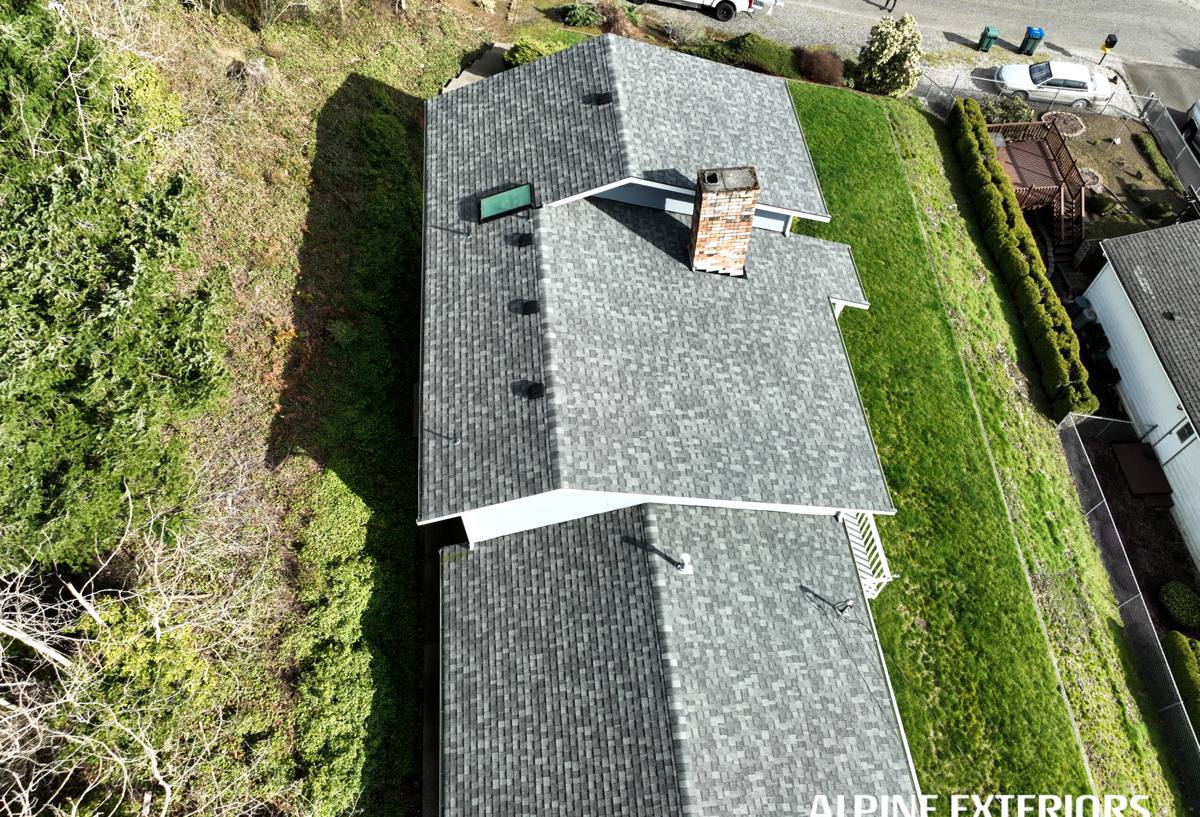
Signs a Roof Needs Replacing, Not Another Patch
Homeowners often call us for a repair and end up learning the roof is past the point where patching makes financial sense. Here's how to tell which situation you're actually in before you spend money on a fix that won't hold.
- Granules collecting in gutters or downspouts in handfuls, not just a light dusting
- Shingles that are cupping, curling at the edges, or cracking when you look closely from the ground
- Moss established in mats rather than a light green film — mats hold water against the shingle surface year-round
- Soft spots or a spongy feel when walked on (a sign the deck underneath is compromised)
- Daylight visible through the roof deck from inside the attic, or water stains on the attic side of the sheathing
- Multiple past repairs in different spots rather than one isolated problem area
- The roof is on its second layer of shingles already, or is 20+ years old with original underlayment
One or two of these on their own might mean a repair is enough. Several together, especially staining on the sheathing or a soft deck, usually mean the roof system as a whole has reached the end of its useful life.
What a Correct Replacement Actually Involves
A roof replacement is more than swapping old shingles for new ones. The parts of the job that don't show once it's finished are the parts that determine whether it lasts.
Tear-off and deck inspection
We remove the existing roofing down to bare deck rather than layering over it. That's the only way to actually see the sheathing — soft, delaminated, or water-stained boards get replaced before anything new goes down. Roofing over a compromised deck just hides the problem for a few more years.
Underlayment
Given how much of the year this area sees rain, we treat underlayment as a real second line of defense, not a formality. Ice-and-water shield goes at eaves, valleys, and around penetrations where wind-driven rain is most likely to work its way under the shingles, with synthetic underlayment across the rest of the field.
Flashing
Flashing around chimneys, skylights, sidewalls, and roof-to-wall transitions is where most leaks actually start — not in the open field of shingles. We replace flashing rather than reuse or caulk over old pieces, since caulk is a maintenance item, not a repair.
Ventilation
Balanced intake and exhaust ventilation keeps the attic close to outside temperature and humidity. Without it, moisture from the house gets trapped against the underside of the deck, which speeds up rot and encourages the exact moss and algae growth that's already a fight on the outside of the roof.
Final details
Drip edge at eaves and rakes, properly lapped and nailed shingles at the correct exposure, and a clean job site when the crew leaves — these are basic expectations, not upgrades, and they're worth confirming in writing before work starts.
Choosing a Roofing Material for This Climate
There's no single "right" material for every house — it depends on your roof's pitch, your budget, and how long you plan to stay in the home. Here's how the common options actually compare for a shaded, damp, moss-prone lot like the ones common around Clear Lake.
| Material | Moss/moisture resistance | Typical lifespan | Trade-offs |
|---|---|---|---|
| Architectural asphalt shingle | Good with proper venting and periodic cleaning | 25–30 years | Best value; still needs moss management on shaded roofs |
| Metal (standing seam or panel) | Excellent — sheds water and dries fast, sheds moss more easily | 40–50+ years | Higher upfront cost; requires a crew experienced with metal detailing |
| Cedar shake | Poor without diligent upkeep — holds moisture against wood | 20–30 years with maintenance | High maintenance burden in this climate; we're upfront that it's a harder sell here |
| Synthetic composite shake/slate | Good — doesn't absorb moisture like real wood | 30–50 years | Mid-to-high cost; appearance and installation quality vary a lot by brand |
We're honest with homeowners who ask about cedar: it can look great, but on a shaded, low-slope, or heavily treed lot it's fighting the exact conditions that shorten its life — trapped moisture and slow drying. That's a maintenance-and-moisture-behavior issue, not a knock on the material itself, and it's why we'll walk through what upkeep it actually requires before you commit to it.
Roof Pitch, Access, and Other Cost Factors
Every estimate we give is specific to the house, but the variables that move the price are consistent. Knowing them ahead of time helps you understand why two quotes for "the same roof" can differ.
| Factor | Why it matters |
|---|---|
| Roof pitch | Steeper roofs take longer, need more fall-protection setup, and cost more in labor |
| Number of existing layers | Tearing off two layers of old shingles takes more time and disposal cost than one |
| Deck condition | Rotten or delaminated sheathing found during tear-off adds material and labor |
| Roof complexity | Valleys, dormers, skylights, and multiple planes all add flashing and labor time |
| Material choice | Asphalt, metal, and composite products carry different material and labor costs |
| Access | Tree cover, tight driveways, or difficult staging can affect equipment and labor time |
Because of tree cover on many Clear Lake lots, deck condition and access tend to be bigger factors here than on more open, newer-development roofs elsewhere in Burlington. We flag both during the initial walk-through so there aren't surprises once tear-off starts.
How Our Process Works
- On-site inspection. We walk the roof and attic, not just look from the driveway, and check for soft spots, moisture staining, and ventilation issues.
- Written estimate. You get a clear scope of work — material, underlayment type, flashing plan, and ventilation approach — not just a bottom-line number.
- Scheduling around weather. We plan tear-off for a dry window whenever possible and have a plan to dry-in the deck if weather turns before the roof is closed in.
- Tear-off and deck repair. Old roofing comes off, the deck gets inspected board by board, and any bad sections are replaced before we move forward.
- Installation. Underlayment, flashing, ventilation components, and roofing material go in per manufacturer specification, not shortcuts.
- Cleanup and walk-through. Magnetic sweep for nails, haul-away of debris, and a final walk-through so you know what was done and what to watch for going forward.
Why a Crew That Already Works Clear Lake Matters
Skagit County building requirements, typical framing styles from different building eras, and the specific way moss and moisture behave on shaded, low-slope roofs in this area aren't things you learn from a manual — they're things you learn by doing the work here repeatedly. A crew that regularly works in and around Burlington knows which older homes are likely to have undersized ventilation, which roof styles in the area tend to trap moisture in valleys, and how local weather windows affect scheduling a tear-off safely.
That experience shows up in small decisions during the job — where to add extra ice-and-water shield even if it's not the minimum requirement, how to detail a valley that collects debris from overhanging trees, or when a "small" moss problem is actually a sign of a ventilation issue underneath. Those are judgment calls, not checklist items, and they come from familiarity with this specific area rather than roofing in general.
After the Replacement: Keeping It That Way
A new roof still lives in the same climate. A little regular attention keeps it performing for its full lifespan instead of showing moss and wear again within a few years.
- Have gutters cleared at least twice a year, more often under heavy tree cover
- Keep overhanging branches trimmed back to reduce shade, debris, and moss spores landing on the roof
- Have moss treated or gently removed before it forms thick mats, rather than after
- Check attic ventilation isn't blocked by insulation or debris after any attic work
- Schedule a quick visual inspection every couple of years, especially after major storms
None of this is intensive work, but skipping it is exactly how a well-installed roof ends up looking like a neglected one ten years early.
If your roof is showing any of the signs above, or you just want an honest read on how much life it has left, we're happy to come take a look. The estimate is free, there's no pressure to move forward, and you'll get a straight answer about whether you need a full replacement or just a repair — use the form below to get started.