 Burlington
 Deck Repair in Conway: A Different Set of Problems Than Inland Homes
Conway sits low, close to the water, and gets more of everything a deck doesn't want: wind-driven rain, damp air that never fully dries out, and long stretches of shade and moisture that keep moss and algae active most of the year. Add the brackish, salt-tinged air that comes off the Skagit delta and nearby Puget Sound, and you've got a combination that's harder on exterior wood and fasteners than what a deck fifteen miles inland has to deal with. We've repaired decks all over Skagit County, and the ones out toward Conway consistently show a specific pattern of damage: soft ledger boards, corroded hardware, and moss-choked decking that's holding water instead of shedding it.
None of that means a Conway deck is doomed — it means repairs have to account for the site conditions, not just patch what's visibly broken. A repair that looks fine in August can fail by the following winter if it doesn't address why the damage happened in the first place.
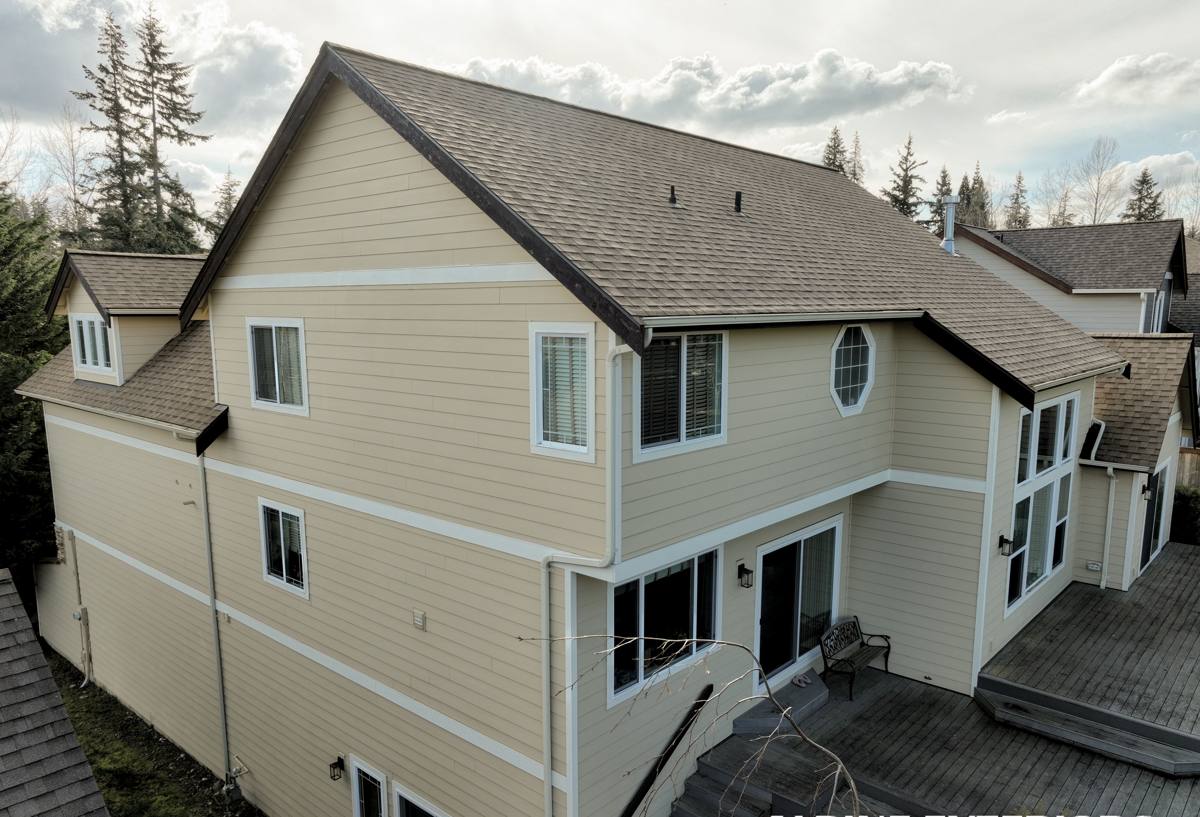
Signs a Conway Deck Needs Repair, Not Just a Cleaning
A lot of deck problems in this area get mistaken for a cosmetic issue when they're actually structural. Here's how to tell the difference:
- Soft or spongy decking underfoot, especially near the house or in shaded corners — usually means moisture has gotten into the wood fibers, not just the surface.
- Rust streaks below fasteners — a sign the screws or nails are corroding, which is common where salt air meets standard hardware.
- Gaps or movement where the deck meets the house (the ledger board) — this is a structural connection, and it's the single most common failure point we find.
- Persistent green or black staining that comes back within weeks of cleaning — surface treatments won't fix it if the deck isn't drying out between rains.
- Railings or stair stringers that flex — often a sign posts have rotted at the base, where they sit closest to standing moisture.
If you're only seeing moss and general weathering, a cleaning and reseal might genuinely be all you need. If you're seeing any of the items above, cleaning will hide the problem without solving it.
The Ledger Board Deserves Special Attention
The ledger board — the piece that attaches the deck to the house — is the most important structural member and the one most likely to fail quietly. Water runs off the house siding, collects behind flashing that's aged or was never properly installed, and rots the ledger from the inside before it shows on the surface. On a lot of older Conway-area decks, we find this before the homeowner has noticed anything wrong. It's also the repair that matters most, because a failed ledger connection is a safety issue, not just a cosmetic one.
What a Correct Deck Repair Actually Involves
A proper repair starts underneath the deck, not on top of it. We check framing, joists, posts, and the ledger connection before we touch decking boards or railings, because replacing surface boards over compromised framing just buys you a year or two before the same problem resurfaces.
- Inspect the substructure. Joists, beams, posts, and footings get checked for rot, insect damage, and movement — including areas hidden under the house or behind skirting.
- Address the ledger and flashing. If water has been getting behind the ledger board, we fix the flashing and drainage path, not just the wood — otherwise the repair fails again.
- Replace only what's actually compromised. Sound framing doesn't need to come out. We're not in the business of upselling a full rebuild when a targeted repair will hold.
- Upgrade fasteners where corrosion is the root cause. If rust streaking or fastener failure was part of the problem, we address it with hardware suited to the exposure, not a like-for-like replacement of the same parts that failed.
- Rebuild decking, stairs, and railings to current safety spacing. Older decks in this area are sometimes out of code on railing height or baluster spacing — repair work is a natural point to bring that up to standard.
- Finish with a real drainage and drying strategy. Gaps between boards, ventilation under the deck, and proper slope away from the house all matter more here than in a drier climate, because a deck that can't dry out between storms will rot again regardless of the wood you used.
Deck Materials Common in Conway — How They Hold Up
| Material | Typical Weak Point Locally | Repair Approach |
|---|---|---|
| Pressure-treated pine/fir framing | Rot at ground contact, ledger, and post bases where moisture sits longest | Sister or replace affected members; improve drainage and ground clearance |
| Cedar decking | Surface graying, splintering, and moss growth in shaded, damp sections | Selective board replacement, cleaning, and breathable finish suited to the exposure |
| Composite decking | Moss and algae film on the surface; fastener or clip failure at seams | Surface cleaning with the right method, hardware replacement, rarely full board swaps |
| Fasteners & hardware (any deck) | Corrosion from salt-tinged, damp air | Replace with fasteners rated for coastal/wet exposure, not the original hardware |
Every material fails differently here, which is why a generic "sand and reseal" approach doesn't hold up long-term in Conway the way it might in a drier part of the county.
Our Process for a Conway Deck Repair
We keep this straightforward, and we don't push for more work than the deck needs.
- On-site inspection — we get underneath the deck and check the framing, not just the surface, before quoting anything.
- Honest scope — you get a clear breakdown of what's structural, what's cosmetic, and what can reasonably wait.
- Written estimate — no surprise add-ons once work is underway unless we find something hidden that genuinely changes the scope, and we'll show you before proceeding.
- Repair work — framing and safety items first, then decking, railings, and finish work.
- Walkthrough — we go over what was fixed and what to watch for going forward, given this site's conditions.
Repair vs. Replace: What Actually Drives the Decision
| Factor | Leans Toward Repair | Leans Toward Replacement |
|---|---|---|
| Framing condition | Solid, isolated soft spots | Widespread rot at multiple joists/posts |
| Deck age | Under ~15 years, well-built originally | Older deck nearing the end of its practical life |
| Ledger/flashing | Sound or easily corrected | Chronic water intrusion with no simple fix |
| Code compliance | Minor railing/spacing updates needed | Structure doesn't meet current span or footing requirements |
We'll tell you honestly which side of this table your deck falls on. Most of the repairs we do in Conway are targeted — replacing the framing and decking that's actually failed rather than tearing out a structure that has years of life left in the parts that are sound.
Maintenance That Keeps a Repair From Repeating Itself
A repair is only worth doing if the deck doesn't end up back in the same condition in a couple of years. In a climate with this much rain and moss pressure, that means a bit more upkeep than a deck would need somewhere drier.
- Sweep debris and standing leaves off the deck surface regularly, especially in fall and winter — trapped organic matter holds moisture against the wood.
- Clean moss and algae off the surface before it builds up a thick mat; a light annual cleaning is far easier than removing years of growth.
- Keep gutters and downspouts directed away from the deck and its footings so runoff isn't concentrating in one spot.
- Check under the deck once a year for standing water, blocked drainage, or new soft spots in the framing.
- Reseal or refinish wood decking on the schedule the product calls for — in this climate, that's often more frequent than the label's general recommendation.
- Watch fastener heads for rust streaking, which usually shows up before the wood around it visibly fails.
Why Hire a Crew That Already Works in Conway
Deck repair looks similar on paper everywhere, but the failure patterns here are specific to this stretch of Skagit County — the delta humidity, the salt-tinged air, the amount of shade and rain that keeps moss active for most of the year. A crew that already works this area knows to check the ledger first, knows which fastener grades actually hold up here, and isn't guessing at how much drainage and ventilation a repair needs to last. That local knowledge is the difference between a repair that lasts one wet season and one that lasts a decade.
If your deck in Conway has soft spots, rust streaks, persistent moss, or just feels less solid than it used to, we're happy to take a look. We'll give you a straight assessment of what's structural and what isn't, and a free, no-pressure estimate for the work — use the form below to get started.