 Burlington
 Building New in Edison: What Your Windows Are Up Against
Edison sits close to Samish Bay and the tidal flats that run along this stretch of Skagit County, which means new construction here deals with a combination most inland Burlington neighborhoods don't see as intensely: salt-laden air off the water, wind-driven rain that comes in sideways during winter storms, and a wet season that stretches long enough to grow moss on anything that stays damp too long. None of that is a reason to worry — it's just the baseline you're designing and building against. Windows installed correctly for this environment will perform for decades. Windows installed by a crew that treats Edison like anywhere else in Western Washington tend to show problems within the first few wet seasons: sill rot, stained siding below the window, fogged glass from failed seals, or fasteners and hardware corroding faster than they should.
New construction is actually the best possible time to get this right. Unlike a retrofit, you're not working around existing damage or compromised framing — you're building the water management system into the wall from the studs out. That's the opportunity, and it's also where a lot of production framing crews cut corners because window flashing takes time and nobody sees it once the siding goes on.
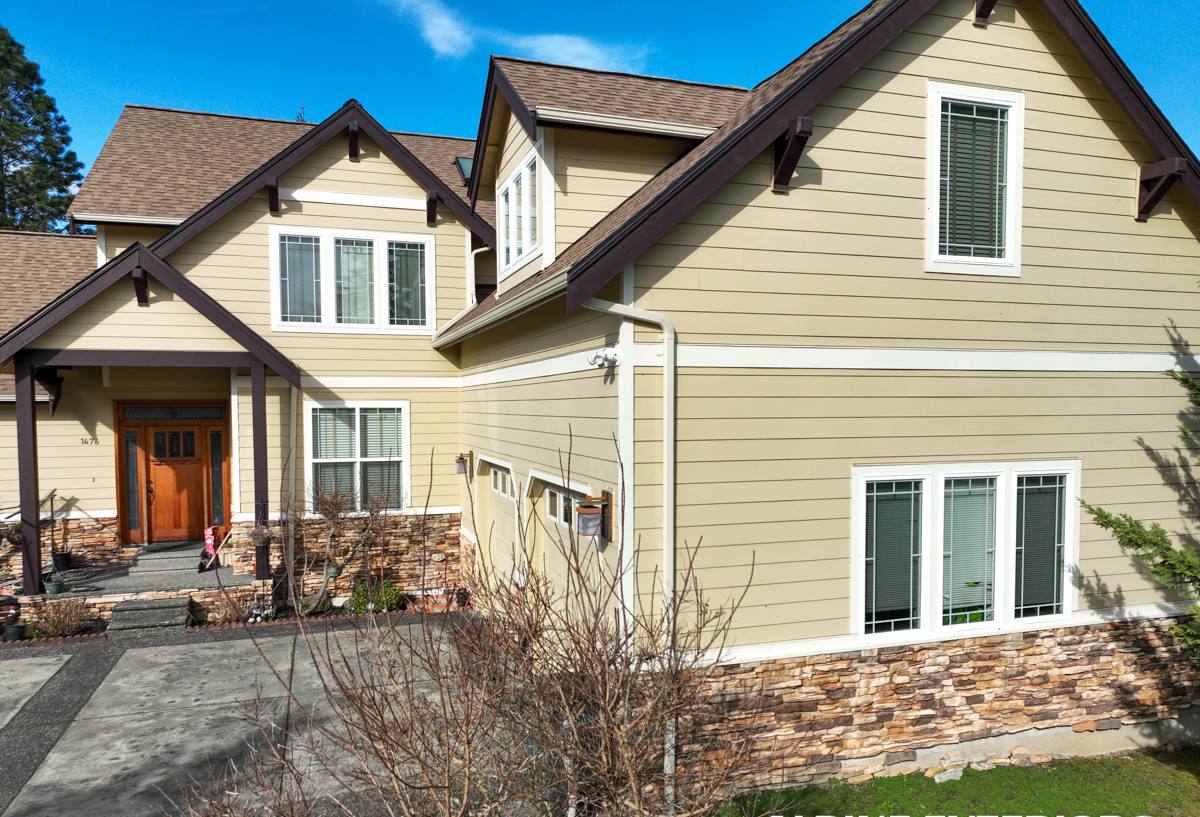
New Construction vs. Retrofit: Why the Distinction Matters
A lot of homeowners and even some builders use "window installation" as one catch-all term, but new-construction windows and retrofit (or "pocket") windows are installed completely differently, and mixing up the approach is one of the most common ways a new home ends up with an early water problem.
- New-construction windows have a nailing fin around the perimeter and are installed before the siding or exterior finish goes on, integrated directly into the weather-resistive barrier (WRB) and flashing system.
- Retrofit windows are designed to fit into an existing opening with the old frame left in place, typically used on remodels where removing siding isn't practical.
- Using a retrofit-style approach on a new build (or vice versa) creates gaps in the water management layers that aren't visible until they leak — often years later.
On a new build in Edison, we always spec and install true new-construction units with a full flashing sequence, because that's the only approach that gives the wall assembly a real chance against sustained wind-driven rain.
What a Correct New-Construction Window Install Actually Involves
The window itself is a small part of the job. The water management around it is what determines whether the install lasts. On every opening, that means:
Sill Pan Flashing
A sloped, back-dammed sill pan under every window opening so any water that gets past the window — and eventually, some will — drains back out to the exterior instead of sitting on the framing or draining into the wall cavity.
WRB Integration
The weather-resistive barrier has to be shingle-lapped correctly around the opening — building paper or house wrap at the sides and top overlapping the layer below it, so water sheds down and out rather than working its way behind the barrier.
Nailing Fin Sealant and Fastening
The nailing fin gets sealed and fastened per the manufacturer's instructions, not a generic bead of caulk. Manufacturers publish exact fastening schedules for a reason — skip fasteners or use the wrong sealant and the warranty can be void even if the window itself never fails.
Head Flashing
A rigid head flashing above the window, integrated under the WRB, is what actually stops water from tracking down behind the siding during driving rain — the condition Edison gets more of than most of the county thanks to its exposure off the bay.
Interior and Exterior Sealant Details
Backer rod and sealant at the interior trim, plus a proper exterior sealant joint that's sized correctly (not just a smear of caulk) — done wrong, either can trap moisture instead of shedding it.
Frame Material: What Holds Up Near the Water
Frame material choice matters more here than in a dry inland location. Salt air accelerates corrosion on hardware and fasteners, and constant moisture exposure punishes materials that absorb water or aren't dimensionally stable.
| Frame Material | Moisture / Salt Air Behavior | Maintenance | Typical Fit |
|---|---|---|---|
| Vinyl | Won't rot or corrode; can expand/contract with temperature swings | Low — occasional cleaning | Best value for most new builds |
| Fiberglass | Very stable dimensionally, excellent moisture and corrosion resistance | Low | Higher upfront cost, strong long-term performance in this climate |
| Wood-clad | Handsome interior wood look, but the exterior cladding and any exposed wood need real upkeep near salt air | Higher — finish and seals need monitoring | Best when the homeowner is committed to maintenance |
| Aluminum | Prone to condensation and corrosion without thermal breaks; we don't recommend it in this climate | Moderate to high | Rarely spec'd for new residential builds here |
We don't push one brand over another as a sales pitch — we talk through what each material means for maintenance and lifespan given where the lot sits, and let the homeowner or builder make the call with real information.
How We Handle a New-Construction Job in Edison
- Plan review: We look at the window schedule and elevations before anything is ordered, checking sizes, egress requirements, and how each opening interacts with the siding and trim plan.
- Coordination with the builder or GC: Window installation has to happen at the right point in the framing sequence — after the WRB is up, before siding. We coordinate directly with whoever is running the build schedule.
- Ordering and lead times: We order to the actual rough openings, not estimated ones, and build in realistic lead time so the schedule doesn't get held up waiting on product.
- Installation: Full sill pan, WRB integration, head flashing, and manufacturer-specified fastening on every opening — not a shortcut version for openings that are "harder to reach."
- Walkthrough: Before siding closes everything in, we walk the openings so any adjustment happens while it's still easy to fix.
Mistakes We See on New Builds — and Check For on Every Job
- Sill pan skipped or improvised instead of properly sloped and back-dammed
- WRB lapped backwards or taped in a way that traps water instead of shedding it
- Nailing fin caulked instead of sealed and fastened to spec — voids the manufacturer warranty
- Head flashing omitted or installed on top of the siding instead of under the WRB
- Wrong frame material for the exposure — aluminum or unclad wood used where it won't hold up
- Rough openings cut to "close enough" instead of to the window's actual specified dimensions
- Interior sealant done without backer rod, leaving a joint too thick to cure properly
Why It Matters to Hire a Crew That Already Works Edison
Edison is a small community, and the building conditions here — proximity to the bay, exposure, moisture load — aren't identical to a lot in Burlington proper or further inland in Skagit County. A crew that's done new-construction window work in this specific area already knows how much flashing detail to build in, what frame materials actually hold up long-term, and how the moss and mildew season here affects sealant choices and cure times. That's not something you get from a crew doing their first job in the area, no matter how skilled they are in general.
We also carry the liability and workmanship coverage a builder or homeowner should expect before signing off on window work — always confirm that with any contractor before hiring, on this job or any other.
Timeline and Cost Factors
| Factor | Why It Affects Timeline / Cost |
|---|---|
| Number and size of openings | More openings and larger or custom sizes mean more labor and longer lead times on ordering |
| Frame material | Vinyl typically has the shortest lead time; fiberglass and wood-clad run longer and cost more upfront |
| Site access and staging | Tighter lots or limited crane/lift access can add labor time |
| Coordination with framing schedule | Installing at the wrong point in the sequence causes delays or rework — good scheduling avoids this |
| Egress and code requirements | Bedroom and basement openings have specific size requirements that affect product selection |
Exact pricing depends on the window count, sizes, and material — we'll always walk through the real numbers for your specific plan set rather than quote off a generic range.
Let's Talk About Your Build
If you're building new in Edison, we're happy to look at your plans and talk through window selection and flashing details before anything gets ordered — it's a lot easier to get this right up front than to fix it after the siding is on. Use the form below for a free, no-pressure estimate.