 Burlington
 Deck Building in Mount Vernon Has to Answer to the Weather
Mount Vernon sits in the part of Skagit County where marine air off the Sound meets the Skagit River valley, and that combination is hard on outdoor structures. A deck here isn't just a place to put a grill and a couple of chairs — it's a structure that sits outside year-round taking on driving rain for months at a time, salt-laden air working into fasteners and finishes, and a moss season that can stretch from fall through spring. A deck built the way it might be built in a drier climate will show problems within a few seasons: soft spots, black streaking, loose railings, and a slick, moss-covered surface that's genuinely dangerous underfoot. Building correctly for this specific area means thinking about drainage, material choice, and hardware from the first footing to the last board.
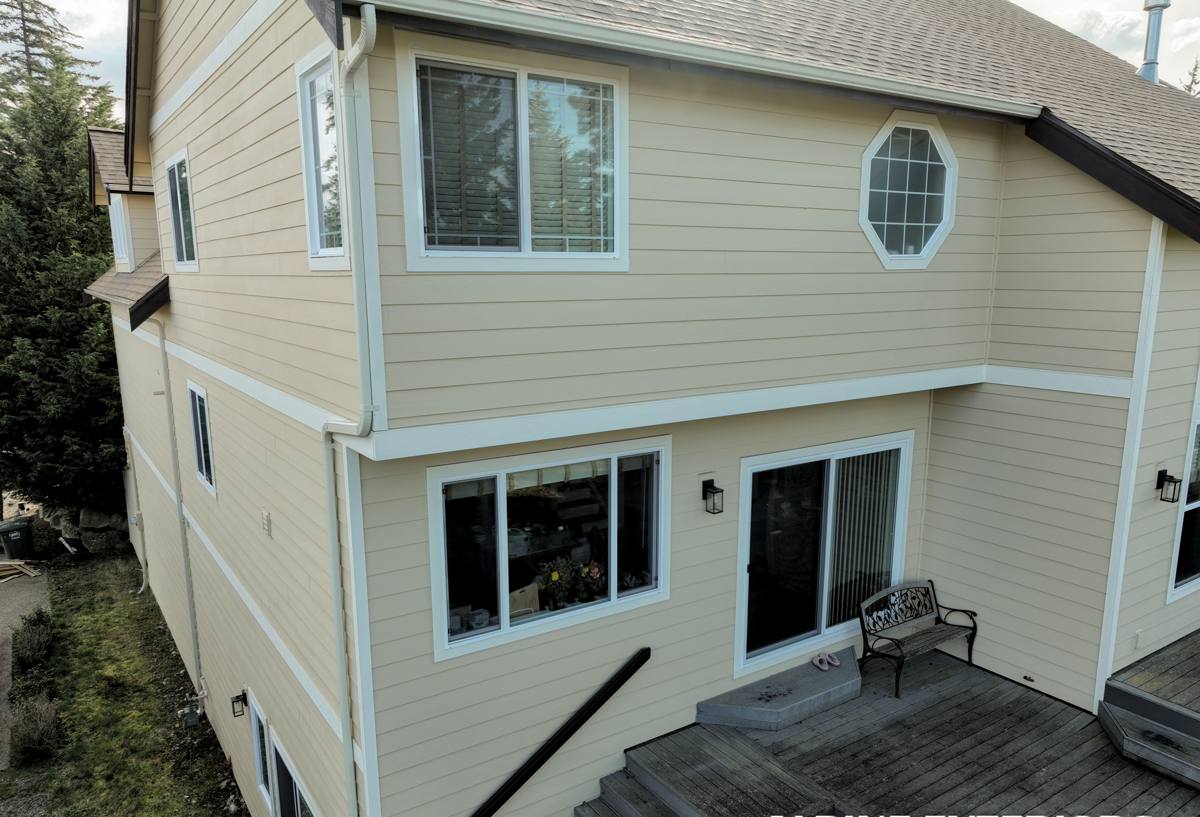
What a Deck in Mount Vernon Is Actually Up Against
Moisture That Doesn't Let Up
Western Washington rain isn't just frequent, it's prolonged — low-intensity rain that sits on a deck surface and in its joints for hours or days rather than a quick downpour that runs off and dries. Decking that can't shed water efficiently, or framing that traps moisture against wood, sets up the conditions for rot long before the structure is visibly failing.
Salt Air Off the Sound Corridor
Mount Vernon isn't beachfront, but the air moving up through the Skagit valley from Puget Sound carries enough salt content to accelerate corrosion on lower-grade fasteners and hardware. Over a few years, cheap screws and brackets will show rust bleed and weaken well before the wood around them does, which is one of the more common reasons a deck starts to feel "wobbly" even though the lumber looks fine.
A Long Moss Season
Shade, moisture, and mild temperatures are exactly what moss wants, and Skagit County gives it all three for a good chunk of the year. Moss on a deck surface isn't just cosmetic — it holds moisture against the boards and turns a walking surface slick, which becomes a real fall hazard on stairs and ramps.
Freeze-Thaw Swings in the Shoulder Seasons
Mount Vernon doesn't get brutal winters, but it does get enough freeze-thaw cycling in the fall and spring to matter. Water that's worked its way into a joint or a fastener hole expands when it freezes, and repeated cycles of that will open up gaps and cracks that wouldn't happen in a milder or drier climate.
Choosing the Right Decking Material for This Climate
There's no single "best" decking material — the right choice depends on budget, how much upkeep a homeowner actually wants to do, and how the deck will be used. Here's how the common options hold up against Mount Vernon's specific conditions:
| Material | How It Handles This Climate | Maintenance | Typical Lifespan Here |
|---|---|---|---|
| Pressure-treated wood | Good rot resistance when properly sealed; needs consistent upkeep to keep moisture out of end grain and fastener holes | Re-seal or re-stain every 1–2 years; regular moss removal | 15–20 years with upkeep |
| Cedar | Naturally rot- and insect-resistant, ages to a gray patina if left unfinished, but softer and can gray unevenly with heavy moss growth | Periodic cleaning and optional refinishing; moss removal important | 15–20 years with upkeep |
| Composite decking | Doesn't absorb water the way wood does, resists rot, but can still grow surface moss/algae in shaded, damp spots and needs the right substructure ventilation | Periodic washing; no staining or sealing | 25+ years, backed by manufacturer warranty |
We're generally cautious about the lowest-grade composite products in a climate like this — some early composite formulations had issues with moisture wicking at cut ends and poor mold resistance in shaded, damp installations. We stick with manufacturers that have a proven track record in wet Pacific Northwest climates specifically, not just a national warranty on paper.
What a Correctly Built Deck Actually Involves
Footings and Framing
Everything starts below the surface. Footings need to be set below frost depth and sized correctly for the soil conditions on the lot, and the framing above them needs proper joist spacing for whatever decking material is going on top — composite, for instance, often needs tighter joist spacing than solid wood.
Ledger Board Flashing
Where a deck attaches to the house, the ledger board connection is the single most common source of hidden rot damage in this climate. Correct flashing — installed so water is directed away from the house rim joist rather than into it — is not optional, and it's one of the first things we check when we're asked to look at an existing deck that's had problems.
Joist Protection and Fastener Selection
Joist tape or an equivalent moisture barrier on top of the framing keeps rain from sitting directly on cut lumber. Fasteners matter just as much: in a climate with salt-tinged air, we use corrosion-resistant, coated or stainless hardware rated for exterior ground-contact use rather than standard-grade screws that will start showing rust streaks within a couple of years.
Drainage and Airflow Underneath
A deck built tight to the ground with no airflow underneath traps moisture and speeds up rot from below, where it's hardest to spot. Proper clearance, and grading that moves water away from the footings, keeps the structure drying out between rain events instead of staying damp continuously.
Our Process, Start to Finish
- On-site assessment. We look at the site, sun/shade exposure, drainage, and — for an addition or rebuild — the condition of the existing structure.
- Design and material selection. We walk through decking material, railing style, and layout based on budget and how the space will actually be used.
- Permitting. Attached decks and decks above a certain height typically require a permit locally; we handle that paperwork so it's not on the homeowner to figure out.
- Footings and framing. Built to span the loads correctly and sized for Skagit County soil and frost conditions.
- Decking, railing, and stairs. Installed with attention to fastener spacing, drainage gaps, and code-compliant railing height and baluster spacing.
- Final walkthrough. We go over care and maintenance specific to whatever material was installed, so the deck actually reaches its expected lifespan.
Maintenance Realities for Mount Vernon Homeowners
No deck material here is truly "no maintenance," despite what some marketing implies — the climate is too wet and shaded for that. What varies is how much and how often. A realistic yearly checklist for most Mount Vernon decks:
- Clear leaves and debris out of gaps between boards before they trap moisture against the wood
- Remove moss and algae growth with an appropriate deck cleaner, not just a pressure washer alone (too much pressure can damage both wood and composite surfaces)
- Inspect the ledger board connection and flashing for gaps or staining that suggests water intrusion
- Check railings and stair connections for looseness, especially where hardware is exposed to weather
- Re-seal or re-stain wood decking on the schedule appropriate to the product (typically every 1–2 years in this climate)
- Confirm gutters and downspouts near the deck aren't dumping extra water onto or under the structure
Permits and Local Considerations
Deck projects in and around Mount Vernon generally fall under Skagit County or City of Mount Vernon building requirements depending on the property's location, and most attached decks or decks built above a certain height need a permit before work starts. Requirements and thresholds can change, so we verify the current rules for the specific property rather than assuming — and we handle the permit application and inspection scheduling as part of the job, so it isn't left for the homeowner to navigate.
Why Hire a Crew That Already Works in Mount Vernon
A deck contractor who mostly works drier climates, or who's building the same design regardless of location, is going to make different choices than one who deals with Skagit County's rain, salt air, and moss every week. That local, repeated exposure to how decks actually fail here — where the rot shows up first, which fastener grades hold up and which don't, how much moss buildup is normal versus a drainage problem — shapes decisions from the footing design up through the fastener spec. It also means faster response if something does need attention down the road, since we're not driving in from out of the area.
If you're planning a new deck or need an honest look at an existing one, we're happy to come take a look and talk through what makes sense for your property. There's no pressure and no obligation — just fill out the form below for a free estimate.