 Burlington
 Asphalt Shingle Roofing Built for Edison's Weather
Edison sits close to the water on the flats between Burlington and the Samish Bay tideland, and that location shapes what a roof has to put up with year after year. Salt-laden air moves in off the bay, driving rain comes in sideways during fall and winter storms, and the shaded, damp conditions common to this part of Skagit County keep moss and algae growing on roofs almost year-round. An asphalt shingle roof that's installed correctly for these conditions will hold up for decades. One that's installed with shortcuts — or with the wrong materials for a marine-influenced climate — will show problems in a fraction of that time: granule loss, moss colonies working under shingle edges, and slow leaks at valleys and flashings that don't get noticed until there's water damage inside.
This page covers what we look at, what we install, and how we work specifically for homes in the Edison area. It's not a generic roofing overview — it's the version that accounts for salt air, sustained moisture, and moss pressure.
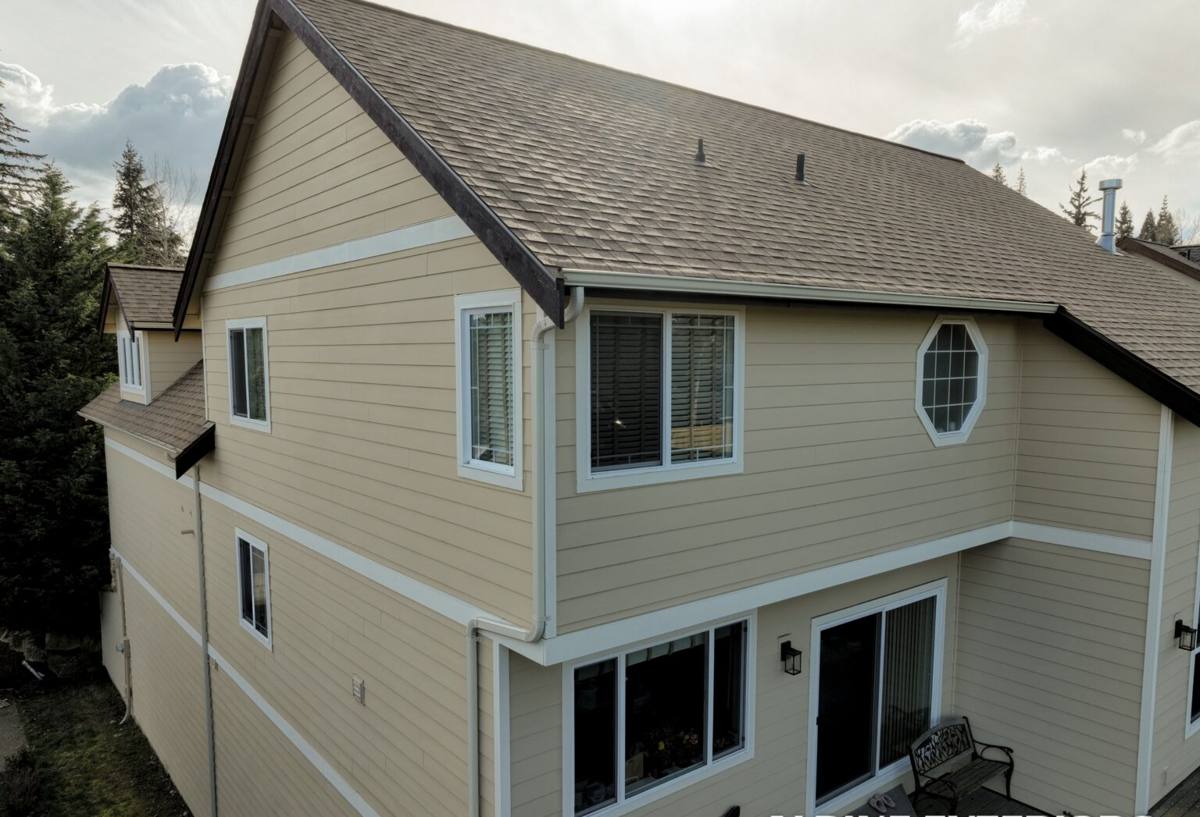
What Edison's Climate Actually Does to a Roof
Salt Air and Corrosion
Proximity to Samish Bay means airborne salt settles on roof surfaces and metal components more than it would further inland in Skagit County. Over time, salt exposure accelerates corrosion on unprotected fasteners, cheap flashing metal, and exposed nail heads. It doesn't ruin asphalt shingles directly the way it can damage some metal roofing, but it does shorten the life of the metal components every shingle roof depends on — flashing, drip edge, and vent boots.
Driving Rain
Storms coming off the water often bring rain at an angle, not straight down. That matters because a roof can be watertight in a light rain and still leak in a wind-driven storm if the underlayment, flashing laps, and shingle exposure aren't sized and lapped correctly for wind-driven moisture. Standard installation habits that work fine in drier climates aren't always enough here.
Moss and Algae Season
Shade from surrounding trees, consistent moisture, and mild temperatures give moss a long growing window in this area — often close to year-round with a heavier push in the wetter months. Moss holds water against the shingle surface, lifts shingle tabs as it grows, and works its way under the edges where it can lift and crack them. Algae staining (the dark streaking you see on older roofs) is mostly cosmetic, but heavy moss growth is a real structural threat if it's left unmanaged.
What a Correct Asphalt Shingle Roof Includes
A shingle roof is a system, not just a layer of shingles. For Edison homes specifically, every layer of that system needs to account for moisture and salt exposure:
- Underlayment: A synthetic or high-quality felt underlayment installed with correct overlaps, not just stapled down loosely. This is the roof's real backup line of defense in wind-driven rain.
- Ice and water shield at vulnerable points: Valleys, eaves, and areas prone to water backup get a self-adhering membrane, not just standard underlayment.
- Flashing at every penetration and transition: Chimneys, skylights, sidewalls, and roof-to-wall junctions all need properly formed and lapped flashing — this is where the majority of leaks actually originate, not in the open field of shingles.
- Corrosion-resistant fasteners and metal: Given the salt exposure here, we don't cut corners on fastener quality or flashing material.
- Proper attic ventilation: Balanced intake and exhaust ventilation keeps moisture from condensing under the roof deck, which matters as much as anything on the outside in a climate this damp.
- Shingle exposure and nailing pattern matched to wind exposure: Edison's open, water-adjacent lots see more wind than sites tucked back among trees, and the nailing pattern and shingle exposure should reflect that.
Shingle Types Worth Considering
| Shingle Type | Typical Lifespan Here | Notes for This Climate |
|---|---|---|
| 3-Tab Asphalt | 15–20 years | Lower upfront cost; less wind resistance and less moss resistance than heavier shingles |
| Architectural (Laminate) | 25–30+ years | Our standard recommendation here — thicker profile holds up better to driving rain and wind, better warranty structure |
| Algae-Resistant (Copper/Zinc-Granule) Architectural | 25–30+ years | Granules impregnated with copper or zinc slow algae and moss growth — worth the small upcharge on shaded or north-facing sections common in Edison |
Our Process for Edison Roofs
1. On-Site Inspection
We look at the whole roof, not just the shingles: deck condition, existing ventilation, flashing condition, moss coverage, and any signs of past leaks in the attic. Salt-air corrosion on existing metal components gets specific attention here, since it's easy to miss from the ground.
2. Honest Scope and Options
We walk you through what's actually needed versus what's optional — for example, whether your existing decking is sound enough to reuse or needs replacement, and whether algae-resistant shingles are worth it for your specific sun/shade exposure.
3. Tear-Off and Deck Assessment
We don't install new shingles over old or over a deck we haven't verified. A full tear-off lets us check the decking for soft spots or moisture damage that's invisible from above — something that shows up more often in homes with long-term moss coverage or past ventilation problems.
4. System Installation
Underlayment, ice and water shield at vulnerable areas, flashing, and shingles go in as a coordinated system, with attention to the details that matter most in this climate: valley construction, sidewall flashing, and vent boot sealing.
5. Final Walkthrough
We go over the finished roof with you, including basic moss-prevention guidance and what to watch for going forward.
Why Moss Management Matters More Here Than Most Places
Homeowners often think of moss as a cosmetic nuisance, but on a roof this close to the bay, in a shaded lot with consistent moisture, moss is a mechanical problem. As it grows, it wedges shingle tabs upward and holds standing water against the shingle surface far longer than open sun exposure would allow. That constant moisture accelerates granule loss and, in bad cases, works water underneath shingle edges and into the underlayment. A roof with algae-resistant shingles and decent airflow across the roof plane will resist this far longer than a standard 3-tab roof in the same location. We can also point out zinc or copper strip options for existing roofs as a lower-cost moss deterrent between full roof replacements, where appropriate.
Repair, Maintenance, or Full Replacement?
Not every roofing issue in Edison calls for a full replacement. Here's roughly how we think through it:
- Isolated leak, roof under 15 years old, shingles otherwise sound: Usually a flashing or penetration repair.
- Widespread granule loss, curling shingles, or roof approaching 20+ years: Full replacement is usually more cost-effective than chasing repairs.
- Heavy moss coverage but shingles structurally intact: Professional moss removal and treatment, plus improved ventilation if that's contributing.
- Visible sagging, soft decking, or interior water stains: Needs an in-person inspection before we can say — this can range from a localized deck repair to a full tear-off.
Cost Factors for Edison Homeowners
Every roof is different, so we don't quote sight-unseen, but the main factors that move the price on a shingle roof job here are consistent:
| Factor | Why It Matters Here |
|---|---|
| Roof size and pitch | Standard cost driver on any roof, anywhere |
| Number of valleys, penetrations, and flashing points | More detail work means more labor and material for proper flashing — critical for wind-driven rain resistance |
| Deck condition | Moss and moisture exposure over years can lead to hidden deck repair needs discovered at tear-off |
| Shingle grade selected | Standard architectural vs. algae-resistant/upgraded warranty lines |
| Ventilation upgrades needed | Damp climates like ours often reveal inadequate attic ventilation once the roof is opened up |
| Access and site conditions | Tree cover, steep pitch, or tight lot access affect labor time |
What to Check Before You Hire Anyone for This Job
- Do they carry proper licensing and insurance for roofing work in Washington?
- Will they do a full tear-off and deck inspection, or are they proposing to layer over existing shingles?
- Do they specify underlayment type and ice-and-water-shield placement in writing, or just "shingles and labor"?
- Do they address ventilation as part of the scope, or only the visible shingle layer?
- Can they explain, specifically, how their approach accounts for salt air and moss in this area — or is it a one-size-fits-all pitch?
- Do they offer a written warranty on workmanship separate from the manufacturer's material warranty?
Why a Local Burlington Crew Makes a Difference
Roofing crews that work Skagit County regularly develop a feel for which details actually matter here — where moss builds up fastest, which flashing details fail first under driving rain, and which shingle products hold up under sustained salt exposure versus which ones look fine on paper but underperform locally. That's not something you get from a crew that mostly works drier inland climates and treats every job the same way. We work in and around Burlington and communities like Edison regularly, and we bring that pattern recognition to every inspection and every job.
If you're dealing with an aging roof, ongoing moss trouble, or you just want an honest read on where your current roof stands, we're glad to take a look. Fill out the form below for a free, no-pressure estimate.