 Burlington
 Decks Built for Edison's Marine Climate
Edison sits close enough to the water and open farmland around Burlington that a deck here takes a different kind of beating than one in a drier, more sheltered part of Skagit County. Salt-tinged air moves in off the bay, rain comes in sideways more often than people expect, and shaded or north-facing decks can stay damp for weeks at a stretch during the fall and winter. A deck built with generic, one-size-fits-all methods will show it within a few seasons — soft spots in the decking, rust bleeding from fasteners, and a slick green film that never quite goes away.
We build and repair decks for homeowners around Burlington and Edison, and we plan every job around what this specific stretch of Skagit County does to exterior wood and hardware year-round. That means material selection, fastener choice, and framing details all get decided with local weather in mind, not just picked off a standard spec sheet.
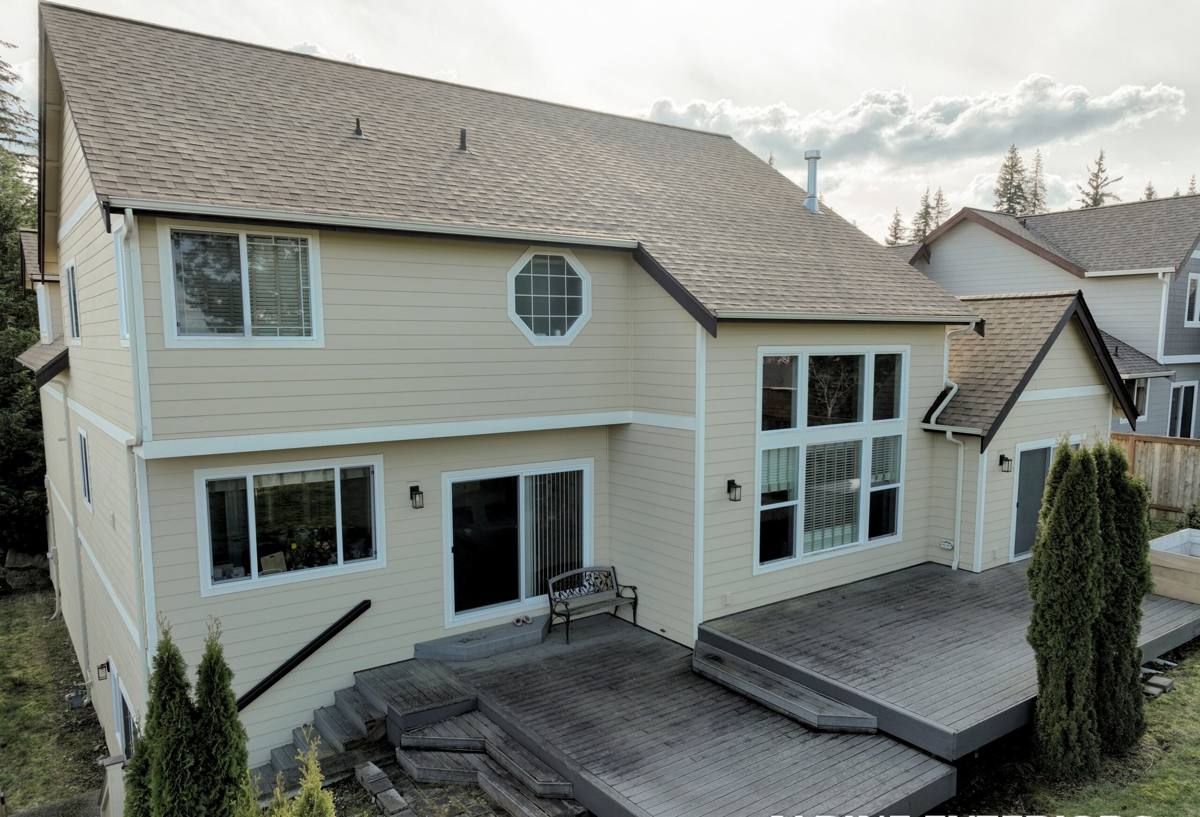
What Salt Air, Rain, and Moss Season Do to a Deck Over Time
Three things wear down decks in this area faster than almost anywhere else in the state, and they compound each other:
- Salt-laden air accelerates corrosion on any fastener, bracket, or fitting that isn't rated for coastal exposure — standard hardware can start rusting and staining the wood around it within a year or two.
- Driving rain gets pushed under railings, into end-grain cuts, and behind ledger boards where it's easy to miss during a quick visual inspection, leading to rot that starts from the inside out.
- Long moss and algae season — often running from fall through spring — keeps shaded decking damp, which speeds up wood decay and makes boards slippery underfoot even when the surface looks dry.
None of these are dramatic on their own, but together they're why a deck built without local conditions in mind tends to need real repair work by year five or six, while one built correctly for this climate can go well beyond that before it needs more than routine upkeep.
Choosing the Right Decking Material for Edison Homes
There's no single "best" decking material — the right call depends on budget, how much sun or shade the deck gets, and how much maintenance the homeowner actually wants to keep up with. Here's how the common options hold up under the conditions we see around Edison:
| Material | How it handles this climate | Maintenance |
|---|---|---|
| Pressure-treated wood | Affordable and solid if properly sealed and re-coated; end grain and cut edges need extra sealant or they'll wick moisture | Annual cleaning, re-sealing every 1-2 years |
| Cedar | Naturally rot-resistant and handles our rain well, but shaded areas still need regular cleaning to stay ahead of moss | Periodic cleaning, occasional oil or stain |
| Composite decking | Doesn't absorb water or rot, though algae can still grow on the surface film in shaded, damp spots | Occasional wash-down, no sealing needed |
| PVC decking | Fully water-resistant, best option for decks that stay shaded or exposed to driving rain most of the year | Lowest — occasional rinse |
We don't push one product over another. What we do is walk the site with the homeowner, look at sun exposure and drainage, and give a straight answer about which material fits the budget and the maintenance appetite — including the honest trade-offs, like composite costing more up front but saving on refinishing labor over the years.
A Note on Lower-End Composite Products
Not all composite decking is built the same way. Some budget composite boards absorb more moisture at the core than others, which matters a lot in a climate with a long wet season — swelling and surface flaking can show up faster than the warranty paperwork suggests. Our standard is to use boards with a capped or fully encapsulated core specifically because of how much moisture this area sees; it's a maintenance and longevity call, not a brand preference.
Framing and Substructure: Where Most Deck Failures Actually Start
Most deck problems people notice — bounce underfoot, sagging rail posts, a soft spot near the house — trace back to the framing, not the decking surface. The framing is also the part that's hardest to inspect once a deck is finished, so it has to be done right the first time.
What a correctly built substructure includes
- Ledger board properly flashed and sealed where it attaches to the house — this is the single most common failure point on older decks in wet climates
- Joist tape or a comparable moisture barrier on top of every joist, so water can't sit directly against cut lumber
- Footings sized and set to local frost depth and soil conditions, not just "deep enough"
- Proper spacing and blocking so the frame doesn't flex over time as fasteners work loose
- Airflow underneath the deck — low, boxed-in decks with no ventilation trap moisture and grow moss on the underside of the decking
A deck that looks fine on the surface can still be failing underneath if these steps were skipped. When we're called out to repair an older deck in the area, this is almost always where the real damage is.
Our Deck Building Process
The process is the same whether it's a full rebuild or new construction, and it's built around not having to guess at anything once the crew starts cutting lumber.
- On-site walkthrough: We look at drainage, sun exposure, ledger attachment point, and what the deck needs to survive here — not just what it needs to look good on day one.
- Material and layout plan: We go over decking options, railing style, and any code requirements together, with real numbers, before anything is ordered.
- Permitting: We handle the permit application and inspections required for the project so the homeowner isn't chasing paperwork.
- Demo and framing: Old structure removed if needed, footings set, framing built with moisture protection at every joint that touches the house or the ground.
- Decking, railing, and hardware installation: Fasteners and brackets matched to the material and to coastal-air conditions.
- Final walkthrough: We go over the finished deck with the homeowner, including what maintenance it actually needs and how often.
Railings, Fasteners, and Hardware That Hold Up Near Salt Air
Hardware is where a lot of decks quietly fail first, because rust stains and loose fasteners don't get noticed until they've already done damage. We use stainless steel or coated fasteners rated for coastal and high-moisture exposure, and we avoid mixing metals that can cause galvanic corrosion between brackets and screws. Railing posts get the same attention — post bases and connectors are chosen so water doesn't pool against untreated metal, which is a common source of early rust streaking on decks built with standard hardware.
Permits and Code Considerations Around Burlington
Most deck projects that involve a new structure, a significant rebuild, or a raised deck will need a permit, and requirements can vary depending on height, size, and how the deck attaches to the house. Skagit County and City of Burlington jurisdictions each have their own review process, and getting it wrong — or skipping it — can turn into a real problem at resale or insurance time. We pull the permits and coordinate inspections as part of the job, so the homeowner ends up with a deck that's actually documented and up to code, not just one that looks finished.
Maintenance Checklist to Keep a Deck Going Longer
A well-built deck still needs some upkeep in this climate — the difference is how much and how often. This is roughly what we tell homeowners to stay on top of:
- Sweep debris and standing leaves off the deck regularly, especially in fall when moss growth accelerates
- Rinse or gently wash the surface a couple times a year to knock back algae and moss before it sets in
- Check railing posts and fastener heads annually for early rust staining or looseness
- Re-seal wood decking on the schedule appropriate to the product — don't wait until it's visibly graying
- Confirm gaps between boards stay clear so water actually drains instead of pooling
- Look under the deck once a year for signs of moisture buildup or blocked airflow
Why Hire a Crew That Already Works in Edison
A deck built by someone unfamiliar with this specific stretch of Skagit County often looks fine at handoff and then starts showing problems within a couple of wet seasons — because the framing, hardware, or material choices were made for a drier or less coastal climate. We build decks in and around Edison and Burlington regularly, so the flashing details, fastener choices, and material recommendations on your project reflect what actually holds up here, not a generic national spec. That's less trial and error, fewer callbacks, and a deck that's still solid well past the point where a poorly matched build starts falling apart.
If you're planning a new deck or need an honest look at one that's showing its age, we're happy to walk the site and give you a straight assessment. The form below gets you a free, no-pressure estimate — no obligation, just a clear picture of what your project actually needs.