 Burlington
 Why Edison Roofs Face a Different Set of Problems
Edison sits close enough to Samish Bay and the surrounding tidal flats that salt-laden air is a daily fact of life, not an occasional weather event. Add in Skagit County's long, wet fall-through-spring stretch and the shaded, moisture-holding tree cover common around Edison properties, and you get a roofing environment that punishes shortcuts. A roof that would hold up fine twenty miles inland in a drier microclimate can show corrosion, moss colonization, and fastener failure years ahead of schedule out here.
Metal roofing, done correctly, is one of the better answers to that combination of salt air, driving rain, and moss pressure. But "metal roofing" covers a wide range of products and installation quality, and the difference between a system that lasts decades and one that fails early almost always comes down to material choice, flashing detail, and fastening — not the metal itself.
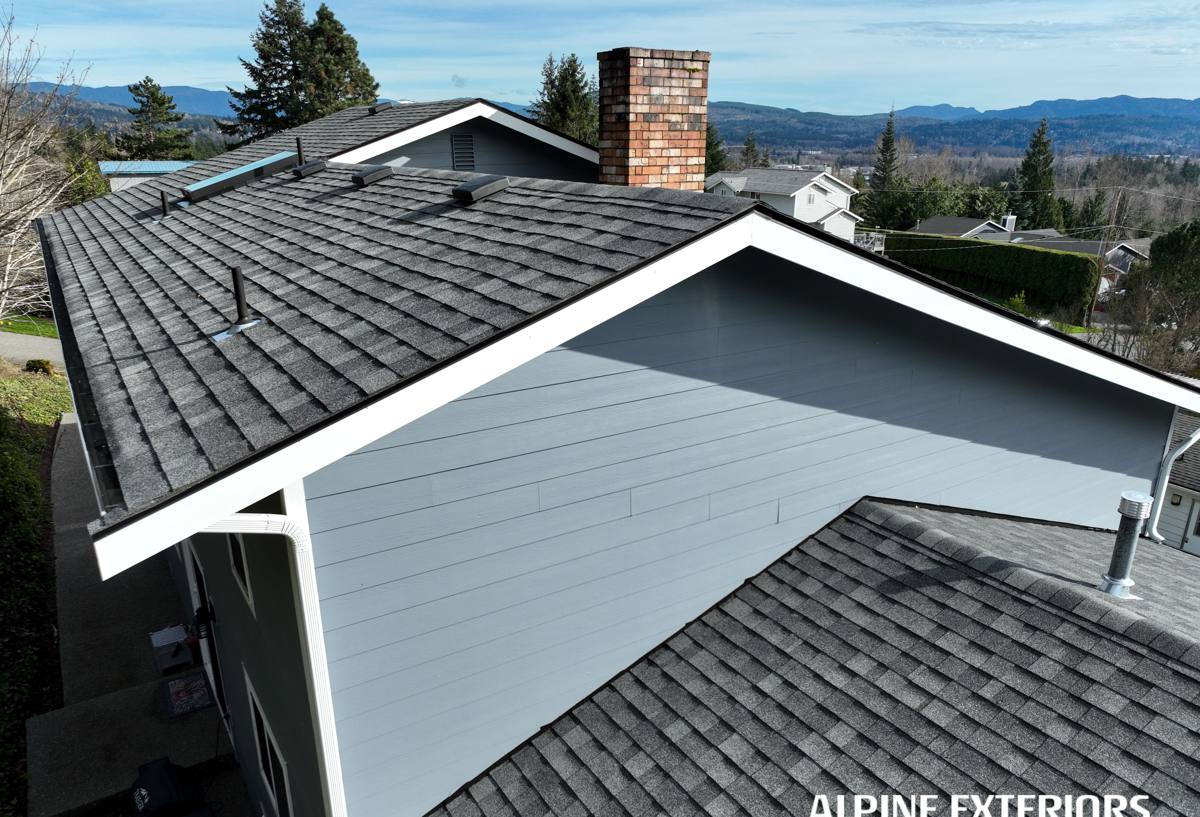
What Edison's Climate Actually Does to a Roof
Salt Air and Corrosion
Airborne salt accelerates corrosion on any exposed metal — fasteners, flashing, panel edges, and cut ends where a factory coating has been compromised. This isn't unique to Edison, but its proximity to the bay puts it closer to that exposure than most of the surrounding Burlington area. The practical impact is that fastener material and coating quality matter more here than they would on a similar home fifteen miles east.
Driving Rain
Wind-driven rain off the water doesn't just fall straight down — it pushes sideways and works its way under laps, around penetrations, and into any flashing detail that was cut short. A metal roof's watertightness depends almost entirely on how the underlayment, laps, and flashings were installed, not on the panel itself being "waterproof."
Moss and Organic Growth
Skagit County's damp, moderate climate and heavy tree cover in and around Edison create ideal conditions for moss, lichen, and algae. On roofing materials that hold moisture — like aging composition shingles or wood shakes — that growth works its way under the surface and shortens the roof's life. Metal roofing doesn't give moss the same foothold, but a poorly ventilated or poorly pitched installation can still trap moisture at valleys, transitions, and low-slope sections.
Metal Roofing Systems: What's Actually Available
Not all metal roofing is the same product wearing different colors. The two systems we install most often on Edison-area homes are standing seam and exposed-fastener panel systems, and the right choice depends on the home's roof pitch, budget, and how much exposure it gets to wind-driven rain.
| System | Fastening | Best For | Trade-offs |
|---|---|---|---|
| Standing seam | Concealed clips, no exposed screws on the field | High-exposure sites, low-slope sections, long-term low maintenance | Higher upfront cost |
| Exposed-fastener panel | Screws through the panel face with rubber-washer seals | Steeper roofs, budget-conscious projects, outbuildings and shops | Washers age and need eventual replacement; more inspection points |
For primary residences directly in Edison's salt-air path, we lean toward recommending standing seam where the budget allows, simply because it removes the long-term maintenance item of exposed fastener washers failing in a corrosive environment. That said, a properly installed exposed-fastener system with quality fasteners is a legitimate, durable option for many homes and outbuildings, and we won't push a homeowner into a more expensive system if their roof geometry and budget don't call for it.
Panel Material and Coatings
Galvalume steel with a quality baked-on paint finish is the standard workhorse for residential metal roofing in this region, and it performs well against salt exposure when detailed correctly. Aluminum is worth discussing for homes with the most direct bay exposure, since it doesn't rust the way steel can if a coating is ever breached. We'll talk through the trade-offs — cost, panel availability, and expansion/contraction behavior — based on your specific home rather than defaulting to one material for every job.
What a Correct Metal Roof Installation Actually Involves
The panels are the most visible part of a metal roof, but they're the smallest factor in whether the roof performs over the next 30-50 years. The details underneath and around them do most of the work.
Underlayment
Given how much driving rain Edison gets off the water, we use a synthetic, high-temperature underlayment rated for metal roofing, with self-adhered ice-and-water membrane at eaves, valleys, and any low-slope transition. This is the roof's backup water barrier if wind ever forces water past a lap or seam.
Flashing Details
Valleys, chimneys, skylights, sidewalls, and roof-to-wall transitions are where the overwhelming majority of roof leaks originate — on metal or any other material. Correct flashing means custom-formed pieces sized to the actual roof geometry, properly lapped with the underlayment and panels, not generic trim pieces caulked into place.
Fastening and Panel Attachment
For exposed-fastener systems, we use corrosion-resistant fasteners matched to the panel material to avoid galvanic reaction, and we follow the manufacturer's fastening pattern rather than "close enough" spacing. For standing seam, correct clip spacing and float allowance let the panels expand and contract with temperature changes without buckling or pulling loose over time.
Ventilation
Trapped moisture under a roof deck causes rot and mold regardless of what's on top of it. We check that intake and exhaust ventilation are balanced and adequate for the home's attic space, and we correct it as part of the roofing project if it's undersized — a detail that's easy to skip and expensive to ignore.
Our Process for an Edison Metal Roofing Project
- On-site inspection. We walk the existing roof, check the decking condition, look at ventilation, and note anything specific to the property — tree cover, roof pitch, prevailing wind exposure.
- Honest scope and estimate. You get a written estimate that spells out the system, materials, and any deck repair or ventilation work included — no vague allowances buried in the fine print.
- Material order and scheduling. Metal panels are often fabricated to the specific roof measurements, so we confirm dimensions before ordering to avoid delays or waste.
- Tear-off and deck inspection. We remove the old roofing down to the deck and address any rot or soft spots before anything new goes down — this is where hidden moisture damage from years of moss or leaks often shows up.
- Underlayment, flashing, and panel installation. Done in that order, with attention to the details above rather than rushing to get panels visibly on the roof.
- Final walk-through and cleanup. We check the finished work with you and clear the site of old material and debris.
Cost Factors for an Edison Metal Roof
Every roof is different, and we won't quote a number without seeing the property, but the factors below are what actually move the price on a metal roofing project in this area.
| Factor | Why It Matters |
|---|---|
| Panel system (standing seam vs. exposed fastener) | Standing seam costs more upfront but reduces long-term maintenance in salt-air exposure |
| Roof pitch and complexity | Steep or cut-up roofs with multiple valleys and penetrations take more labor and flashing work |
| Deck condition | Rot or soft decking found at tear-off adds repair cost but is far cheaper to fix now than later |
| Ventilation upgrades | Correcting undersized attic ventilation adds a modest cost but protects the whole roof system |
| Material choice | Aluminum and heavier-gauge steel cost more than standard Galvalume steel but resist salt exposure longer |
Why a Crew That Already Works Edison Matters
A roofing crew that's worked on homes throughout Edison and the greater Burlington area already knows what the salt air, moss pressure, and driving rain do to a roof here, because they've seen it firsthand on other jobs nearby — not as a generic climate zone on a spec sheet. That familiarity shows up in small decisions: which flashing details to over-build for wind-driven rain, which fastener grade actually holds up long-term this close to the bay, and where ventilation tends to be undersized in homes built in this area during a particular era. It also means a shorter drive for warranty visits or follow-up questions after the project is done, instead of waiting on a crew based well outside Skagit County.
Maintenance That Actually Extends the Roof's Life
Metal roofing is low-maintenance compared to shingles or shakes, but "low-maintenance" isn't "no-maintenance," especially in Edison's climate. A short annual routine goes a long way:
- Clear debris and needles from valleys and gutters before the fall rains pick up
- Check for any moss or lichen starting on shaded slopes and address it early, before it holds moisture against a seam
- Look at flashing around chimneys, vents, and skylights for any sign of lifting or gaps
- Confirm gutters and downspouts are directing water away from the foundation, not just off the roof edge
- After any major windstorm, do a quick visual check for loose panels or displaced flashing
None of this requires a specialist visit every time — most of it is a homeowner walking the perimeter with a pair of binoculars twice a year. But if you're not comfortable getting on the roof yourself, we're happy to do a maintenance check as part of a broader visit.
Signs Your Current Roof Is Ready for a Metal Replacement
Homeowners often wait too long because a roof "still looks fine" from the ground. A few signs worth acting on sooner rather than later:
- Persistent moss growth that returns within a season or two of cleaning
- Granule loss or curling on aging composition shingles
- Visible rust streaking or corrosion on existing metal flashing or fasteners
- Soft spots or sagging visible from inside the attic
- Frequent minor leaks around chimneys, skylights, or valleys
Any one of these is worth a look before it turns into a deck repair or interior damage on top of the roofing cost.
If you're weighing options for a metal roof on an Edison-area home, we're glad to come take a look, walk the roof, and give you a straight answer on what it needs — no pressure, no upsell. Fill out the form below for a free estimate.