 Burlington
 Edison Roofs Work Harder Than Most
Edison sits close to the water, surrounded by open farmland and tidal flats, which means homes here take on a different kind of weather load than a roof twenty miles inland in Mount Vernon or Sedro-Woolley. The air carries salt off the bay, the rain comes in sideways more often than straight down, and the shaded, damp stretches of the year give moss a long runway to establish itself. None of that is dramatic on its own, but stacked together year after year, it shortens the useful life of a roof that wasn't built or maintained with this specific climate in mind.
We replace roofs across the Burlington area, and Edison jobs get treated as their own category — not because the construction is different, but because the exposure is. A roof spec'd for a sheltered inland lot doesn't automatically hold up the same way a few miles from open water.
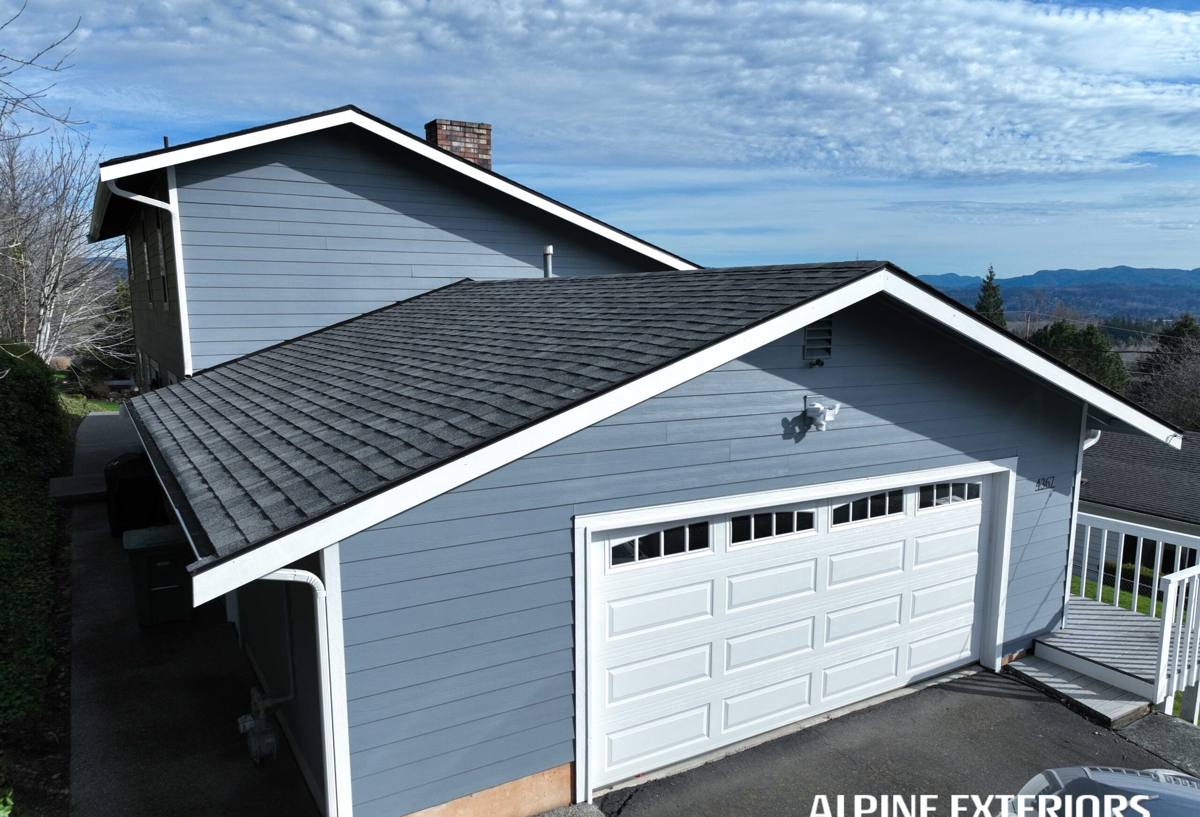
What Salt Air, Driving Rain, and Moss Actually Do
It helps to understand the mechanisms, not just the symptoms.
Salt air
Airborne salt accelerates corrosion on anything metal — fasteners, flashing, drip edge, and any exposed metal roofing panels. Galvanized nails that would last decades inland can start showing rust streaks years earlier this close to the water. It also degrades certain sealants faster, which matters at every penetration point on the roof: vents, chimneys, skylights.
Driving rain
Skagit County storms often come with real wind behind them, which pushes water sideways and uphill under shingle edges, around valleys, and into any flashing that's marginal to begin with. A roof that would shed water fine in a calm downpour can leak in a wind-driven one if the underlayment and flashing details weren't done right the first time.
Moss and organic growth
Edison's tree cover and damp shoulder seasons give moss and lichen months to establish themselves, especially on north-facing slopes and shaded roof sections. Moss isn't just cosmetic — it holds moisture against the roofing material, works its way under shingle tabs as it grows, and can lift them enough to let wind-driven rain underneath.
Signs a Roof Needs Replacing, Not Just Patching
Not every issue means a full tear-off. But there's a point where patching stops being cost-effective and starts being a way to delay an inevitable, more expensive repair. Watch for:
- Granule loss heavy enough that you're finding grit in gutters every season
- Shingles that are cupping, curling, or cracking across multiple sections, not just one spot
- Moss that keeps coming back within a year or two of cleaning
- Soft spots in the decking when walked, or sagging visible from the ground
- Flashing around chimneys, vents, or valleys that's rusted, lifted, or was never properly sealed
- Daylight visible through the attic sheathing, or water stains on interior ceilings
- A roof that's 20+ years old with asphalt shingles, even if it "looks fine" from the street
If it's one or two of these in isolation, a repair is often the right call. If it's several at once, replacement usually costs less over a five-year window than repeated patch jobs.
Choosing Materials for a Coastal-Adjacent Climate
There's no single "best" roofing material — there's a best fit for a given roof's exposure, budget, and how long the homeowner plans to stay in the house. Here's how the common options stack up specifically against Edison's conditions:
| Material | Salt air resistance | Moss resistance | Wind-driven rain | Typical lifespan here |
|---|---|---|---|---|
| Architectural asphalt shingle | Good, with corrosion-resistant fasteners | Moderate — benefits from zinc/copper strips | Good with proper underlayment | 20–25 years |
| Metal (standing seam) | Very good with the right coating/fastener spec | Excellent — sheds moss naturally | Excellent | 40–50 years |
| Cedar shake | Fair — needs more upkeep near salt air | Poor without regular treatment | Good if properly installed | 20–30 years with maintenance |
| Composite/synthetic shingle | Good | Good | Good | 30–50 years |
We don't push one product on every roof. A lot of Edison homes do well on a quality architectural asphalt shingle with the right underlayment and metal detailing — it's the most economical option that still holds up. Where a homeowner wants to minimize moss maintenance long-term or is replacing a roof they intend to keep for 30+ years, metal earns a serious look. Cedar shake can look great, but on a roof this close to salt air and shaded by trees, it asks for more upkeep than most owners want to commit to — that's a maintenance-burden tradeoff worth being honest about upfront, not a knock on the material itself.
What a Correct Roof Replacement Actually Involves
The shingles or panels on top get all the attention, but most roof failures trace back to what's underneath or around the edges, not the field material itself.
Tear-off and deck inspection
Every layer comes off down to the decking, which then gets inspected for soft spots, rot, or delamination — especially common around older valleys and chimney bases where leaks have been slow and undetected. Bad decking gets replaced, not covered over.
Ice and water shield at vulnerable points
Eaves, valleys, and roof-to-wall transitions get a self-adhering waterproof membrane underneath the main underlayment. This is the single biggest defense against wind-driven rain finding its way under the roofing material, and it's an area that gets skipped or under-specified on cheaper jobs.
Ventilation
A roof that can't breathe traps moisture in the attic, which condenses, soaks the underside of the decking, and accelerates rot from the inside — independent of what's happening on the outside surface. Balanced intake (soffit) and exhaust (ridge or roof vents) ventilation is part of a correct replacement, not an upsell.
Flashing and fasteners
Given the salt air, we spec corrosion-resistant fasteners and flashing rather than standard galvanized where it matters — chimneys, skylights, valleys, and any dissimilar-metal contact points. This is a small cost difference at install time and a large difference in how the roof looks and performs a decade in.
Moss prevention built in
Zinc or copper strips near the ridge use rainwater runoff to inhibit moss growth on the slopes below them — a passive, low-maintenance defense that's worth including on most Edison roofs given how much moss pressure the area sees.
Our Process
- Roof and attic inspection — we look at decking condition, ventilation, existing flashing, and any interior signs of past leaks before recommending anything.
- Honest scope and material recommendation — based on your roof's exposure, budget, and how long you plan to stay in the house, not a one-size answer.
- Written estimate — clear on material, underlayment spec, flashing details, and timeline, so there's no ambiguity about what's included.
- Tear-off and deck repair — old material removed, decking inspected and repaired where needed before anything new goes down.
- Underlayment, flashing, and ventilation installed correctly — the parts that determine whether the roof performs in a real storm, not just on a dry day.
- Final walkthrough — we go over the finished roof with you before we consider the job done.
Timeline and What to Expect
Most single-family roof replacements in this area take one to three days of active work once materials are on site, weather permitting — steep or complex rooflines take longer. Skagit County's wetter months make scheduling around dry windows important; we plan tear-offs around forecasts so a roof isn't left exposed overnight if it can be avoided. Permitting, when required, and material lead times are usually the bigger factors in overall timeline, not the install itself.
What Affects the Cost
| Factor | Why it matters |
|---|---|
| Roof size and pitch | Steeper roofs take longer and require more safety setup, increasing labor cost |
| Number of layers to remove | Tear-off of multiple old layers adds labor and disposal cost |
| Decking condition | Rot or soft spots found during tear-off require repair before new roofing goes on |
| Material choice | Asphalt, metal, and composite options span a wide cost range, with different lifespans to weigh against price |
| Roof complexity | Valleys, dormers, skylights, and chimneys each add flashing work and time |
| Ventilation upgrades | Adding or correcting intake/exhaust venting is a smaller add-on during a full replacement than as a standalone project |
We give a specific number after seeing the roof, not a phone estimate — too many of these factors only show up once we're actually up there.
Why a Crew That Already Works This Area Matters
A roofing crew that regularly works Edison and the surrounding Burlington and Skagit County area already knows to spec corrosion-resistant fasteners without being asked, already builds in moss defense as standard rather than an upsell, and already understands where wind-driven rain tends to find weak spots on local roof designs. That's not a marketing point — it shows up in fewer callbacks and fewer surprises five years down the road. We're not driving in from out of the area guessing at what this climate needs; it's what we build for every day.
Before You Hire, Check
- Are they licensed and insured in Washington, and will they show you proof without you having to ask twice?
- Does the estimate specify underlayment type and flashing details, or just "new roof, X price"?
- Do they mention ventilation as part of the scope, or only the visible roofing material?
- Will decking repair be quoted as a per-sheet rate if problems are found, rather than a vague allowance?
- Do they have local references you can actually call, from jobs in this same climate?
If your roof is showing its age or you just want an honest read on how much life it has left, we're happy to take a look. Estimates are free, there's no pressure, and you'll get a straight answer about whether you need a full replacement or just a repair — use the form below to get started.