 Burlington
 Storm Damage Roof Repair Built for Edison's Coastal Exposure
Edison sits close enough to Samish Bay and the open flats of Skagit County that its roofs take a different kind of beating than homes further inland. Wind off the water drives rain sideways into flashing and eave lines that were never designed to handle water moving at an angle. Add in the salt content of that air, which speeds up corrosion on metal fasteners and flashing, and you have a roof that ages faster here than it would twenty miles east. When a storm does damage, the fix has to account for all of that, not just patch the visible hole.
We work storm damage calls in Edison as part of our regular service area out of Burlington, so we're not guessing at what this microclimate does to a roof system over time. We've seen what a few seasons of salt air and standing moisture do to fasteners, underlayment, and flashing here, and that shapes how we inspect and repair.
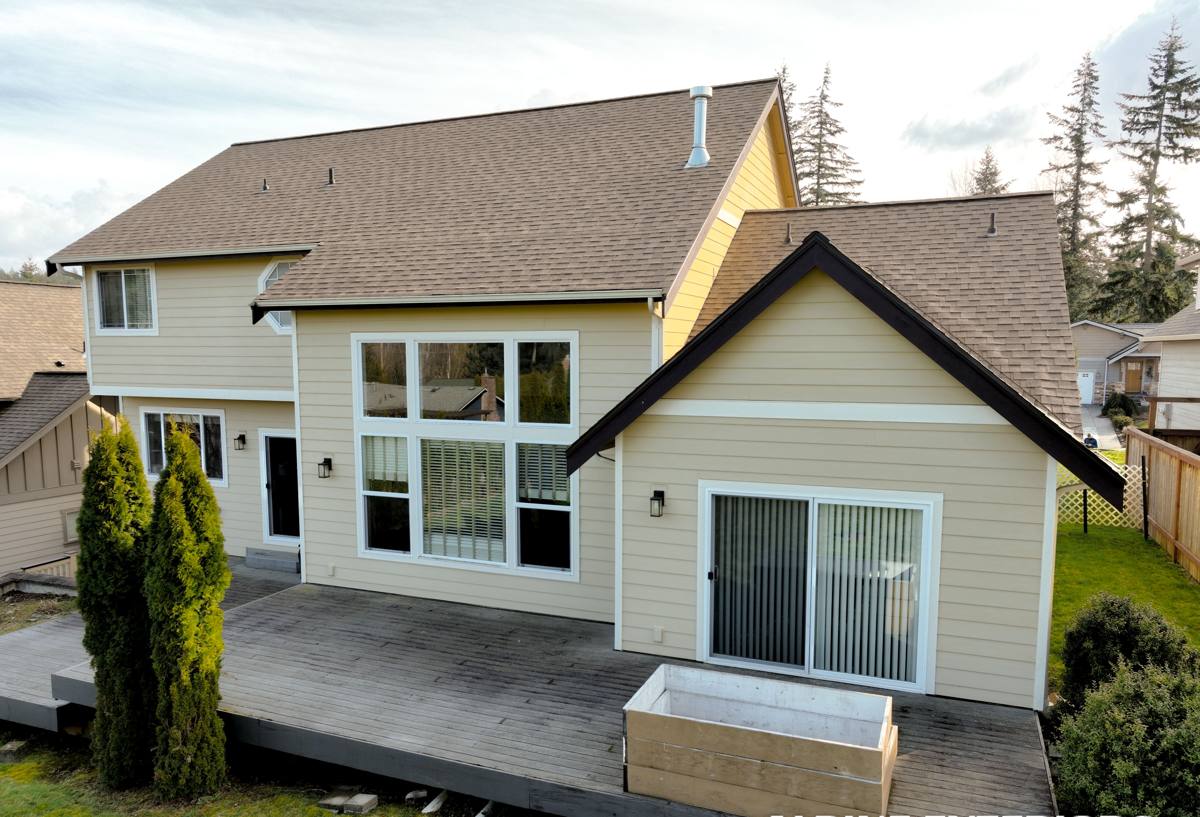
What Skagit County Storms Actually Do to a Roof
Storm damage isn't always a dramatic hole or a pile of shingles in the yard. Most of the storm-related repair calls we get in this area fall into a handful of categories:
- Wind-lifted shingles or panels — edges and ridge lines pop loose first, especially on roofs where the original nailing pattern was marginal to begin with.
- Driving-rain intrusion — water pushed sideways under flashing at chimneys, dormers, and roof-to-wall transitions, which shows up later as an interior stain rather than an obvious exterior sign.
- Debris impact — branches and windblown material from nearby trees puncturing or cracking roofing material.
- Fastener failure from corrosion — salt-air exposure accelerates rust on exposed nails and metal flashing, and a storm is often what finally works a weakened fastener loose.
- Moss-related water backup — long moss season here means moss mats can dam water during a storm even on a roof that's otherwise sound, forcing water backward under the roofing.
The honest challenge with storm damage is that the visible damage and the real damage aren't always the same thing. A missing shingle is easy to spot. Water that snuck in under a flashing lap during that same storm might not show up as a ceiling stain for weeks.
Why the "Long Moss Season" Matters Here
Western Skagit County's mild, wet winters and cool, damp spring and fall shoulder seasons give moss a longer window to establish than it gets in drier parts of the state. On a roof that already has moss growth, a storm's rainfall doesn't just run off — it gets slowed and pooled by the moss mat, giving water more time to find any weak point in the roofing or flashing. That's one reason two roofs that take the same storm can end up with very different amounts of damage: the one with active moss growth was already primed for water intrusion.
What a Correct Storm Damage Repair Involves
A rushed repair after a storm tends to treat the symptom — the obvious hole or missing shingle — and miss the cause. We approach it in a specific order:
- Full roof inspection, not just the damaged section. Wind and rain events rarely damage just one spot. We check the whole roof plane, flashing details, and any adjoining sections before quoting a fix.
- Interior check where relevant. If there's any chance water got past the roofing, we look at attic framing, insulation, and ceiling areas below the affected zone for moisture, not just the exterior.
- Underlayment and decking assessment. If water has been getting in over time, the underlayment or the wood decking underneath may be compromised even if the roofing material above looks repairable.
- Matching repair to actual cause. A lifted shingle from wind uplift gets re-secured or replaced with proper nailing. A flashing failure gets the flashing corrected, not just caulked. Different problems need different fixes, and caulk-and-hope repairs tend to fail again in the next storm.
- Verification before we call it done. We check that the repair ties in cleanly with the surrounding roofing so it sheds water the way the rest of the roof does, not as an isolated patch that creates its own edge for water to catch on.
Repair vs. Replace: How We Help You Decide
Not every storm-damaged roof needs a full replacement, and not every roof is worth patching indefinitely. The right call depends on the age and condition of the roof, how widespread the damage is, and whether this is an isolated storm event or the latest in a pattern of recurring problems.
| Factor | Favors Repair | Favors Replacement |
|---|---|---|
| Roof age | Under 10-12 years, roofing material still has useful life | Nearing or past expected material lifespan |
| Damage extent | Localized to one section or a handful of shingles/panels | Widespread across multiple roof planes |
| Underlying decking | Sound, no rot or soft spots found | Water intrusion has reached and damaged decking |
| Prior storm history | First significant damage event | Recurring damage from the same weak points each season |
| Moss/algae condition | Minimal growth, roof otherwise clean | Heavy moss mats indicating long-term water retention |
We'll tell you honestly which side of that table your roof falls on. If a repair is the sound and cost-effective choice, that's what we'll recommend — we're not going to push a full replacement on a roof that just needs a proper fix.
Flashing, Fasteners, and Salt Air: Why Materials Matter Here
Edison's proximity to the water means the material choices in a repair matter more than they would further inland. Standard fasteners and flashing that hold up fine in a drier, less coastal-influenced part of Skagit County can corrode faster here. When we do storm repairs in this area, we pay attention to:
- Using corrosion-resistant fasteners appropriate for coastal exposure rather than whatever's fastest to grab
- Checking existing flashing for early corrosion, not just physical damage, since salt-accelerated rust can compromise a flashing's seal before it looks visibly bad
- Sealing and lapping repair sections so they shed wind-driven rain rather than just vertical rainfall
This isn't about upselling premium materials — it's about not repeating a repair in three years because the fasteners we used weren't suited to the environment.
Our Process for Edison Storm Calls
1. Contact and Initial Assessment
We'll ask what you're seeing — visible damage, interior staining, missing material — and get a sense of urgency. If there's active water intrusion, we prioritize accordingly.
2. On-Site Inspection
We come out, inspect the full roof and relevant interior areas, and document what we find with photos so you have a clear record for insurance purposes if needed.
3. Written Estimate
You get a clear, itemized estimate before any work starts. No surprise scope creep once we're on the roof.
4. Repair
We complete the work, matching materials and technique to the actual cause of failure, not just the visible symptom.
5. Follow-Up Check
Especially after a significant storm event, we're available to confirm the repair is holding through subsequent weather.
Insurance and Documentation
Many storm damage repairs involve a homeowner's insurance claim. We provide clear photo documentation and a written scope of damage that you can submit to your insurer. We're not a public adjuster and we won't promise a claim outcome, but we'll give you accurate, honest documentation of what we found and what it takes to fix it correctly.
Why Local Experience with Edison Roofs Matters
A contractor unfamiliar with this stretch of Skagit County might treat a storm repair the same way they would anywhere else in Western Washington. But Edison's combination of coastal wind exposure, salt air, and an extended moss season creates failure patterns that show up here more than they do in drier or less exposed parts of the region. Working this area regularly means we recognize those patterns quickly — a flashing detail that's marginal here would be fine somewhere less exposed, and knowing that difference saves you from a repair that looks fine for a season and then fails in the next storm.
Quick Reference: Signs You May Have Storm Damage
- Granules collecting in gutters or at downspout outlets after a storm
- Shingles or panels that look lifted, curled, or out of alignment at the edges
- New or worsening stains on interior ceilings, especially near chimneys or dormers
- Visible daylight through the attic roof deck
- Debris (branches, moss clumps) lodged against flashing or in valleys
- A musty smell in the attic that wasn't there before
If a recent storm has you wondering whether your Edison roof needs attention, we're glad to take a look. We offer a free, no-pressure estimate — you'll get an honest read on what's actually going on and what it would take to fix it right. Use the form below to get started.