 Burlington
 Fiber Cement Siding Built for Oak Harbor's Marine Climate
Oak Harbor sits close to the water, and that changes what siding has to survive. Homes here deal with a near-constant flow of salt-laden air off Puget Sound, wind-driven rain that gets forced sideways under eaves and around corners, and a wet season that runs long enough to give moss and algae months to establish themselves on north-facing walls and anything shaded by trees. Siding that would hold up fine forty miles inland can fail early out here, and we see the results of that mismatch regularly.
We install James Hardie fiber cement siding exclusively, and Oak Harbor is one of the areas where that decision matters most. Fiber cement doesn't absorb moisture into a wood substrate, doesn't feed mold and mildew the way organic materials can, and doesn't degrade from salt exposure the way some coatings and metals do over time. This page walks through what a correctly specified and installed fiber cement job looks like for an Oak Harbor home, and why the climate here isn't something you can treat as an afterthought.
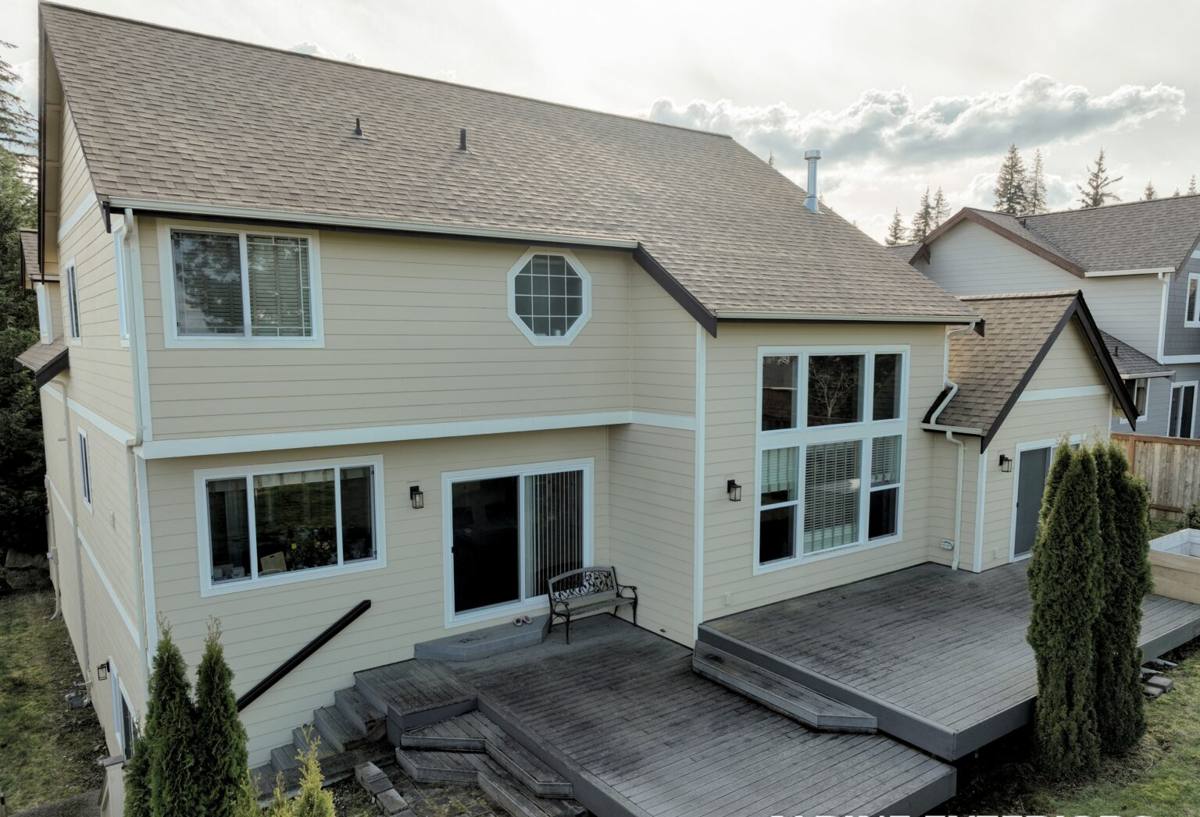
What Salt Air and Driving Rain Actually Do to Siding
It's worth being specific about the mechanisms at work, because they drive real decisions about product selection and installation detail.
Salt Air
Airborne salt is corrosive to exposed metal fasteners, flashing, and trim hardware, and it accelerates the breakdown of some paint and coating systems over years of exposure. It doesn't damage fiber cement siding itself in any meaningful way — Hardie board is not vulnerable to salt corrosion the way metal siding or unprotected fasteners are — but it does mean every metal component in the assembly, from nails to flashing to trim screws, needs to be corrosion-resistant, and factory-applied finishes hold up better than field-applied paint that will need recoating on a shorter cycle.
Driving Rain
Wind off the water doesn't let rain fall straight down — it pushes it laterally into wall assemblies, under laps, and around penetrations like hose bibs, light fixtures, and vents. This is a water-management problem more than a material problem. Even the best siding fails if the flashing, house wrap, and drainage plane behind it aren't detailed correctly. A lot of the value in hiring an experienced local crew is in what happens behind the siding, not just what's visible once it's up.
Moss and Algae Season
Skagit and Island County's wet season stretches long, and shaded or north-facing walls stay damp for extended stretches. Organic growth needs sustained moisture to take hold, and it will colonize any surface that holds water at the surface — paint films, wood grain, textured coatings. Fiber cement's dense, non-porous composition and factory finish give it less to grip onto than bare wood or some vinyl and composite products, which helps keep growth from establishing as quickly, though no exterior surface in this climate is entirely maintenance-free.
Why We Only Install James Hardie in This Climate
We don't install LP SmartSide, vinyl, Cemplank, Allura, or bare cedar or primed spruce siding, and Oak Harbor's exposure is a big part of why. Each of those products has legitimate uses somewhere, but they carry trade-offs that show up faster in a marine environment than they would in a drier, more sheltered location.
- Vinyl can warp or distort under sustained temperature swings and takes direct wind-driven rain differently than a rigid board product — water can find its way behind panels at laps and corners over time.
- Wood-based composite siding (LP SmartSide) uses an engineered wood strand core. It performs well when the factory edge seal and field-cut edge treatment are maintained perfectly, but any breach in that seal — a missed caulk joint, a cut edge left untreated — gives moisture a path into a wood-based product, which is a bigger risk in a high-moisture coastal zone than in a dry climate.
- Bare or primed wood siding (cedar, primed spruce) is directly organic and moisture-absorbent. In a long wet season with heavy moss pressure, it needs the most frequent recoating and the most vigilant maintenance of any option on this list.
- Other fiber cement brands (Cemplank, Allura) compete on the same basic material science as Hardie, but we've standardized on Hardie for its HZ5 climate-engineered formulation for the Pacific Northwest, its ColorPlus factory finish, and its transferable warranty structure — consistency we can stand behind on every job.
None of this means those products are junk. It means that for a house facing Oak Harbor's specific combination of salt exposure, driving rain, and extended damp seasons, we think the trade-offs land differently than they would somewhere drier, and we've built our business around installing one product correctly rather than several products adequately.
The James Hardie System for This Region
Hardie makes region-specific formulations, and for Western Washington that means the HZ5 product line, engineered for wet, temperate climates with freeze-thaw cycling. The panels themselves are a dense composite of cement, sand, and cellulose fiber — non-combustible, dimensionally stable, and resistant to moisture absorption in a way that raw wood products can't match.
ColorPlus Factory Finish
For a home this close to salt air, we lean toward ColorPlus prefinished siding over field-painted product whenever it fits the project. The finish is baked on at the factory in a controlled environment, which gives it more consistent coverage and better adhesion than a coating applied on-site, and it comes with its own finish warranty separate from the substrate warranty. That matters in a marine environment where field-applied paint is under more stress from salt exposure and moisture cycling than it would be inland.
Product Lines We Work With
| Product | Profile | Common Use |
|---|---|---|
| HardiePlank | Lap siding, several reveal widths | Primary wall cladding, most common choice |
| HardiePanel | Vertical panel | Accent walls, gable ends, modern facades |
| HardieTrim | Boards for corners, fascia, window/door surrounds | Trim detailing, corner boards |
| HardieShingle | Staggered or straight-edge panels | Accent sections, gables, dormers |
What Correct Installation Involves Here
Fiber cement is only as good as the assembly it's part of. In a high-exposure coastal location, the details behind and around the siding carry as much weight as the board itself.
Water Management Behind the Siding
Proper installation starts with a continuous weather-resistant barrier, correctly lapped and taped, with flashing integrated at every window, door, and penetration so water is directed out and down rather than trapped behind the cladding. Butt joints between planks get flashed or caulked per Hardie's specification, not just butted and painted over.
Fastening and Clearances
We use corrosion-resistant fasteners appropriate for coastal exposure, set to Hardie's specified pattern and depth — overdriven or underdriven nails are a common cause of premature failure. Siding is held to the minimum clearances Hardie specifies above roofing, decks, and grade, since ground and roof splash-back is one of the more common sources of moisture damage on homes near the water.
Caulking and Sealant Joints
Every joint, trim intersection, and penetration gets sealed with a high-quality, paintable sealant rated for exterior use. In a climate with this much sustained moisture exposure, sealant quality and joint prep aren't a place to cut corners.
Cut Edge Treatment
Any field cut into a Hardie board exposes raw material that needs to be sealed or primed per manufacturer instructions before installation. Skipping this step is a small shortcut that creates a real weak point over time, especially with the moisture load this area sees.
Our Process for an Oak Harbor Project
- On-site assessment. We walk the exterior, check the condition of existing siding, sheathing, and trim, and look specifically for moisture damage, moss buildup, and areas of direct wind and rain exposure.
- Product and profile selection. We talk through plank width, profile, and finish options based on your home's style and your maintenance preferences.
- Written estimate. A clear scope and price, with no pressure to decide on the spot.
- Tear-off and substrate check. Once old siding comes off, we inspect sheathing for hidden rot or water damage before anything new goes up — this is often where problems from a previous, poorly detailed installation get found.
- Weather barrier and flashing installation. The unglamorous part that determines whether the siding actually keeps water out for the long haul.
- Siding installation. Installed to Hardie's fastening, clearance, and joint-treatment specifications — not just standard practice, but the manufacturer's specific requirements, which is what keeps the warranty intact.
- Final walkthrough. We review the completed work with you before calling the job done.
Why Hiring a Crew That Already Works This Area Matters
A contractor who mainly works drier, more sheltered inland areas can install Hardie siding correctly by the book and still miss the details that matter specifically near the water — how much clearance to leave near a low deck that gets salt spray, which walls need extra attention for moss exposure based on sun and shade patterns, or how much slope and drainage detail a given elevation needs given prevailing wind direction. A crew that regularly works Oak Harbor and the surrounding Whidbey Island and Skagit County shoreline has already made those judgment calls on other homes facing the same conditions yours does.
There's also a warranty dimension worth understanding clearly:
- James Hardie's product warranty is transferable to a new owner if you sell, which matters for resale value.
- The warranty is tied to installation meeting Hardie's specifications — this is part of why correct installation isn't optional, it's what keeps the manufacturer warranty valid.
- ColorPlus finishes carry a separate finish warranty from the substrate warranty, covering different aspects of the product's performance.
Maintenance Expectations for a Coastal Property
Fiber cement siding with a factory finish is genuinely low-maintenance compared to wood, but "low-maintenance" isn't "no-maintenance," especially this close to the water. A realistic homeowner checklist:
- Rinse siding periodically, particularly shaded or north-facing walls where salt residue and organic growth accumulate faster.
- Inspect caulk joints annually, especially around windows, doors, and trim intersections, and re-caulk where sealant has cracked or pulled away.
- Keep gutters clear and functioning so water isn't overflowing directly onto wall sections below.
- Trim back vegetation and tree cover that keeps particular wall areas shaded and damp for extended periods, since that's where moss pressure builds fastest.
- Watch for any soft spots, staining, or bubbling at trim boards or penetrations, which can indicate a sealant or flashing issue worth addressing early.
Cost Factors for an Oak Harbor Fiber Cement Project
Every home is different, but a few factors consistently drive cost on projects in this area:
| Factor | Why It Matters Here |
|---|---|
| Substrate condition | Hidden moisture damage from prior siding failures is more common near the water and adds repair scope once discovered |
| Plank profile and finish | ColorPlus prefinished product costs more upfront than field-painted, but reduces recoating frequency |
| Trim and detail complexity | Homes with more corners, dormers, and penetrations require more flashing and sealant work |
| Wall height and access | Multi-story or difficult-access elevations add labor time |
| Wind/rain exposure of the elevation | Walls facing prevailing weather often warrant extra flashing and clearance attention |
We don't quote a number without seeing the house — anyone who does is guessing. What we can tell you is that the honest range for a full fiber cement re-side varies significantly based on square footage, trim complexity, and existing substrate condition, and we'll walk you through exactly what's driving your number during the estimate.
Get a Free, No-Pressure Estimate
If you're weighing siding options for a home in Oak Harbor, we're glad to come take a look, walk the exterior with you, and give you a straight assessment of what your house needs — no pressure, no upsell to a product we don't stand behind. Use the form below to request a free estimate.